





© ROOT-NATION.com - Use of content is permitted with a backlink.
Today, let’s take a look at how Chinese AI models are successfully bypassing Western sanctions – and what that could mean for the future, using Baidu’s ERNIE Bot as a key example.
Tensions between the U.S. and China in the tech sector have reached new heights, yet Chinese companies continue to overcome the restrictions imposed by Western sanctions. Baidu’s flagship AI model, ERNIE Bot, has become a symbol of China’s ability to push back against U.S. efforts to curb its technological progress.
What was meant to act as an effective brake on China’s AI ambitions has, somewhat paradoxically, accelerated the development of the country’s domestic AI ecosystem. In doing so, it has laid the groundwork for a tech infrastructure increasingly independent of the West.
The sanctions introduced by the Biden administration and continued from the Trump era were designed to halt the progress of China’s artificial intelligence sector by cutting off access to advanced semiconductors. In practice, however, the outcome has been quite different. Rather than stalling, Chinese tech companies have not only endured the pressure but have actually accelerated the development of domestic AI-driven solutions.
Read also: Civilization at Risk: Donald Trump’s Policies Are Undermining the Scientific World
TABLE OF CONTENTS:
China’s domestic chipsets contrary to forecasts
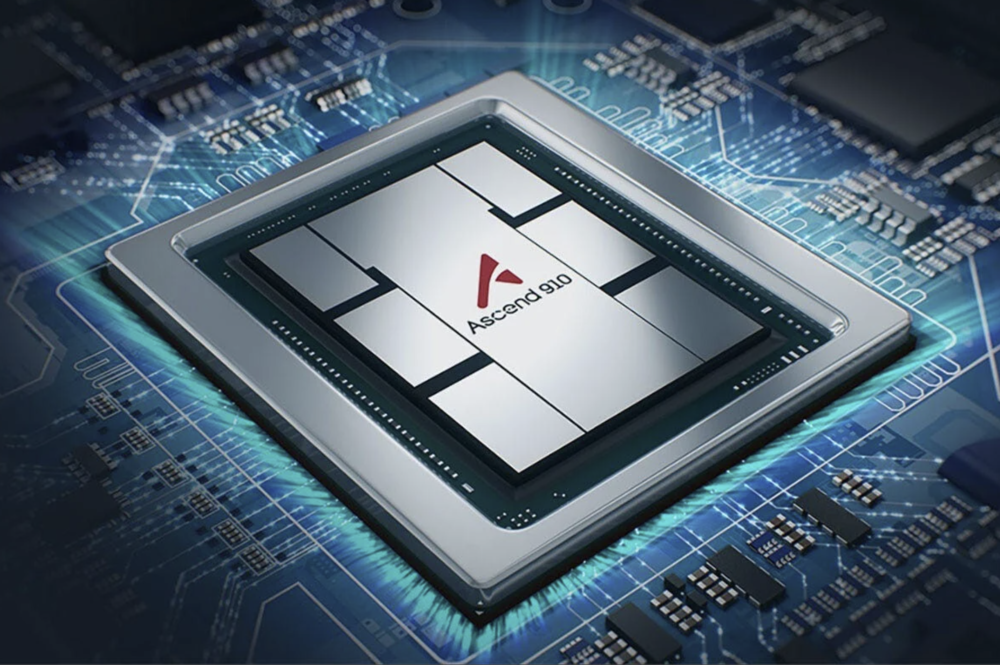
Huawei was the first to catch global analysts off guard by unveiling its own Ascend chips, whose performance in AI applications is beginning to approach that of NVIDIA’s hardware. In internal tests conducted by an independent lab in Shenzhen, the Ascend 910B chips reached 80% of the performance level of the NVIDIA H100 when training large language models. Just two years ago, such a result would have seemed out of reach for a company cut off from Western technology.
Baidu, for its part, has invested over 15 billion yuan (around \$2.1 billion) into the development of its Kunlun accelerators, which are specifically designed for processing large language models. The second generation, Kunlun II, features 512 cores and 77 billion transistors, delivering a performance of 256 TOPS (tera operations per second) while consuming half the power of the first-generation chips.
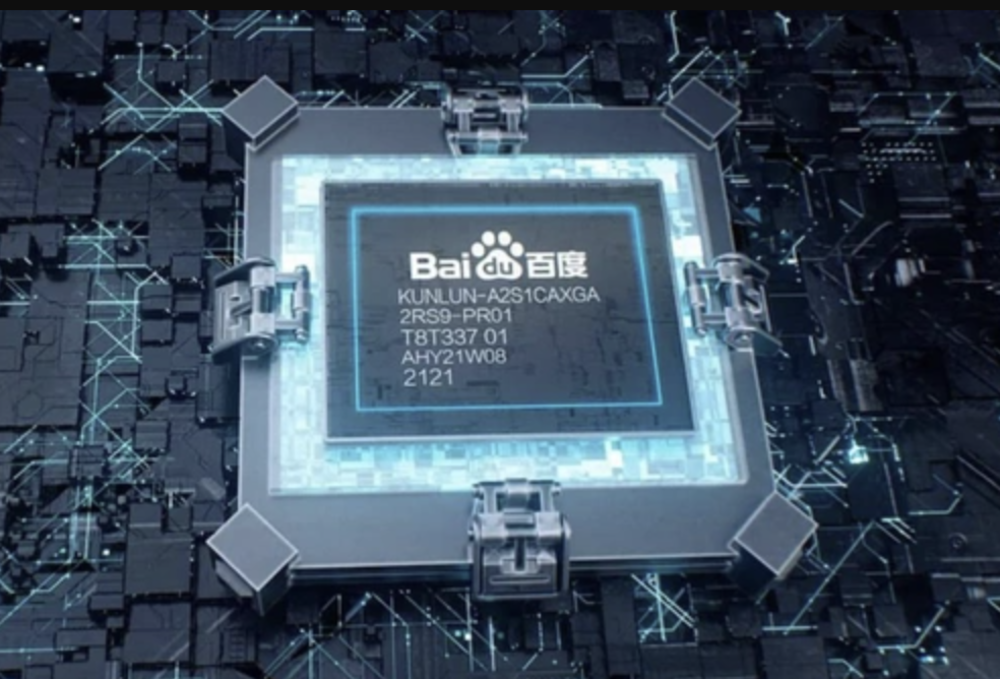
The Kunlun II processor is specifically designed for the vector-based mathematical operations required by large language models. This enables the Chinese company to train its own language models without relying on imported chips, effectively reducing dependence on American suppliers.
Alibaba, through its semiconductor division Pingtouge, has expanded its chip design team from 200 to over 2,000 engineers in the past two years. The company recently announced the successful testing of its first 5-nanometer chip – an important milestone in narrowing the technological gap.
Read also:
- Closer Than Ever: What Is the Dead Internet Theory?
- Everything You Need to Know About NVIDIA DLSS 4.0 and Reflex 2: What They Offer and Why They Matter
How the Chinese system of overcoming barriers works
Chinese companies are bypassing sanctions through several remarkably effective and multifaceted strategies. Let’s take a closer look at how they’re doing it.
Network of shell companies in third countries
Investigations conducted by U.S. intelligence services have uncovered the existence of intricate networks of shell companies operating primarily in the United Arab Emirates, Singapore, and Malaysia. These entities procure advanced NVIDIA A100 and H100 chips, which are then rerouted to Chinese research centers. In 2023 alone, the U.S. Department of Commerce estimated that over 10,000 high-end AI chips may have reached China through these backdoor channels.
A network of over 300 companies has been uncovered, which do not engage in actual operational activities but act as intermediaries for purchasing American chips. These companies frequently change their names and ownership structures to avoid detection.
One particularly interesting case was found in Dubai, where a company registered as a medical equipment importer purchased NVIDIA chips worth over \$200 million, which were then distributed among Chinese AI startups. Notably, the company, Mountain Summit Technologies, was established just one month after the introduction of US sanctions.
Redesign and downgrading of technology
Another strategy involves intentionally modifying chips so that they formally do not fall under the sanctions. In an effort to maintain access to the crucial Chinese market, NVIDIA developed special versions of its chips – the A800 and H800 – which were modified to comply with US regulations. While these versions officially have reduced performance compared to the A100 and H100, Chinese engineers have found ways to partially restore their original computational power.
This is a classic case of cat-and-mouse. As manufacturers reduce chip performance to meet regulatory requirements, Chinese engineers have discovered ways to optimize software to counteract these limitations. This has allowed them to access the latest technology while bypassing sanctions.
Obtaining used chips on the secondary market
The parts market has turned out to be an unexpected source of advanced components. Chinese companies are actively purchasing used servers and workstations with high-performance processors and graphics cards. Particularly valuable are older NVIDIA graphics cards, such as the V100 series. These do not fall under sanctions but still offer substantial computational power for AI tasks.
In 2023, it was discovered that several large American corporations unknowingly sold their decommissioned data centers to intermediaries, who then resold the graphics cards to Chinese companies. This loophole was partially closed by new regulations. However, experts predict that the parts market will remain a significant source of components for Chinese corporations.
Development of alternative computing architectures
The most ambitious response to the sanctions is the development of entirely new computing architectures optimized for artificial intelligence but based on principles different from those of dominant Western solutions. A Shanghai-based AI lab, in collaboration with Fudan University, is working on a neuromorphic processor that mimics the structure of the human brain.
The new neuromorphic computing platform (NCP) uses a fundamentally different architecture compared to traditional graphics processors. Instead of mass parallel processing, it employs a network of artificial neurons and synapses, offering a significant advantage in energy efficiency.
Read also: AI Hallucinations: What They Are and Why They Matter
ERNIE Bot – the Chinese giant comes out of the shadows
ERNIE Bot (Enhanced Representation through Knowledge Integration) by Baidu is a prime example of the effectiveness of China’s strategy. The model debuted in March 2023, but it was its latest version, ERNIE 4.0, that raised concerns in the West. In independent tests conducted by Tsinghua University in China, ERNIE 4.0 outperformed GPT-4 in tasks requiring knowledge of Chinese cultural context, while showing comparable results to OpenAI’s model in other categories.
Architecture that surprises
ERNIE 4.0 is built on the Transformer architecture, similar to models from OpenAI and Google, but incorporates several significant innovations. One of these is the so-called “Knowledge Transformer with Enhanced Depth,” which integrates encyclopedic knowledge from Chinese sources, such as Baidu Baike (the Chinese equivalent of Wikipedia), directly into the model’s training process.

Another unique aspect is ERNIE 4.0’s ability for “continuous learning.” The model can be trained continuously with new data without the risk of “forgetting” previously acquired knowledge. This represents significant progress compared to Western models, which require complete retraining for updates.
Chinese context as a competitive advantage
Chinese AI models are advancing at an astonishing pace, despite the sanctions. The ERNIE bot has a fundamental advantage in the Chinese market. It was developed with the needs of Chinese users in mind, taking into account local linguistic and cultural nuances that are lacking in Western models.
This advantage is most evident in tests related to Chinese idioms, proverbs, and cultural allusions. ERNIE 4.0 achieves 95% accuracy in understanding and generating traditional four-character Chinese idioms (chengyu), while GPT-4 only reaches 45% for the same tasks.
Censorship as an unexpected asset in education
Paradoxically, China’s censorship requirements may have contributed to the development of the ERNIE bot. Models like GPT-4 are trained with a series of safeguards and filters that often limit their capabilities. While ERNIE is also subject to censorship, it is trained under different standards, which may allow for greater flexibility in certain areas.
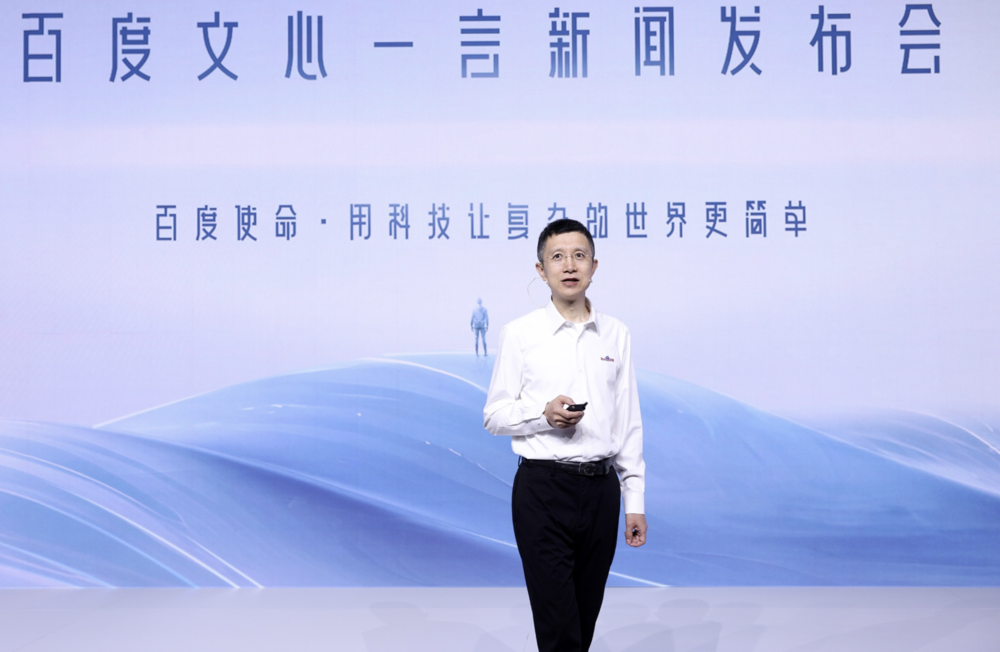
It’s worth noting that Robin Li, co-founder, chairman, and CEO of Baidu, announced ERNIE 4.0 at Baidu World 2023, which took place in October 2023.
Chinese models have a different definition of what is permissible and what is prohibited, creating an interesting asymmetry. ERNIE Bot can freely discuss topics that are taboo for GPT-4, while simultaneously avoiding politically sensitive issues within China.
Read also: Techno-feudalism – A New Form of World Order
Main advantages of the ERNIE bot over Western competitors
Baidu has created a comprehensive ecosystem around its flagship AI model, making it difficult for Western competitors to replicate. The ERNIE bot holds key advantages over its Western counterparts, including:
- Access to vast Chinese-language datasets. As the operator of China’s most popular search engine, Baidu has a unique collection of texts, queries, and interactions in Chinese, spanning over 20 years of Chinese internet history.
- Deep integration with Baidu’s app ecosystem. ERNIE Bot is integrated with over 50 Baidu apps, ranging from maps to streaming services, creating a closed loop of data and interactions not available to Western competitors.
- Better understanding of Chinese cultural context. The model is trained on Chinese literature, history, and local media, giving it a deep understanding of cultural nuances and historical references.
- Government support and protectionist policies. Chinese legislation favors domestic solutions, particularly in sectors deemed strategic, giving ERNIE Bot an advantage in a market with over 1.4 billion potential users.
- Optimized for Chinese hardware. Unlike Western models, ERNIE Bot is optimized to run on Chinese processors, such as Kunlun, providing better performance with lower energy consumption.
Read also: Space Travel at the Speed of Light: When Will It Become a Reality?
From local player to global expansion
Baidu’s strategy is not limited to the domestic market. The company has established partnerships with companies in Global South countries, particularly in Southeast Asia and Africa. In Malaysia, Thailand, and Nigeria, the ERNIE bot is already available in local language versions, while OpenAI and Anthropic models are still planning to expand into these markets.
Digital Silk Road Initiative
As part of the “Digital Silk Road” initiative, which is a component of the broader “Belt and Road” project, Baidu offers special access conditions to its AI technologies for governments and companies in developing countries. In Kenya and Ethiopia, Baidu is collaborating with local telecom operators to provide access to the ERNIE bot through simple SMS interfaces, allowing people without access to smartphones or high-speed internet to use artificial intelligence.
Addressing local needs
“Unlike Western models, which are primarily designed for users in developed countries, our solutions take into account the specifics of emerging markets,” explains Wang Haifen, Baidu’s Chief Technology Officer. “We offer models that require lower bandwidth and can run on lower-end hardware, which is key to widespread adoption in markets like Africa and Southeast Asia.”
This strategy is yielding tangible results. In Indonesia, where Baidu is partnering with local tech giant GoTo, the ERNIE Bot gained over 8 million active users within just three months of its launch, largely due to its integration with popular local apps.
Investment race – trillions of yuan for artificial intelligence
According to data from the International Data Corporation (IDC), Chinese investments in artificial intelligence have increased by 58% over the past year, reaching over $120 billion. In comparison, the United States saw a growth of 35%.
State support on an unprecedented scale
In June 2023, China’s Ministry of Science and Technology announced the creation of a special fund worth 800 billion yuan (approximately \$111 billion) dedicated exclusively to the development of domestic artificial intelligence technologies. Additionally, regional and municipal governments are establishing their own support programs. For example, Shanghai has committed to investing 100 billion yuan (\$14 billion) in its local AI ecosystem by 2025.
“This is an unprecedented mobilization of resources,” comments Dr. Mary Johnson from the Peterson Institute for International Economics. “China views artificial intelligence as a critical element of national security and international competitiveness, leading to an investment level comparable to the U.S. space program in the 1960s.”
Private capital follows state capital
Following state investments, private investments are also making significant strides. According to PitchBook data, Chinese AI startups raised a total of \$45 billion in funding in 2023, marking a 75% increase compared to the previous year. Investors are particularly interested in companies specializing in quantum computing, AI chips, and multimodal models.
Sequoia China, which rebranded itself as HongShan after separating from its U.S. parent company, has pledged to invest \$8 billion exclusively in Chinese AI startups.
“We believe that in the next 5 years, at least 50 AI ‘unicorns’ worth over $1 billion will emerge in China,” predicts Neil Shen, founder of HongShan.
Boomerang effect – sanctions accelerate China’s development
Experts note that sanctions may have paradoxically accelerated the development of the AI ecosystem in China, forcing companies to become more self-sufficient and invest more intensively in research. While the technological gap between the US and China still exists, it is narrowing at an astonishing rate, raising doubts about the effectiveness of the US containment strategy.
Accelerated supply chain localization
Before the sanctions, Chinese companies were reliant on Western technologies and lacked significant incentives to develop their own solutions. The American restrictions created an existential threat that mobilized resources and talent in ways that would typically have taken decades.

In response to the sanctions, the Chinese government launched the “Local Innovations” program, offering significant tax incentives and preferential loans to companies investing in the development of domestic AI technologies. The program has attracted over 5,000 companies, which have committed to localizing their supply chains.
Reverse brain drain
An interesting trend is the return of Chinese artificial intelligence specialists from abroad. According to China’s Ministry of Education, over 3,000 Chinese researchers and engineers, who specialize in AI and had previously worked in the US and Europe, returned to China in 2023. This number is more than double the figure from 2020.
Dr. Chen Xiaohui, who worked at Google for 15 years before returning to Beijing to join Baidu’s AI team, explains, “In Silicon Valley, I felt an increasing sense of uncertainty about my status as a Chinese researcher. In China, I have access to vast data sets, significant computational resources, and most importantly, the opportunity to work on projects of strategic importance to the country.”
Unexpected consequences for American business
Sanctions have also affected American companies. NVIDIA, whose graphics processors are crucial for AI development, lost access to the Chinese market, which was worth over \$10 billion annually. In response, the company has ramped up lobbying efforts to ease the restrictions, arguing that the sanctions harm America’s competitiveness more than they do China’s.
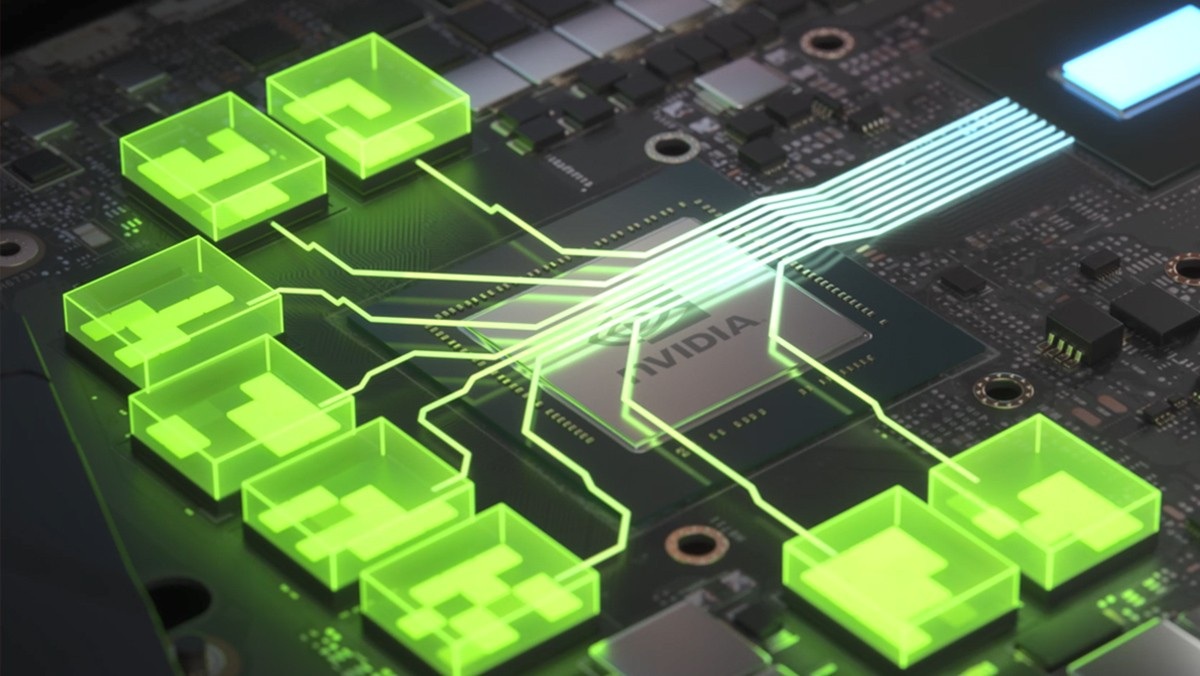
Intel and AMD also reported significant revenue losses. According to Goldman Sachs, American semiconductor companies collectively lost over $25 billion in potential revenue due to the sanctions, leading to reduced research and development budgets and potentially slowing technological progress.
Read also: Use It or Lose It: How AI is Changing Human Thinking
The future is painted in Chinese colors
While the world watches the competition between OpenAI, Anthropic, and Google, the real challenge to American dominance in the field of artificial intelligence may come from an entirely different direction. ERNIE Bot and other Chinese models could soon become a global alternative to Western solutions, potentially reshaping the technological landscape for decades to come.
Future outlook
Analysts at the consulting firm McKinsey predict that by 2028, Chinese artificial intelligence models will be globally competitive in most applications, and in certain niches, such as image recognition and processing of Asian languages, they may even achieve dominance.

“There is a real risk that within the next five years, we could see the digital world divided into two spheres of influence,” warns Dr. Sarah Miller from the Center for Strategic and International Studies. “The Western sphere, where models like GPT and Claude will dominate, and the Eastern sphere, where ERNIE Bot and similar solutions will prevail.”
This scenario could have far-reaching consequences not only for technology but also for geopolitics, trade, and global ethical standards regarding artificial intelligence.
The final word on innovation
Baidu’s CEO, Robin Li, sums up the situation in his typically optimistic terms: “External restrictions may slow development, but they cannot stop innovation. The history of technology shows that true progress always finds a way. ERNIE Bot is proof that the Chinese AI ecosystem is not only resilient to sanctions but can also turn them into a catalyst for its own development.”
Despite political instability, one thing is certain – the technological Cold War between the US and China is entering a decisive phase, and its outcome may be very different from what American leaders initially expected.
Read also:
- Tectonic Shifts in AI: Is Microsoft Betting on DeepSeek?
- Panama Canal: History of Its Construction and Basis of U.S. Claims

