





© ROOT-NATION.com - Use of content is permitted with a backlink.
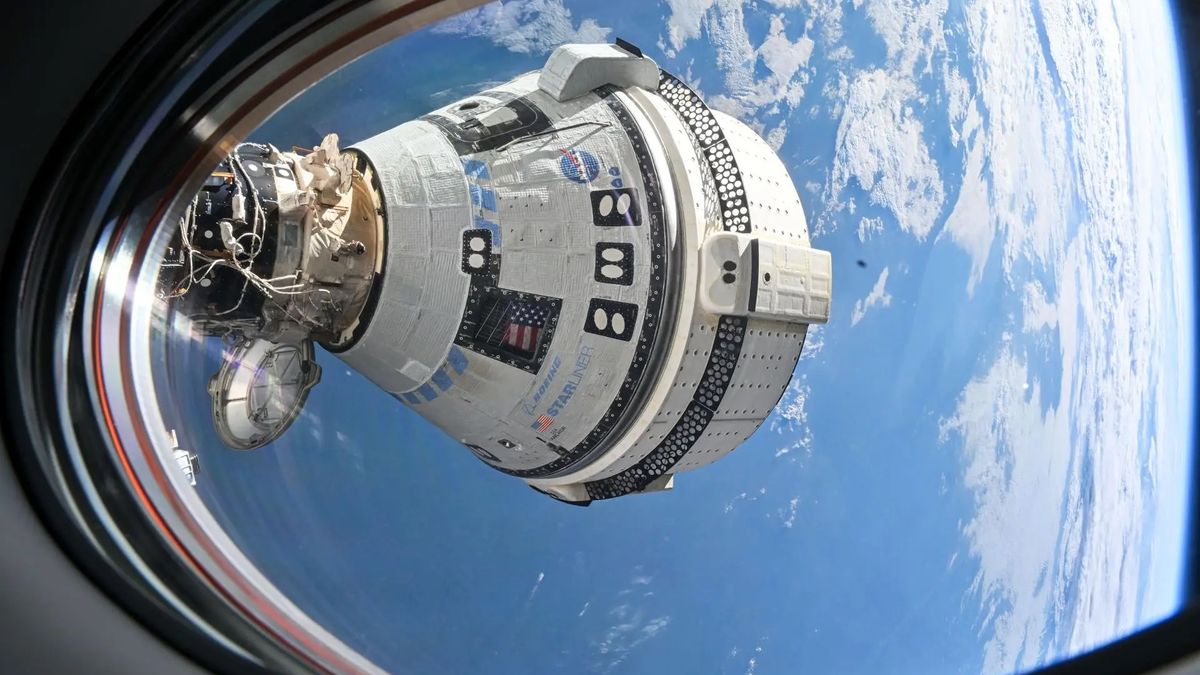
The Boeing CST-100 Starliner story is not just about reputation, risk, and trust – it’s also about the future of space development. The situation is far from straightforward.
A flight that was meant to be a triumph turned into a critical test of decision-making under pressure. The crewed debut of Starliner in 2024 was planned as a showcase for one of the world’s largest aerospace contractors. Instead, it became a case study in how thin the line can be between “controlled risk” and a “potential catastrophe,” a line that can be crossed almost imperceptibly.

Today, NASA officially classifies this mission as a Category A incident – the highest severity level. This is the same classification historically assigned to the Space Shuttle Challenger and Columbia tragedies. Formally, the mission involved no crew casualties, but in practical terms, it presented all the conditions that could have led to them.
Read also: Weapons of Ukraine’s Victory: The Heavy Cruise Missile “Flamingo”
TABLE OF CONTENTS:
The Second Pillar That Wavered
The program’s concept was strategically sound. After the Space Shuttle era, NASA did not want to be reliant on a single provider again. In 2014, the agency split the commercial crew contract between Boeing and SpaceX.
SpaceX quickly delivered the Crew Dragon, a spacecraft that gradually proved its reliability through regular missions.

On Boeing’s side, there were continual delays, redesigns, repeated testing, software glitches, and concerns with both the flight control and propulsion systems. The crewed CFT (Crew Flight Test) had been postponed for years. When Starliner finally launched on June 5, 2024, carrying experienced astronauts Suni Williams and Butch Wilmore, it appeared to mark the end of a long, albeit difficult, development process.
The plan was straightforward: approximately ten days aboard the ISS, demonstrate docking procedures, and return safely to Earth – a routine certification mission. But reality proved otherwise.
Read also: All About Starship V3: Technological Platform for the Next Spaceflight Era
Engines That Went Silent
Problems began during the approach to the ISS. Some of the maneuvering thrusters started failing, and the attitude control system behaved unpredictably. The spacecraft temporarily lost full orientation control.
Formally, control was restored and docking was achieved. But behind the technical statements lay a more concerning reality: the system responsible for ensuring a safe approach to the station was operating at the edge of its tolerances. More engines had to be shut down than planned, reducing safety margins and effectively weakening the redundancy of critical systems.

At that point, this was no longer a “demonstration flight.” It had become a test of how far the system could endure before a cascading failure scenario unfolded.
Read also: Mission Control: How Ukraine Is Building a Unified Digital Brain for Drone Warfare
Why the Crew Wasn’t Returned Immediately
NASA’s official explanation was measured: additional time was needed for analysis.
Unofficially, the meaning was clear – no one was prepared to guarantee the safe return of astronauts aboard a spacecraft whose propulsion system was behaving unpredictably. As a result, an unprecedented decision was made: Starliner would return to Earth uncrewed.

In September 2024, the capsule detached from the ISS and executed an autonomous reentry into Earth’s atmosphere, while Suni Williams and Butch Wilmore remained in orbit.

The planned ten-day mission stretched to roughly nine months. The irony was sharp: their “rescuer” ended up being the competitor’s spacecraft – SpaceX’s Crew Dragon.
Read also: Pilatus Turboprop Aircraft: An Overview of PC-9
Even the Uncrewed Return Was Not Flawless
At first glance, autonomous mode eliminates the primary risk – human life. Yet even during Starliner’s return, problems reappeared.
Another thruster failure occurred, and one component of the attitude control system failed to activate entirely during atmospheric entry. This effectively eliminated the spacecraft’s “single-fault tolerance,” a fundamental safety principle designed to ensure that the system can withstand one failure without catastrophic consequences.

And if another failure had occurred, maneuvers during atmospheric entry could have become uncontrollable. This was no longer a matter of comfort – it was a matter of survival.
Read also: Everything About the P1-Sun – SkyFall’s Ukrainian Interceptor Drone
Category A Classification: A Delayed Acknowledgment
NASA maintains an internal severity scale for incidents, with Category A representing the highest level. It applies either in the event of an actual catastrophe or in situations that create direct preconditions for one.
The CFT mission met two critical criteria simultaneously:
- uncontrolled deviations from the planned flight profile;
- extensive, unplanned costs and operational consequences.
Yet for many months, the flight was not classified as a top-tier incident. Only a report released in February 2026 revealed an uncomfortable truth: within the program, there had been a push to obtain certification as quickly as possible and “close the chapter.”

In practice, program advocacy had outweighed a sober risk assessment.
Only an independent team, established in 2025, reviewed the mission in full – examining technical issues, flight control, internal reporting culture, and public communications – and compelled the agency to revise its classification. Starliner was officially designated a Category A incident. In doing so, NASA effectively corrected its own historical record.
Read also: All About Project Suncatcher: Google’s Space Experiment
Boeing Under Time Pressure
For Boeing, this was no longer just a technical issue – it became a matter of trust. NASA’s report highlighted not only engineering shortcomings and issues with component readiness, but also decision-making errors and cultural aspects of risk reporting.
Now, Boeing must demonstrate more than the ability to fix the engines; the company also needs to change how it manages the program.

The next step is an uncrewed Starliner cargo mission to the ISS, scheduled no earlier than April 2026. No humans will be on board. NASA has made it clear: until the causes of the propulsion issues are fully understood and resolved, another crewed flight is not possible.
Time for this is extremely limited.
The International Space Station is expected to be deorbited around 2030, meaning the “window of opportunity” for Starliner to serve as a full-fledged space taxi is rapidly closing.
Read also: Inertial Navigation Systems: How It Works
Reputation: The Most Valuable Cargo
The Starliner story is not just about hardware. It’s about institutional decisions – how the desire to demonstrate success can cloud risk assessment, and how even within a structure with a strict safety culture, pressure points can emerge.
The crew returned safely. The spacecraft did not burn up. There was no catastrophe. Yet that is precisely what makes the situation so instructive.
Sometimes the most dangerous missions are the ones that end successfully. With Starliner, there remain more questions than answers.
Read also:
- MQM-172 Arrowhead: Overview of a Versatile Loitering Munition Drone
- All About Proteus: Self-Contained Helicopter with Potential Implications for Future of Aviation
- Why Modern Aircraft Still Crash and How Each Tragedy Shapes Aviation Safety

