



© ROOT-NATION.com - Use of content is permitted with a backlink.
Today we will examine the new TRIDON Mk2 mobile air defense systems developed by BAE Systems Bofors, which are expected to enter service with the Armed Forces of Ukraine in the near future. These systems are intended for use against unmanned aerial vehicles, cruise missiles, helicopters, and tactical strike aircraft.
Read also: Mission Control: How Ukraine Is Building a Unified Digital Brain for Drone Warfare
TABLE OF CONTENTS:
What Is Known So Far
It has been reported that Sweden and Denmark will deliver TRIDON Mk2 air defense systems manufactured by BAE Systems Bofors to Ukraine over the coming year. The systems were ordered in February 2025, according to a statement by Swedish Minister of Defence Pål Jonson.
According to him, the deliveries will include not only the artillery systems themselves but also a full set of associated components. This package will cover detection and command-and-control equipment, spare parts, and the ammunition required for operational use.
Sweden is financing the procurement of the TRIDON Mk2 systems, allocating 2.1 billion Swedish kronor, equivalent to approximately USD 190 million. Denmark has decided to expand its participation in the program by funding an additional purchase of TRIDON guns and a modernization equipment package valued at 480 million Swedish kronor (around USD 43 million). The Swedish Ministry of Defence notes that this volume corresponds to equipping one full air defense battalion.
It is also stated that Sweden is prepared to place additional TRIDON orders on short notice should other partner countries join the initiative. This approach would allow the scale of deliveries to increase and could accelerate the reinforcement of Ukraine’s air defense capabilities.
Read also: MQM-172 Arrowhead: Overview of a Versatile Loitering Munition Drone
Next-Generation Mobile Gun-Based Air Defense
In today’s security environment, where aerial threats evolve faster than air defense doctrines can be updated, mobile air defense systems are increasingly coming to the forefront. They have become a critical tool not only for protecting frontline military units, but also for safeguarding rear-area infrastructure, logistics hubs, and civilian facilities. This segment is driving demand for relatively simple, mobile, and economically justified solutions capable of effectively countering large-scale aerial attacks.
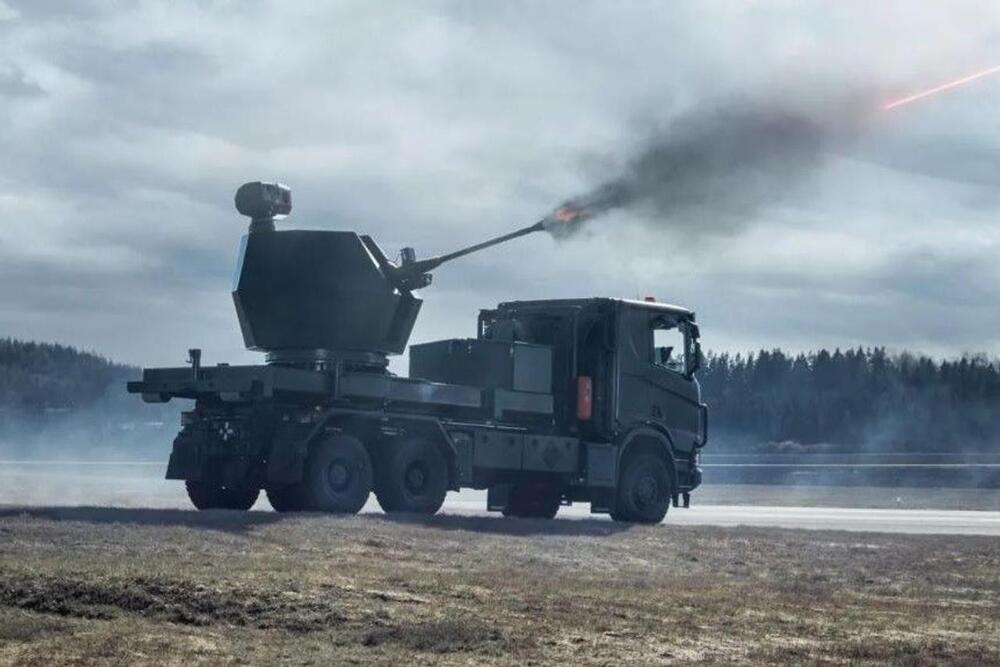
One of the more notable and promising developments of recent years is the TRIDON Mk2. It is a mobile gun-based air defense system developed by the Swedish division of BAE Systems Bofors. First publicly presented in 2024, the system is intended to address the growing threat posed by unmanned aerial vehicles, cruise missiles, and low-altitude targets, against which the use of expensive missile-based air defense systems is often not economically justified.
The TRIDON Mk2 effectively fills the gap between high-cost missile air defense systems and simplified short-range counter-drone solutions. By combining a modern 40 mm automatic cannon, programmable ammunition, and a digital fire control system, the platform offers a balanced approach in terms of effectiveness, cost per engagement, and mobility. The system’s versatility is also notable, as it can engage not only aerial targets but also ground targets, allowing it to perform a fire support role when required.
The TRIDON Mk2 is particularly relevant in the context of modern high-intensity conflicts, including the war between Russia and Ukraine. The widespread use of low-cost strike and reconnaissance UAVs, along with attempts to saturate air defense systems through sheer target volume, has increased demand for solutions where the cost of interception does not exceed the cost of the threat itself. In this context, next-generation gun-based systems using programmable ammunition appear to be an increasingly practical option.
This article examines the background of the TRIDON Mk2’s development, its technical characteristics, key components, tactical capabilities, and potential use cases. It also assesses the system’s prospects on the global arms market, based on open-source information available as of early 2026.
Read also: Weapons of Ukraine’s Victory: Tempest Air Defense System with AGM-114L Longbow Hellfire Missiles
Development Background and System Origins
Work on the TRIDON Mk2 began in the early 2020s as a direct response to the rapidly growing threat posed by unmanned aerial vehicles and other low-altitude targets. The widespread use of low-cost loitering munitions and reconnaissance UAVs highlighted the limited economic viability of employing expensive surface-to-air missiles for their interception. This prompted leading air defense manufacturers to revisit the concept of next-generation gun-based systems.
The project was initiated by BAE Systems Bofors, the Swedish subsidiary of the British defense group. Development was conducted using internal funding and drew on the company’s long-standing experience in naval artillery systems. The TRIDON Mk2 is based on solutions proven in 40 mm naval gun mounts, adapted for a mobile land-based platform and aligned with modern requirements for automation, accuracy, and rapid deployment.
The first full-scale TRIDON Mk2 prototype was publicly unveiled at the Eurosatory 2024 international defense exhibition in Paris. At the event, the system was informally described as a “revived legend,” referencing the well-known 40 mm Bofors gun that has been in service with various armed forces worldwide since the 1930s, now reintroduced in a fundamentally updated technological form.
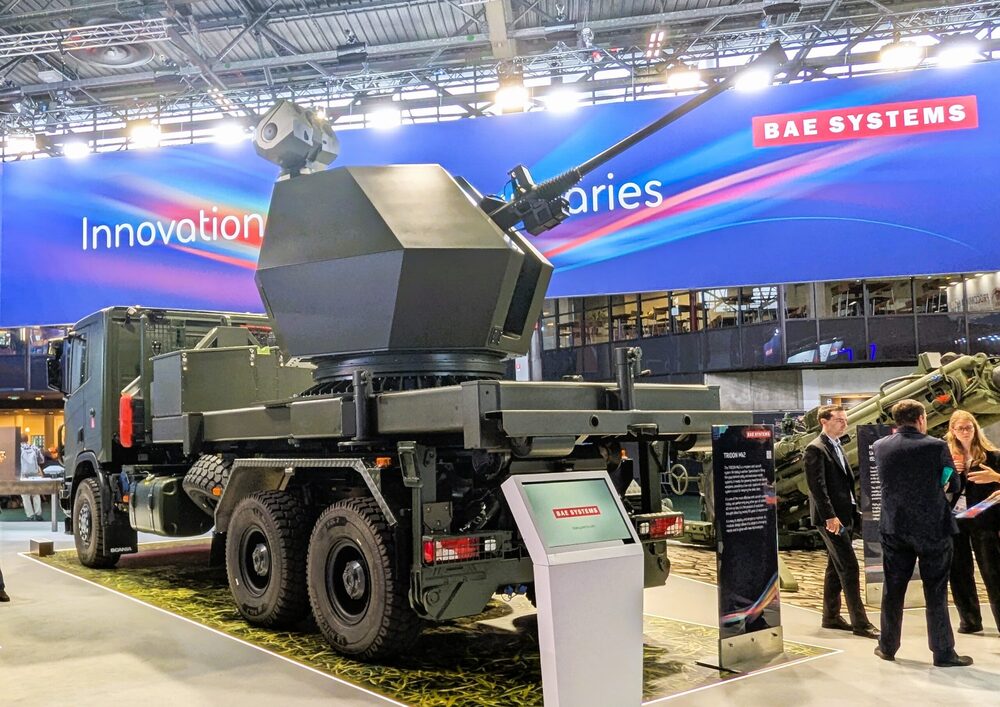
In the same year, 2024, BAE Systems signed a contract with the Swedish Defence Materiel Administration (FMV) to adapt the system to the requirements of the Swedish Army. By the end of the year, the first technology demonstrator had been completed, and by mid-2025 the TRIDON Mk2 underwent a series of trials at test ranges in Sweden. During these evaluations, the system demonstrated effectiveness against a wide range of targets, including fixed-wing and rotary-wing unmanned aerial vehicles. This included commercial platforms such as the DJI Phantom, whose characteristics are comparable to UAVs widely used in the war against Ukraine. The system’s ability to engage ground targets was also tested, confirming its multi-role capability.
Overall, the development history of the TRIDON Mk2 reflects a broader trend in modern air defense. Rather than relying on entirely new concepts, emphasis is placed on the comprehensive modernization of proven solutions through the integration of digital fire control systems, modern sensors, and programmable ammunition. This approach provides a high degree of adaptability and helps ensure relevance in an environment where aerial threats continue to evolve rapidly.
Read also: Weapons of Ukraine’s Victory: Paveway IV Guided Bombs
Core System Components
The TRIDON Mk2 is a modern self-propelled short- to medium-range gun-based air defense system developed by the Swedish division of BAE Systems Bofors. The system is designed to protect military units, rear areas, and critical infrastructure from a broad range of aerial threats, including unmanned aerial vehicles, cruise missiles, helicopters, and low-flying aircraft. In addition, it can be effectively employed against ground targets, such as lightly armored vehicles and personnel.
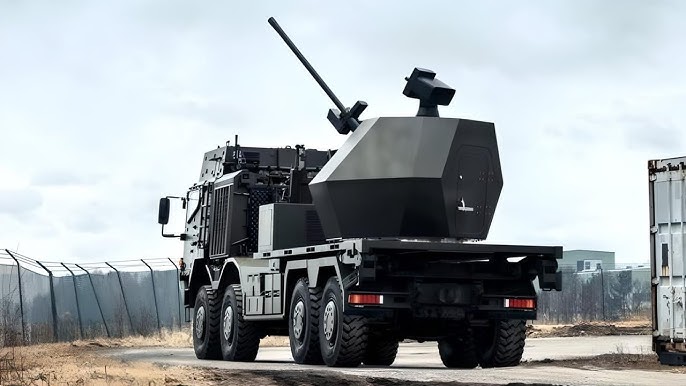
The TRIDON Mk2 is based on the 40 mm Bofors artillery platform, which has been in service for decades, and is complemented by a modern fire control system, digital sensors, and programmable ammunition. This combination provides a high degree of accuracy, mobility, and a comparatively low cost per interception. Depending on the type of ammunition, target characteristics, sensor configuration, and terrain, the effective engagement range can reach up to 12 km.
A key feature of the TRIDON Mk2 is its modular architecture. The system can be integrated with other air defense elements, including Saab Giraffe 1X radars and SHORAD-class command-and-control (C2) solutions, or operate in a standalone configuration. Remote operation is supported, improving system survivability and crew safety. In a networked setup, multiple units can be linked to provide coverage over larger areas.
The following sections examine these components in greater detail.
Read also: A-60 Aircraft: Soviet Dream of Laser Weapons in the Sky
Chassis and Platform
The TRIDON Mk2 is a fully self-propelled system mounted on a truck chassis to ensure high operational mobility. The baseline configuration uses a 6×6 Scania Gryphus truck or another Scania family platform with a flatbed frame, suitable for both paved roads and cross-country movement.
The modular design allows the artillery module to be installed not only on wheeled chassis but also on semi-fixed or fixed positions, depending on operational requirements and customer preferences.
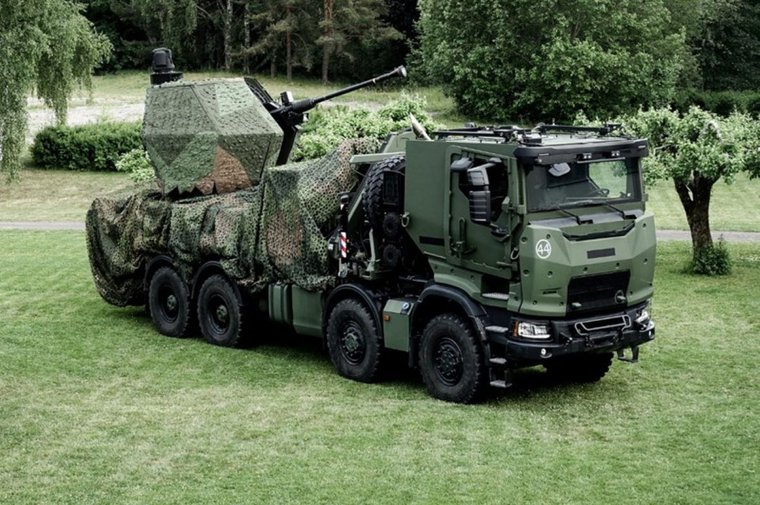
Key design features include the ability to operate the system from the vehicle cab or remotely from a protected position, as well as rapid deployment and redeployment. This enables the TRIDON Mk2 to relocate quickly and change firing positions as required. Another important aspect is the ability to integrate multiple units into a unified air defense network.
This approach makes the TRIDON Mk2 suitable both for accompanying maneuver units and for the protection of high-value rear-area assets.
Gun System
The primary armament of the TRIDON Mk2 is the 40 mm Bofors 40 Mk4 automatic cannon. This is a significantly modernized evolution of the classic L/70 platform, which for decades served as a benchmark in the field of anti-aircraft artillery. Rather than a routine upgrade, the 40 Mk4 represents the culmination of more than 90 years of Bofors gun development, adapted to the conditions of modern warfare characterized by the prevalence of unmanned systems, highly maneuverable targets, and increased demands for first-shot accuracy.
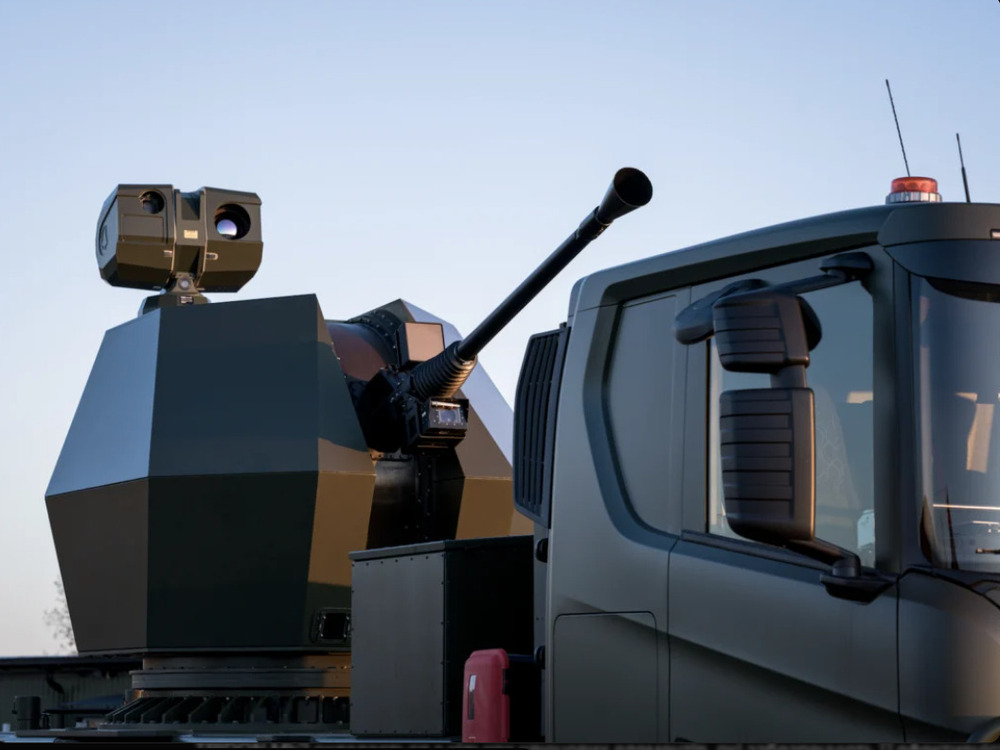
The gun is mounted in a fully stabilized, remotely operated turret with electric drives for azimuth and elevation. The turret weighs approximately 2,300 kg, features a reinforced roof, and has a reduced profile to comply with Swedish road regulations. This configuration allows accurate fire not only from prepared positions, but also after rapid deployment or from a partially stabilized platform. The electric drives provide high traverse speed and smooth tracking, which is critical when engaging small, fast-moving aerial targets such as UAVs and cruise missiles.
The choice of a 40 mm caliber represents a deliberate balance between lethality, range, and cost efficiency. Compared to smaller calibers, it enables the use of programmable airburst ammunition capable of creating a dense fragmentation pattern, significantly increasing the probability of kill even without a direct hit. At the same time, the system remains considerably less expensive to operate than missile-based air defense solutions.
Key combat characteristics of the gun include:
- a 40 mm caliber optimized for engaging small and medium-sized aerial targets;
- full 360° traverse in azimuth with no dead zones;
- wide elevation angles, enabling effective engagement of targets at low and medium altitudes;
- high accuracy provided by stabilization, a digital fire control system, and modern sensors;
- the ability to fire both short, precise bursts and longer engagements to create a sustained engagement zone.
An important component is the automated ammunition feeding system, which is directly integrated with the fire control system. It allows the operator to switch ammunition types instantly based on target characteristics. For example, the system can transition from programmable high‑explosive fragmentation rounds for counter‑UAV missions to armor‑piercing ammunition for engaging ground targets. This change can be made without interrupting fire or reducing engagement tempo, which is critical when countering massed attacks or operating in rapidly changing tactical conditions.
ТRead also: Everything About the P1-Sun – SkyFall’s Ukrainian Interceptor Drone
Ammunition
One of the key advantages of the TRIDON Mk2 is its use of programmable 40 mm Bofors 3P ammunition (Pre‑fragmented, Programmable, Proximity‑fuzed). Each round weighs approximately 2.5 kg and contains 0.975 kg of explosive. Prior to firing, the round is programmed by the fire control system to select the optimal detonation mode for the specific target being engaged.
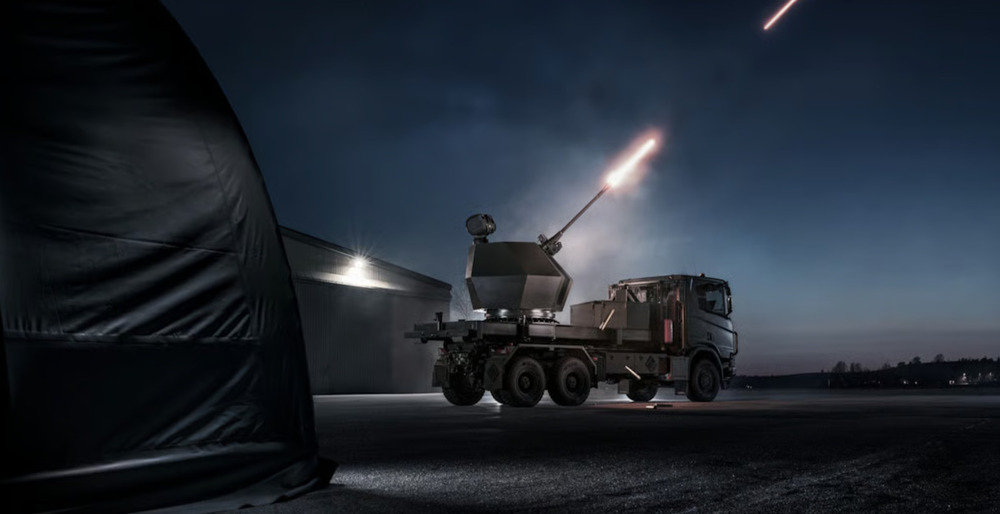
Key capabilities of the ammunition include airburst detonation above the target to create a fragmentation cloud, as well as contact and proximity fuze modes. The rounds are effective against maneuvering and small targets, and different fuze settings or ammunition types can be alternated within a single engagement.
The estimated cost of a basic round is approximately USD 27, making gun-based interception several times cheaper than the use of surface-to-air missiles and particularly relevant for countering mass drone attacks. A substantial onboard ammunition supply allows for extended autonomous operation without immediate resupply.
Fire Control System
The TRIDON Mk2 is equipped with the Hawkeye Air Defence (AD) fire control system developed by the UK-based company Chess Dynamics. This system is deeply integrated into BAE Systems’ digital architecture and represents one of the key contributors to the platform’s overall combat effectiveness. It is this component that transforms a traditional gun-based air defense system into a network-enabled, next-generation air defense asset.
Hawkeye AD provides a high level of automation across the entire engagement cycle, from initial target detection and classification to tracking, trajectory calculation, and firing. Within this process, the operator primarily performs a supervisory and confirmation role, which significantly reduces crew workload and minimizes the impact of human factors during high-intensity air attack scenarios.

The system operates with real-time three-dimensional data, combining inputs from its own electro-optical sensors, external radars, and command posts. This enables the creation of an up-to-date air picture with precise information on target coordinates, speed, and direction of movement, which is critical when intercepting maneuvering UAVs or low-flying cruise missiles.
One of the strengths of Hawkeye AD is its flexibility in working with different types of effectors. The system supports the full range of available 40 mm ammunition, including programmable rounds, and automatically selects the optimal fuze mode based on target type. In practice, decisions on how to engage a specific target – whether through direct impact, airburst, or the creation of a fragmentation zone – are made by the system within fractions of a second.
The TRIDON Mk2 can operate either fully autonomously or as part of an integrated air defense network. In autonomous mode, the system is capable of independently detecting, tracking, and engaging targets, which makes it particularly suitable for protecting assets in remote areas or under conditions of degraded communications. In a networked configuration, it integrates with external radars, battle management systems, and command-and-control nodes.
High reaction speed is another critical characteristic of the Hawkeye AD system. It can rapidly switch between targets, operate effectively in dense air threat environments, and respond to massed attacks where the number of threats exceeds the capacity of traditional air defense systems. This capability is especially relevant in scenarios involving drone swarms or combined attacks using both UAVs and cruise missiles.
Sensors and Electro-Optical Systems
The electro-optical fire control system is one of the key contributors to the TRIDON Mk2’s combat effectiveness and effectively serves as the system’s “eyes” on the battlefield. In its typical configuration, the system uses a multi-sensor electro-optical suite based on the Hawkeye solution from Chess Dynamics, integrated into the unified digital architecture of the fire control system. It provides continuous, all-weather target detection, tracking, and identification regardless of lighting conditions and under most weather scenarios.
The electro-optical module combines several sensors: a high-resolution daytime television camera for precise identification, a thermal imaging channel for night operations and use in smoke or fog, and a laser rangefinder for accurate distance measurement. All sensors are mounted on a high-speed stabilized platform, allowing reliable tracking of maneuvering targets with high angular velocities.
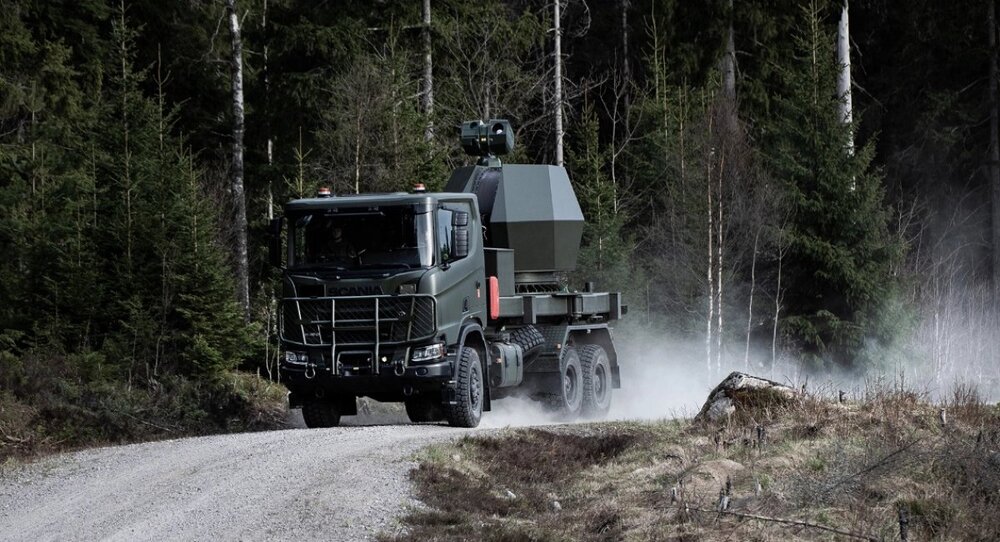
The TRIDON Mk2 is designed for close integration with radar assets, in particular the lightweight Saab Giraffe 1X 3D radar. This radar provides 360-degree airspace surveillance and can detect aerial targets at ranges of up to 75 km, depending on their radar cross section and flight profile. The Giraffe 1X is specifically optimized for detecting small and low-flying targets, including UAVs, making it a complementary sensor for a gun-based air defense system.
Of additional note is the Grindstone software used for modeling and analyzing the system’s combat effectiveness. It enables the simulation of various air attack scenarios, including massed strikes and drone swarm attacks, while assessing probability of kill, ammunition expenditure, and optimal target allocation algorithms. This software is employed both during the design and testing phases, as well as for crew training and adapting the system to emerging threat profiles.
Read also: Weapons of Ukraine’s Victory: Terrahawk Paladin Anti-Aircraft Artillery System
Capabilities and Advantages
The TRIDON Mk2 is effective against a wide range of threats, from low-cost one‑way attack UAVs such as the Shahed‑136 to cruise missiles, helicopters, ground‑attack aircraft, and even armored vehicles. Its main advantages include:
- Cost efficiency: The cost per engagement is measured in thousands of dollars, compared to missile-based interceptors that can cost millions per launch.
- Versatility: The system can engage both aerial and ground targets and provides an inherent self-defense capability.
- Mobility: High tactical mobility allows for rapid repositioning, operation shortly after deployment, and reduced vulnerability to countermeasures.
- Scalability: The modular design enables integration into layered air defense networks, including systems such as NASAMS or IRIS‑T.
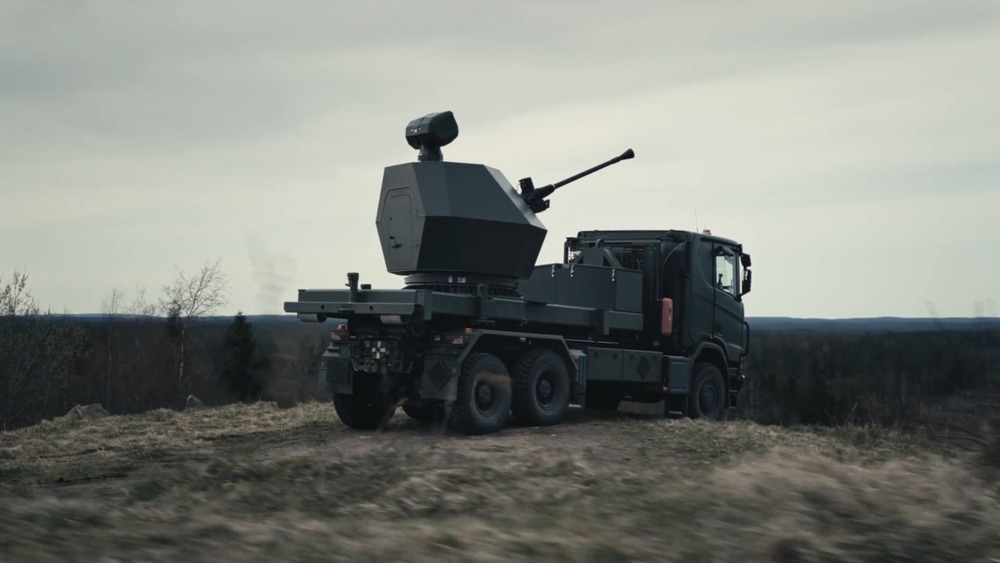
During testing, the system typically engaged a single target with 5–10 rounds, demonstrating a high level of accuracy. According to representatives of BAE Systems, the TRIDON Mk2 is intended to address a capability gap within NATO air defense structures, particularly in response to the operational challenges posed by unmanned aerial systems.
Read also: Weapons of Ukraine’s Victory: The Heavy Cruise Missile “Flamingo”
Limitations
As of early 2026, the TRIDON Mk2 has a number of notable limitations and constraints:
- Limited ammunition load: The system carries only 100 rounds onboard (30 in the ready magazine and 70 in reserve). With a rate of fire of approximately 300 rounds per minute, the ammunition supply can be depleted in roughly 20–25 seconds of sustained firing. This makes the system vulnerable to drone swarms without immediate resupply and logistics support.
- Limited simultaneous engagement capability: A single gun can effectively engage only one or two targets within a narrow sector at a time. In the case of mass attacks involving 20–50 or more drones, a significant number of systems would be required to provide adequate coverage.
- Dependence on external sensors: Without an integrated high-power radar, and when relying on systems such as the Giraffe 1X or equivalents, overall effectiveness can degrade under electronic warfare conditions, poor weather, fog, or if the radar assets are damaged or suppressed.
- Reduced effectiveness against high-speed or high-altitude targets: The practical engagement range against fast cruise missiles, high-altitude targets, or helicopters employing stand-off anti-tank guided missiles is significantly shorter than the nominal 12 km figure, limiting reliability against such threats.
- Platform vulnerability: The truck-based chassis (Scania 6×6 or 8×8) lacks substantial armor protection and is vulnerable to FPV drones, artillery fire, anti-tank guided missiles, and heavy machine guns. Since the crew is located in the cab, a successful hit is likely to result in crew losses.
- Logistics and production constraints: The system has not yet reached full-scale serial production and currently exists as demonstrators and early production batches. Ammunition requires a dedicated supply chain, with estimated delivery timelines of 12–18 months.
- Non-absolute cost efficiency: Although the cost per round is relatively low (approximately USD 25–35), engaging a single Shahed-type UAV or a small group of drones may require 5–30 rounds, increasing the total interception cost. In large-scale attacks involving 100 or more drones, cost efficiency may decrease without dense system deployment.
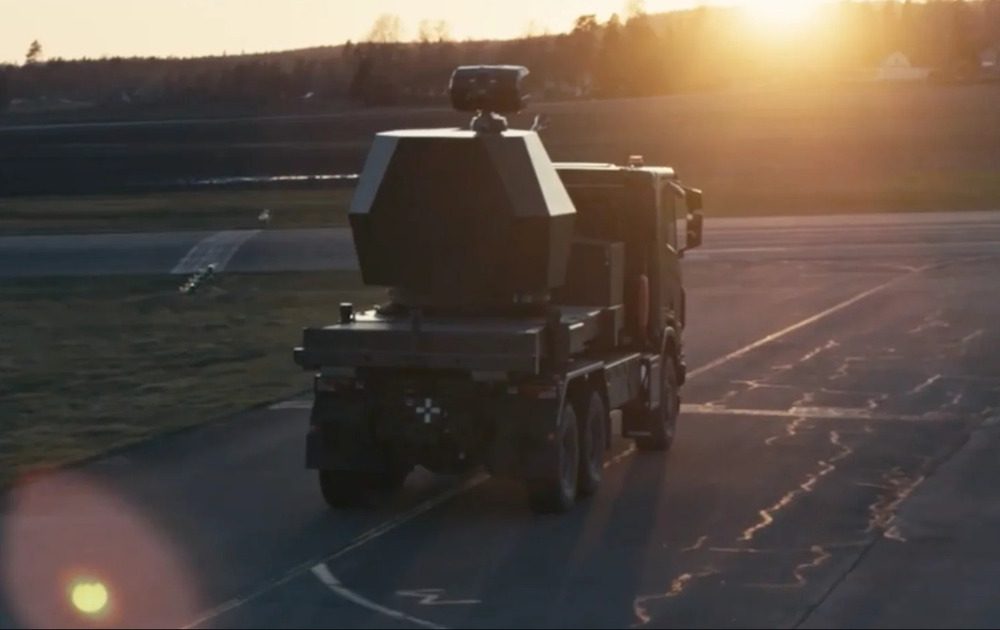
TRIDON Mk2 – відмінне доповнення до шаруватої ППО як економічний “останній рубіж” проти дронів і низьколетючих цілей, але не універсальне рішення. Вона не замінить ракетні комплекси, страждає від класичних арт-недоліків (малий боєзапас, вразливість носія, залежність від сенсорів) і потребує грамотної інтеграції, РЕБ-захисту та великої кількості машин на напрямку.
Read also: Weapons of Ukraine’s Victory: SDB Guided Bomb
Specifications
The TRIDON Mk2 is a self‑propelled, remotely operated gun‑based air defense system optimized for mobility and rapid deployment. The key parameters are summarized below for reference:
- Caliber: 40 mm (Bofors 40 Mk4)
- Engagement range: Up to 12.5 km (depending on ammunition type and target profile)
- Rate of fire: Up to 300 rounds per minute (software‑controlled)
- Elevation angle: Up to 80°
- Traverse: 360° continuous rotation via electric actuators
System weight: Approximately 2,300 kg without ammunition; around 2,550 kg with magazines (30 + 70 rounds)
- Muzzle velocity: 1,012 m/s (for 3P ammunition)
- Ammunition load: 100 rounds (30 in the ready magazine, 70 in reserve)
- Mobility: Mounted on a truck chassis (Scania 6×6 or 8×8); road speed up to 80 km/h
- Crew: 2–3 personnel (remote operation supported)
- Deployment time: Less than 5 minutes in mobile configuration
Estimated unit cost: Approximately USD 2–3 million, positioned as a lower‑cost alternative to missile-based systems
The system is capable of firing while on the move without the use of stabilizers, relying on the chassis’ pneumatic suspension, although stabilizers are recommended on some platforms to reduce vibration. Recoil is relatively low, allowing integration on a variety of carriers, including tracked platforms such as the BvS10.
Read also: Weapons of Ukraine’s Victory: Modern Long-Range ERAM Missiles
Comparison with Similar Systems
When comparing the TRIDON Mk2 with other well-known gun-based air defense systems, most notably the German Gepard, it is important to clarify the context from the outset. This is not a matter of direct replacement, but rather a comparison between different generations and operational philosophies shaped by different threat environments.
The classic Gepard, equipped with twin 35 mm Oerlikon cannons, was for a long time a benchmark for short-range mobile air defense. It combines an organic radar, an armored tracked chassis, and a high rate of fire – features that have proven effective against mass UAV threats. At the same time, its practical effective engagement range against aerial targets is approximately 3–4 km. The system is also heavy, costly to maintain, and dependent on increasingly scarce 35 mm ammunition.
By contrast, the TRIDON Mk2, using a single 40 mm gun with programmable ammunition, offers a significantly larger engagement envelope – up to 12 km under favorable conditions. This allows targets to be engaged earlier and reduces pressure on inner layers of air defense. The ability to generate a fragmentation field at greater distances makes TRIDON Mk2 potentially more effective against drone swarms and targets following predictable flight paths.
At the same time, TRIDON Mk2 lags behind the Gepard in terms of platform protection and autonomy. The lack of armor and an integrated surveillance radar makes it more dependent on networked integration and competent tactical employment. As a result, it should be viewed as a new type of artillery-based air defense system rather than a direct successor to the classic Cold War–era self-propelled anti-aircraft guns.
A comparison with Rheinmetall’s Skynex system (also based on 35 mm Oerlikon guns) highlights the conceptual differences even more clearly. Skynex is a stationary or semi-mobile system designed around maximizing fire density, deep integration into layered air defense networks, and the protection of critical infrastructure. It offers high firepower and accuracy but comes at a higher cost and is less suited to rapid maneuver alongside field units. TRIDON Mk2, by contrast, prioritizes operational mobility, rapid deployment, and lower platform and interception costs, allowing it to be used closer to the forward edge of the battlefield or redeployed quickly between threatened sectors.
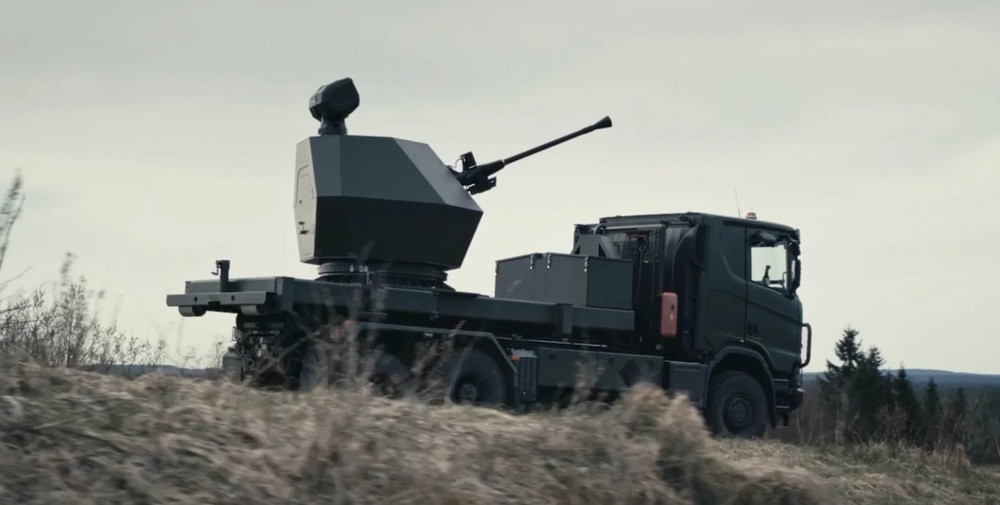
TRIDON Mk2 fits naturally into a layered air defense architecture. It does not compete with medium- and long-range missile systems such as SAMP/T or Patriot, but rather complements them by covering the lower and terminal tiers of defense. At this “last line” of engagement, TRIDON can address drones, cruise missiles, helicopters, and other low-altitude targets, allowing more expensive missile interceptors to be reserved for higher-priority threats.
Developed by BAE Systems, TRIDON Mk2 reflects a contemporary approach to air defense that combines conventional artillery with modern sensing and control technologies to counter emerging threats. Its introduction – particularly in Ukraine – illustrates an ongoing shift in defensive planning toward greater cost efficiency and operational flexibility. By 2026, the system is expected to transition from the prototype stage to serial production. Future upgrades may include increased automation, potentially incorporating AI-assisted target acquisition and engagement, further extending the system’s capabilities within its intended role.
Read also:

