





© ROOT-NATION.com - Use of content is permitted with a backlink.
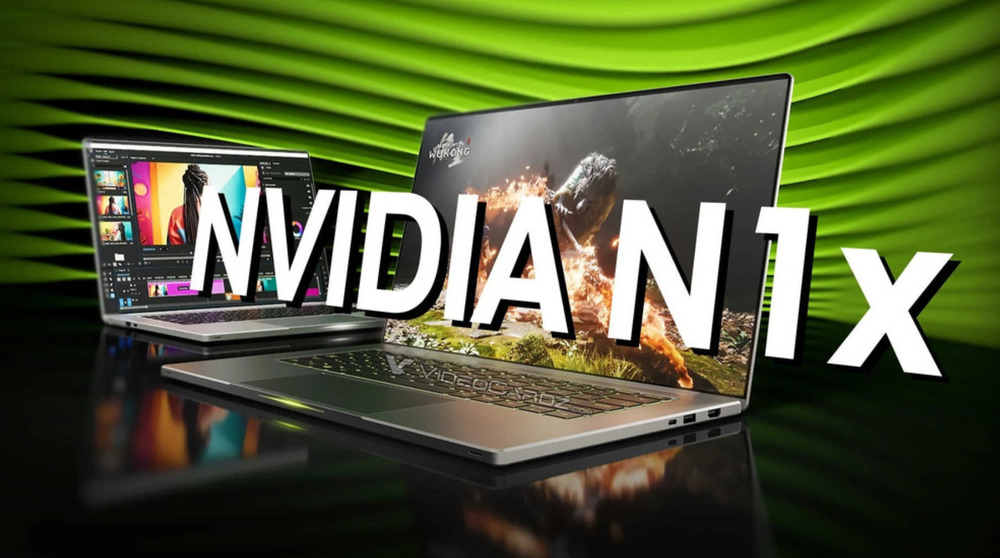
NVIDIA and Microsoft are collaborating on new NVIDIA N1 and N1X chips. This partnership goes beyond a routine product announcement. It may indicate an effort within the Windows ecosystem to compete more directly with Apple in the premium laptop segment and to narrow the performance and efficiency gap that emerged following the introduction of Apple Silicon. Over the past five years, Apple’s M-series chips have set a new benchmark for performance per watt, while the Windows ecosystem has largely remained centered on x86-64 architecture without a comparable transition. The current development could signal a shift, with NVIDIA and Microsoft jointly exploring ARM-based designs as a potential alternative direction.
Read also: Instructions, Guides, How To for Windows
TABLE OF CONTENTS:
From Windows Mobile to broader ambitions: the long path toward ARM
The idea of running Windows on the ARM architecture is not new. As early as the Windows Mobile era, Microsoft was already exploring the potential of combining mobile efficiency with the functionality of a full desktop operating system. A more substantial effort followed around Windows 8.1 and Windows 10, when the company actively promoted the concept of ultra-mobile devices with full PC capabilities. However, the initiative did not fully succeed at the time: the software ecosystem was not prepared, and the available hardware did not offer clear advantages over x86 systems.
A more significant turning point came in 2020, when Apple introduced its first M-series chip. It became clear that this was not simply about convenience features or mobile-oriented design. ARM-based architectures offered fundamental advantages. Performance per watt, thermal efficiency, on-device AI workloads, and battery life all improved significantly, giving MacBook devices a substantial edge. As a result, competing with Apple’s ARM-based systems on x86 architecture became increasingly difficult.
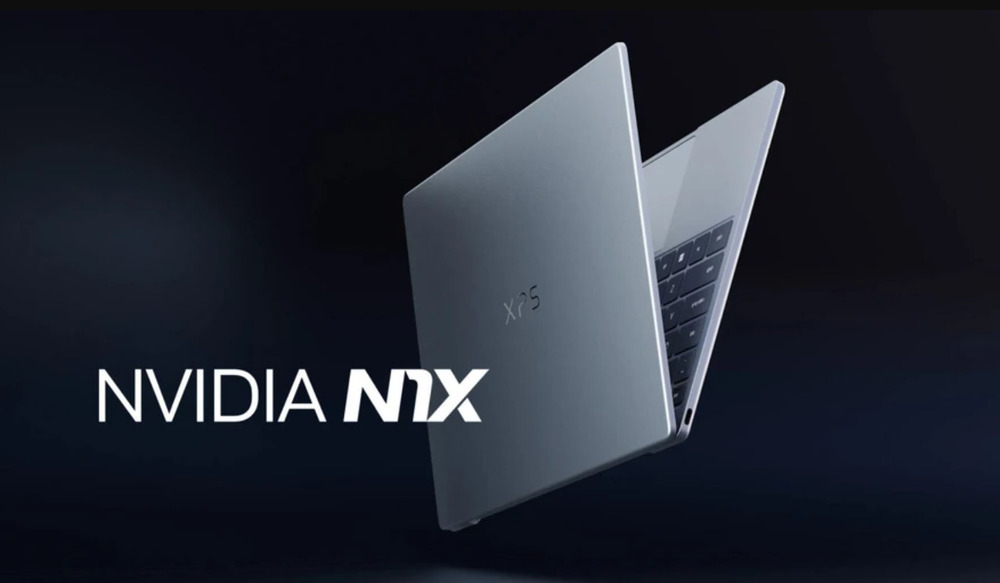
Microsoft has lagged behind in this transition. While ARM support eventually appeared in its software stack, the lack of matching hardware meant that the potential benefits remained largely theoretical.
Qualcomm has made progress in this area. The Snapdragon X Elite and X Plus processors demonstrated that ARM-based Windows laptops can deliver both strong performance and improved energy efficiency. However, gaming support, specialized software, and established user habits have continued to sustain x86-64, which remains deeply entrenched in the ecosystem. NVIDIA’s entry into this space may alter the balance, introducing a new variable into an already competitive landscape.
Read also: Privacy as a Business Model: Proton Services and Efforts Toward a Surveillance-Free Internet
NVIDIA N1X and N1: two chips, two segments, one strategy
Available information describes two distinct chips targeting two different market segments, which represents a structurally reasonable approach. The NVIDIA N1X is positioned for the premium segment: high-performance creative workstations, AI workstation-class laptops, and developer-focused systems. The NVIDIA N1 is aimed at a broader market, including mobile productivity, education, and lightweight AI workloads.
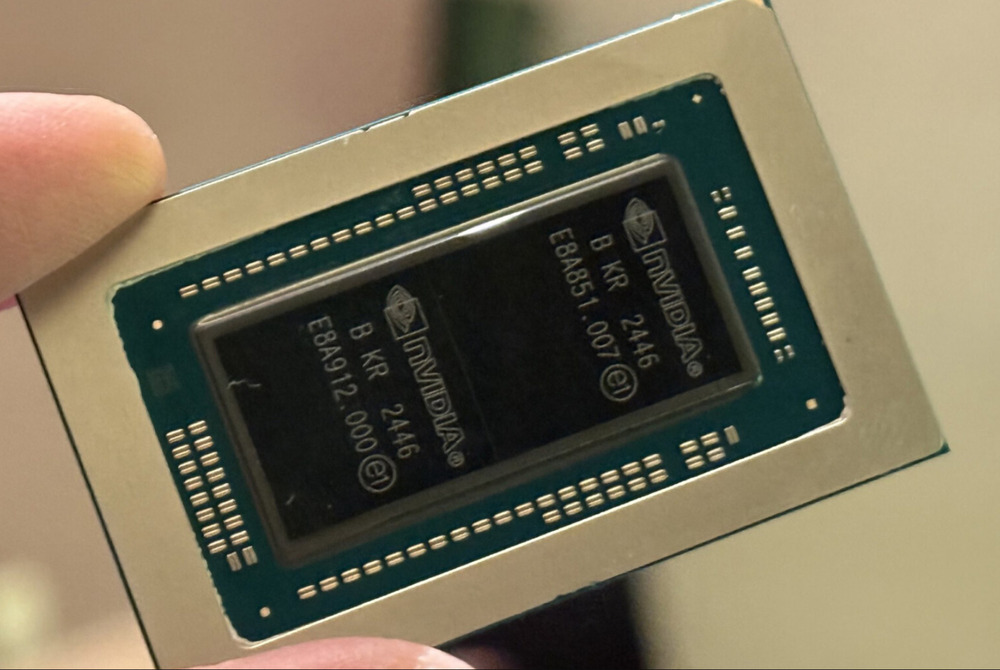
The flagship NVIDIA N1X is expected to include the following specifications:
- CPU configuration: 10+10 ARM cores
- Core types: Arm Cortex-X925 + Cortex-A725
- GPU SM blocks: 48 (Blackwell architecture)
- CUDA cores: 6,144
- Maximum memory: 128 GB LPDDR5X
- TDP range: 45–80 W
- PCIe lanes: 12× Gen5 + 5× Gen4
The NVIDIA N1, targeting the mass-market segment, is expected to include the following configurations:
- CPU options: 12-core or 10-core variants
- GPU SM blocks: 20 or 16
- CUDA cores: 2,560 or 2,048
- Maximum memory: 64 GB LPDDR5X
- TDP range: 18–45 W
- Storage: up to two M.2 slots
On paper, the NVIDIA N1X reaches a CUDA core count comparable to the class of the GeForce RTX 5070. However, this comparison should not be interpreted as a direct equivalence in performance. CUDA core counts do not scale linearly with real-world throughput, and the use of unified LPDDR5X memory instead of dedicated GDDR7 introduces a significant architectural constraint. In particular, memory bandwidth is likely to become the primary bottleneck in workloads involving intensive rendering, such as gaming or real-time content generation, where high-throughput data access is critical.
Read also: Five AI Cities: Inside the Emergence AI Experiment – Order, Chaos, and Survival
Shadow of GB10: when a laptop aims to behave like an AI server
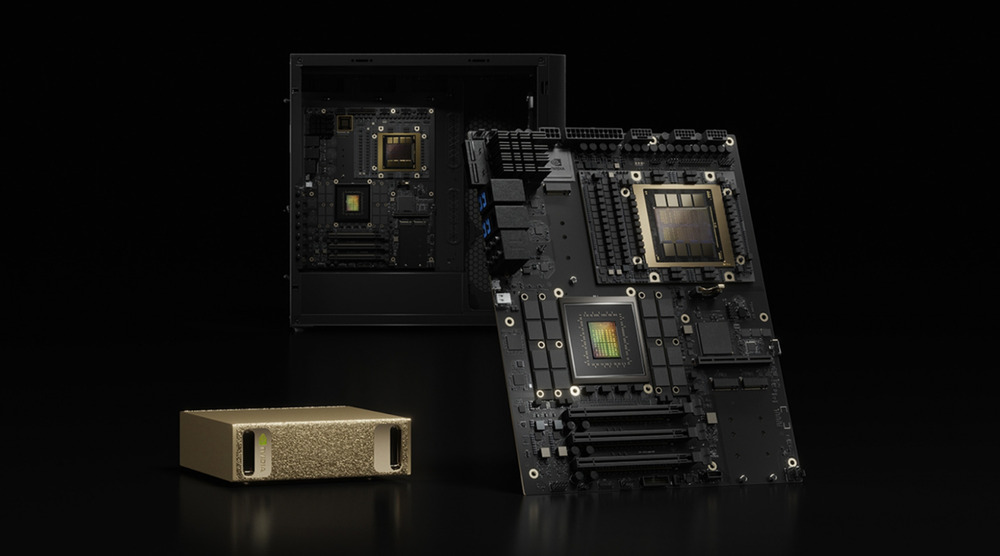
Among the leaked information, the GB10 superchip is mentioned separately as the core of the DGX Spark platform. The official DGX Spark specification includes a 20-core ARM processor, 128 GB of LPDDR5X memory, and a Blackwell GPU with fifth-generation tensor cores from NVIDIA.
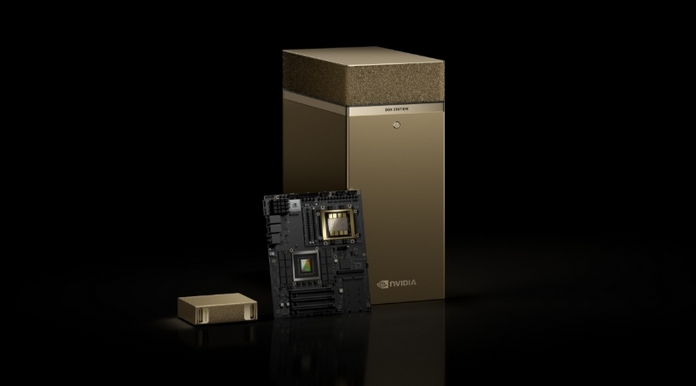
If the NVIDIA N1X indeed shares part of its architectural DNA with it, NVIDIA’s strategy becomes clearer: bringing a portion of the local AI ecosystem – previously confined to developer workstations – into mainstream laptops.
Unverified signals circulating on NVIDIA’s social media channels pointing to Taiwan, ambiguous teaser material, and parallel messaging in Windows-related channels all suggest that the company may be preparing more than a conventional chip launch. It appears to indicate a broader repositioning of the Windows platform, with AI capabilities increasingly defined at the hardware level through deeper system integration between NVIDIA and Microsoft Windows.
Tensor cores and local LLM workloads are no longer a secondary or marketing-driven use case, but a primary operating scenario for a significant portion of users. Developers, content creators, and researchers increasingly require high-performance local AI compute without continuous reliance on cloud infrastructure. If the N1X can deliver performance in this domain comparable to Apple’s Neural Engine, while also pairing it with a full Blackwell-class GPU, it would provide a strong technical foundation for Microsoft to build on within the Windows ecosystem through Microsoft Windows.
Read also: Everything About VERTU ALPHAFOLD: Smartphone Priced Like Car or Future of Enterprise AI?
Why comparing to Apple is valid – and why it is also risky
The natural competitor for both chips is Apple’s MacBook lineup based on the M-series, primarily the Apple M5. A base M5 configuration with a 10-core CPU/GPU setup, 24 GB of unified memory, and a 512 GB SSD represents one of the most efficient mobile computing platforms on the market. At around $1500, it delivers a tightly integrated experience where productivity, media creation, general development, and battery life are combined into a single coherent system. Finding a comparable Windows-based alternative at the same price point remains difficult.
However, the key question is not whether the NVIDIA N1X will be technically more powerful than the Apple M5. The real question is whether Microsoft’s OEM ecosystem will be able to translate that raw capability into a cohesive product experience that matches the integration level of Apple’s hardware-software stack through Microsoft and Microsoft Windows.
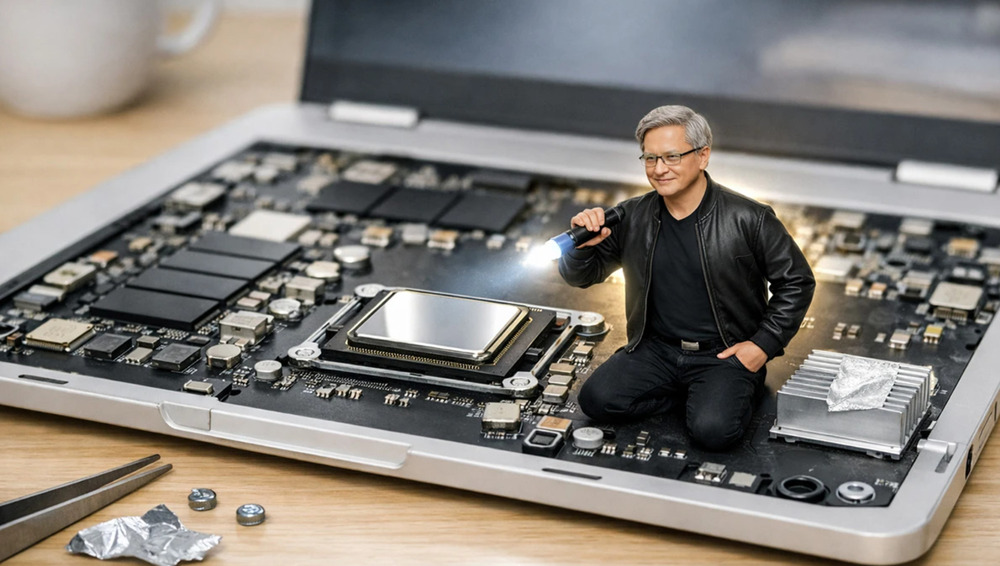
Apple has one clear advantage over any Windows OEM: full control over the entire stack – from silicon to operating system and application software. A MacBook is not simply “a laptop with an Apple chip”; it is a system in which every layer is co-designed and optimized in relation to the others. The Windows ecosystem, by definition, does not have this characteristic. OEMs such as Dell, Lenovo, HP Inc., and Microsoft compete using the same underlying silicon platforms, while each implementing system integration differently.
For this reason, the way OEM partners approach a new platform becomes critical. If they follow the traditional pattern – emphasizing industrial design and marketing while maintaining only moderate system-level integration – the outcome is predictable: strong specifications on paper but inconsistent real-world experience. What Microsoft needs in this context is not only new chips, but also a higher baseline of execution quality across its partner ecosystem, supported by Microsoft Windows.
Read also: Moon Base: What’s Behind NASA’s Ambitious Plan to Conquer the Moon
System challenges that hardware alone cannot solve
Hardware is a necessary but insufficient condition for the success of Windows on ARM. The software ecosystem, driver quality, and in particular x86 application emulation remain critical factors. Unlike macOS, where Rosetta 2 enabled a largely transparent transition and has already fulfilled its primary role, Windows on ARM still faces uneven application compatibility. Some applications run seamlessly, while others exhibit limitations or fail to launch entirely.
Three systemic challenges
1. Emulation quality. Emulated x86 applications must operate without noticeable performance degradation. Any stuttering, compatibility issue, or regression will be interpreted by users as a step backward rather than progress.
2. Driver ecosystem. ARM requires native drivers from hardware and software vendors. Without coordinated pressure from Microsoft, this transition is likely to remain slow, and users will ultimately bear the consequences in the form of incomplete or inconsistent device support.
3. Update stability. A persistent issue in Microsoft Windows has been updates that disrupt previously stable configurations. This risk must not be repeated on the ARM platform. User trust takes years to build but can be undermined by a single poorly executed patch.
At this point, Microsoft is in a position where the balance can still tip in either direction. If it uses this moment to enforce structural cleanup – by pushing OEM partners toward higher execution standards, ensuring transparent and predictable update behavior, and accelerating native ARM versions of key software – this could represent a genuine turning point for Windows on ARM.
If, however, the response is limited to polished announcements and incremental improvements focused mainly on premium Surface devices aimed at enterprise executives, the result is likely to mirror the earlier Windows 10 ARM cycle: technically interesting on paper, but failing to achieve broad, consistent adoption in real-world use.
Read also: Windows 12: Five Changes Users Are Still Waiting For
Gaming: no reason for premature optimism
Gaming remains a particularly sensitive area where Windows on ARM has not yet achieved parity with the traditional x86 ecosystem. The reasons are well understood: a large portion of the game library is built for x86-64, many DRM systems behave unpredictably under emulation, and some anti-cheat solutions simply refuse to run in an ARM environment.
The NVIDIA N1X, with 6,144 CUDA cores and a theoretical performance level comparable to the GeForce RTX 5070 class, appears impressive on paper. However, this impression changes once memory bandwidth constraints are taken into account – LPDDR5X unified memory versus dedicated GDDR7-class VRAM – and when considering the lack of fully native DirectX optimization paths on ARM.
Even if the rendering workload itself can be handled, real-world frame rates in demanding titles are likely to remain significantly below those of desktop-class equivalents. This is not inherently a flaw, but it is a structural limitation that needs to be communicated clearly rather than buried in fine print within specifications.
Read also: Quantum Networks as Alternative to Classical Internet: What to Expect
Competition is always beneficial
There is one argument in favor of Windows on ARM that goes beyond purely technical considerations: competition forces Apple to remain disciplined. While Windows historically dominated the notebook market up to a certain price tier, it gave Cupertino less incentive to aggressively reduce prices or expand baseline configurations. If the NVIDIA N1X and N1 enable OEM partners to deliver genuinely competitive machines, Apple may be pushed to reconsider its pricing strategy.
This benefits users across both ecosystems: those choosing macOS and those remaining within Windows. Increased competition typically leads to lower prices, better specifications, and improved software quality. The premium laptop market has long lacked a second serious ARM competitor. In that sense, this may represent Microsoft’s most consequential bet on ARM – perhaps not the first attempt, and not the only one, but the one where the stakes are highest and the window of opportunity is the most constrained.
If manufacturers such as Dell, Lenovo, and Microsoft (through its Surface line) deliver serious products based on the NVIDIA N1X and N1 – featuring proper system integration, high-quality displays, competitive battery life, and genuinely native software support – then Windows on ARM would receive the strongest momentum in its history. This would not guarantee success, but it would represent a real opportunity.
The key point is timing. Microsoft needs to execute effectively while this window is open. In platform transitions, opportunities of this scale are rare and may not repeat under the same conditions. Competition, in this context, remains a net positive force.
Read also:
- New Zhenwu M890 AI chip: How U.S. sanctions contributed to China’s technological independence
- Rome vs. Silicon Valley: Why Leo XIV’s “Magnifica Humanitas” Encyclical on Artificial Intelligence Matters
- Top 10 TWS Earbuds Under $35

