





© ROOT-NATION.com - Use of content is permitted with a backlink.
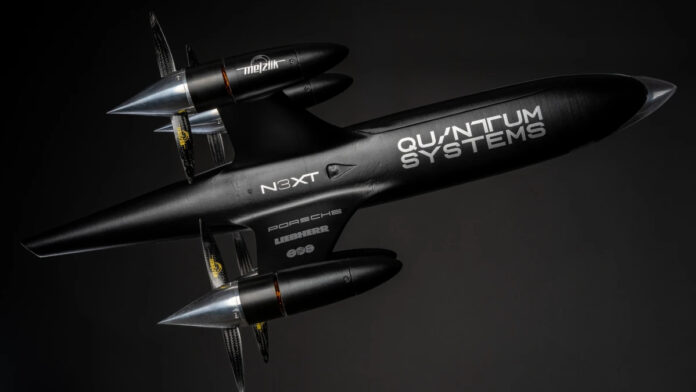
The N3XT experimental division of Germany’s Quantum Systems has developed a quadrotor drone that reached a horizontal flight speed of 699 km/h. This performance makes it the fastest battery-powered unmanned aerial vehicle ever recorded.
According to the developers, the test flight was conducted on July 26 during internal trials, while official certification by Guinness World Records representatives is expected within the next few weeks. The Apex Recordhunter prototype surpassed the previous official speed record for electric aircraft, which stood at nearly 657.59 km/h.

The development of the platform is intended to serve more than a demonstrative purpose. Quantum Systems plans to incorporate the technologies validated through the project into a new family of interceptor drones. On the battlefield, where a matter of seconds can determine the outcome, such capabilities could prove decisive in neutralizing an incoming attack drone before it reaches its target.
Robert Gardemin, Lead Prototype Development Engineer at Quantum Systems and a member of the project team, stated that the effort spanned more than a year and involved early mornings, long overnight shifts, repeated setbacks, and a persistent commitment to pushing the limits of what was considered achievable. He described the 699 km/h milestone as a significant achievement but emphasized that it marks only the beginning, with the team intending to return in the near future to pursue even higher speeds and secure their official certification.
Battery-powered systems remain significantly slower than military unmanned aircraft powered by internal combustion engines or jet propulsion. For example, the experimental Northrop Grumman X-47B jet-powered UAV is capable of reaching speeds approaching Mach 0.9 (approximately 1,100 km/h), while the stealth reconnaissance drone RQ-170 Sentinel has an estimated top speed of around 925 km/h, or roughly Mach 0.75. Unlike battery-powered platforms, these aircraft rely on liquid fuel, prioritizing extended range and payload capacity over the constraints of electric propulsion – capabilities that remain essential for sustained military operations.

According to the company’s official statement, the Apex platform is not a weapon itself. Instead, it serves as a technology demonstrator developed by the same engineering team responsible for the interceptor program. As such, the two projects share common design expertise and engineering solutions rather than physical components.
The combat systems themselves are being developed by Kyiv-based WIY Drones, which operates as a separate entity within the same corporate group through the Quantum WIY Industries joint venture. The company is currently preparing to test two dedicated interceptor platforms: the Strila, an FPV drone with a 0.5 kg payload, and the Spys, which is positioned as the world’s fastest FPV air-defense interceptor. Both systems are designed to counter the kamikaze drones that Russia has increasingly employed against targets across Ukraine.
During demonstration events held this week, WIY Drones unveiled updated versions of both platforms. The Spys reached speeds of up to 600 km/h, enabling it to intercept jet-powered attack drones such as the Shahed, while the upgraded Strila 2 LR achieved 310 km/h, trading some of its top speed for an endurance of up to 30 minutes. Although neither performance has yet been recognized as an official world record, both represent practical operational benchmarks for drones designed to neutralize some of Russia’s fastest aerial attack systems.

The initiative has already been backed by substantial financial investment. Quantum Systems has acquired a stake in the joint venture and secured a contract to supply 15,000 Strila interceptor drones to the National Guard of Ukraine, a move intended to transition the combat-proven platform into a fully operational, large-scale air defense system.
Read also: SkyFall Unveils Its First Middle Strike Drone: Capabilities, Features, and Pricing
Source: newatlas