




© ROOT-NATION.com - Use of content is permitted with a backlink.
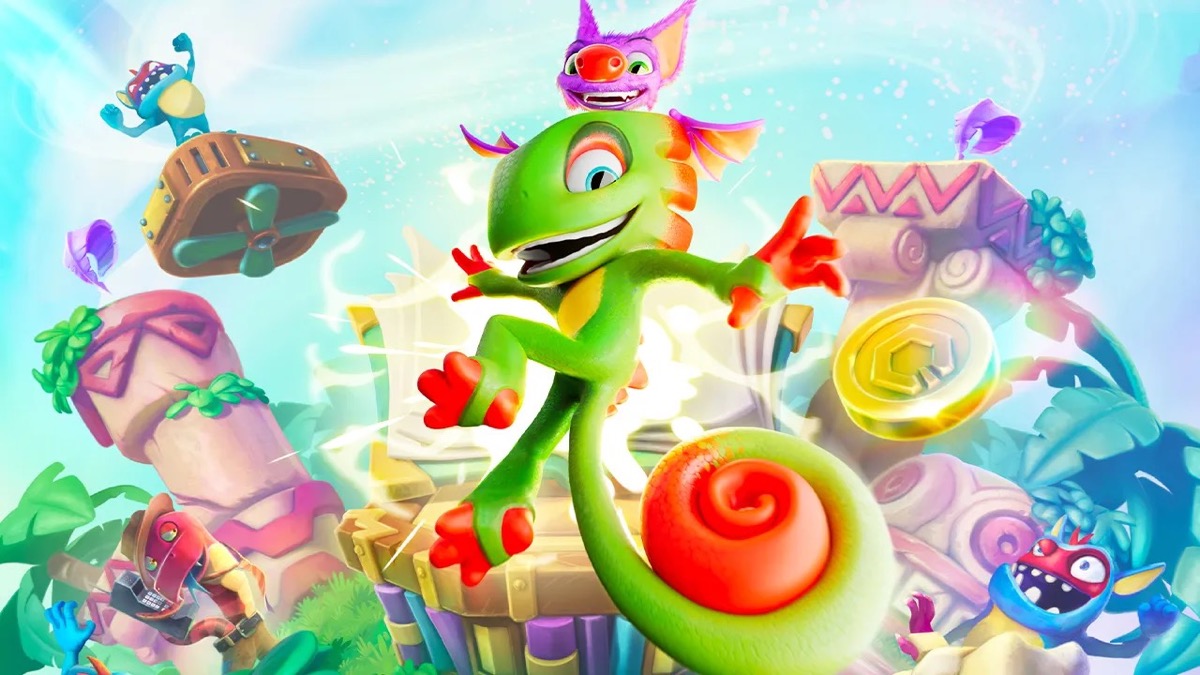
Yooka-Replaylee is not just a second chance; it’s the game we were promised all along. Pitched as a simple remaster, this release is instead a ground-up overhaul of 2017’s Yooka-Laylee, a love letter to 3D platformers that was famously soggy with nostalgia but hampered by frustrating design choices. Playtonic Games didn’t just apply a fresh coat of paint; they took a chisel to the original’s foundation, smoothing out the roughest edges and rebuilding a significant portion of the experience to create something that feels both familiar and fundamentally new. The result is a vibrant, joyous collect-a-thon that finally lets the charming duo of a chameleon and a bat soar, delivering on the potential that was always just bubbling under the surface.

For anyone who played the original, the most immediate and profound improvements in Yooka-Replaylee are the controls and camera. The notoriously atrocious camera and imprecise, slippery movement are gone, replaced by a system that is smooth, responsive, and, most importantly, rarely noticeable. I almost never thought about the camera while playing, a compliment of the highest order for a 3D platformer. This single change transforms the experience, making platforming challenges that were once exercises in frustration feel fair and fun. You can now fully appreciate the intricate worlds without fighting the controls, and any failed jump feels like your own mistake, not the game’s.
The improvements extend deep into the game’s structure. The entire progression system has been rethought for a faster, less linear adventure. You start with Yooka and Laylee’s full moveset, which means no more tedious backtracking to areas you couldn’t previously access because you were missing a specific ability. Each of the five main worlds is now fully explorable from the outset, complete with a fast-travel system to minimize monotonous treks across the massive landscapes. Even the core collectible, the Pagies, have been doubled, shifting the gameplay loop to feel more akin to the constant discovery of Super Mario Odyssey rather than the more sparse design of its N64-era inspirations. These changes combine to create a much more addictive and free-flowing experience, letting you sprint through each zone, methodically clearing puzzles and challenges at your own pace.
Read also: EA Sports FC 26 Review – It’s a Draw
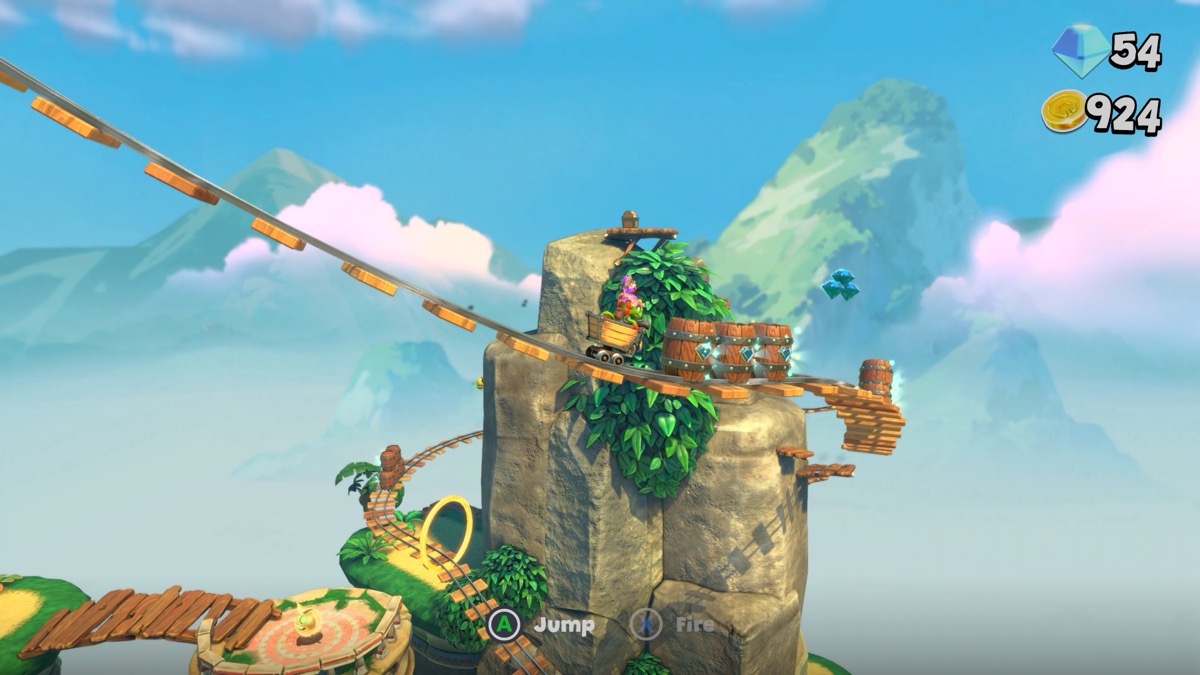
Visually, the game has never looked better. The original’s simple, charming art style is retained but enhanced with luscious detail, from crisp snow to verdant forests, all taking advantage of more powerful hardware. This graphical upgrade is paired with a soaring, fully orchestrated soundtrack arranged by the Prague Philharmonic Orchestra, which does wonders for the original tunes. It all comes together to feel like an incredibly high-quality production that is a feast for the eyes and ears.

Calling Yooka-Replaylee a remaster is a massive understatement; it’s a remake in everything but name. Nearly every challenge has been reworked or replaced, the dialogue has been updated, and there are new enemies, secrets, and story sequences to discover. The entire opening has been redesigned with a brand-new tutorial and an altered story that lends more weight to the duo’s quest to stop the villainous Capital B. New collectibles have also been added, such as feathers to buy upgrades and coins to spend on cosmetics and game-altering “tonics,” adding another layer of customization to your adventure.
However, these extensive changes have some strange side effects. The decision to double the number of Pagies, while making collection more frequent, also creates an uneven experience. Some Pagies are hidden behind elaborate challenges or boss fights – remnants of the original’s design – while others are just sitting out in the open or crammed into spots that don’t feel entirely natural. It creates a slightly disjointed feeling, a constant reminder of how much the game has been altered under the hood.
Read also: Donkey Kong Bananza: DK Island & Emerald Rush DLC Review: Tale of Two Halves
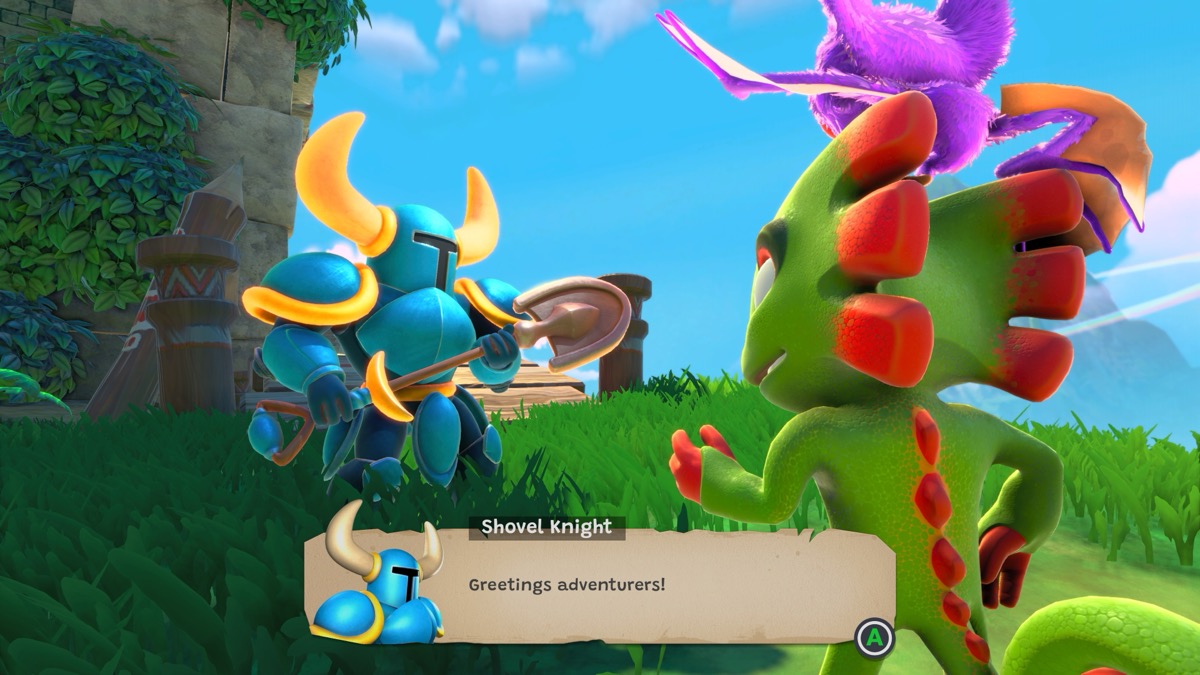
Furthermore, by removing the original’s controversial “level expansion” system, where players would spend Pagies to make the current world larger, the game loses some of its intentional structure. In the 2017 release, each world started small and grew in complexity as you expanded it, creating a curated difficulty curve. In Replaylee, you’re dropped into massive sandboxes from the start, which can lead to random difficulty spikes as you stumble into challenges the designers originally intended for you to face later. It’s a trade-off: you gain freedom but lose some of the guided progression that defined the original’s level design.
Verdict
Despite the mountain of improvements, Yooka-Replaylee cannot entirely shake the biggest criticism of its predecessor: it is, at its heart, an unambitious throwback that plays on your love of old-school 3D platformers instead of trying to push the genre forward. The tighter controls and camera only serve to highlight the fundamental simplicity of its puzzles and combat. Most enemy encounters can be solved by spamming the tailspin attack, and the platforming challenges, while enjoyable, are rarely complex. This is a remake of a game that was already a remix of old ideas, and no amount of polish can hide the fact that its core design feels dated, especially eight years after its initial release.
And yet, it’s hard to care too much when the game is this charming and fun to play. The frustrating edges have been sanded away, leaving a purely enjoyable collect-a-thon loop. Exploring the colorful worlds, chatting with dorky, googly-eyed characters, and hunting for Pagies is an addictive delight. For those who saw the flawed gem in the original Yooka-Laylee, this version is a vindication. For newcomers, it’s a fantastic and accessible entry point into a genre defined by pure, unadulterated fun. Yooka-Replaylee is a massive upgrade and the definitive version of the game, finally living up to its potential as a worthy successor to the platforming legends it so lovingly emulates.

