





© ROOT-NATION.com - Use of content is permitted with a backlink.
As digital AI assistants become smarter and take on increasingly complex tasks on mobile devices, a serious challenge arises: keeping gadget owners informed without requiring them to switch between different apps regularly. Google offers a solution to this problem with a new feature called Android Halo.
In a recently published video on the official YouTube channel for developers, Samir Samat, head of the Android division, shared new details about this feature around the 30-minute mark of the video. This tool, which was first demonstrated at the Google I/O conference in May, is designed to make the interaction between people and their AI assistants significantly smoother and more open.

See also: AERONAUT – everything that flies above the ground: aviation, UAVs and drones, rockets, and space
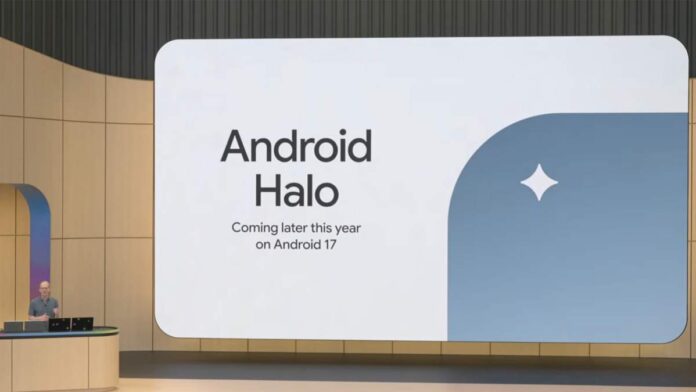
The proposed concept seems simple, yet quite ingenious, as Android Halo reserves a permanent space in the phone’s status bar for the user’s chosen AI agent – which could be either Gemini or any compatible third-party product. Whenever the digital assistant is performing a specific task, a barely noticeable indicator will appear on the screen. Through this element, the system can display the stages of task completion, ask quick follow-up questions, or provide final results, eliminating the need for the user to open the app directly again.
Samat noted that although modern AI systems already handle many processes autonomously quite well, they still require human intervention at critical moments. The Halo feature serves as a personal information bridge for three key areas: formulating questions to clarify details, displaying current progress, and showing completed work.

According to him, this is a dedicated space in the status bar area where a virtual assistant selected directly by the user can provide updates on the status of tasks and receive new instructions for the current queue of scheduled operations. The executive called this solution an extremely interesting direction for the future development of interactions between people and intelligent computer systems.
Thanks to constant visibility and easy access to information, Halo provides a significantly higher level of transparency regarding the background operations of artificial intelligence. This allows intelligent assistants to be perceived not as incomprehensible black boxes full of secrets, but as helpful colleagues, which should help strengthen consumer trust.
This feature is expected to debut later in 2026 alongside the release of the Android 17 operating system. This innovation harmoniously complements Google’s large-scale strategy for promoting the Gemini platform and can effectively interact with other new AI tools. Although detailed information about the rollout regions and the list of devices supporting this technology is not yet available, the developers’ goal is quite clear: to make AI on Android feel more natural and more deeply integrated into daily life.
This move clearly demonstrates the direction in which the entire mobile industry is heading – toward more proactive, agent-based systems. Solutions like Halo have every chance of becoming indispensable components as artificial intelligence takes on increasingly significant responsibilities, so it will be incredibly exciting to watch this process evolve further.
Read also:
- Google loses final appeal: EU court upholds record €4.1 billion antitrust fine
- Google has released Gemini Spark, a revolutionary AI agent for Mac