





© ROOT-NATION.com - Use of content is permitted with a backlink.
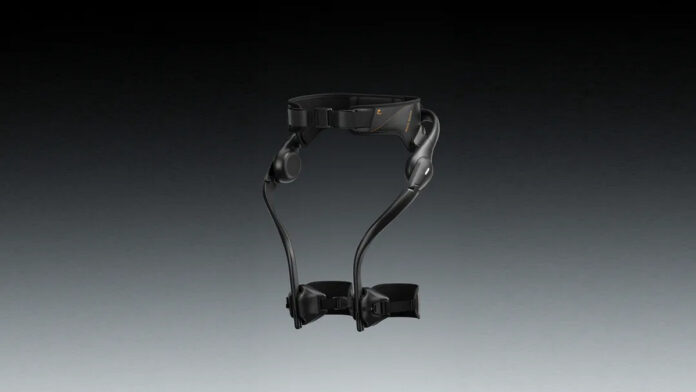
The future is approaching surprisingly fast, bringing to life things that previously existed only in fantasies or science fiction movies. Haier has officially unveiled a new product called Haier W3, a wearable technology device designed to improve the efficiency of human movement during sports. The developers claim that this robot is the world’s lightest AI-powered exoskeleton for sports activity, as it weighs only 1.75 kg. Due to its minimal weight, users can use it for a long time without any feeling of burden or inconvenience.
If you want to modernize your body’s capabilities, this exoskeleton will come in handy. It functions as additional external equipment, providing the body with increased support and making exercise much easier and more effective.

To create Haier W3, the developers chose carbon fiber and titanium alloy. It is this combination of materials that allowed us to achieve exceptional strength while maintaining minimal weight. This allows you to easily use the device during workouts or daily activities without feeling heavy. Its design is designed to guarantee a feeling of comfort, smoothly follow every body movement, and provide additional support when needed.

The Haier W3 model implements an intelligent gait analysis algorithm AI gait algorithm 3.0, thanks to which the device adapts to various variants of human activity. The system is able to support 12 different sports and movement modes, helping a person during normal walking, running, or intense training. The robotic assistant is capable of generating up to 16Nm of auxiliary force on each leg, significantly reducing the level of stress during movement. According to Haier, this solution can reduce the consumption of internal energy by up to 37%, which helps to increase endurance and minimize fatigue. As we are amazed by the rapid development of robotics, the Haier W3 model proves that wearable robots are becoming more and more practical for everyday use.
Read also:
- End of the “Flesh and Bone” Era: 9 Areas Where Robots Will Outperform Humans as Soon as Tomorrow
- NASA Shuts Down Scientific Instruments on Voyager 1 to Preserve the Mission: What Will Happen to the Spacecraft?