



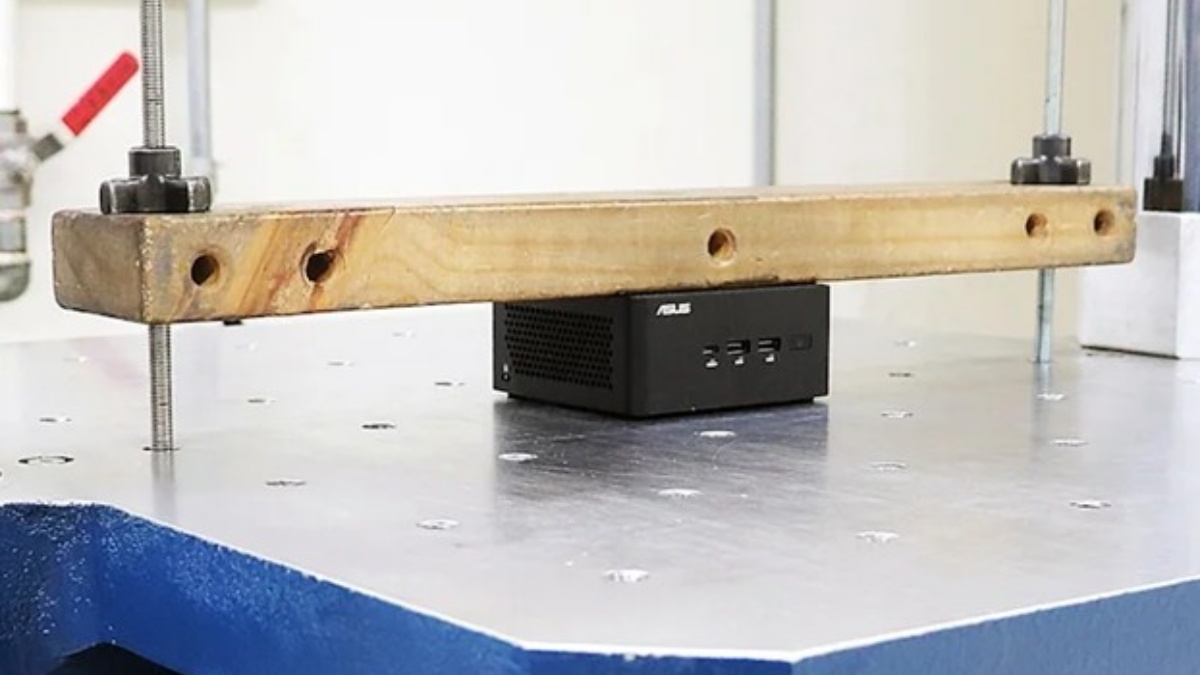

© ROOT-NATION.com - Use of content is permitted with a backlink.
Two key facts about ASUS NUC mini-PCs worth knowing: as of June 2025, the return rate has not exceeded 1%, and the mean time between failures (MTBF) reaches 50,000 hours – nearly six years of continuous 24/7 operation without downtime. If you are looking for the best price-to-performance ratio for upgrading a fleet of mini-PCs in a business or organization, these figures speak for themselves.
IT professionals consider the ASUS NUC series to offer an optimal balance of performance and compactness, suitable for a wide range of business tasks. To ensure maximum return on investment, ASUS subjects these devices to rigorous testing that significantly exceeds industry standards for durability and reliability.
Read also: ASUS NUC 14 Essential Review: Affordable and Productive Mini PC
TABLE OF CONTENTS:
MIL-STD-810H Standard
ASUS goes beyond industry norms when it comes to MIL-STD-810H testing. Compared to competitors, their products undergo a wider range of tests wherever applicable, and ASUS clearly documents which tests each model has passed.
These standards, developed by the U.S. Department of Defense, are designed to assess equipment durability under extreme conditions. ASUS focuses on MIL-STD-810H tests that demonstrate resistance to environmental challenges that mini-PCs may encounter in corporate settings.
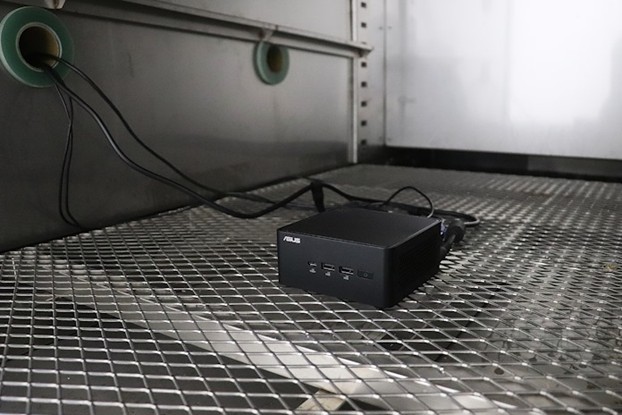
Some tests simulate conditions typical for transportation, while others replicate real-world usage. To ensure the longevity of its products, ASUS has developed a comprehensive testing regimen that models both the typical life cycle of a mini-PC and harsh conditions during extended operation:
- High-temperature test: Devices endure 33°–71° C for seven days powered off, then 32°–49° C for three days under load.
- Low-temperature test: NUCs are exposed to -25°–-33° C for seven days powered off, then -21°–-32° C for three days under load.
- Altitude tests: Products withstand low-pressure environments in two stages – first during storage, then during operation.
- Humidity test: Devices endure 95% relative humidity at 30°–60° C for ten days powered off.
- Shock test: NUCs are subjected to 100 mm drops while operating.
- Vibration test: Devices are vibrated for 40 minutes along each axis while powered off.
Durability of ASUS NUC mini PCs during transport
Engineers begin by analyzing the risks ASUS NUCs may face during shipping. Since customers are located worldwide, the packaging must withstand transportation, storage at port terminals, and movement through regional networks. During transit, devices can be subjected to strong vibrations, so ASUS tests product durability in a vibrating environment with frequencies from 5 to 500 Hz for 60 minutes.
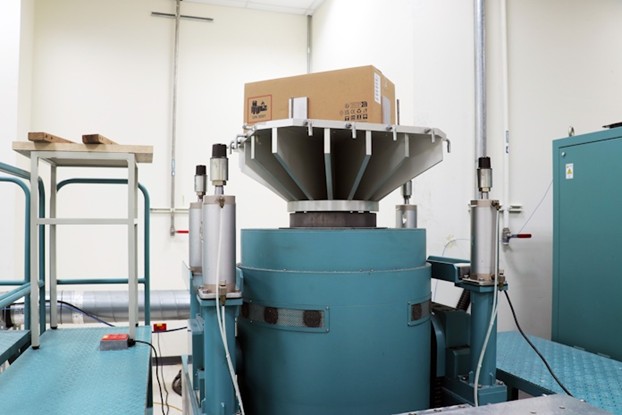
Afterward, the ASUS NUC undergoes a drop test that significantly exceeds MIL-STD-810H requirements: devices are raised to a height of 60 cm and dropped onto all six faces, three edges, and two corners. This ensures that the mini-PC remains functional even if something goes wrong during shipping.
Read also: ASUS NUC 14 Pro Review: Efficient Mini PC
Withstand daily wear and tear with the ASUS NUC mini PC
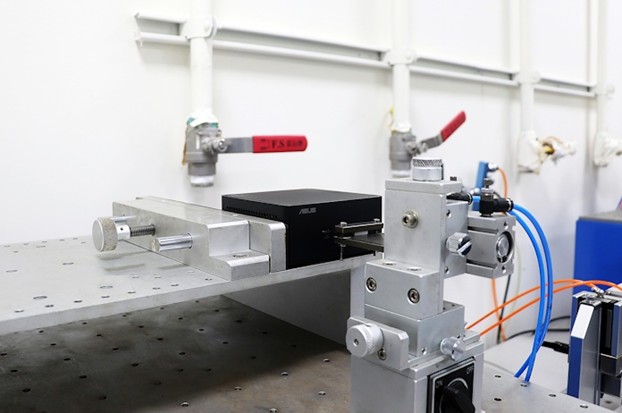
In corporate environments, mini-PCs operate 24/7, often with multiple peripherals connected via I/O ports. To test port durability, ASUS subjects NUCs to 1,500 connection and disconnection cycles in their laboratories.
Dust can also pose a serious threat, so the laboratories conduct rigorous dust exposure tests that simulate operation in environments with sand and dust particles suspended in the air.
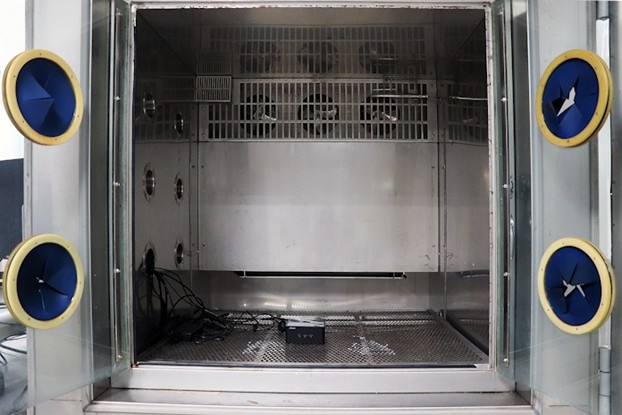
Inside the mini-PC chassis, components are packed more tightly than in full-size models. This makes thermal management critical for stable operation. Under high temperature and humidity conditions, ASUS tests both potential performance and corrosion resistance. A specialized humidity test exposes the mini-PC to 85% relative humidity and 85 °C for approximately 500 hours – nearly twice the duration required by the MIL-STD-810H standard.
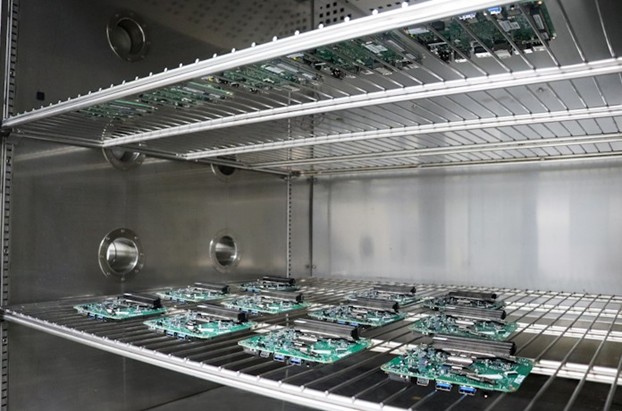
To assess the reliability of soldered connections, engineers conduct testing in environments ranging from -40° to 100 °C. ASUS NUCs withstand over 600 such cycles. This test reveals whether components might fail due to expansion and contraction caused by temperature changes.
Advantages of the ASUS NUC mini PC
The mean time between failures (MTBF) is an industry-standard metric for assessing reliability. ASUS evaluates MTBF by placing forty NUC units in a controlled chamber at a constant temperature of 40 °C for 90 days. This extended stress test ensures stable 24/7 operation and long-term value for customers.
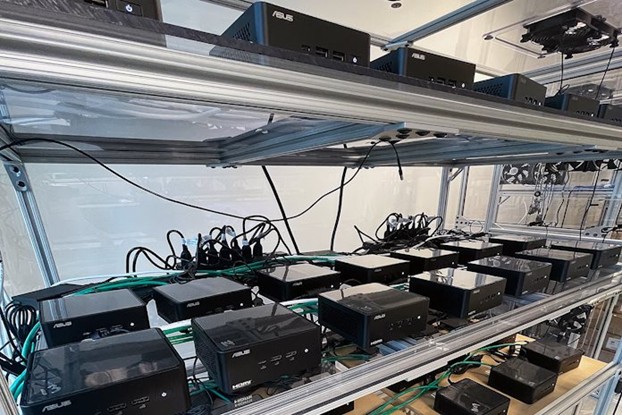
Reliability is not just a feature on a specification sheet; it is a fundamental criterion for modern equipment. ASUS identifies and addresses every potential weakness before the product reaches the end user, thanks to MIL-STD-810H standards and additional testing in its own laboratories.
ASUS consistently exceeds industry standards when it comes to evaluating the durability and performance of its NUC mini-PCs. One of the most notable and powerful models today is the ASUS NUC 15 Pro, though the ASUS NUC lineup is extensive and includes configurations for a variety of needs and requirements. The full range can be viewed on the manufacturer’s website.
Read also:
- YUNZII QL75 Retro Typewriter Keyboard Review: Modern Mechanical Design with Vintage Aesthetic
- Nubia Neo 3 GT Review: Budget Smartphone for Mobile Gaming
- Fosi Audio i5 Open-Back Planar Magnetic Headphones review: Planar That Destroys The Competition

