





© ROOT-NATION.com - Use of content is permitted with a backlink.

Laser welding is no longer limited to large automated production lines. Many workshops, repair teams, OEM suppliers, and small manufacturers now want cleaner welds, faster work, and less grinding after welding.
That shift has made the laser welding machine market more practical and more competitive. Buyers are no longer asking only which machine has the highest power. They are asking which system fits daily work, which supplier gives useful support, and which machine can handle real materials without making operation complicated.
This guide compares several top manufacturers of industrial fiber laser welding machines and explains how buyers can choose based on performance, portability, support, and long-term value.
TABLE OF CONTENTS:
Why Industrial Fiber Laser Welding Machines Are Becoming Popular
Industrial fiber laser welding machines are gaining attention because they solve several daily production problems. When the settings and joint preparation are right, laser welding can produce a narrow and controlled weld with lower heat spread.
For workshops, the practical benefits are clear:
- Cleaner weld seams
- Less distortion on thin metal
- Less grinding and polishing after welding
- Faster work on stainless steel, carbon steel, and aluminum
- Better fit for visible sheet metal parts
- More flexibility for repair and small-batch production
Portability is another reason. A portable laser welding machine can move between work areas, support repair jobs, and handle workpieces that are not convenient for fixed stations. This is why a handheld laser welder for workshops is becoming more attractive to small and medium fabrication teams.
How We Chose These Laser Welding Equipment Manufacturers
This list is not based only on brand size or price. A famous name does not automatically mean the machine is right for every buyer.
When comparing laser welding equipment manufacturers, buyers should look at:
- Product range and power options
- Welding stability and material compatibility
- Portability and machine weight
- Cooling design and maintenance needs
- Training and parameter support
- Warranty, spare parts, and after-sales service
- Real industrial use cases
A good manufacturer should not only sell a machine. It should help buyers choose the right configuration, understand the process, and reduce trial-and-error during real production.
Quick Comparison of Leading Laser Welding Machine Manufacturers
| Brand | Main Strength | Best For | Key Limitation |
| Dynalasers | Flexible handheld systems with M/D/S series | Workshops, repair teams, OEM users | Less suitable for fully automated production lines |
| IPG Photonics | Strong fiber laser background and premium LightWELD platform | Professional users with higher budgets | Higher cost level |
| Han’s Laser | Broad industrial laser equipment coverage | Buyers needing multiple laser processes | Exact support depends on local market |
| HSG Laser | Metal fabrication and laser cutting background | Sheet metal and fabrication shops | Welding lineup may be less central than cutting |
| Miller | Familiar welding brand entering laser welding | Buyers who trust traditional welding brands | Laser range may be narrower |
Top Manufacturers of Industrial Fiber Laser Welding Machines
Dynalasers
Dynalasers is a practical option for buyers who need handheld laser welding systems for workshops, repair work, field maintenance, and industrial fabrication. Its M, D, and S Series cover different needs, from flexible shop-floor welding to stronger industrial use and lightweight portable work.
Instead of pushing only one machine type, Dynalasers gives buyers several choices based on workload, material thickness, mobility, and function requirements. Depending on the series, the systems can support welding, cutting, cleaning, spot welding, and rust removal.
Pros
- Clear M, D, and S Series for different users
- Portable handheld structure for flexible shop use
- Supports common industrial metals
- Multi-function options for welding, cutting, cleaning, and repair
- Technical support, spare parts, remote assistance, and 2-year warranty
Cons
- Not designed as a large fully automated production line
Best for
- Fabrication shops
- Repair teams
- Small and medium manufacturers
- OEM users
- Buyers who want practical handheld fiber laser welding technology
IPG Photonics
IPG Photonics is one of the best-known companies in the fiber laser industry. Its LightWELD systems helped bring more attention to handheld laser welding, especially among professional users who want a polished and premium platform.
IPG is often a strong option for buyers who value laser source background, global recognition, and mature industrial laser experience.
Pros
- Strong reputation in fiber laser technology
- Well-known LightWELD handheld welding platform
- Good fit for professional production environments
- Strong brand recognition in global laser markets
Cons
- Usually positioned at a higher price level
- May be more than some small workshops need
Best for
- Professional fabrication teams
- Buyers with higher budgets
- Users who want a premium handheld laser platform
Han’s Laser
Han’s Laser is a large industrial laser company with broad product coverage. Its portfolio includes laser welding, laser cutting, marking, automation, and other laser processing systems.
For welding users, Han’s Laser is often considered for sheet metal, stainless steel, carbon steel, aluminum, and general fabrication applications. Its wide product range can be useful for buyers who need more than welding equipment.
Pros
- Large industrial laser product portfolio
- Covers welding, cutting, marking, and automation
- Suitable for buyers considering several laser processes
- Strong presence in the industrial laser field
Cons
- Product range is broad, so buyers must check the exact welding model carefully
- Support and service quality may vary by region or distributor
Best for
- Larger industrial buyers
- Companies needing several laser processing technologies
- Users comparing broad laser welding equipment manufacturers
HSG Laser
HSG Laser is better known for metal laser cutting equipment, but it also offers handheld laser welding machines for fabrication users. This makes it relevant for workshops already familiar with sheet metal processing.
Its handheld welding systems are generally positioned around efficiency, cleaner seams, and flexible metalworking. HSG can be a useful choice for buyers who want a supplier connected to the wider fabrication workflow.
Pros
- Strong background in metal processing equipment
- Useful for sheet metal and fabrication users
- Good fit for workshops already using laser cutting systems
- Focus on efficient metalworking workflows
Cons
- Welding may not be the brand’s strongest or most central category
- Buyers should check local support and exact machine configuration
Best for
- Sheet metal shops
- Fabrication companies
- Buyers already using laser cutting equipment
Miller
Miller is a long-established welding equipment brand. Its move into handheld laser welding shows how quickly the market is changing. Many buyers know Miller from traditional welding equipment, so the brand may feel familiar to professional welders.
Miller may be attractive for users who want to explore laser welding through a supplier with strong welding industry recognition.
Pros
- Strong traditional welding brand recognition
- Familiar to many professional welders
- Useful for buyers who value local welding support networks
- Shows growing acceptance of handheld laser welding
Cons
- Laser welding range may be narrower than dedicated laser companies
- Buyers should check system capability against actual material thickness
Best for
- Traditional welding shops exploring laser welding
- Buyers who prefer familiar welding equipment brands
- Markets where Miller support is easy to access
Dynalasers Handheld Laser Welding Series
Dynalasers offers three main handheld laser welding series. Each series has a clear role, helping buyers choose based on thickness, portability, daily workload, and required functions.
M Series for Flexible Workshop Welding
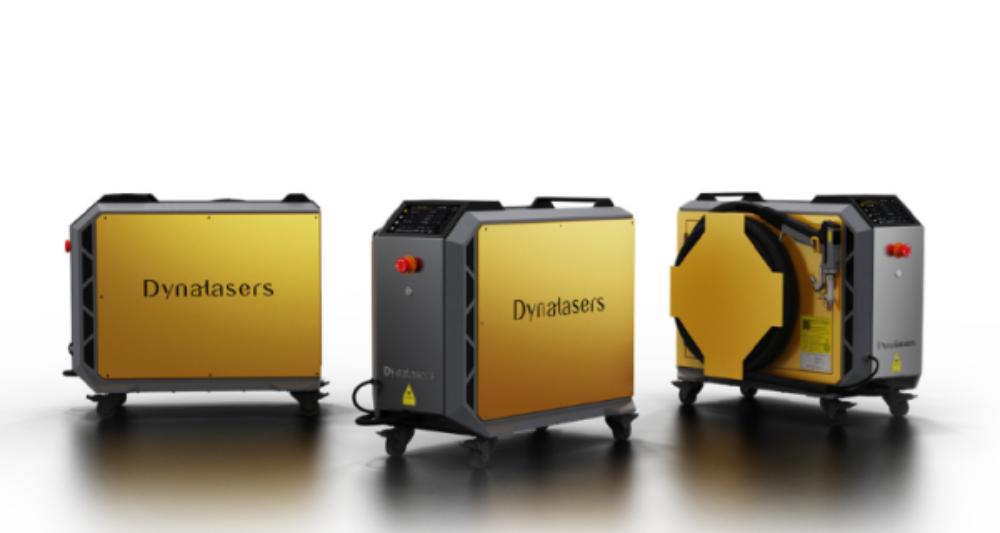
The Dynalasers M Series is designed for workshops that need flexible welding capability without a large fixed system. Models include M30, M50, and M70, with power options from 800W to 1800W.
It supports continuous, pulse, spot, and turbo modes. Depending on the configuration, it can support welding, cutting, and cleaning. This makes the M Series useful for fabrication shops, repair teams, and metal product manufacturers that often switch between different jobs.
Best for
- Medium-thickness sheet metal
- Flexible workshop welding
- Repair and fabrication work
- Users who need welding, cutting, and cleaning in one platform
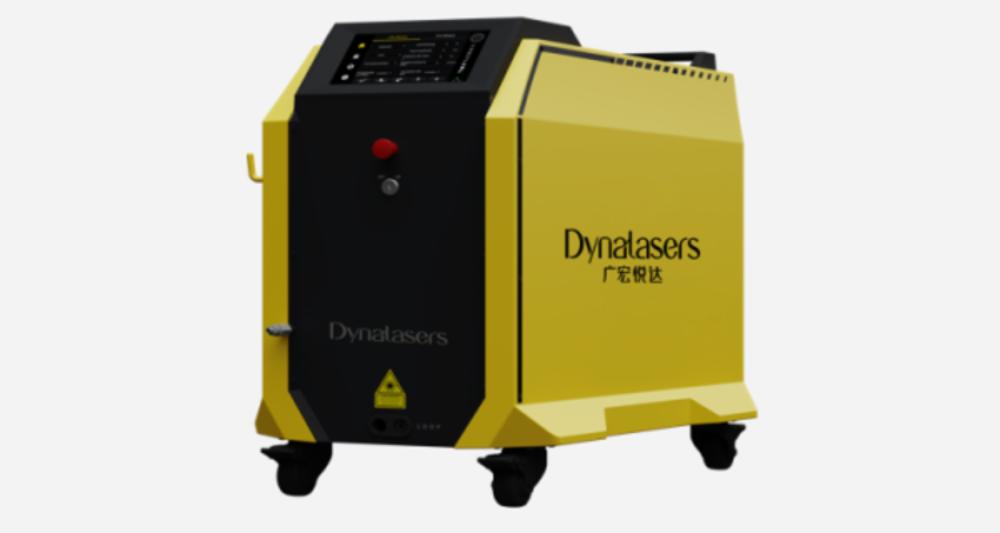
D Series for High-Performance Industrial Welding
The Dynalasers D Series is made for users who need stronger capability and more process coverage. Models include D50P and D70P, with 1200W and 1800W power options.
The series supports 5-in-1 use, including welding, cutting, cleaning, spot welding, and rust removal. It is suitable for thicker stainless steel, carbon steel structures, aluminum parts, batch production, repair work, and shops that need to handle different metals or tasks.
Best for
- Industrial repair
- Structural parts
- Batch production
- Buyers needing stronger multi-function capability
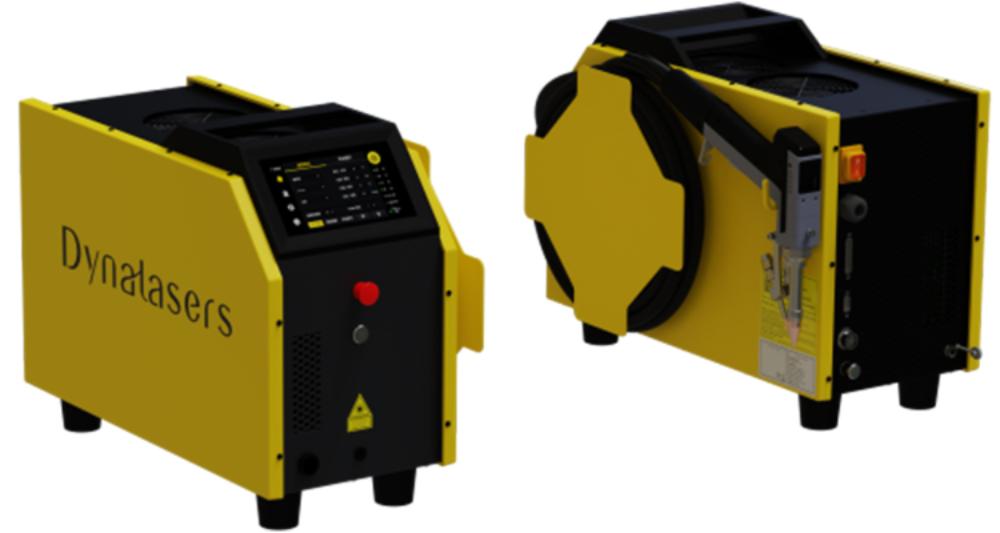
S Series for Portable Handheld Welding
The Dynalasers S Series focuses on portability. It is designed for field repair, mobile service, small workshops, custom parts, and small-batch production.
The S30 weighs less than 21 kg, and the S40 weighs less than 22 kg. The welding gun weighs less than 0.48 kg, which helps reduce operator fatigue. The series supports continuous, pulse, and burst modes.
Best for
- Field maintenance
- Mobile repair
- Small-batch welding
- Buyers who need a compact portable laser welding machine
Dynalasers Series Comparison
| Series | Positioning | Power Range | Best Match |
| M Series | Flexible workshop welding | 800–1800W | Fabrication shops, repair teams, mixed tasks |
| D Series | High-performance industrial welding | 1200–1800W | Structural parts, batch production, industrial repair |
| S Series | Lightweight portable welding | 700–900W | Field repair, small-batch work, mobile service |
FAQs
What are industrial fiber laser welding machines used for?
They are used for welding stainless steel, carbon steel, aluminum, brass, copper, galvanized sheet, and other industrial metals. Common applications include sheet metal fabrication, machinery repair, kitchen equipment, elevator parts, automotive components, cabinets, and precision assemblies.
How should buyers compare laser welding manufacturers?
Buyers should compare power range, cooling design, welding gun weight, material compatibility, support, warranty, spare parts, and training. They should also ask whether the manufacturer can provide sample testing and parameter guidance for their actual workpieces.
Are portable laser welding machines suitable for workshops?
Yes, if the material thickness and workload match the machine. Portable systems are useful for repair work, flexible fabrication, small-batch production, and jobs that do not need a fixed automated welding station.
Why should buyers consider Dynalasers?
Dynalasers offers practical handheld laser welding systems for different workshop needs. The M Series supports flexible multi-process work, the D Series provides stronger industrial capability, and the S Series focuses on lightweight portable welding. Dynalasers also provides technical support, remote assistance, spare parts support, and a two-year warranty.
Conclusion
Choosing from the top manufacturers of industrial fiber laser welding machines is not only about brand name or maximum power. The better question is whether the machine fits the buyer’s materials, workflow, operators, space, and service expectations.
IPG Photonics, Han’s Laser, HSG Laser, Miller, and Dynalasers all bring different strengths to the market. For buyers who want practical handheld systems with clear series options, Dynalasers is worth serious consideration. Its M, D, and S Series give workshops and industrial users flexible choices for welding performance, portability, and long-term value.

