





© ROOT-NATION.com - Use of content is permitted with a backlink.

When choosing a domain name, many entrepreneurs and developers make the same mistake: they obsess over what comes before the dot while ignoring what comes after. They assume startup.com and startup.biz are essentially the same thing – just that the second one is cheaper.
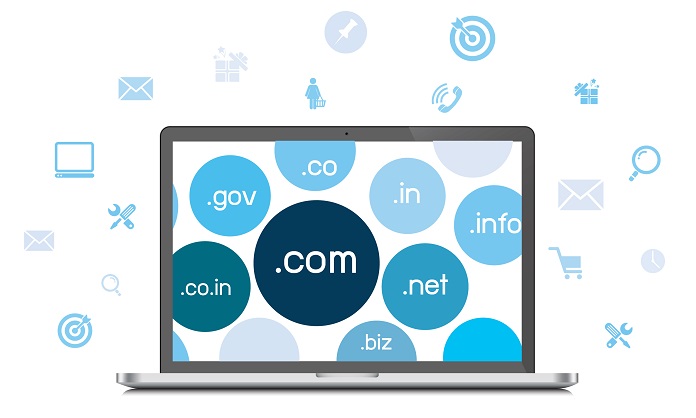
This is a dangerous misconception. Domain zones (TLDs) are like city neighborhoods. There’s the elite historic center, the bustling business district, the cozy suburbs, and then there are the ghettos where the police (or in our case, anti-fraud systems) only enter in tanks.

Let’s break down how domain zones actually differ and why this matters for your business and analytics.
TABLE OF CONTENTS:
1. “Heavy Luxury”: .COM, .NET, .ORG
This is the internet classic. The .com zone is like Manhattan real estate.
- The Pros: Absolute user trust. It is hardcoded into people’s brains: if a site is serious, it ends in
.com. Smartphone keyboards even have a dedicated button for it. - The Cons: Scarcity. Finding a decent, available name here has been impossible since 1998.
- The Tech: These are the most massive zones. The Verisign registry processes billions of queries. For a data analyst, working with the
.comzone is a true Big Data challenge. Zone files here weigh in at gigabytes.
2. National Apartments: ccTLD (.DE, .RU, .UK)
Zones assigned to specific countries. They operate under the laws of their respective states.
- The SEO Factor: If your business is a pizzeria in Berlin, a
.dedomain gives you a head start in German Google over a competitor on a.com. Search engines love local domains. - The Catch: Red tape. Try registering a
.no(Norway) or.au(Australia) domain without a local legal entity or passport – it won’t happen. - Geography Hackers: Some countries have successfully monetized their codes. Islands in the Indian Ocean (
.io) became home to IT startups, while Tuvalu (.tv) lives off streaming services. Technically, these are national zones, but the market treats them as international generics.
3. New Districts and “Bad Neighborhoods”: New gTLD
Since 2012, the internet has been flooded with thousands of new zones: .club, .top, .online, .xyz.
- The Opportunity: You can actually get a catchy name like
best.pizzaormy.blog. - The Reputation: This is a minefield. Many new zones (e.g.,
.rest,.gq,.top) sold domains for $1 or gave them away for free. The result was predictable: spammers and botnet creators bought them in bulk. - The Consequence: Corporate firewalls and email filters often block the entire zone by default. Your honest email from a
.workdomain might never reach the client simply because of the bad “karma” of your neighbors.
4. Special Facilities: .BANK, .GOV, .MIL
Restricted territories. You cannot buy a domain here “off the street.”
- Security: Registries for these zones require strict document verification. Furthermore, high standards are often enforced at the technical level: mandatory DNSSEC, HTTPS, and strict email policies. These are the zones with the highest level of trust.
The Engineer’s View: How to Handle This Chaos
If you aren’t registering a domain but analyzing the internet (for cybersecurity, brand monitoring, or marketing), the diversity of zones becomes your headache.
The global internet is a patchwork quilt. Each zone has its own administrator (Registry), its own data format, its own access protocol, and its own update schedule.
- The
.comregistry updates instantly. - The registry of some exotic zone might update its lists once a week and serve them via ancient FTP.
- Some zones hide owners (WHOIS Privacy), while others show everything.
The Aggregation Problem
To get a picture of the “whole internet,” you would need to write 1,500+ connectors to different registries. This is a colossal amount of work.
This is exactly why the industry uses domain list providers like NetAPI. They act as a universal adapter.
Instead of figuring out how the registry for .sh (Saint Helena) works or how to parse the specific format of .br (Brazil), you connect to a single API.
What this means in practice:
- Unified Format: Data for all zones arrives in a standardized CSV.
- Incrementality: You can request “all new domains that appeared globally in the last 24 hours.” NetAPI collects this information from hundreds of registries itself, filters out duplicates, and gives you a clean list.
- Enrichment: If a “naked” list isn’t enough, the aggregator can immediately add data about IP addresses or NS servers, saving you from having to resolve millions of names yourself.
Summary
A domain zone is a signal.
- For the user, it is a signal of a site’s reliability (or suspiciousness).
- For a search engine, it is a signal of business geography.
- For a developer and analyst, it is metadata that determines the complexity of collecting and processing information.
By understanding the difference between zones, you won’t buy a “toxic” domain for your startup, and you will be able to build the correct data collection architecture without trying to download the immense .com zone onto an office laptop.

 are like city neighborhoods. Let’s break down how domain zones actually differ and why this matters for your business.)