




© ROOT-NATION.com - Use of content is permitted with a backlink.
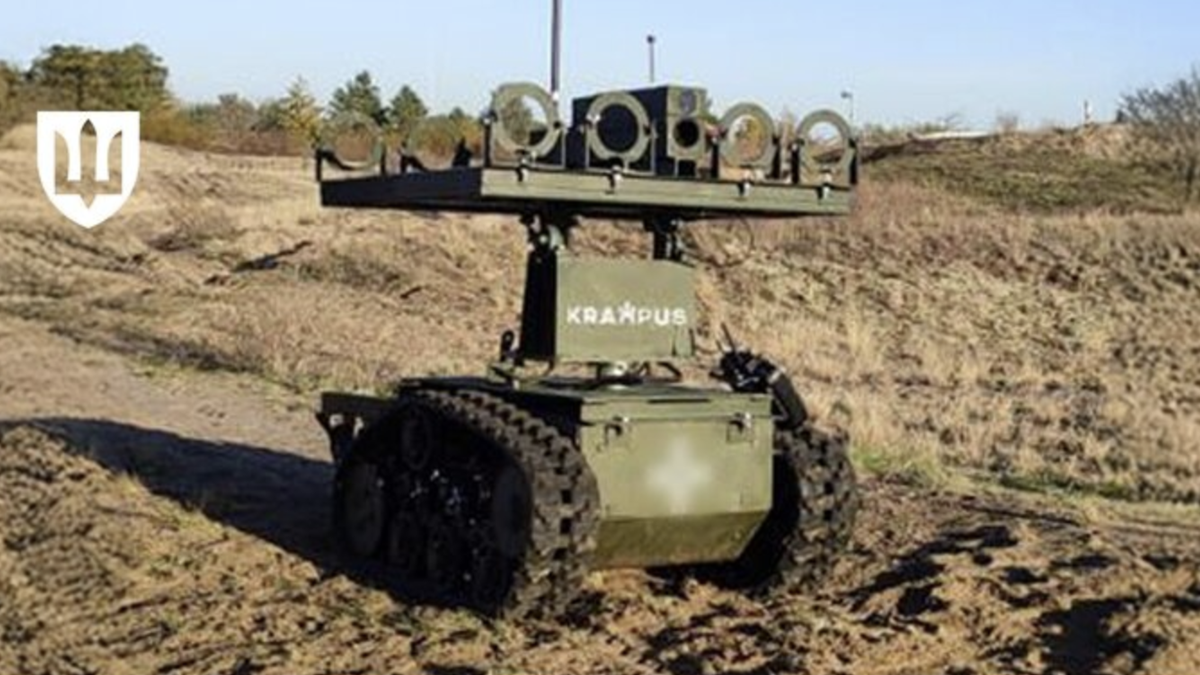
Today, we’ll look at the Ukrainian-made mobile flamethrower strike system called KRAMPUS, which has recently been adopted by the Ukrainian Armed Forces.
The Ukrainian military is actively addressing shortages of traditional equipment by developing unmanned and robotic systems. One of the latest additions is the KRAMPUS, a ground-based remote-controlled system built on a robotic platform and equipped with rocket flamethrowers. KRAMPUS is presented as a straightforward yet effective tool for providing fire support on the battlefield.
Read also: Weapons of Ukrainian Victory: GEREON RCS Ground Drones
TABLE OF CONTENTS:
New robotic complex
The Ukrainian Ministry of Defense is placing significant emphasis on various types of robotic systems given the current situation. Over the past few weeks, the ministry has conducted comparative testing of such equipment to identify the most effective models. Several dozen different systems participated in these tests.
Among the participants was the KRAMPUS combat robotic complex, named after a figure from Alpine mythology. The developer of this system has not been officially disclosed. During testing at a military range, the robotic complex demonstrated its core capabilities and combat potential.
On May 19, 2025, the Ukrainian Ministry of Defense announced that KRAMPUS received a positive evaluation and was recommended for adoption into service. This decision paves the way for a potential procurement contract to supply the system to combat units. However, the volume of the possible order and delivery timelines remain unknown. It is also possible that the project may not reach the stage of mass production, although some units have already been deployed to the front lines.
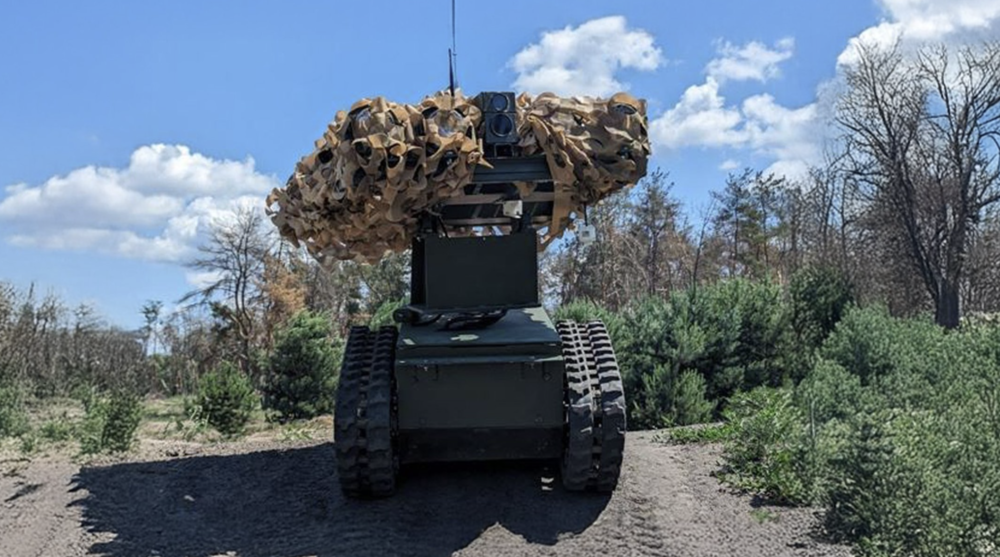
Both developers and military personnel have given positive assessments of the new Ukrainian-made mobile flamethrower strike system KRAMPUS. Experts highlight the system’s high mobility, enabled by its new tracked platform. They also point out the robot’s unusual armament and its significant firepower, which allows it to effectively carry out various combat tasks and offers an advantage over comparable systems.
However, the full technical specifications of the new robotic complex have not been disclosed. This may be due to security concerns or a desire to keep potential shortcomings of the project confidential. It is likely that more detailed information about the system will become available in the near future.
Read also: Field Tests of the M2 Bradley and CV90: Which Infantry Fighting Vehicle Comes Out on Top?
Tracked platform for flamethrowers
From an architectural standpoint, the KRAMPUS mobile flamethrower strike system consists of a remotely controlled tracked platform equipped with rocket flamethrowers. The base chassis and combat module were designed from scratch using readily available components, while the weaponry appears to have been sourced directly from existing stock.
The exact dimensions and weight of the new robotic system have not been disclosed. However, it is known that the unit can be transported in the bed of a standard pickup truck. Loading and unloading do not require specialized equipment or lifting machinery. The same vehicle can also accommodate the control station and operator.
The robotic chassis is built around a compact rectangular frame. Inside, it houses battery packs, two traction electric motors, and remote control equipment. The specific models of these components have not been disclosed.
The two motors directly drive the front sprocket wheels. The suspension system includes several small-diameter support rollers on each side. A ground-level guide wheel complements the roller system. The exact type of suspension is not specified. According to experts, the powertrain and running gear provide strong mobility and off-road capability for the robotic platform, though detailed specifications remain confidential. It is known, however, that the system can operate continuously for several hours.
On top of the chassis, there is a rotating platform with a tilting frame, equipped with drives for horizontal and vertical aiming. This frame houses the electronics responsible for controlling the targeting system and includes mounts for up to four flamethrowers. The modular mounting system allows for quick installation or replacement of weapons, offering flexibility in combat use.
KRAMPUS is a tool designed to support the Ukrainian Armed Forces in conducting assault and clearance operations with reduced risk to personnel, particularly in densely built-up areas or complex defensive terrain. The primary role of this robotic system is to engage enemy infantry and equipment in shelters, buildings, or fortifications where the use of conventional weapons is difficult or dangerous for troops. By employing a remotely controlled unmanned platform, the system helps minimize infantry casualties. Overall, it aims to enhance the effectiveness of Ukrainian forces in neutralizing threats.
Read also:
- Laser Weapons: History, Development, Potential, and Prospects
- Weapons of Ukraine’s Victory: Otokar Cobra II Armored Combat Vehicle
KRAMPUS and RPV-16 rocket launcher
KRAMPUS is a tool designed to support the Ukrainian Armed Forces in conducting assault and clearance operations with reduced risk to personnel, particularly in densely built-up areas or complex defensive terrain. The primary role of this robotic system is to engage enemy infantry and equipment in shelters, buildings, or fortifications where the use of conventional weapons is difficult or dangerous for troops. By employing a remotely controlled unmanned platform, the system helps minimize infantry casualties. Overall, it aims to enhance the effectiveness of Ukrainian forces in neutralizing threats.
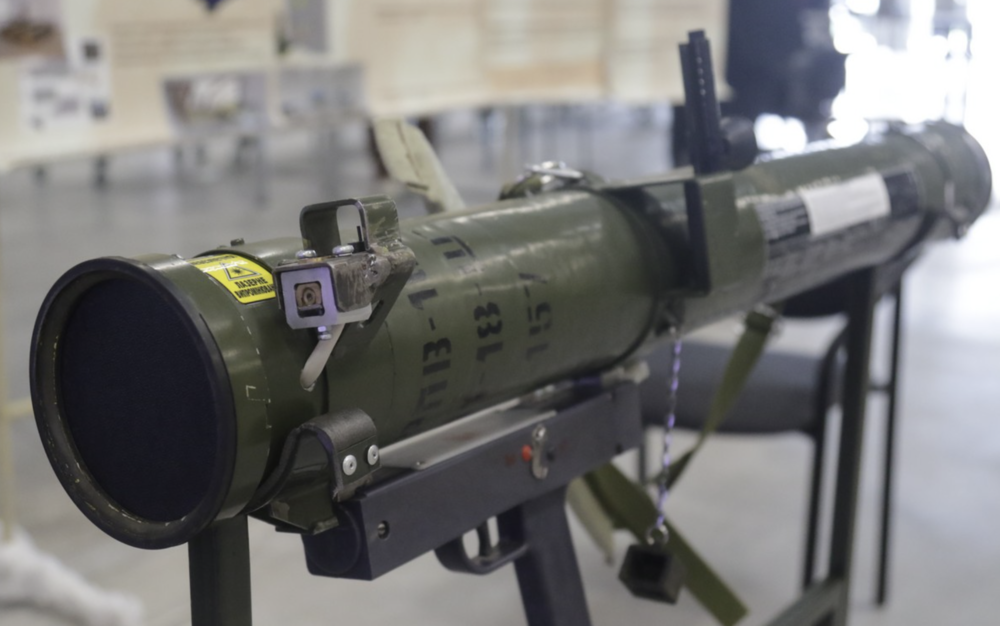
The RPV-16 is a modern Ukrainian adaptation of the Soviet-era RPO-A “Shmel” infantry rocket flamethrower. It was developed in the mid-2010s by the State Research Institute of Chemical Products in Shostka. The project’s goal was to produce an updated, locally manufacturable version of the original system, optimized for serial production at Ukrainian defense industry facilities. While retaining its high destructive capability, the RPV-16 introduces improvements in ergonomics, reliability, and compatibility with modern combat platforms.
In 2017, the first functional prototype of the infantry rocket flamethrower RPV-16 was publicly presented at a defense technology exhibition. Shortly after the unveiling, preparations for serial production began. By 2018, the developers announced the launch of a production line and the delivery of initial batches to units of the Ukrainian Armed Forces. There were also intentions to promote the flamethrower on the international arms market; however, to date, no information about export contracts has been released or confirmed, likely due to security reasons.
The RPV-16 is a development based on the Soviet RPV-A “Shmel” design but includes several technical improvements. Its main component is a 93 mm tubular launch container that houses a reactive thermobaric warhead. A detachable firing mechanism attaches to the container, featuring a control handle, aiming devices, and safety locks. The overall length of the system exceeds 920 mm, with a combat weight of approximately 11.8 kg. Due to its simplicity, compact size, and effectiveness, the RPV-16 can be used both as a standalone weapon and as part of combat modules on robotic platforms.
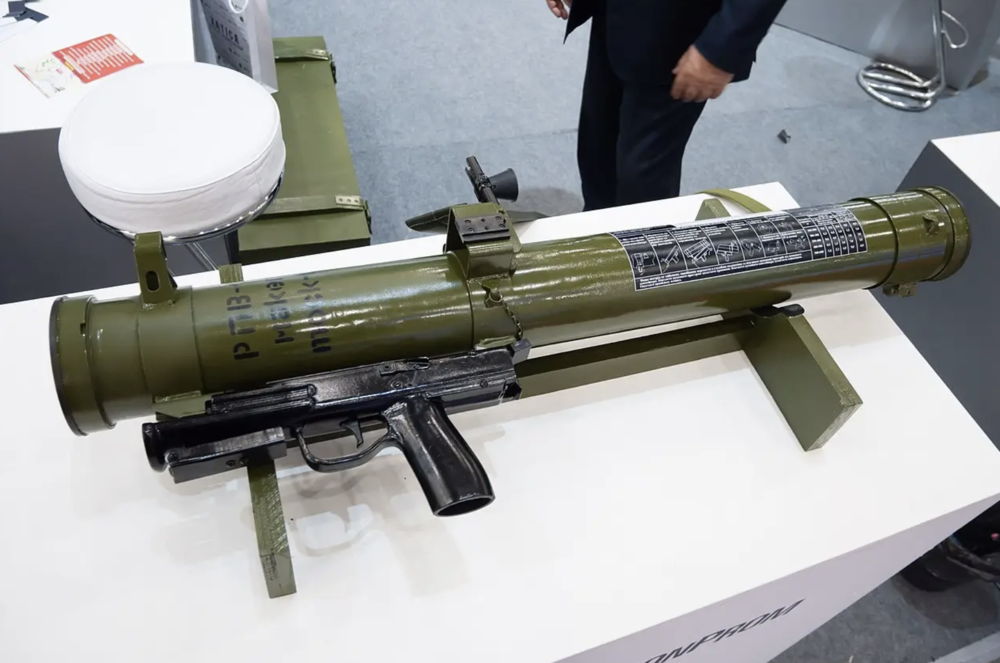
The 93 mm reactive projectile of the RPV-16 consists of several main components: a warhead containing a thermobaric charge based on a liquid incendiary substance, a tail section with stabilizing fins, and a solid-fuel rocket motor. After launch from the container, the projectile reaches an initial speed of approximately 130 m/s, which is sufficient for accurate engagement of targets at medium ranges.
The effective firing range of the RPV-16 is up to 600 meters, enabling it to engage fortifications, vehicles, and enemy personnel effectively. The manufacturer notes that under favorable conditions, shots can reach distances of 800 to 1,000 meters, though accuracy and effectiveness decrease at those longer ranges. The powerful thermobaric warhead delivers significant destructive force in enclosed spaces and shelters by generating a strong shockwave and elevated pressure zone.
Within the KRAMPUS robotic system, RPV-16 flamethrowers are mounted on a shared rotating and tilting frame using two sets of reinforced clamps, ensuring secure weapon fixation during movement and firing. The flamethrowers are operated through a modern remote-controlled firing system integrated into the platform’s overall control system.
Aiming of the flamethrowers before firing is carried out using a standard optoelectronic system, which includes video cameras, thermal imaging, and, when needed, laser rangefinder modules. This setup allows for accurate target detection and identification under various lighting conditions, including night operations and challenging weather. Thanks to the integration of all control and targeting components, the KRAMPUS platform can operate effectively even without direct line of sight, requiring minimal operator involvement.
Read also: Weapons of Ukrainian Victory: MAGURA V5 Maritime Drones
Prospects and potential of the KRAMPUS complex
The Ministry of Defense of Ukraine has given a positive assessment to the new KRAMPUS robotic system equipped with rocket flamethrower weaponry. It is noted that the introduction of this equipment will provide Ukrainian forces with enhanced combat capabilities, improving their effectiveness on the battlefield and offering a tactical advantage over Russian units.
The KRAMPUS system is seen as a promising support tool for both assault and defensive operations, particularly in dense urban environments, industrial areas, forested terrain, or locations where deploying full-sized armored vehicles is difficult or risky. Its compact size, high maneuverability, and remote control capability enable the platform to operate effectively in complex tactical scenarios, reducing risks to personnel while enhancing the effectiveness of firepower against the enemy.
The KRAMPUS strike system, developed in Ukraine, offers several notable advantages that enhance its combat effectiveness. First, its fully robotic design for both the platform and weaponry reduces risks to personnel. Additionally, its compact dimensions make it harder to detect by enemy reconnaissance. Another key benefit is the tracked chassis, which provides improved mobility and maneuverability, allowing the system to operate effectively even in challenging terrain.
The use of flamethrower weaponry in the KRAMPUS system is also of significant interest. This armament enables the platform to effectively engage various targets at distances of several hundred meters. Its combat use is expected to deliver the typical destructive effects associated with reactive infantry flamethrowers like the “Shmel” and its modern counterparts – namely, a powerful thermobaric impact and a high degree of effectiveness against fortified positions and enemy personnel.
The new Ukrainian robotic technical complex (RTC) has several advantages, but it also comes with certain drawbacks. Some of these are typical for systems of this class. Due to its limited weight capacity, the lightweight platform cannot support heavy armor, which significantly reduces its survivability in combat conditions. Additionally, the exposed placement of the incendiary weaponry without adequate protection represents a serious vulnerability. Even an accidental hit from a bullet or shrapnel could cause critical damage or complete destruction of the RTC, which limits its use in active combat zones.
There are significant concerns regarding the security of the control radio channel. Although it is claimed to be resistant to electronic interference, it is important to recognize that no system is completely immune to modern electronic warfare (EW) methods. If the control signal is successfully jammed or intercepted, the Krampus platform may lose contact with the operator, resulting in the termination of its combat mission. In such a scenario, the robotic complex essentially becomes a stationary target, vulnerable to a wide range of enemy fire – from small arms to artillery.
The choice of armament for the KRAMPUS robotic technical complex raises reasonable questions about its suitability. The reactive infantry flamethrower RPV-16 used has a limited firing range and relatively low accuracy, which significantly reduces the system’s combat effectiveness in open terrain or against mobile targets. Even with an automated targeting system, these characteristics cannot be substantially improved due to inherent design limitations of the weapon itself. Additionally, to perform an accurate shot, the platform must approach the target at a distance that potentially exposes it to effective return fire. This notably increases the risk of losing both the robotic complex and the tactical advantage it provides.
In the future, it is likely that other types of armament will be introduced for the Ukrainian robotic complex. Expanding the range of weapons will allow the platform to be more flexibly adapted to different mission types and operational environments. This could improve its overall effectiveness on the battlefield by enhancing versatility, engagement range, and firepower.
KRAMPUS is a tool designed to support the Ukrainian Armed Forces in conducting assault and clearance operations with reduced risk to personnel, particularly in densely built-up areas or complex defensive terrain. The primary role of this robotic system is to engage enemy infantry and equipment in shelters, buildings, or fortifications where the use of conventional weapons is difficult or dangerous for troops. By employing a remotely controlled unmanned platform, the system helps minimize infantry casualties. Overall, it aims to enhance the effectiveness of Ukrainian forces in neutralizing threats.
Read also:
- Weapons of Ukrainan Victory: KF 41 Lynx Infantry Fighting Vehicle
- Weapons of Ukrainian Victory: V-BAT Vertical Takeoff UAV

