





© ROOT-NATION.com - Use of content is permitted with a backlink.
Laser weapons are rapidly moving from the pages of science fiction into the real world. What until recently seemed like the plot of a futuristic movie is now being actively tested, refined, and even deployed for military use. Let us take a closer look at the latest developments in laser weapon systems and examine how they could reshape the battlefield of the future.
Not long ago, this concept belonged exclusively to the realm of science fiction: a blazing beam fired from a weapon of the future, instantly destroying a target in the sky. Today, it has become a practical reality in defense laboratories from Tel Aviv to Kharkiv. By 2026, laser weapons had moved beyond the stage of laboratory prototypes and crossed a threshold from which there is no turning back. They are no longer confined to simulations or idealized test ranges – they are capable of engaging real targets in the airspace above real cities. The question is no longer whether laser weapons will play a major role in future conflicts. The real question is how quickly they will be adopted and at what cost.
Read also: Everything About Palantir’s Dataroom: How Ukraine Turns the War into a Defense AI Laboratory
TABLE OF CONTENTS:
The Physics of Destruction: What Directed-Energy Weapons Are
The operating principle of a laser weapon system is as elegant as it is unforgiving. A concentrated, coherent beam of light generated by a fiber-optic or solid-state laser is directed at a target, heating it to extreme temperatures within fractions of a second. Electronic systems fail. Structural components are burned through. Fuel tanks can ignite. All of this occurs silently and with minimal visible signature – the beam itself is typically invisible to the naked eye, and observers often see only brief flashes at the moment the target is damaged or destroyed.
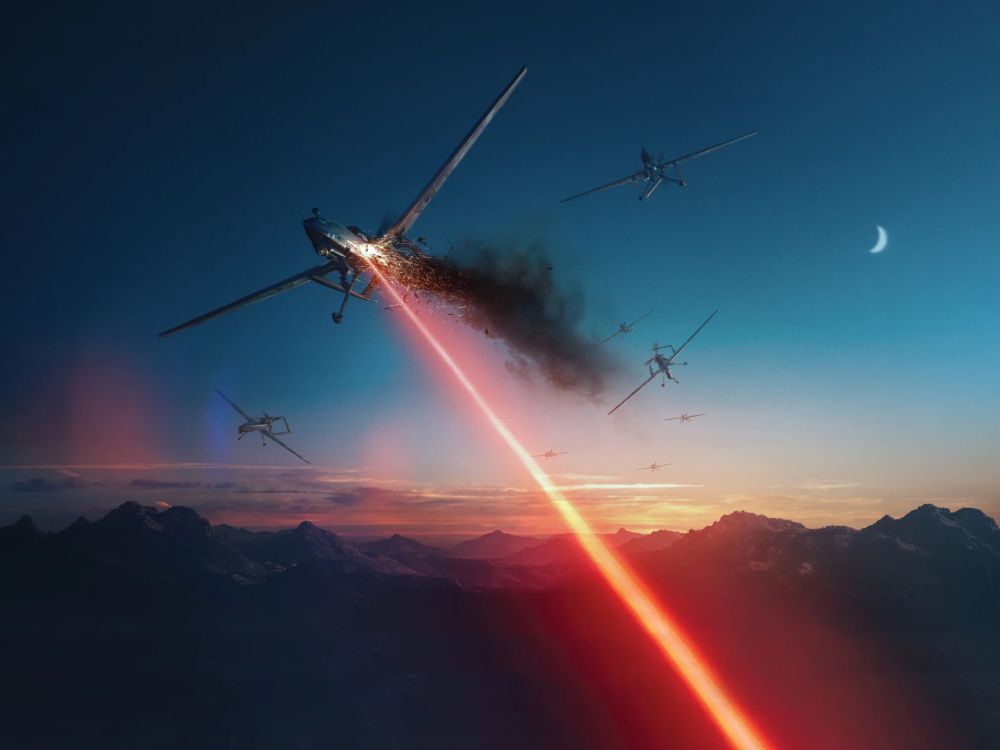
Transmission at the speed of light allows a laser beam to engage distant targets almost immediately after detection. Directed laser energy also offers reduced collateral damage and greater tactical flexibility, as the beam can be focused on a precise point of impact. This is a fundamental distinction from any kinetic weapon: a bullet has to travel, a missile has to travel – a laser is effectively already there.
A laser’s “ammunition supply” depends almost entirely on the availability of power. Because light carries negligible momentum in practical weapon applications, laser systems generate virtually no recoil. In operational terms, this means that as long as electrical power is available, the weapon remains combat-capable. There is no need for extensive ammunition stockpiles, complex resupply chains, or daily reports on remaining missile inventories.
This leads to a potentially transformative engagement-cost equation. Launching a surface-to-air missile can cost tens or even hundreds of thousands of dollars, whereas a single laser shot may cost only a few dollars’ worth of electricity. As noted in U.S. defense budget documents, laser weapons are widely viewed as a significantly less expensive means of neutralizing targets compared with conventional missile interceptors.
Read also:Laser Weapons: History, Development, Potential, and Prospects
From Star Wars to Real Wars
The concept of directed-energy weapons is not new. Its roots can be traced back to the 1980s and the administration of Ronald Reagan, whose ambitious Strategic Defense Initiative was famously – and somewhat mockingly – nicknamed “Star Wars.” At the time, it was a geopolitical vision that ultimately collided with the technological and physical limitations of the era.
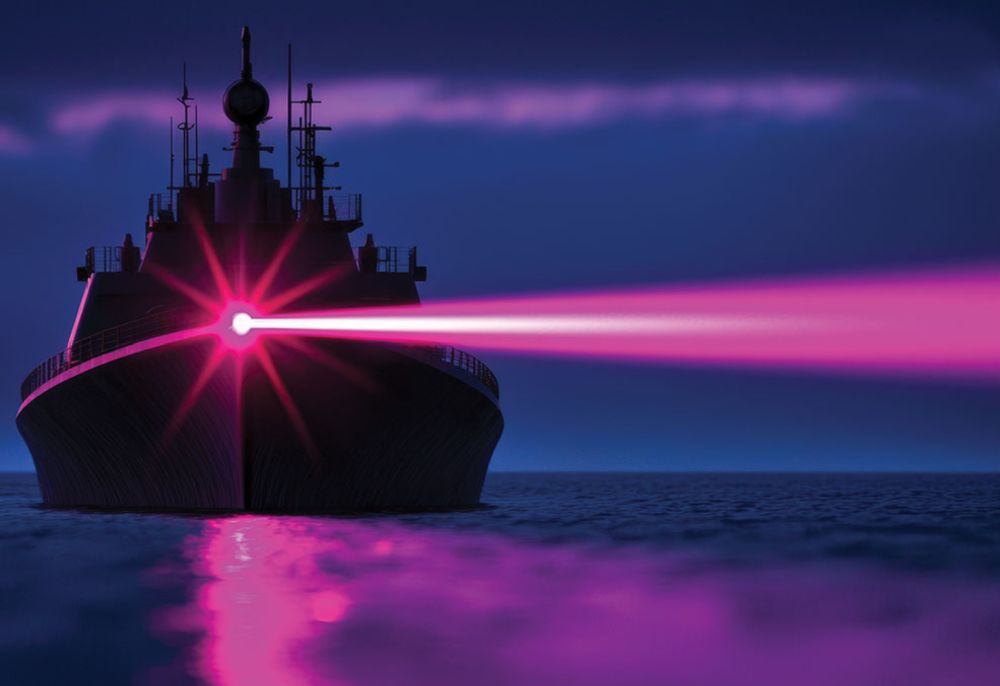
The turning point came in the 2010s. In 2014, the U.S. Navy deployed the first operational laser system aboard the USS Ponce. However, the real catalyst emerged from an unexpected direction: swarms of inexpensive FPV drones and strike UAVs that turned the airspace over Ukraine, Gaza, and Yemen into a new battlefield. When an adversary can launch hundreds of platforms costing only a few thousand dollars each, countering them with missiles worth hundreds of thousands of dollars becomes economically unsustainable.
This cost asymmetry has become the primary driver behind the race to develop and field laser weapons.
Read also: Razer BlackShark V3 Headphones Review: Full Immersion in Gameplay and Solid Sound Quality
The American Approach: From Naval Platforms to Ground Forces
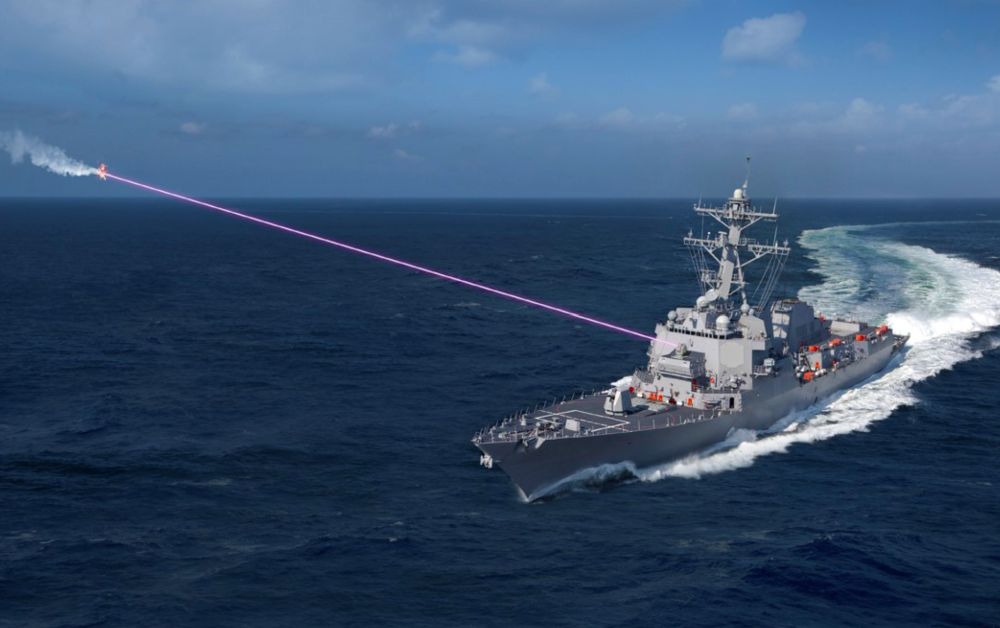
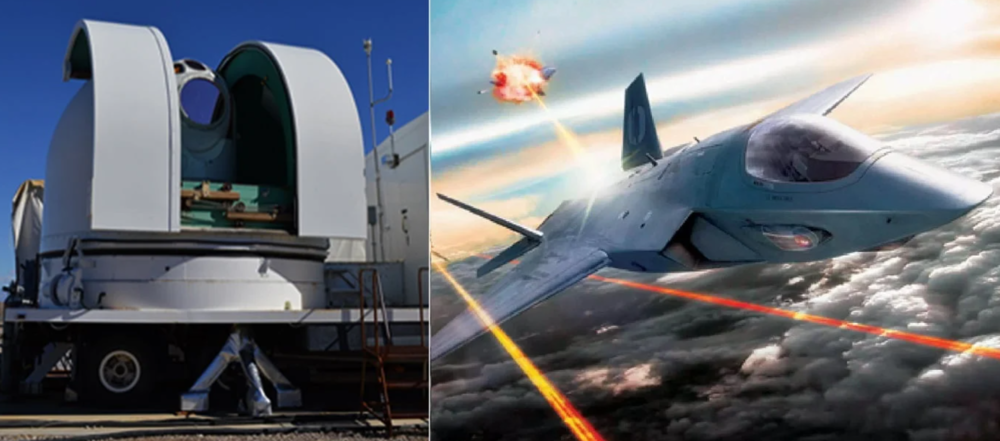
The United States remains the clear leader in both the scale and diversity of laser weapon programs. The U.S. Navy has already deployed directed-energy systems on nine Arleigh Burke-class destroyer vessels. These include the ODIN and HELIOS laser systems, which are designed to counter drones, reconnaissance platforms, and small maritime targets.
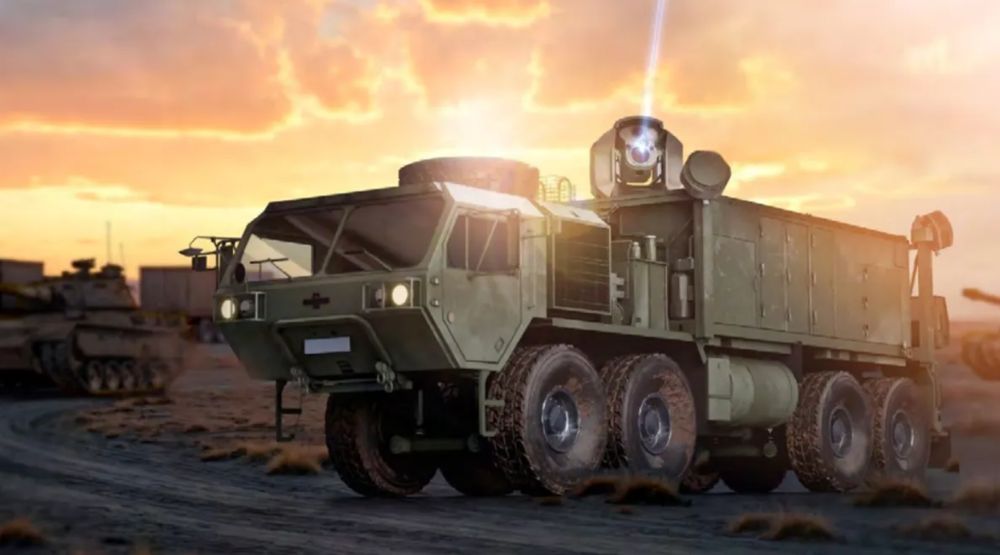
At the same time, the Pentagon is moving toward serial production of ground-based systems. The U.S. Army plans to award its first production contract for laser-based air defense systems mounted on the Stryker armored vehicle in 2026. This would mark an important milestone in the Pentagon’s long-running effort to field effective directed-energy weapons.
The path to large-scale deployment, however, remains challenging. During comparative trials at Fort Sill last summer, soldiers evaluated 50-kilowatt laser systems alongside small missile interceptors. The tests suggested that one of the main obstacles to wider adoption is the military’s continued preference for more established and proven solutions. In this respect, institutional conservatism may be as significant a barrier as the physical limitations imposed by the atmosphere.
However, the ambition is not decreasing. Tests have shown that a single directed-energy platform can perform two critical military functions without separate equipment: transmitting energy to a remote location and then rapidly switching to engage a simulated drone threat. A laser that functions both as a power source and as a weapon represents a fundamentally different approach to field logistics.
In parallel, the United States is testing next-generation autonomous systems. The U.S. company Aurelius Systems conducted successful tests of its autonomous directed-energy system, Archimedes, for the U.S. Department of Defense. During the current “Golden Dome” trials, specialists employed a fully autonomous system capable of independently detecting, tracking, and neutralizing aerial targets without operator intervention. The human role is gradually being reduced in the decision loop, which introduces its own set of ethical considerations.
Read also: Weapons of Ukraine’s Victory: TRIDON Mk2 Mobile Air Defence Systems from BAE Systems Bofors
Israel: First in Combat Deployment
If the United States leads in technological scale, Israel stands out for its willingness to field systems under operational conditions. The Iron Beam developed by Rafael Advanced Defense Systems is a 100 kW-class system and is described as the first laser air-defense system to transition from testing to operational deployment.
Following a series of attacks by Hezbollah, there have been reports suggesting that the Israel Defense Forces may have used a laser air-defense system in operational conditions for the first time. Analysts have noted that certain characteristics of nighttime interception patterns partially align with what would be expected from directed-energy engagements. However, these assessments remain interpretative and have not been officially confirmed in detail.
In December 2025, Israel announced the nationwide deployment of the system following its reported interception of around 40 UAVs launched by Hezbollah in October 2024. This is not only a technical achievement but also a political signal: a system that previously showed instability in test conditions has demonstrated performance against a real, multi-layered threat environment.
The Israeli case is also notable as an example of allied technology diffusion. The Iron Beam is already being supplied to the United Arab Emirates, indicating that the technology is beginning to shape a new regional security architecture. This model illustrates how directed-energy systems are moving from experimental deployments toward integration into operational air-defense networks, with implications that extend beyond purely technical performance into strategic and geopolitical alignment.
Read also: Weapons of Ukraine’s Victory: Tempest Air Defense System with AGM-114L Longbow Hellfire Missiles
British DragonFire: from £120 million to a destroyer
The United Kingdom is pursuing a different model – less focused on rapid fielding and more on a structured institutional development process. The DragonFire program took around seven years to develop and cost over £120 million in development funding alone. However, the outcome has been considered technically viable and operationally promising.
In March 2026, the UK government confirmed a revised timeline. The first installation is planned for a Type 45 destroyer. This step highlights how quickly directed-energy systems are moving from experimental trials to integration on combat platforms. The original plan targeted 2032, but the deployment schedule has been brought forward significantly, indicating accelerated confidence in the technology’s maturity.
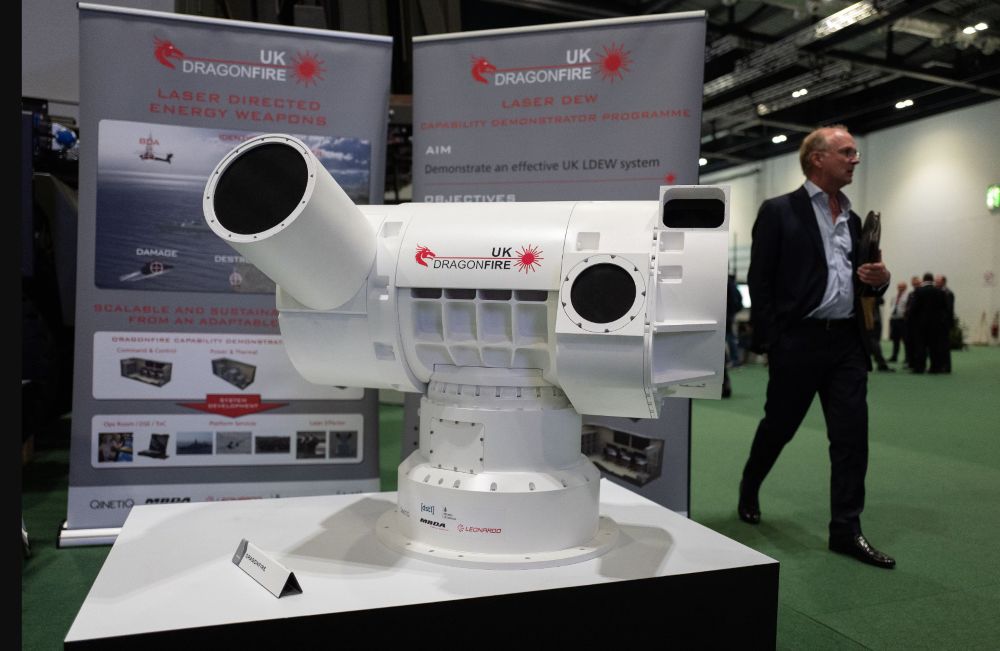
Drone warfare has evolved faster than traditional defense procurement cycles, and accelerated deployment is intended to close that gap. When operational reality outpaces bureaucracy, even the traditionally conservative British armed forces are compelled to adapt more rapidly.
Read also:Weapons of Ukrainian Victory: The Robotic KRAMPUS System
“Tryzub”: Ukraine’s response in wartime tempo
This is where the discussion becomes more interesting – and more significant from a local perspective.
While British Aerospace spent seven years and nine-figure sums developing the DragonFire system, a relatively small Ukrainian company, Celebra Tech, developed its own laser complex in approximately two years – under conditions of active armed conflict, continuous missile strikes, and severe resource constraints not experienced by most major defense powers.
The system was first mentioned publicly in December 2024 by the inaugural commander of Ukraine’s Unmanned Systems Forces, Vadym Sukharevskyi. Since then, the company has continued to refine the laser system, progressing from an early concept to an officially approved combat-ready prototype.
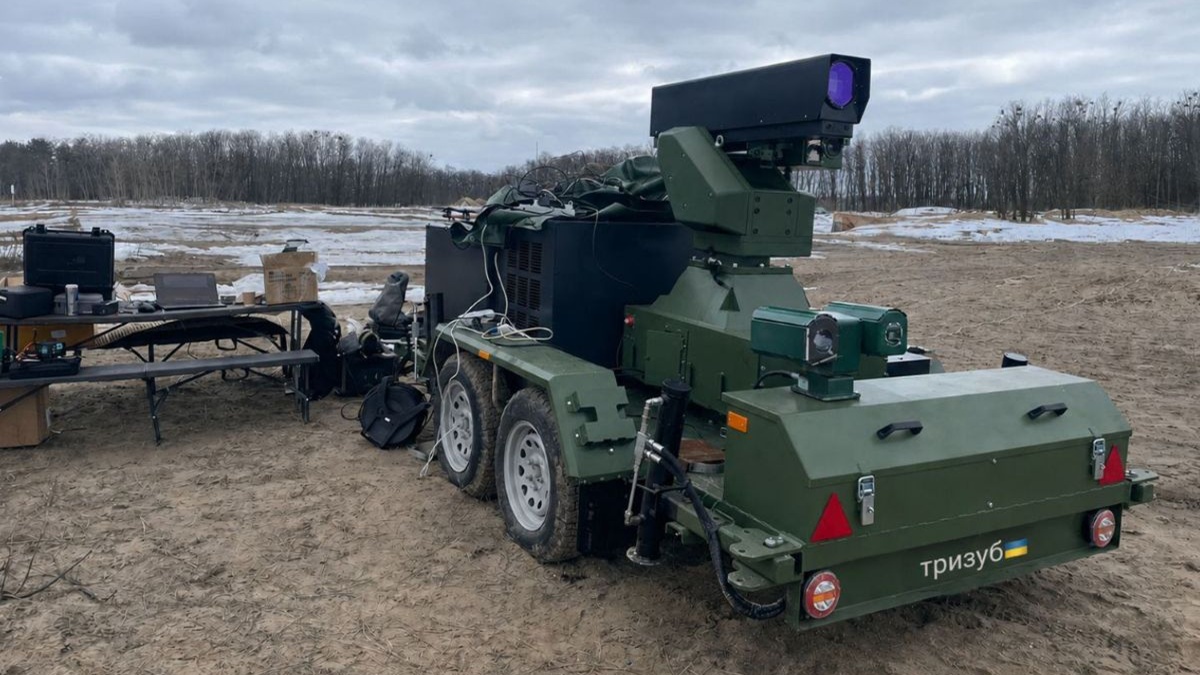
The confirmed performance characteristics of the “Tryzub” system indicate engagement capability against FPV drones at ranges of approximately 800–900 meters, and reconnaissance UAVs at distances of up to 1,500 meters. The developers also state that the system is effectively close to being capable of countering strike UAVs of the “Shahed” class at ranges of up to 5 kilometers, although this capability is still undergoing final validation.
The engineering team has significantly upgraded the targeting and tracking subsystem. In particular, “Tryzub” incorporates improved terminal guidance using artificial intelligence, automated target acquisition and tracking, and integration with radar systems to improve trajectory prediction accuracy.
Against this background, “Tryzub” occupies a potentially distinct niche: it may be the first laser system developed and tested under conditions of active armed conflict against a defined adversary and specific target sets. This represents a fundamentally different development logic – not a traditional path from requirements to battlefield deployment, but a reverse process driven directly by operational experience, accelerated to an unusual degree.

“Tryzub” was developed as an affordable and mobile alternative to expensive air-defense assets. The system’s primary role is countering the mass deployment of low-cost FPV drones and reconnaissance UAVs used by Russia. Compared to conventional interceptor missiles – which can cost between approximately $430,000 and $4 million per unit – laser weapons promise a fundamentally different cost structure, significantly reducing the cost per engagement.
Read also: The Ukrainian “Tryzub” Laser System: From Testing Grounds to the Front Line
Global race: who else is on the list
The scale of laser weapon development is substantial. Japan, India, Turkey, South Korea, and Ukraine are each running their own laser development programs. The main advantage of the technology remains the low cost per engagement: a single shot is tens or even hundreds of times cheaper than a surface-to-air missile.
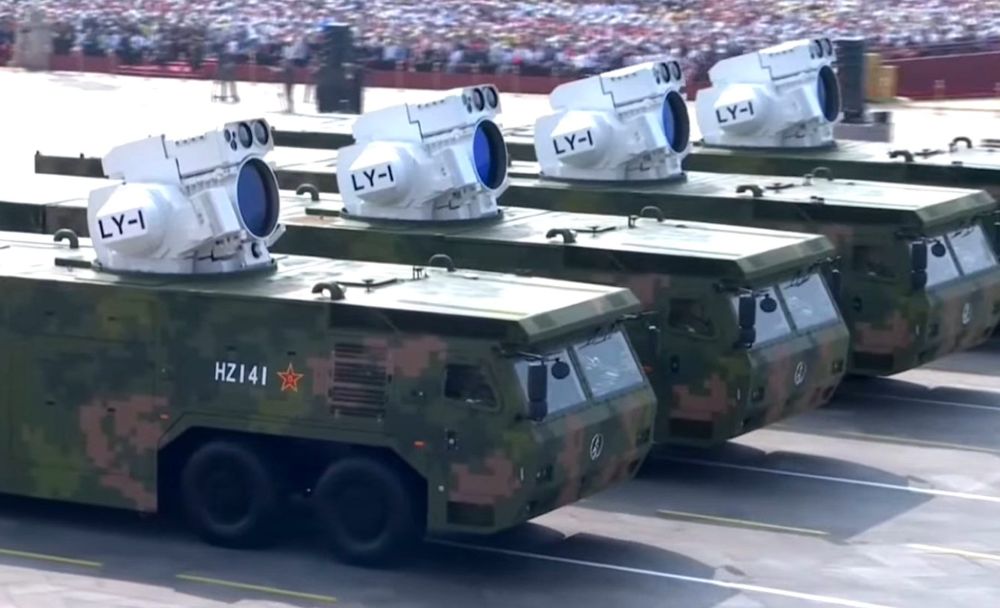
China occupies a special position – not only as a developer but also as an active exporter. Its systems, such as Silent Hunter and Guangjian-21A, have a noticeable presence in Middle Eastern and African markets. In addition, Russia has claimed the operational use of laser systems in the conflict zone. However, available evidence suggests that these are likely Chinese-manufactured systems deployed under Russian designations. The situation is notable in a broader context: a state engaged in a major war against Ukraine appears, in part, to rely on externally sourced laser technologies. This underscores both the growing internationalization of directed-energy systems and the uneven state of domestic defense-industrial capacity.
Read also: Lenovo Legion Go 2 Review: More Powerful, More Comfortable, and Finally Featuring OLED
Limitations: the technology is not all-powerful
It would be inaccurate to ignore the key vulnerabilities of emerging directed-energy systems. The closer the operating environment is to ground level – or maritime conditions – the higher the concentration of particulates in the air, and the lower the fraction of laser energy that reaches the target. As a result, even high-energy laser systems tend to be more effective at shorter engagement ranges.
Weather conditions also play a significant role. Fog, rain, dust, and smoke can all reduce beam transmission and act as a natural shield for the target. Power consumption remains another fundamental constraint. Stationary systems can mitigate this by drawing directly from the electrical grid. Mobile platforms, by contrast, require high-capacity generators, which increase system weight and reduce operational flexibility.

Finally, there is also a purely human factor: military organizations tend to prefer more proven solutions. This is not conservatism for its own sake – it reflects institutional memory shaped by cases where promising technologies failed when exposed to real field conditions.
Read also: “Free Bird” from Türkiye: Everything About the TAI Hürkuş Trainer and Light Attack Aircraft
New Architecture of Air Warfare
However, despite all limitations, the transition point has already been reached. Laser weapons are no longer a novelty or an experimental concept. They are becoming part of the operational order of real armed forces engaged in real conflicts.
Against the backdrop of a growing drone threat, countries are increasingly investing in directed-energy systems. Lasers are expected to provide a low-cost and precise response to UAVs. At the same time, operational experience indicates that a universal solution is still far from being achieved. No single system is currently capable of replacing the entire air-defense arsenal, but each can improve its effectiveness and reduce costs within specific threat segments.
The key paradigm shift is not purely technological, but economic. When the cost of a single interception drops from hundreds of thousands of dollars to just a few dozen, the logic of escalation itself changes: an attacker can no longer assume that swarms of cheap drones will financially exhaust the defender. The art of attack, long built on cost asymmetry, is entering a new phase – and it remains unclear which side will cross the next threshold first.
Read also: How Wearables and AI Glasses Are Rewriting the Logic of Technological Civilization
Instead of a conclusion: a beam that changes the balance sheet
In 2026, laser weapons have answered a question that, just five years earlier, was considered largely academic: can a missile be replaced by photons? The answer is yes – at least within a certain range of targets and operating conditions.
But the deeper question is more fundamental. In a world where a drone swarm costs less than a single air-defense missile, and where militaries are producing millions of drones annually, the traditional model of air defense is becoming increasingly strained. Laser weapons are not simply a new category of armament. They represent an attempt to rewrite the underlying economic logic of air warfare.
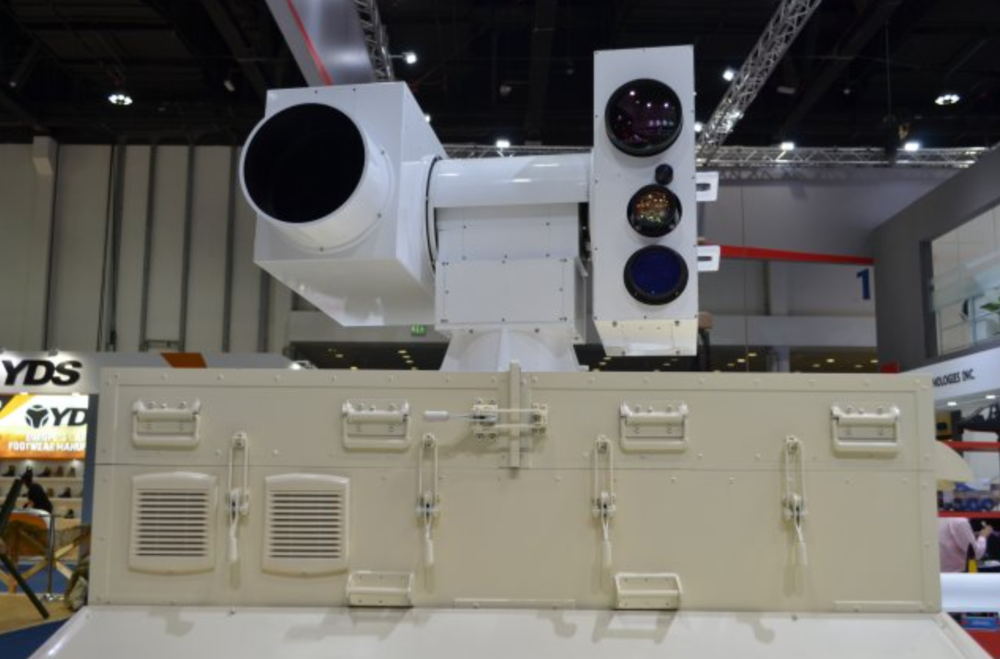
The Israeli Iron Beam has reportedly already been used in combat over Lebanon. The British DragonFire is preparing for maritime deployment. The U.S. HELIOS is positioned for counter-UAV missions over the Indian Ocean. Meanwhile, at a test range in Ukraine, a small team of engineers from Celebra Tech is calibrating the guidance system of “Trident,” a platform that has been in development for less than two years from initial prototype to final testing phase.
This reflects a new operational reality. Not one in which major powers gradually develop future weapons in protected laboratory environments, but one in which operational necessity accelerates development cycles and compresses timelines that were previously considered non-viable.
Read also:
- Weapons of Ukraine’s Victory: “Vyrivniuvach” Guided Glide Bomb
- Your router is not only for Wi-Fi – here’s what else it can do
- SpaceXAI1: Elon Musk Takes Artificial Intelligence into Space
- MOVA Virtuoso 10 Pro Coffee Machine Review: Compact Size, 90 Flavor Profiles, and Dense Milk Foam

