© ROOT-NATION.com - Use of content is permitted with a backlink.
Today I’m taking a look at the rugged Cubot KingKong Dura smartphone, featuring a durable yet slim body and two removable batteries. In the rugged smartphone market, durability often comes at the cost of increased size and weight. This model, however, takes a different approach.
Read also: Reviews and tests of rugged smartphones

TABLE OF CONTENTS:
Positioning
The rugged smartphone market has long followed the same rule: the tougher the device is supposed to be, the thicker and heavier it becomes. Manufacturers seem to compete over who can push the body thickness to 20 mm and cram a 15,000 mAh battery inside, conveniently forgetting that carrying such a “brick” in your pocket every day is hardly a pleasure. The Cubot KingKong Dura breaks with this logic to some extent. Instead of competing for the highest possible battery capacity, the company took a different approach: it made the device relatively slim for an armored phone and chose to compensate for the smaller battery with a second removable one that supports hot swapping.

The idea, to be honest, is quite elegant. Instead of carrying around one enormous power pack all the time, you get two standard 5,000 mAh batteries – one in the smartphone and the other in your pocket or sitting in a charging dock. The result is a device that doesn’t turn into a brick, yet is theoretically capable of running longer than any competitor with a non-removable battery. How well this idea works in practice is something we’ll examine in detail.
Read also: Review of Rugged Tablet Cubot TAB KingKong Mini: Yes, You Can Dunk It and Throw It in the Mud
What Makes the Cubot KingKong Dura Interesting
The Cubot KingKong Dura maintains a surprisingly compact profile while offering comprehensive protection against water, dust, drops, and extreme temperatures. This makes the smartphone suitable both for everyday use in demanding conditions and for work or outdoor activities.
Its entry-level hardware platform also emphasizes the device’s practical nature: there is enough performance for communication, navigation, and basic tasks. But the KingKong Dura’s main advantage is its dual-battery system, with both batteries replaceable without shutting down the smartphone. This allows the device to keep running even when a conventional smartphone would already have to be put on charge.

At the heart of the Cubot KingKong Dura is the Unisoc Tiger T620 chipset, also known by the alternative designation Unisoc T7280. Yes, it’s an entry-level 4G platform built on TSMC’s 12-nm FinFET process, but it is perfectly self-sufficient for the device’s intended tasks. The octa-core processor combines power efficiency with enough performance for everyday use, while graphics are handled by the Mali-G57 MP1 clocked at up to 850 MHz. This is a solution aimed more at casual gaming and a smooth user interface than demanding 3D workloads.
The smartphone comes with 8 or 12 GB of LPDDR4X RAM, with the option to add another 12 GB of virtual memory. Internal storage is available in 128 or 256 GB configurations, with support for expansion via a microSD card. We’re testing the higher-end 12/256 GB version, of which 238 GB is actually available to the user – the rest, as usual, is taken up by the system.

The display is a 6.88-inch IPS panel with an HD+ resolution of 720×1640 pixels, a 120 Hz refresh rate, and a claimed peak brightness of 450 nits. The 16-megapixel selfie camera (f/2.25 aperture, 27.1 mm equivalent focal length) sits in a V-shaped notch. On the rear, there’s a 64-megapixel main sensor with an f/1.8 aperture and a 31.4 mm equivalent focal length, accompanied by a 2-megapixel macro lens with an f/1.85 aperture and a 4 cm minimum focusing distance.
The battery is removable, with a capacity of 5,000 mAh, and a second identical battery is included in the box. The system supports hot swapping, while charging is rated at up to 20 W. The smartphone runs Android 16 and supports NFC, Bluetooth 5.0, Wi-Fi 5, Wi-Fi Direct, Hotspot, and Cast Display. It also features a side-mounted fingerprint scanner integrated directly into the power button. Protection is rated at IP68, IP69K, and MIL-STD-810H, providing a comprehensive package of resistance to water, dust, drops, and extreme temperatures.
Read also: Everything You Need to Know About MIL-STD-810H in Smartphones: A Look at the Motorola Edge 50 Neo
The Cubot KingKong Dura is expected to cost around $270, making it a fairly attractive option at this price point.
Cubot KingKong Dura Specifications
- Processor: Unisoc Tiger T620, 8 cores (2× Cortex-A75 at 2.2 GHz + 6× Cortex-A55 at 1.8 GHz), 12 nm process technology
- GPU: Mali-G57 MP1
- RAM: 8/12 GB, LPDDR4X, with support for virtual memory expansion
- Storage: 128/256 GB, UFS 2.1
- Display: 6.88-inch IPS, 1640×720 pixels, 260 ppi pixel density, 120 Hz refresh rate, 20:9 aspect ratio, ~73.4% screen-to-body ratio
- Main camera: 64 MP primary module with PDAF, 5 MP ultrawide sensor, 2 MP macro lens, LED flash; photo resolution of 9216×6912 pixels (64 MP) and 4608×3456 pixels (12 MP by default); video recording at 1920×1080 pixels at 30 fps
- Front camera: 16 MP; photo resolution of 2448×3264 pixels; video recording at 1280×720 pixels at 30 fps
- Battery: Removable 5,000 mAh Li-ion battery
- In the box: 2× 5,000 mAh batteries
- Operating system: Android 16
- Mobile connectivity: 2G, 3G, 4G (VoLTE)
- Wireless connectivity: Wi-Fi 5 (802.11 a/b/g/n/ac, dual-band), Bluetooth 5.0 (A2DP, LE), NFC
- Navigation: A-GPS, GPS, GLONASS, Galileo, BeiDou
- SIM slot: 2× Nano-SIM or Nano-SIM + microSD
- Memory card support: microSD up to 1 TB
- Sensors: Face ID, accelerometer/gyroscope, magnetometer (digital compass), ambient light sensor, proximity sensor
- Protection: IP68/IP69K, MIL-STD-810H
- Dimensions: 180.1×85.0×13.0 mm
- Weight: 299.5 g
- Additional feature: Camping light
- Package contents: Smartphone, charger, USB Type-C cable, protective case, screen protector, SIM ejector tool
Read also: Cubot KingKong Power 5 Review: Rugged, Durable, and Budget-Friendly
Package Contents
The smartphone comes in the brand’s signature turquoise box, with the model name printed on the lid – a recognizable packaging design that Cubot uses for most of its flagship releases.

Inside, neatly arranged alongside the smartphone itself, are:
- a second 5,000 mAh battery
- a charger for the charging dock
- a USB Type-C to Type-C cable
- a 12 V/1.67 A (20 W) wall charger with an EU plug
- documentation

The package contents are clearly more than just a box-ticking exercise. Cubot provides everything needed to make full use of the dual-battery setup right out of the box, including a separate charging dock for the spare battery. It’s nice to see that the manufacturer didn’t stop at simply saying “a second battery is included,” but actually thought through how the user would put the feature to practical use.
Read also: Cubot Note 60 Review: A Practical Budget Smartphone
Design, Build Quality, and Controls
This is where the KingKong Dura really surprised me. The design is minimalist and utilitarian, with functionality clearly taking precedence over style. But most importantly, the profile is remarkably slim for a rugged device. The manufacturer has managed to shave a few millimeters off the body and reduce its perceived weight, so the typical brick-like bulk associated with most rugged smartphones is barely noticeable here.

Paradoxically, it’s the dual-battery system that made it possible to keep the device more compact. The manufacturer didn’t need to install one enormous battery – two standard ones were enough.

The body is made from a practical combination of three materials: metal, polycarbonate, and thermoplastic polyurethane (TPU). The metal frame provides the structural foundation, ensuring rigidity and impact resistance. Polycarbonate panels form the outer frame and body, while the vertical metal rails remain barely visible. It’s a nice aesthetic touch rather than something driven purely by “factory-floor” functionality. The shock-absorbing TPU forms the outermost layer and provides additional cushioning around the corners. The result is a device that feels good in the hand. It’s compact, comfortable to use, and genuinely rugged – not merely “rugged” in the marketing sense.

The protection here is comprehensive: IP68 and IP69K ratings cover dust, high-pressure water jets, and full immersion, while the MIL-STD-810H certification confirms resistance to repeated drops from a height of 1.5 meters and operation in extreme temperatures. Despite its rugged construction, large display, and high-capacity batteries, the KingKong Dura remains fairly compact for its class.

It measures 13 mm thick (excluding the camera bump), 85 mm wide, and 180.1 mm tall, with a weight of 299.5 g. Two color options are available: black and military green. The black version is the one I received for review.

The front panel is almost entirely occupied by the large display, protected by a thin factory-applied film – a nice bonus, since there’s no need to immediately go looking for a screen protector. The bezels are impressively thin for an armored phone: 3 mm on the sides and 5 mm at the top and bottom. At the top, there’s a V-shaped notch for the front-facing camera. To its right are the ambient light and proximity sensors, along with an LED notification indicator, while a mesh-covered earpiece sits above them in the center. Navigation is fully software-based, with a choice between gestures and virtual buttons, depending on your preference.

The rear panel features a symmetrical, minimalist design with details inspired by a “mecha” aesthetic. In the upper third, there’s an elongated camera island with rounded corners, housing the main camera, macro lens, and LED flash.

In the lower-right corner of the module, there’s a triangular camping light, while the rest of the surface is decorated with mechanical motifs that reinforce the overall “armored” aesthetic.

Further down, there’s a large recessed area that serves as the mounting point for the removable battery pack, securely locked in place at the bottom with a dedicated latch.

The entire perimeter of the rear panel is beveled and wrapped in TPU. This not only improves grip, but also provides additional cushioning against impacts from drops.
The top frame is bare, with no ports. Personally, I find that a little disappointing, as an IR blaster would always be a welcome addition on a device like this. The bottom frame houses the USB Type-C port, speaker, and microphone, while the lower-right corner features a lanyard hole.

On the left side, there’s a hybrid tray for two SIM cards, sitting flush with the frame (you’ll need a SIM ejector tool or something similar to remove it). Just below it is a programmable shortcut key.

The right side is more compact and functional. It houses the power button with an integrated side-mounted fingerprint scanner, along with a flat, almost inconspicuous volume rocker.

We have a typical rugged smartphone here, complete with all the expected aesthetics, decorative details, and visual flair. But it’s surprisingly compact and slim. And, by the way, quite comfortable to use.
Read also: Cubot KingKong 11 Review: Rugged Smartphone with Dual Displays
Cubot KingKong Dura Display
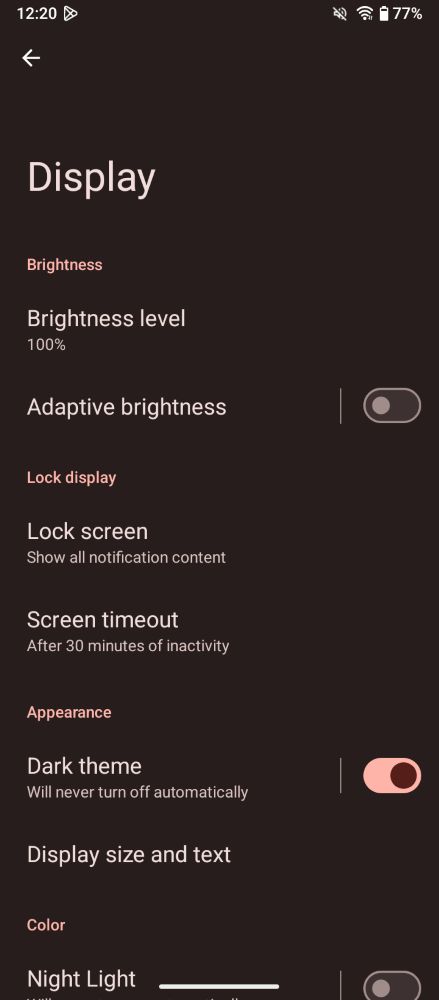
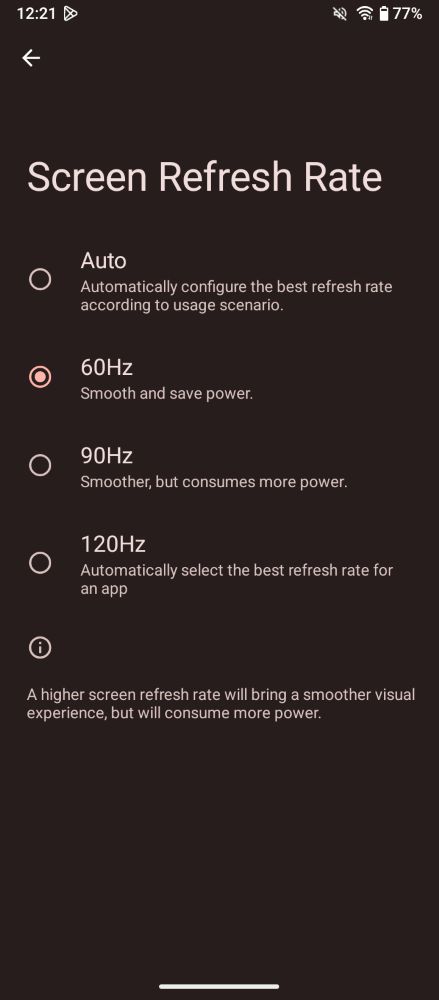
The Cubot KingKong Dura features a 6.88-inch IPS panel with an HD+ resolution of 720×1640 pixels and a refresh rate of up to 120 Hz. Even with the standard settings, everything is fairly straightforward here. You get brightness adjustment, adaptive brightness, dark mode, night light, auto-rotate, interface scaling and text-size controls, refresh-rate selection, color and contrast settings, and screensavers. In other words, pretty much everything you’d expect from a modern Android smartphone.

At the same time, there are a few interesting extras. Among them are an LED notification indicator, a backlight power-saving mode, a pocket mode, and a full-fledged “Game Space.” The latter offers SDR/HDR switching, various performance modes, and advanced graphics settings, including anisotropic filtering, mipmap level of detail, and texture filtering. There’s also a dedicated video playback enhancement feature for YouTube, Files, Photo Editor, and Photos.
According to laboratory measurements, the display demonstrated a fairly uniform brightness profile. The upper third of the panel averaged 410.3 nits, with a white-point temperature slightly below 12,000 K. The center section was the brightest at 457.14 nits, while the white-point temperature exceeded 12,000 K. The lower third delivered almost the same result – 456.14 nits, also with a temperature above 12,000 K. Overall, the brightness uniformity can be considered quite good: the deviations are minimal and virtually unnoticeable in everyday use.
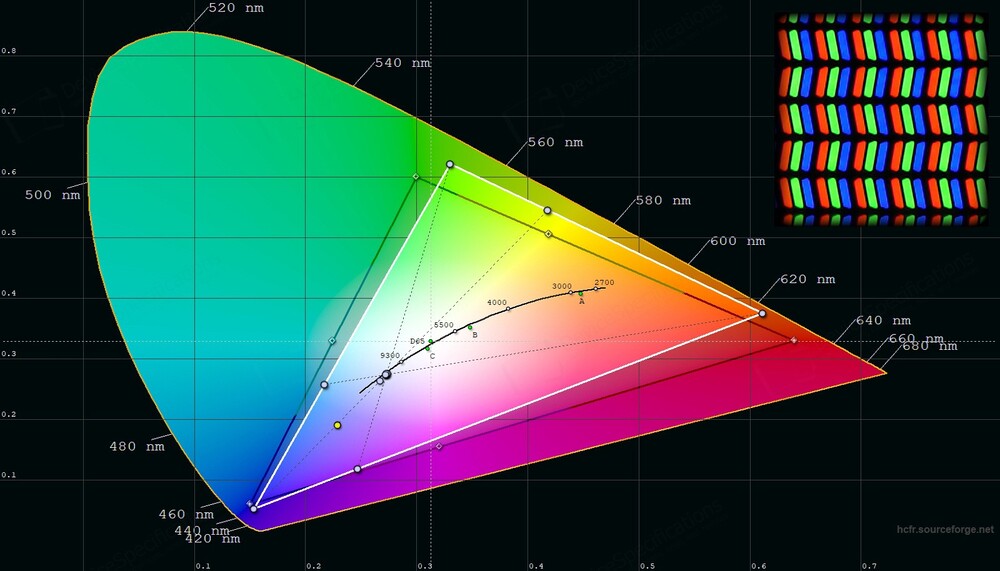
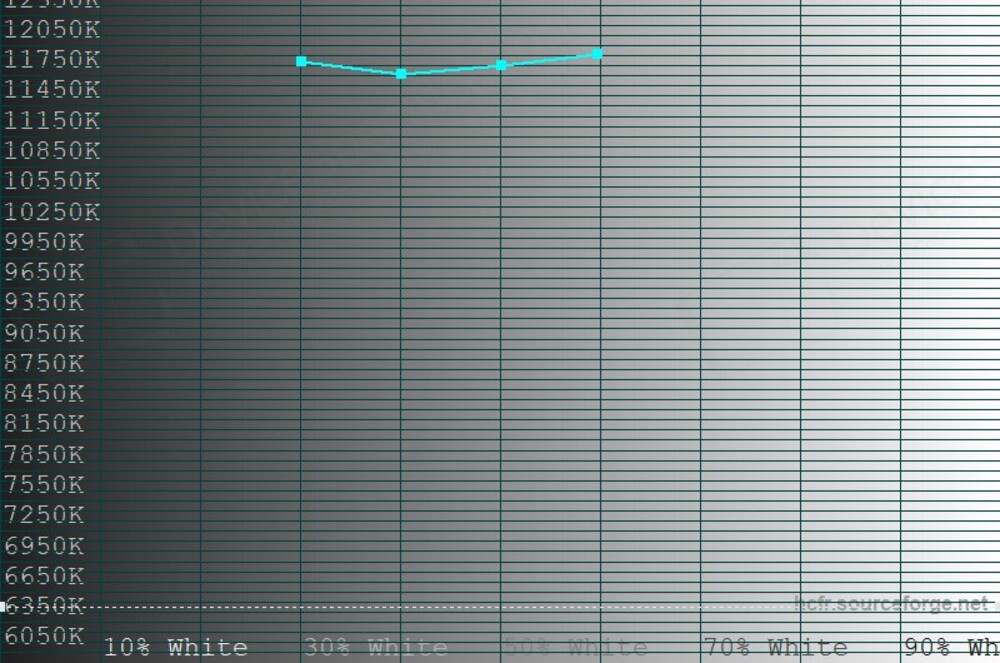
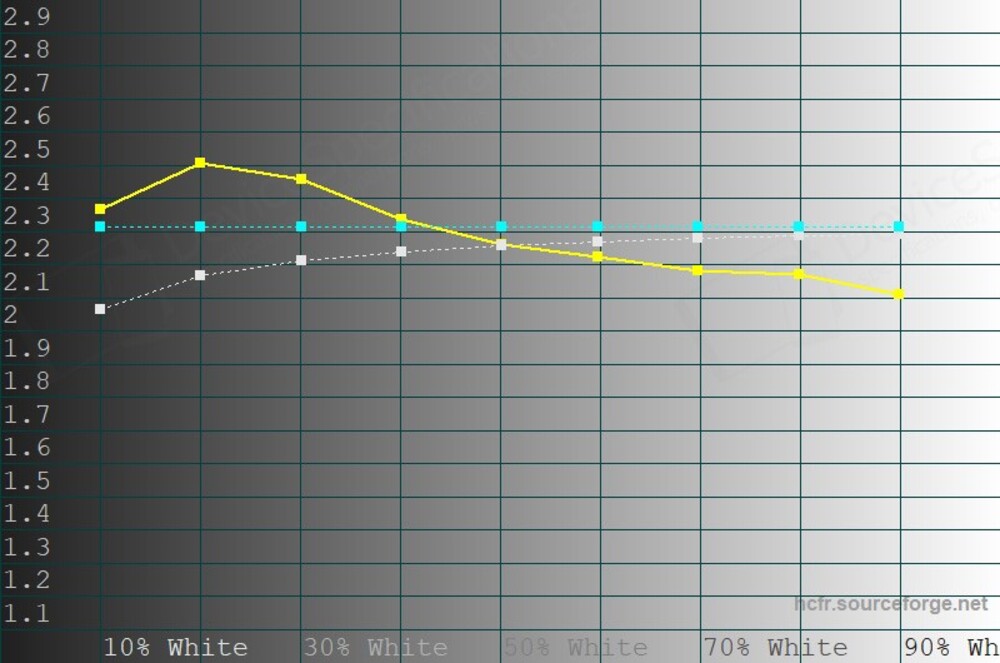
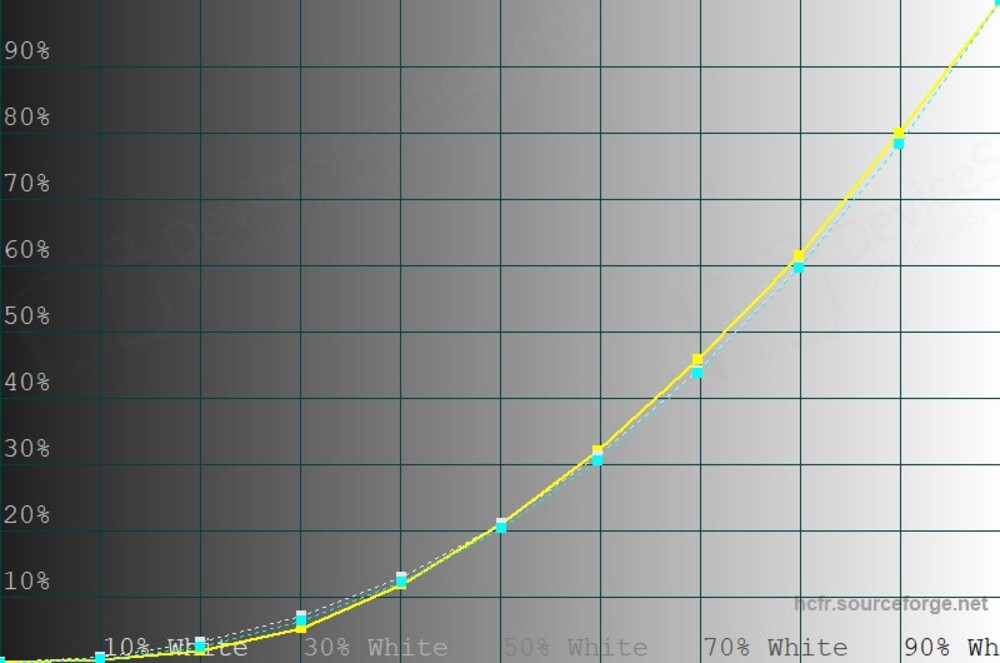
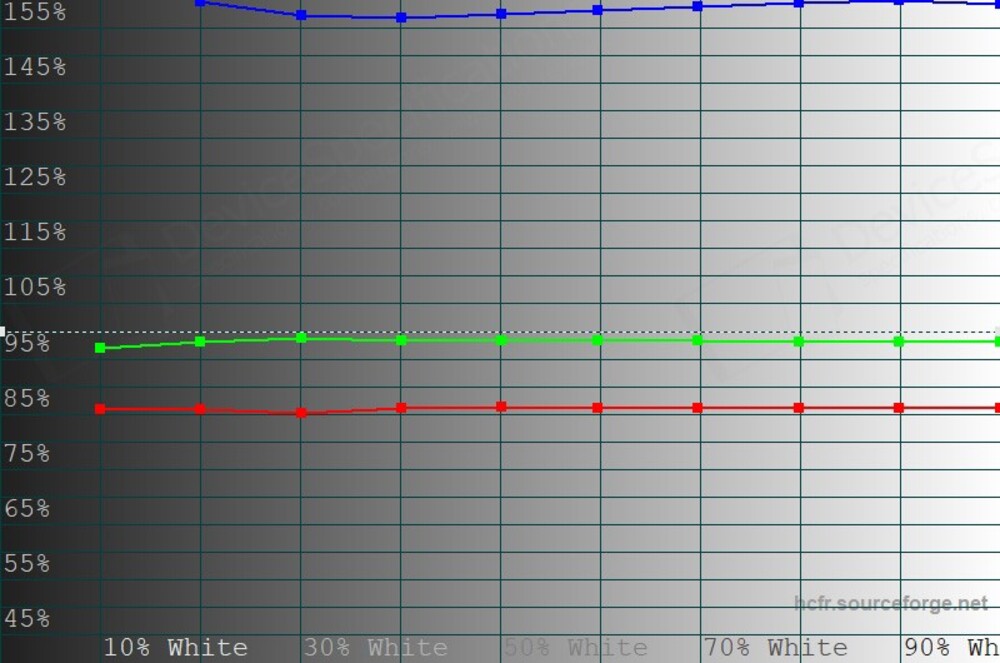
The color gamut is somewhat more complicated, however. According to the CIE diagram, the overall gamut is oriented toward the sRGB color space, but does not fully cover it. For some hues – particularly blue, cyan, dark green, purple, pink, and red – coverage is narrower than the standard. At the same time, light green, yellow, and orange shades extend beyond the sRGB gamut and may appear somewhat oversaturated.

The subpixel structure is standard vertical RGB. As a result, there are no issues with text or fine-detail rendering, and no specific artifacts associated with an unconventional pixel arrangement are observed.


In simple terms, the display is fairly mediocre. But this isn’t a flagship – it’s a straightforward rugged smartphone, and the screen offers enough brightness and sharpness for everyday use. Just don’t expect miracles from this IPS panel.
Read also: Bigme HiBreak Pro Review: An Almost Ideal E-Ink Smartphone for Digital Detox
Performance
Performance in the Cubot KingKong Dura is handled by the Unisoc T620, an entry-level octa-core chip built on a 12-nm process. Its configuration is fairly typical for this class: two cores are clocked at up to 2.2 GHz, while the other six run at up to 1.8 GHz. Graphics are handled by the Mali-G57 MP1 clocked at 650 MHz.

This platform isn’t going to set any performance records, but it’s hardly the smartphone’s weak link either. Especially since Cubot has generously paired it with 12 GB of RAM. If needed, the system can allocate up to another 20 GB of virtual memory from the internal storage.

In practice, this has a positive impact on multitasking: having several apps open doesn’t mean constantly waiting for them to reload.
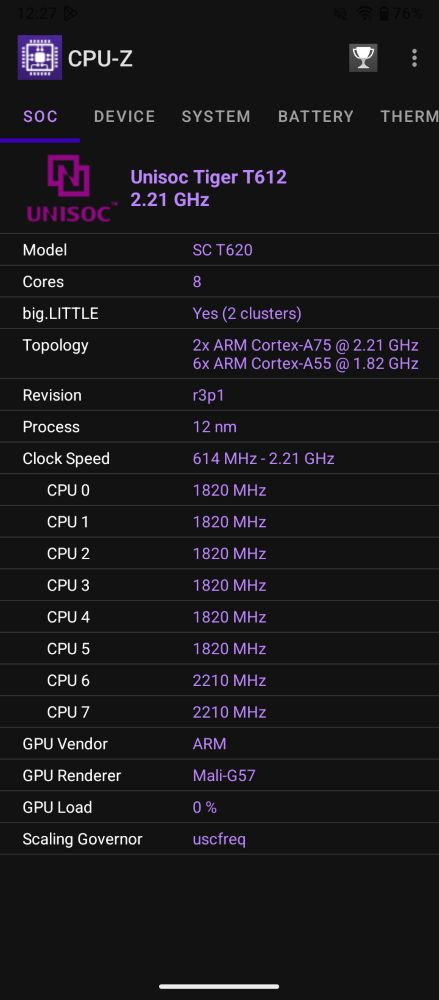
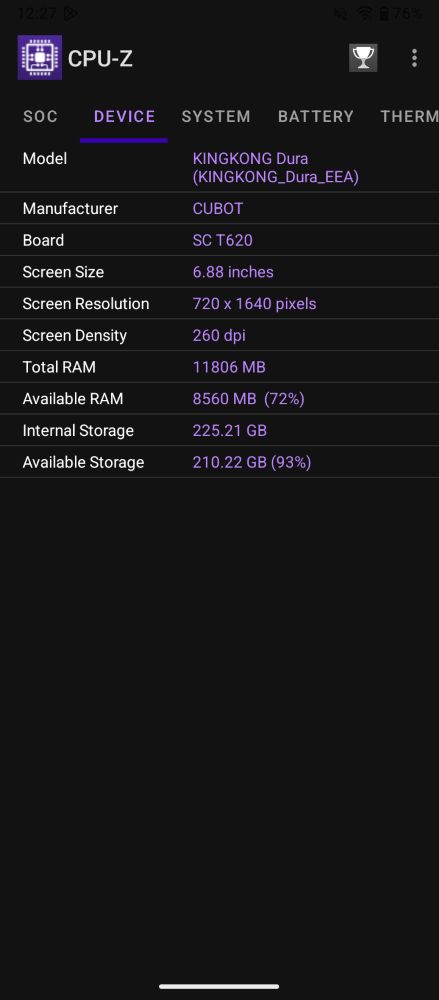
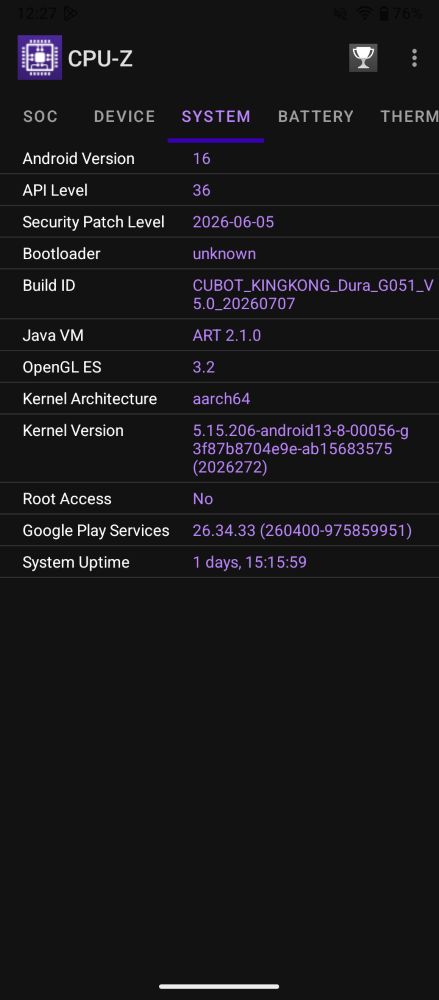
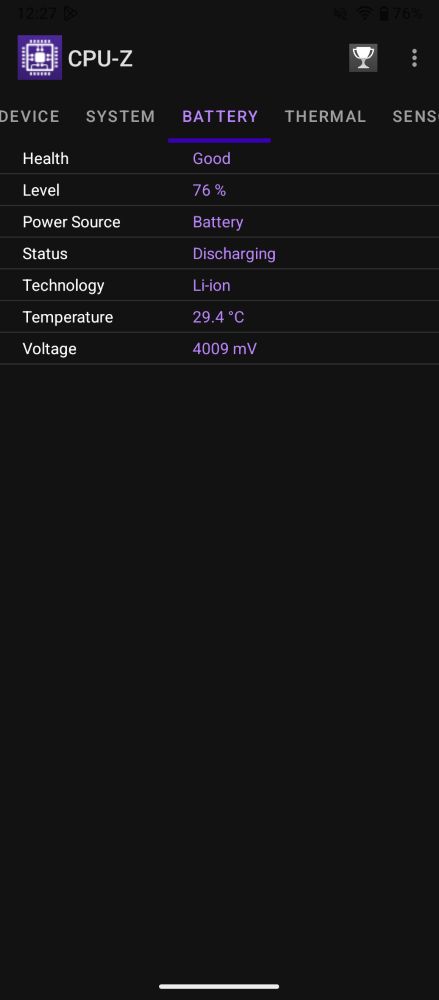
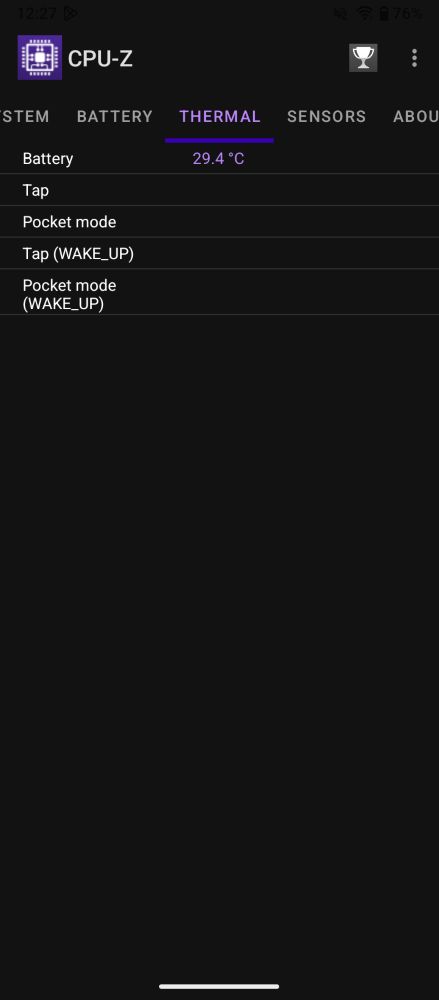
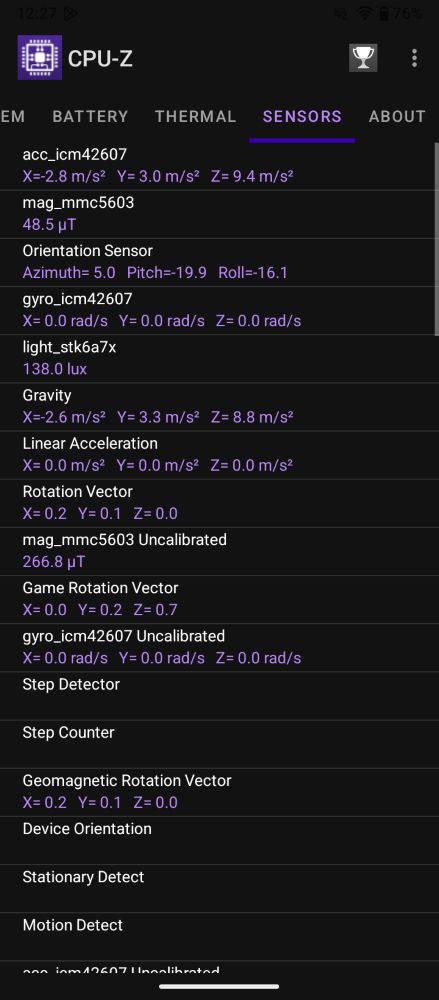
The built-in storage is 256 GB. That should be enough for most users, although those who frequently record video, store large files, or install a lot of games may eventually need more space.

This is where support for microSD cards of up to 1 TB comes in handy. However, the slot is hybrid, so you’ll have to choose between using two SIM cards or a SIM card and a memory card.
In everyday use, the KingKong Dura performs quite confidently. Android 16 runs smoothly, menus and transitions don’t leave you feeling like you’re constantly waiting, and most everyday apps launch without noticeable delays. This isn’t the kind of smartphone that will impress you with its speed, but it certainly won’t have you getting frustrated with every tap either.
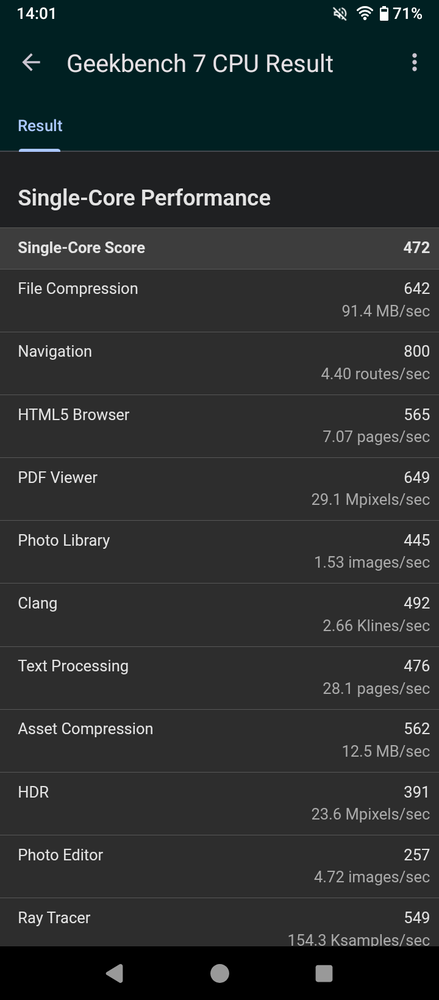
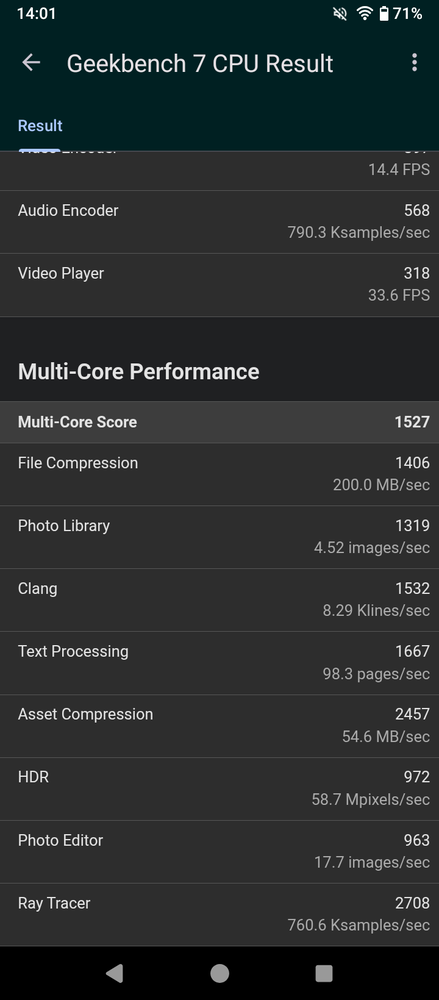
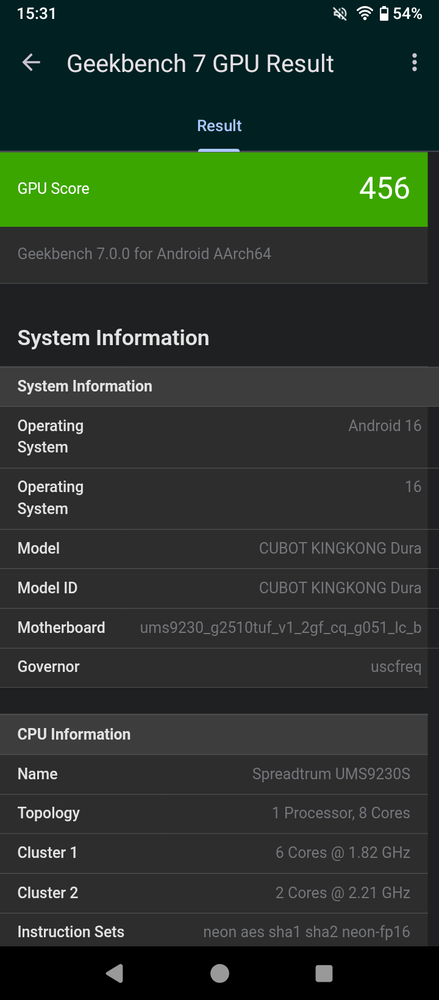
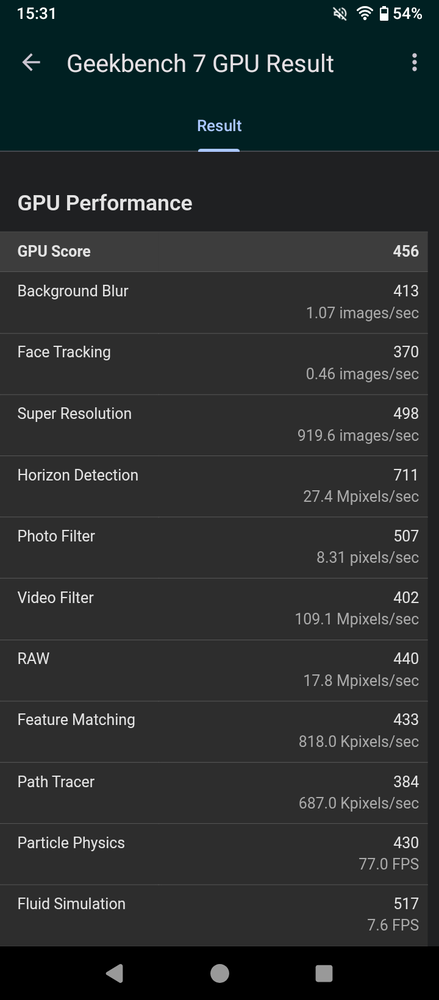
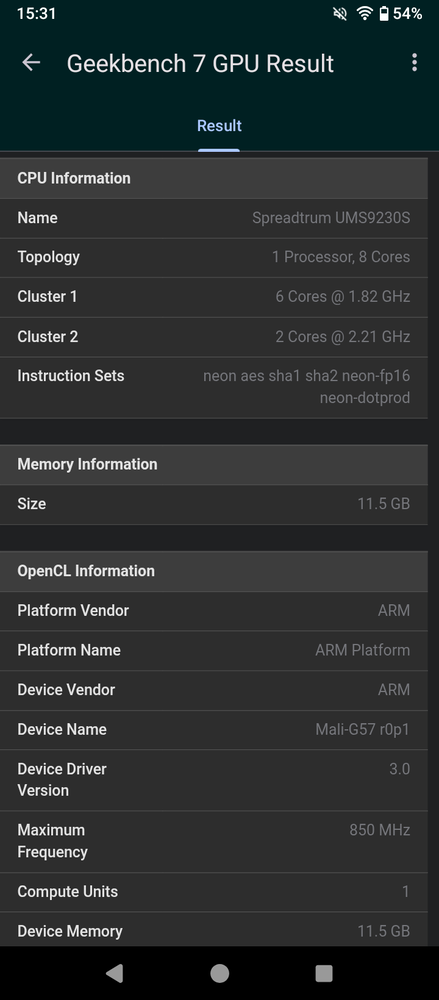
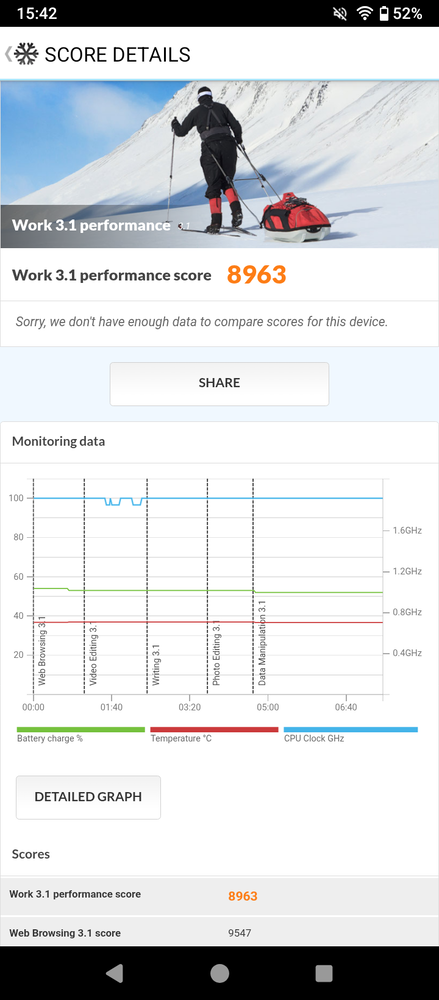
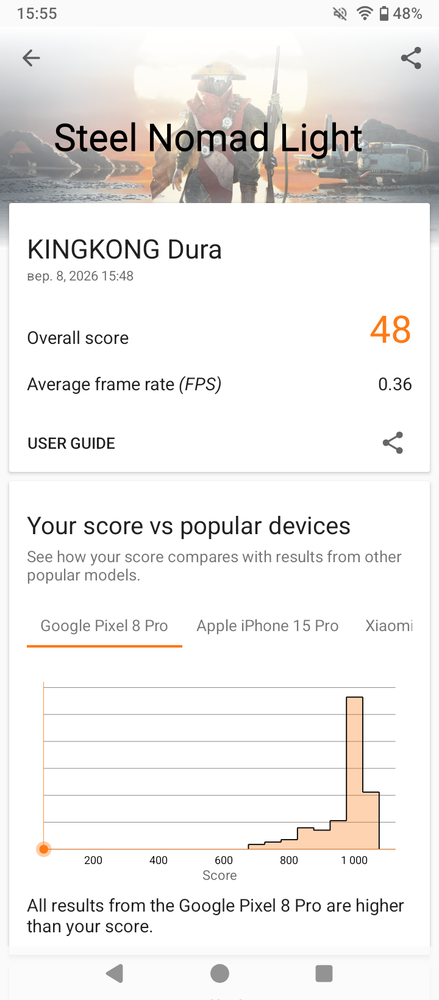
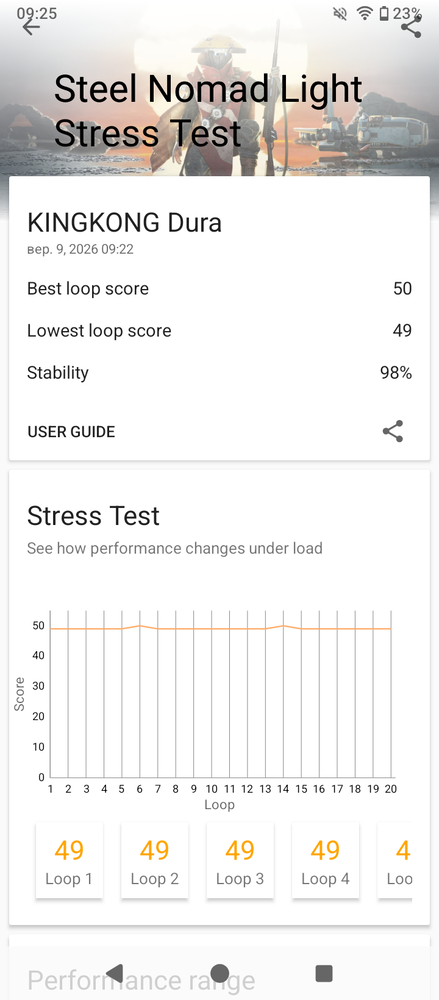
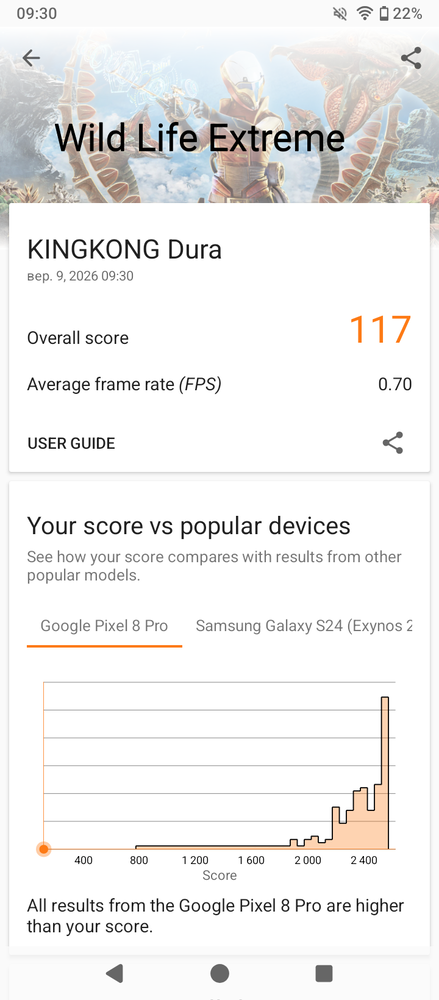
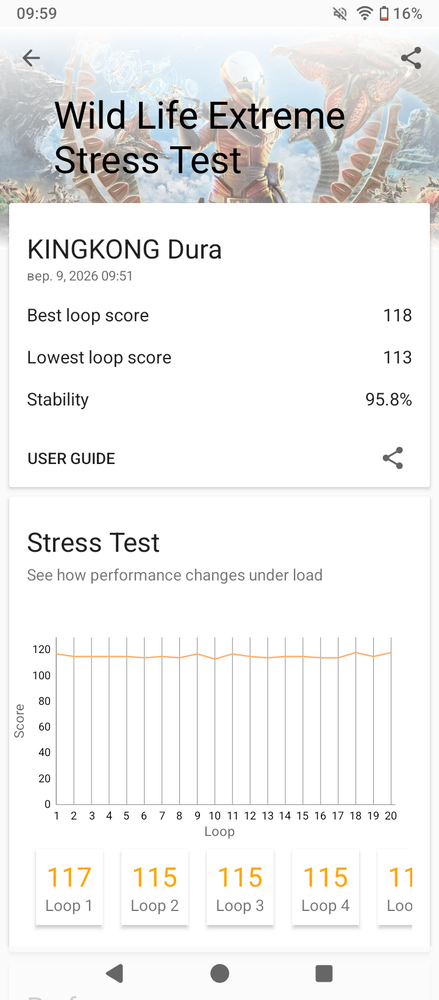
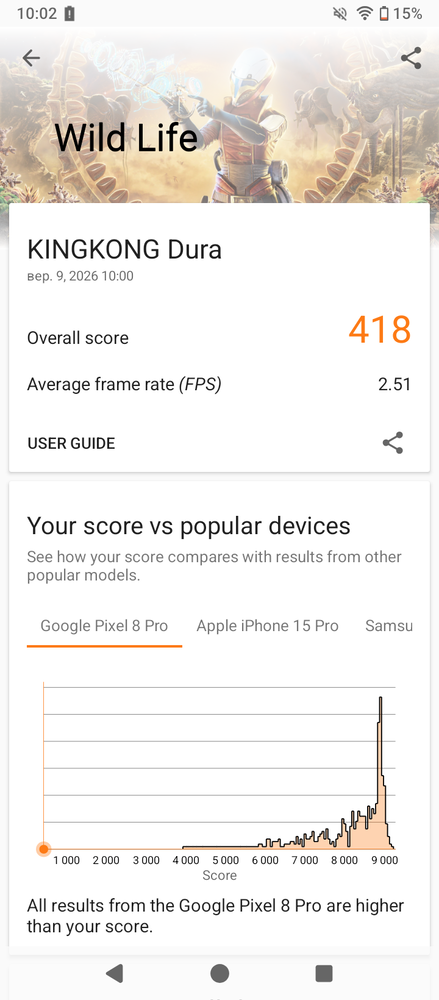
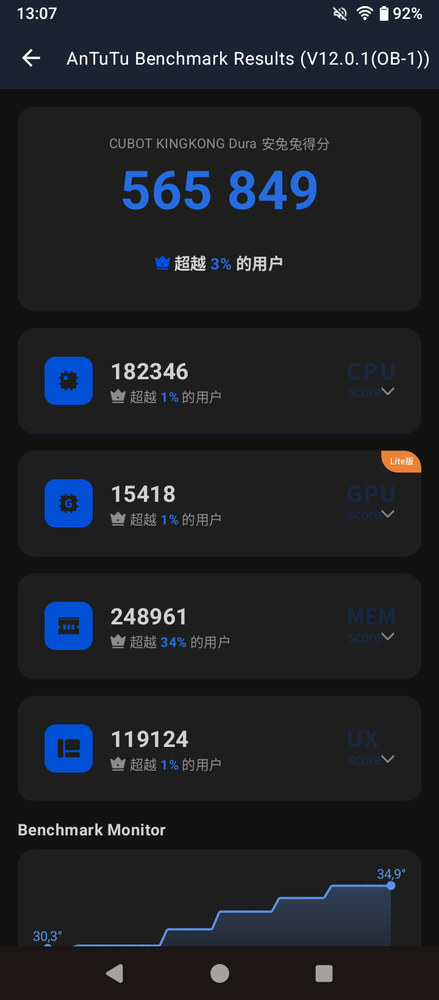
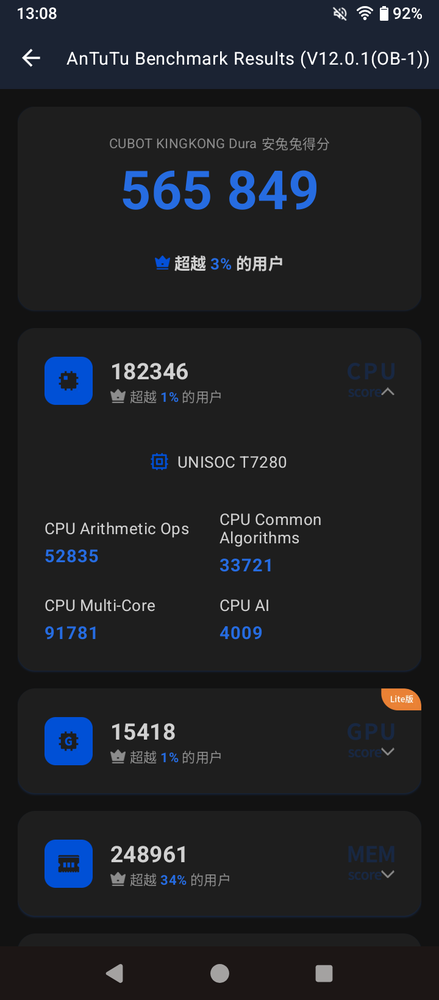
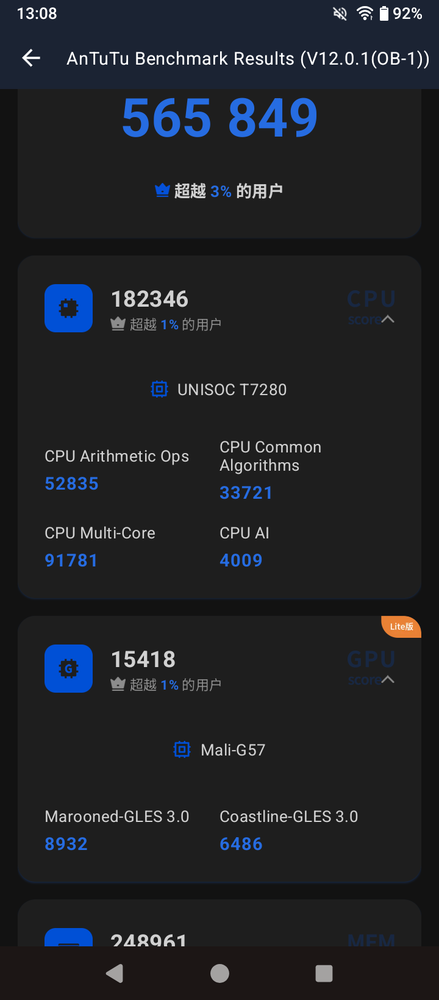
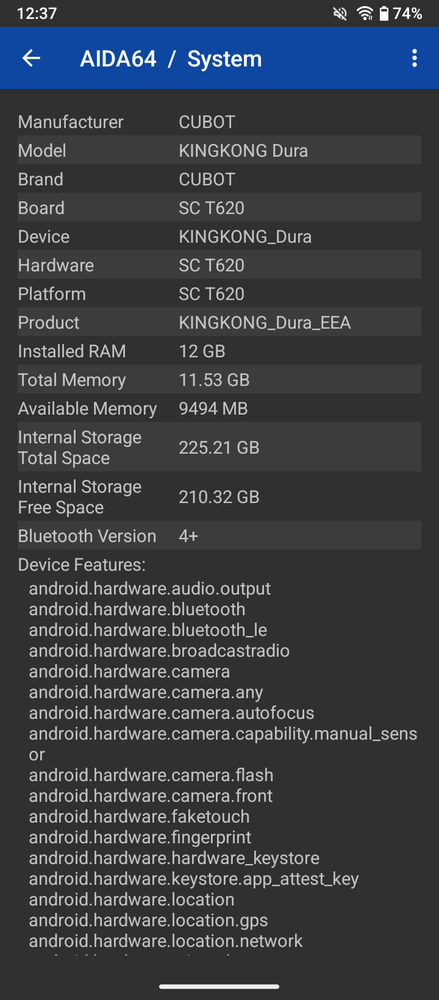
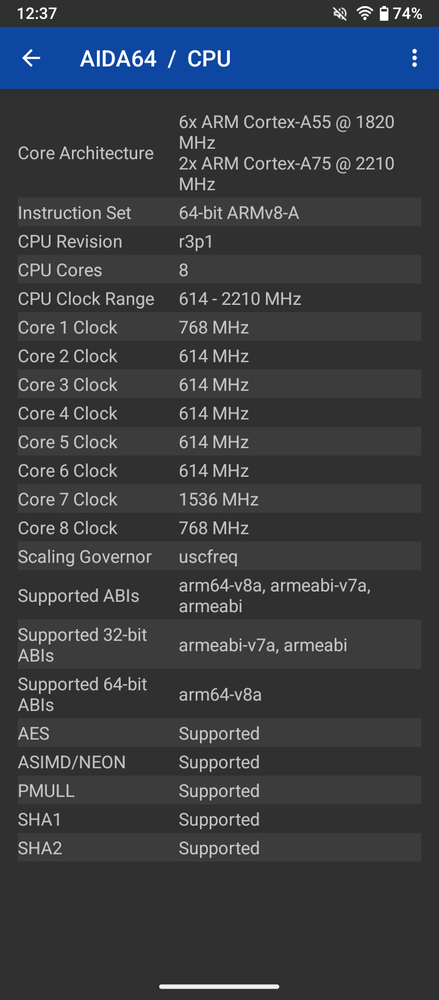
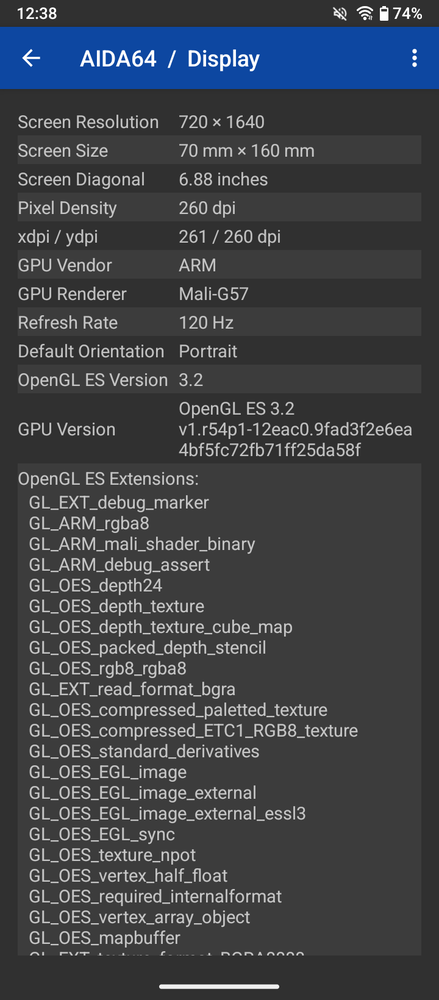
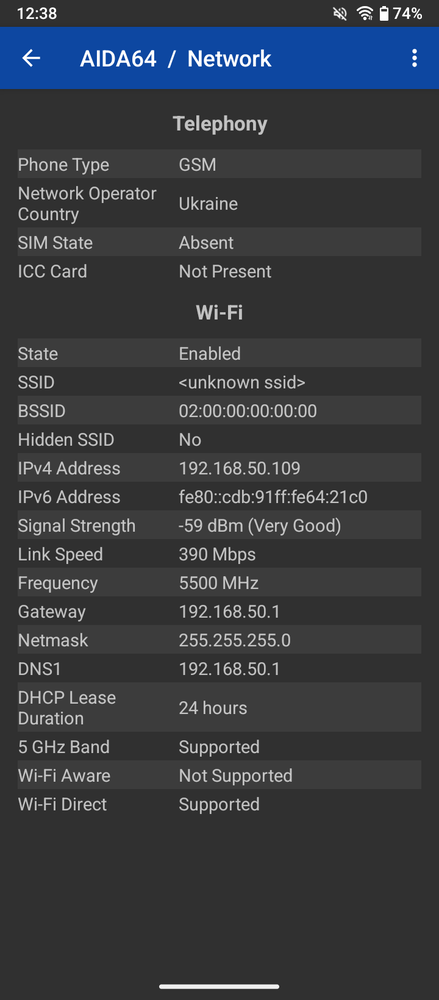
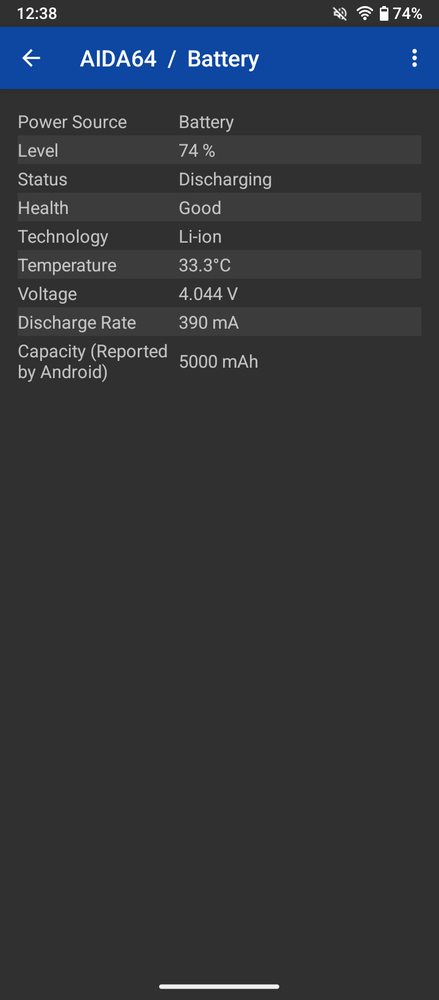
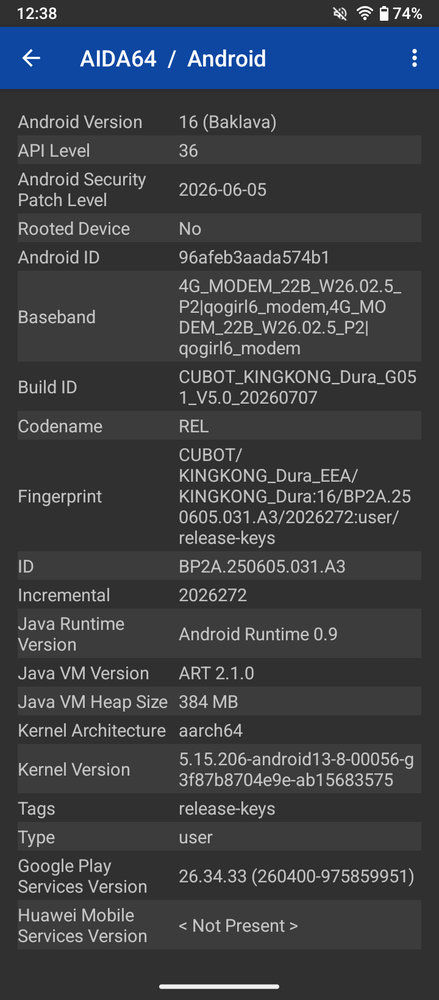
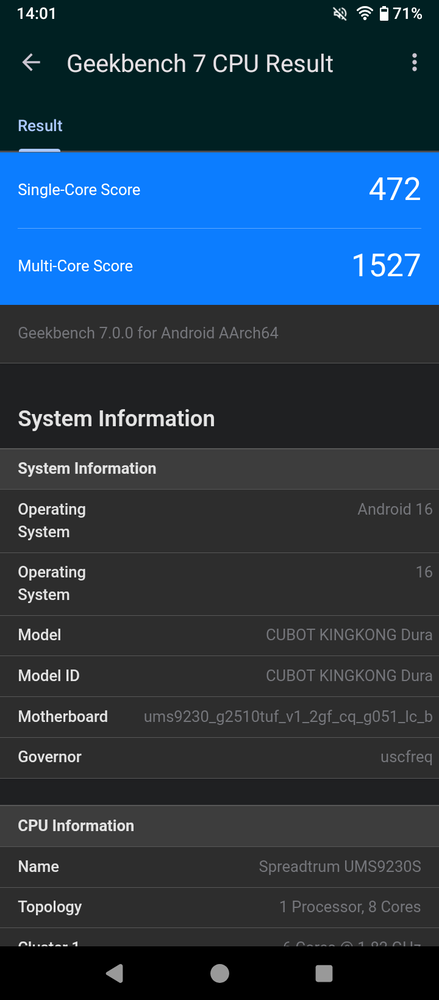
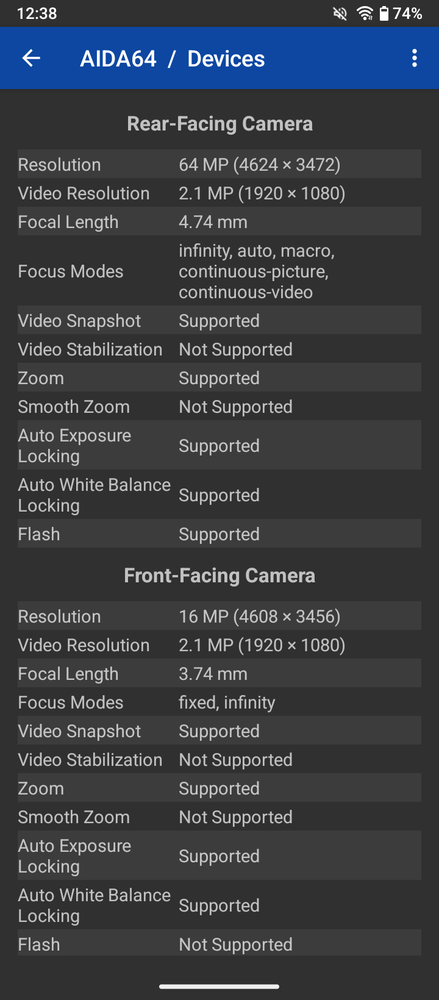
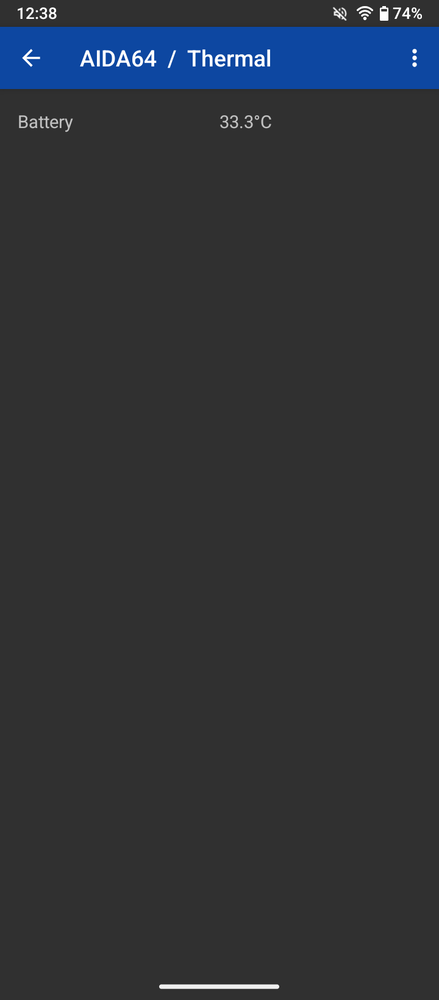
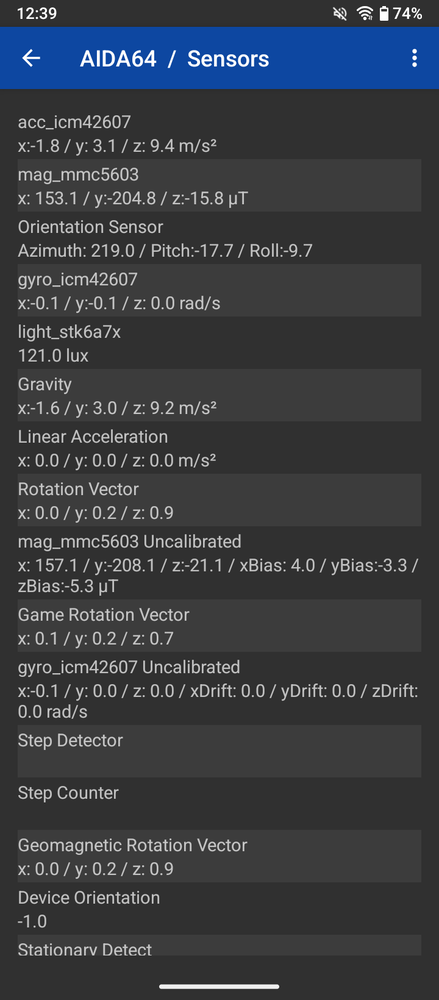
The synthetic benchmark results only confirm the obvious: this is a budget device with no pretensions of setting performance records. The scores are in line with what you’d expect from this class, and more importantly, those numbers don’t translate into a constant battle with lag in real-world use.
That said, there are still a few situations where a little more performance would be welcome. This is most noticeable when using the camera: the app may take a moment when switching between modes or saving photos at the full 64 MP resolution. Minor delays can also occur when scrolling through Facebook or YouTube feeds. But these are more isolated quirks than anything that could seriously detract from the overall experience.
Read also: Samsung Galaxy Fold8 Ultra Review: Thinner, More Powerful, and… More Expensive
What About Gaming?
The KingKong Dura doesn’t pretend to be a gaming smartphone from the outset, so you shouldn’t expect flagship-level performance. Casual games, puzzles, and simple 2D titles run without any major issues.

More demanding games are predictably a different story. In PUBG Mobile or Call of Duty: Mobile, you’ll need to lower the graphics settings to achieve acceptable smoothness. At medium settings, the frame rate stays around 40–50 FPS, although dips are possible in more demanding scenes.
In other words, the KingKong Dura is perfectly capable of handling games, but turning it into a pocket gaming console isn’t the best idea. The Unisoc T620 is designed primarily for everyday tasks, not hours-long gaming marathons.

Overall, the Cubot KingKong Dura delivers exactly the kind of performance you’d expect from a budget rugged smartphone. It handles social media, messaging, web browsing, video playback, and most everyday tasks with confidence, while also letting you play more demanding titles if you’re willing to accept a few compromises.
This isn’t a smartphone you buy for benchmark numbers. Its strength lies elsewhere: it’s fast enough in everyday use that you rarely feel like you’re dealing with a budget device. And for a smartphone in this class, that’s probably what matters most.
Read also: Cubot Tab Kingkong rugged tablet review
Sound and Connectivity
The Cubot KingKong Dura’s earpiece is fairly average. The frequency range is narrow and there isn’t much volume headroom, but it’s perfectly adequate for calls. Voices come through clearly without distortion, although they have a slightly “metallic” character. In noisy environments, you’ll need to hold the phone closer to your ear, but this doesn’t affect the actual call quality.
There’s a single multimedia speaker here, using a classic mono setup. The sound is flat, with a noticeable emphasis on the high frequencies and almost no bass. Volume is average, with little headroom, so it’s enough for watching YouTube or browsing social media, but you’ll be better off using headphones for music.

The hybrid tray for two Nano-SIM cards is located on the left side and sealed with a red gasket, providing an additional barrier against moisture and dust. Network connectivity is comprehensive, covering 2G GSM, 3G WCDMA, 4G FDD-LTE, and 4G TDD-LTE across virtually all common bands. Wireless connectivity is equally well covered, with NFC, Bluetooth 5.0, Wi-Fi 5, Wi-Fi Direct, Hotspot, and Cast Display. The navigation module supports GPS, GLONASS, Galileo, and BeiDou, while positioning accuracy in testing reached 2 meters – a respectable result for a smartphone in this class. There’s also a USB Type-C 2.0 port.
Read also: Cubot KingKong ES 5 Review: Rugged, Affordable, and Equipped with Flashlight
Cubot KingKong Dura Software
The Cubot KingKong Dura runs Android 16, which is a nice bonus for a budget smartphone. Most competitors still ship with Android 14 or 15. That said, things are less optimistic when it comes to future updates: Cubot isn’t known for providing long-term software support, so I wouldn’t count on Android 17 just yet.
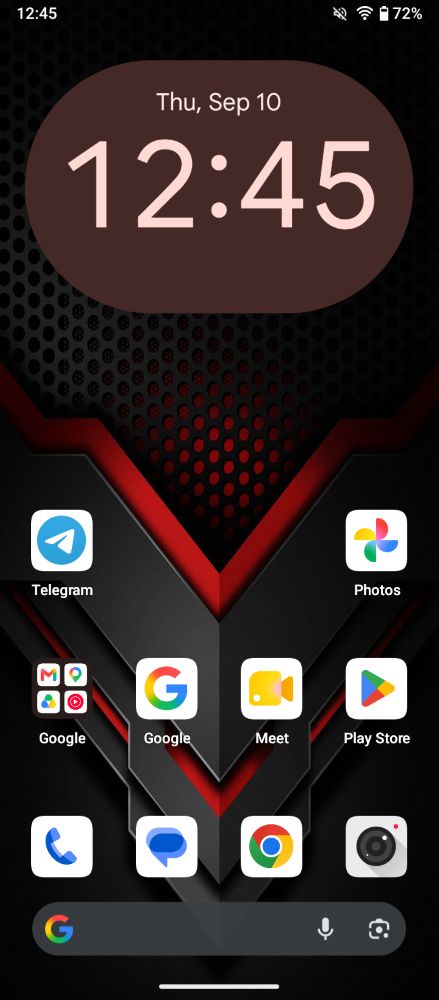
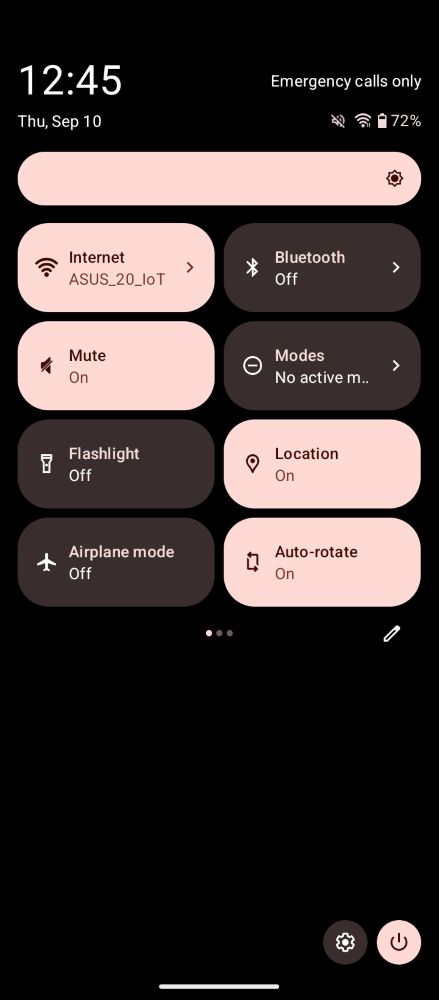
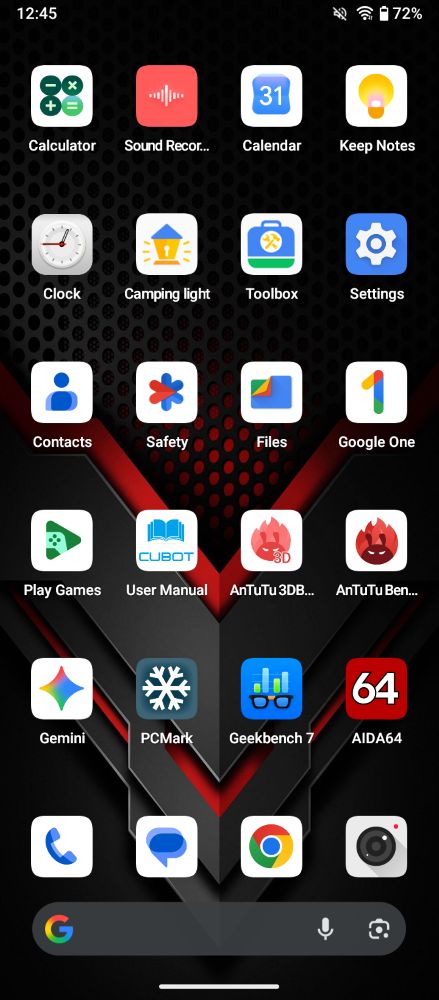
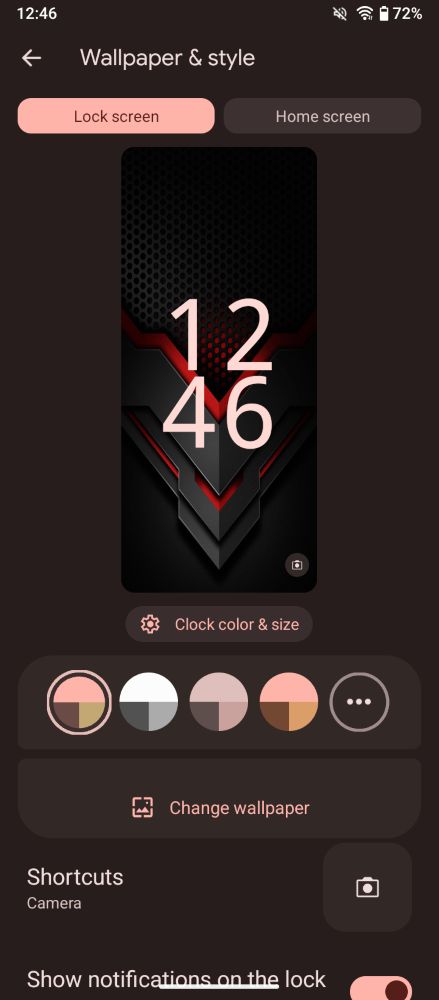
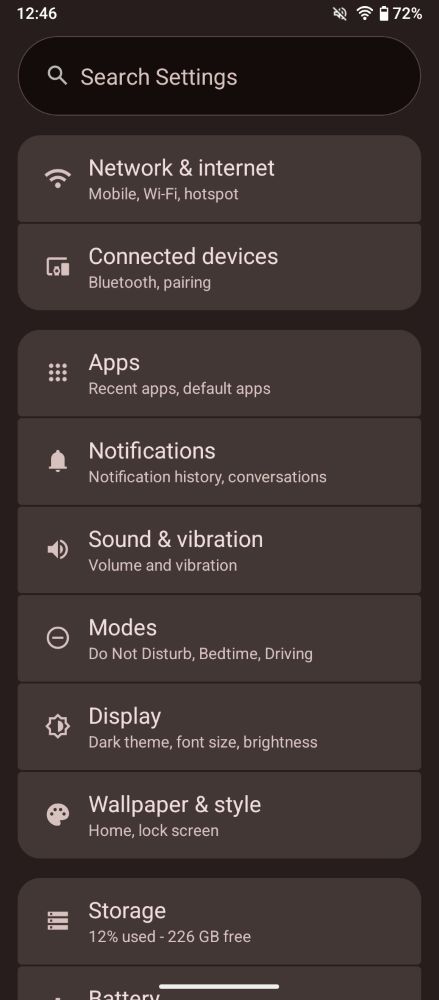
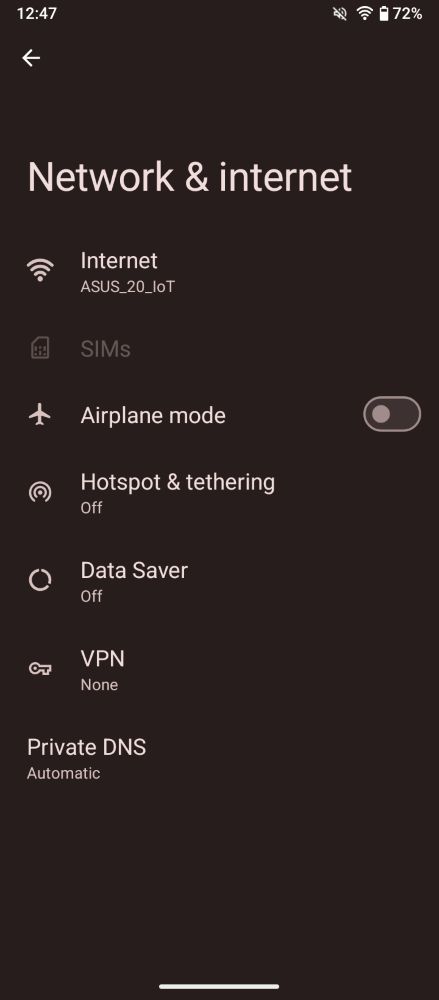
The interface is as close to stock Android as it gets. There’s essentially no custom skin, just a launcher with slightly modified icons and a few cosmetic tweaks. Overall, everything looks clean, simple, and straightforward.
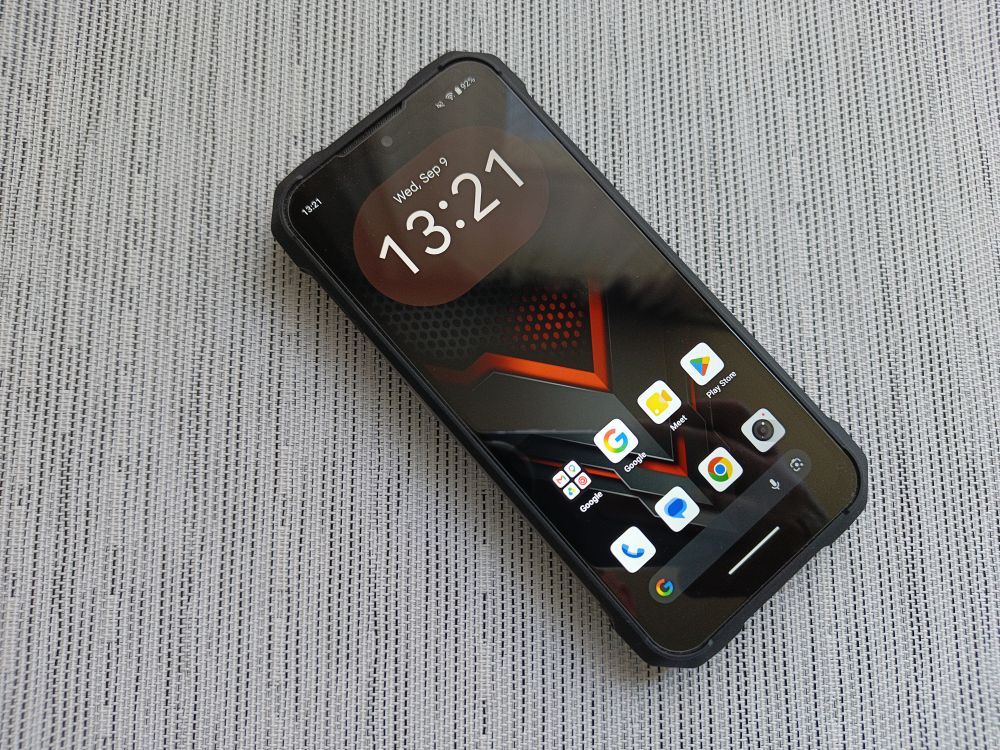
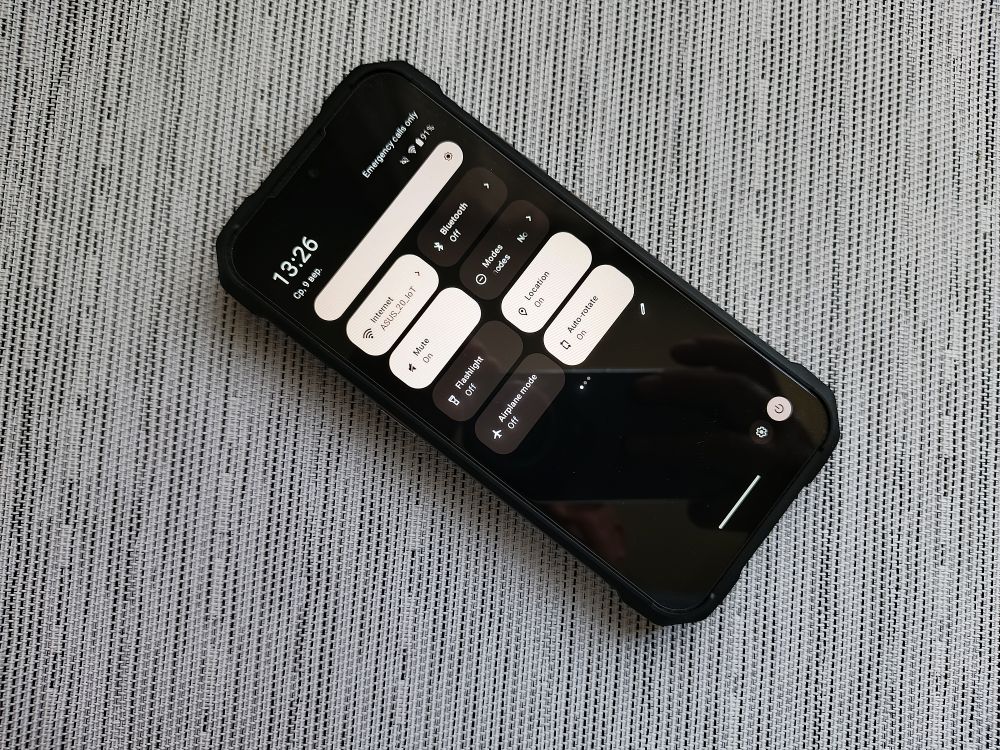
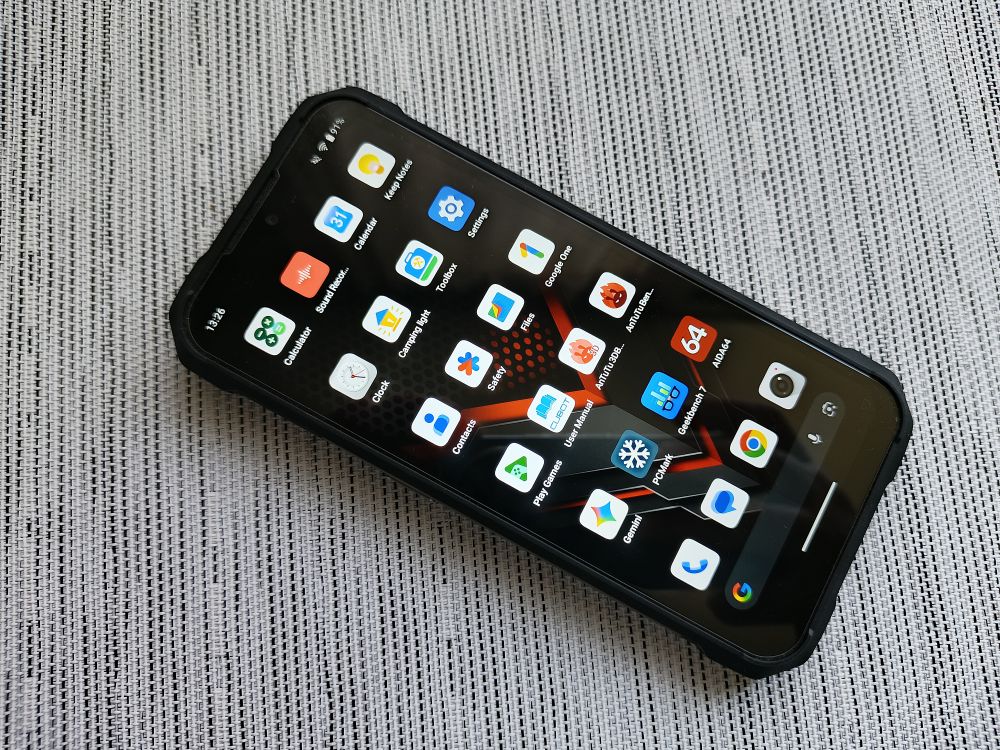
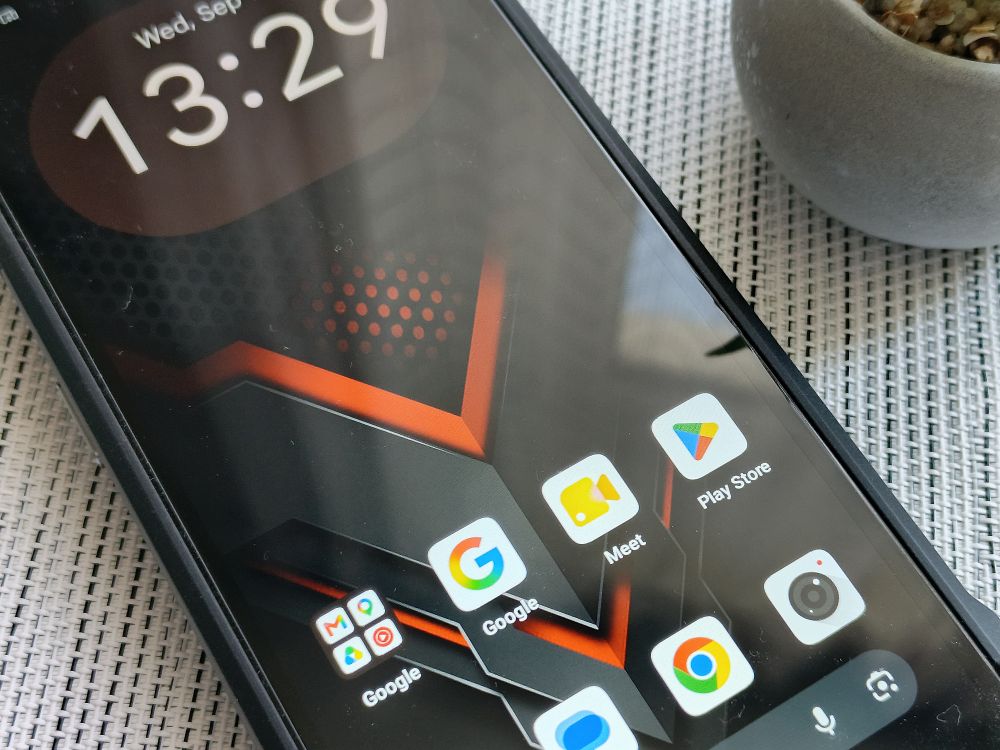
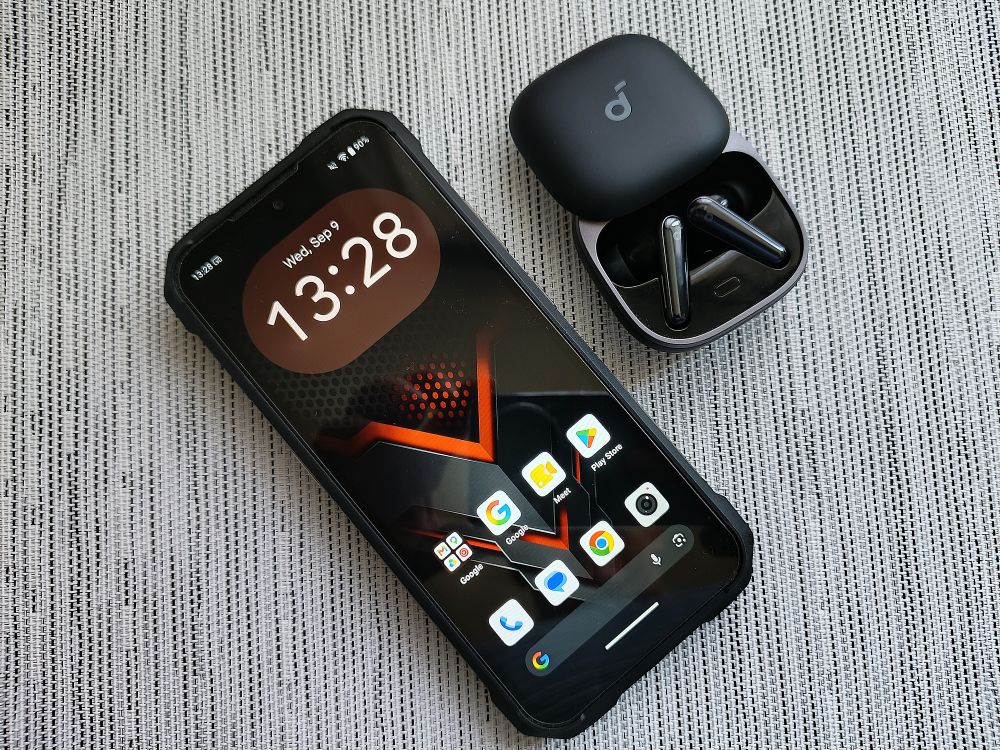
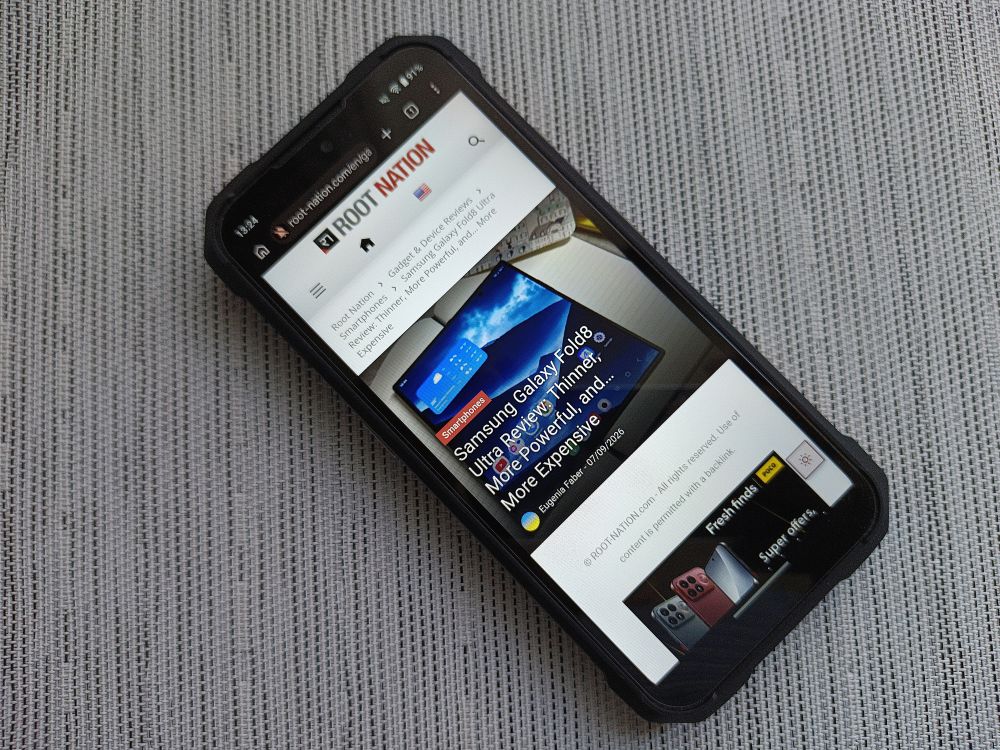
It’s nice to see that the manufacturer hasn’t overloaded the system with unnecessary software or ads. There’s the standard set of Google services – YouTube, Gmail, Maps, Play Store, Assistant, and Feed – and practically nothing else.
During testing, the system remained stable and smooth, with no freezes, noticeable slowdowns, or issues switching between apps. Split-screen mode, one-handed operation, and several useful gestures are also supported, including lifting the phone to wake the display, double-pressing to launch the camera, and taking a screenshot with three fingers. Three-button navigation is enabled by default, but it can be replaced with gesture navigation.
The only thing that feels slightly lacking is a dedicated gaming mode. It’s not critical for a rugged smartphone, but some basic performance optimization during gaming would have been a welcome addition.
Overall, the KingKong Dura’s software leaves a positive impression: clean Android, minimal bloatware, a full set of Google services, and stable performance. That’s exactly what you want from a smartphone in this class.
Read also: CUBOT TAB KINGKONG S Rugged Tablet Review: Practicality and Reliability
Cubot KingKong Dura Cameras
When you’re dealing with a budget smartphone, you’re inevitably shackled by the economics. There are no high-quality sensors with large pixels or fast lenses here – just a camera. It takes pictures, sometimes even in focus, and every now and then produces shots that could boldly be described as art-house photography.

The main camera is built around a 64-megapixel sensor with an f/1.8 aperture. By default, photos are captured at 16 MP using pixel binning, while the full 64 MP resolution requires manually enabling the dedicated 64 MP mode. The main camera records video in Full HD at 30 fps.
The setup is complemented by a 2-megapixel macro lens with a 4 cm minimum focusing distance and an f/1.85 aperture – a standard budget-segment offering with no pretensions of artistic photography.
The front-facing camera has a 16 MP sensor and an f/2.25 lens. It also records Full HD video at 30 fps and handles face unlock. It’s fast and reasonably reliable for everyday use.















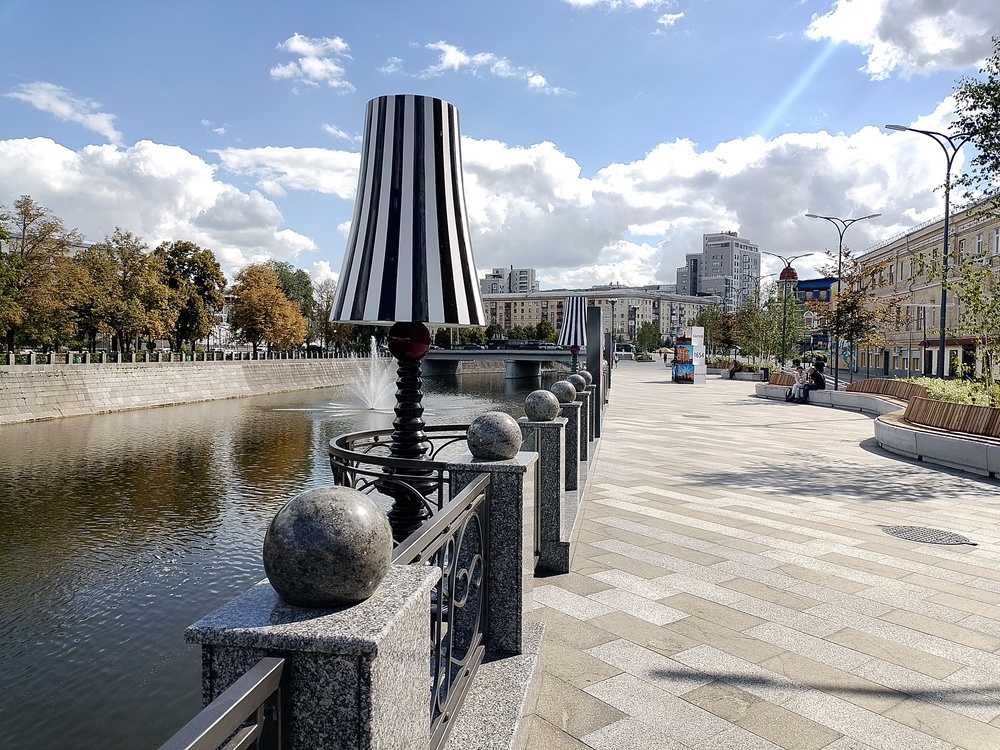




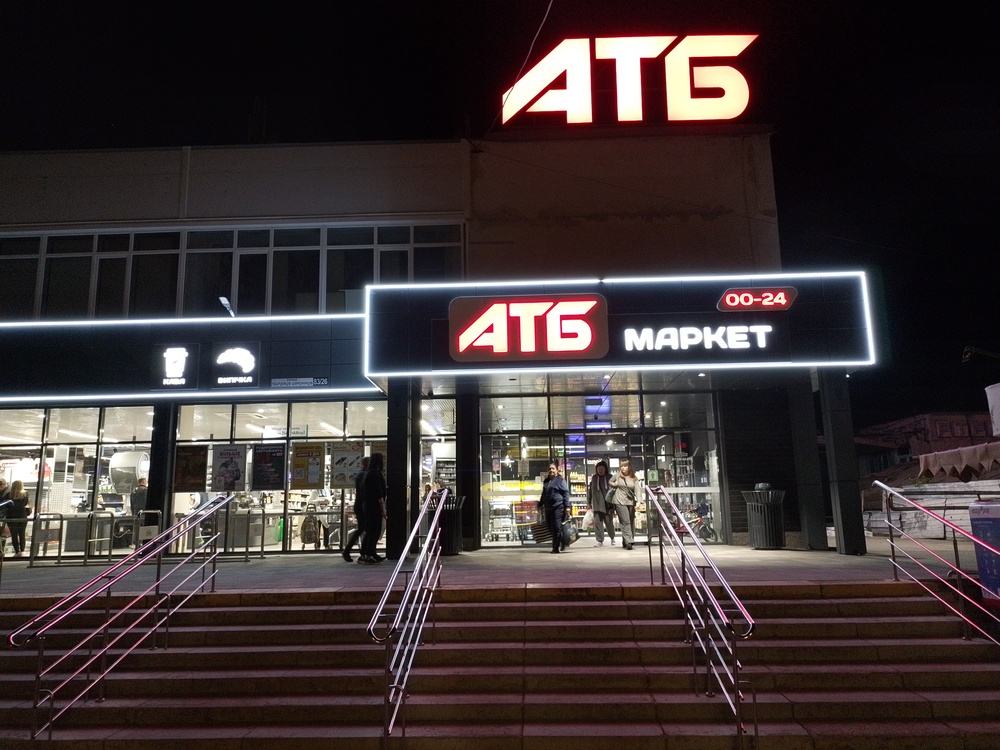
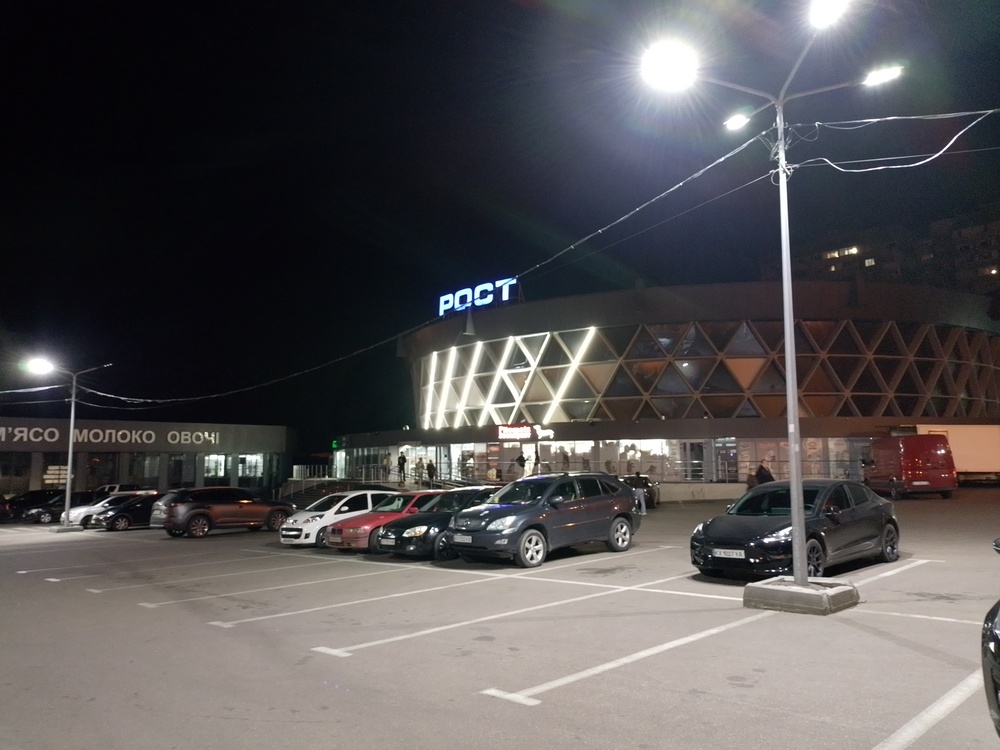
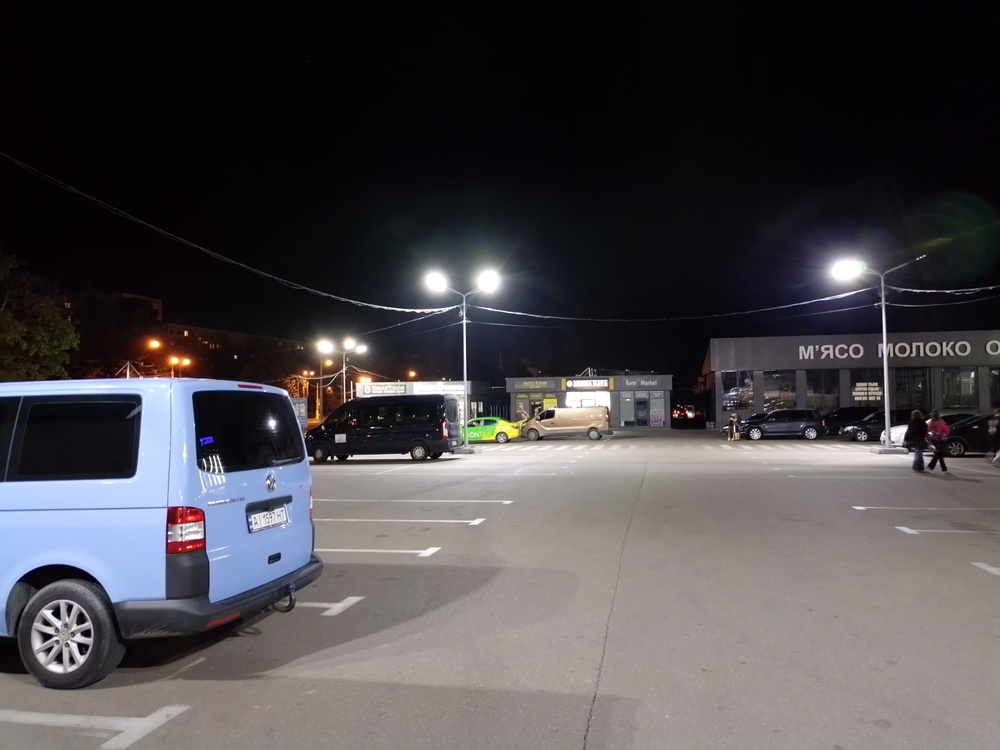
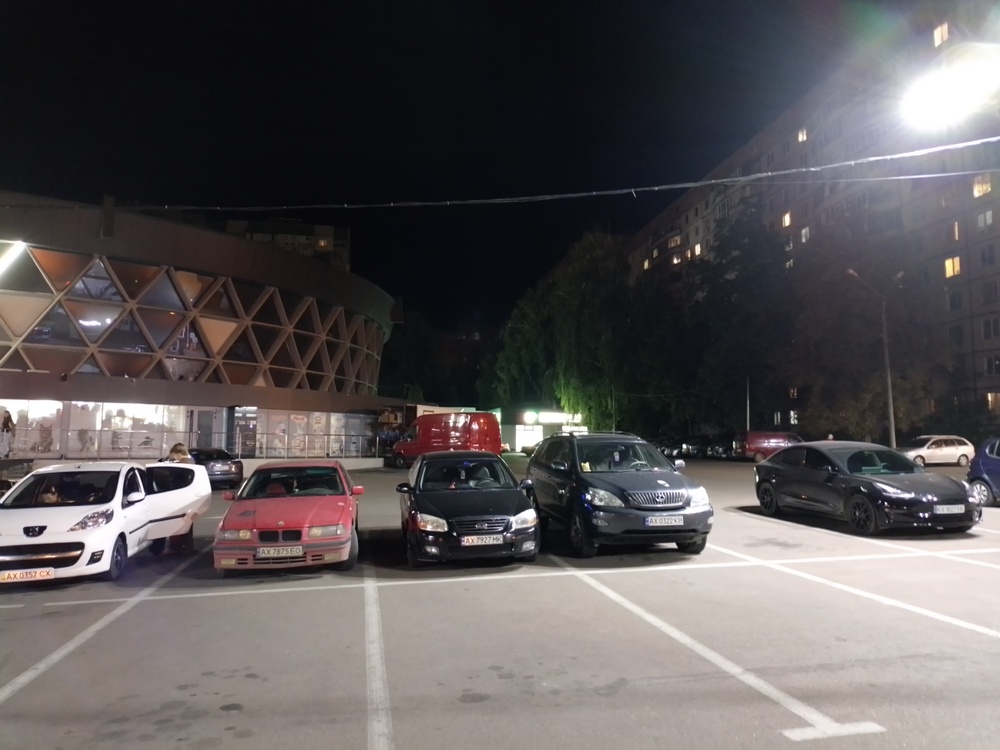
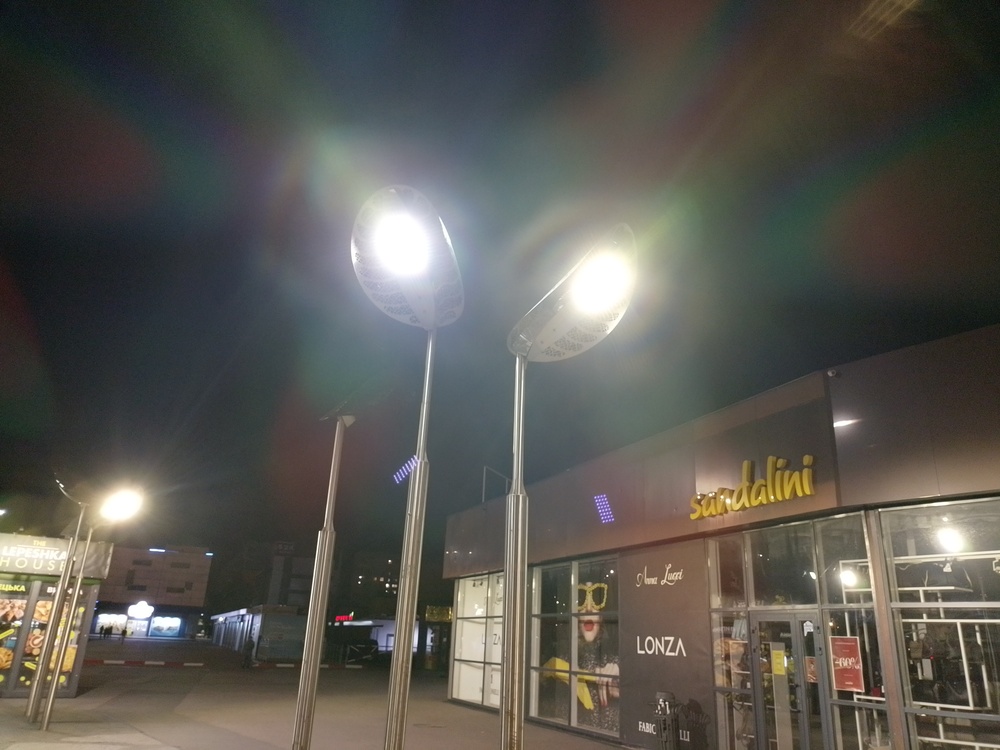
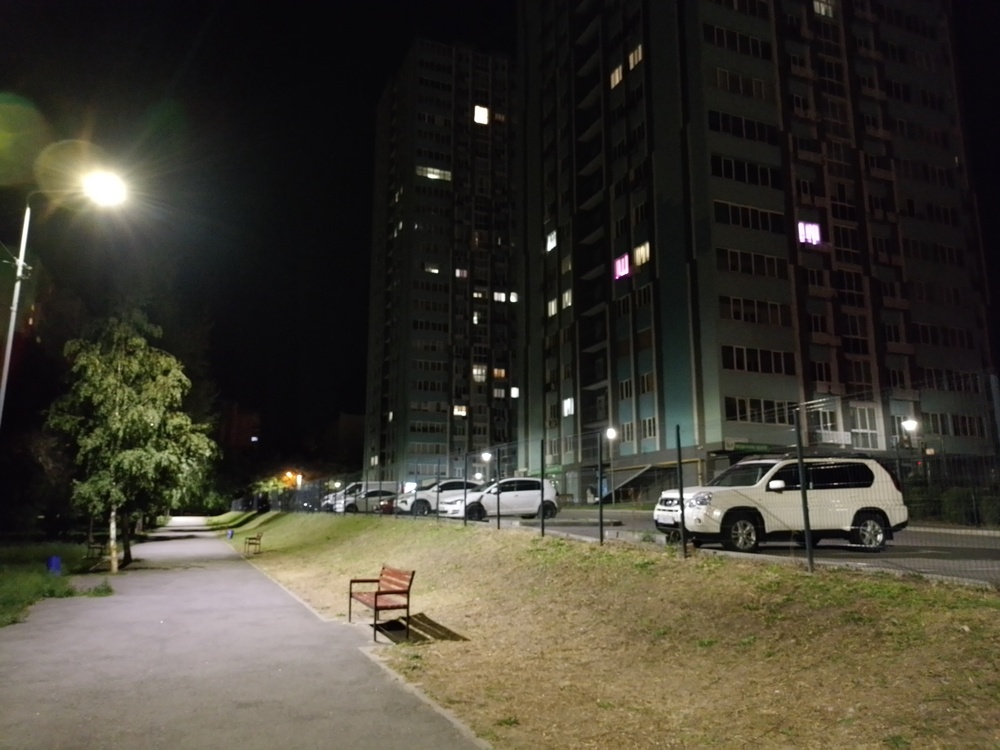
The headline-grabbing 64 MP resolution of the main camera feels like an attempt to create the illusion of flagship-level capabilities. But, as is often the case, quantity doesn’t translate into quality here: the megapixels are there, but the sharpness isn’t. Even in sunny conditions, photos can come out washed out, with crushed shadows and blurry details. Every now and then, though, the camera manages to produce a surprisingly decent shot – just don’t count on it happening consistently.













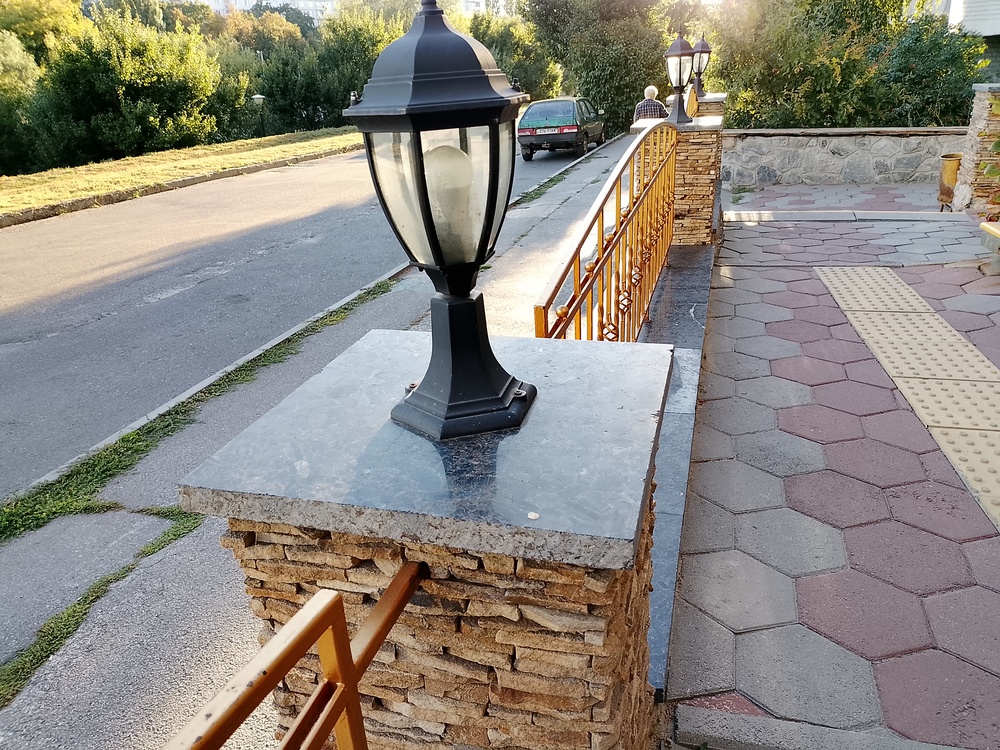


At night, things only get worse. Contrast increases, while colors become duller. In low-light conditions, everything seems to depend on the smartphone’s mood: sometimes the shot turns out reasonably decent, while other times it looks like a frame from a security camera. The “Night” mode does help a little by bringing out more light, but usually at the cost of increased noise and lost detail.


The macro lens feels more like a decorative feature, added so the phone can look “like everyone else’s” in 2026. In practical terms, it offers very little value.






The 16 MP front-facing camera doesn’t exactly save the situation either. Yes, it’s there – and that’s already something. But its photos are more about proving that the camera exists than delivering any meaningful quality.




Selfies are mediocre at best: they lack sharpness, the white balance seems to have a mind of its own, and the dynamic range is fairly narrow.
Video is recorded in Full HD, but there are no miracles here either. Stabilization supposedly exists in the settings – but only there. In practice, the image shakes with the slightest movement, while the audio is recorded with noticeably heavy compression.

The camera on this smartphone isn’t about creativity or impressing anyone. It’s simply a basic tool that covers the essentials and occasionally reminds you that the budget segment is, first and foremost, about compromises.
YOU CAN VIEW THE ORIGINAL PHOTOS AND VIDEOS HERE
Battery Life and Removable Battery
The Cubot KingKong Dura comes with two 5,000 mAh batteries: one installed in the phone and the other included in the box, where it can be charged separately using a dedicated charging dock. Both support 20 W fast charging.
This isn’t just a “feature for the sake of it” – the manufacturer has also taken the legal side of things into account. A device with a removable battery and IP67 protection complies with the new EU rules (Regulations 2023/1670 and 2023/1542), which require smartphone batteries to be easily replaceable. In other words, Cubot could have simply sealed the battery inside, but deliberately chose the more complicated – and more sensible – approach.

In testing, the phone charged from 0 to 100% in 2 hours and 5 minutes. The first 80% took 1 hour and 25 minutes, while the remaining 20% took another 40 minutes as charging slowed down. The battery warmed up slightly during charging, from 24°C to a maximum of 32°C, before cooling back down to 29°C.
Battery life results were good as well. During web browsing, the phone lasted 9 hours and 15 minutes of continuous use. Interestingly, the result was almost identical at both 60 Hz and 120 Hz – the system automatically switches to the higher refresh rate only when it’s actually needed. Video playback lasted even longer, with the phone managing 14 hours and 21 minutes.

And that’s with just one battery. Considering that the second one can be swapped in immediately when the first runs out, the practical limit of the phone’s battery life depends more on the owner than on the device itself.
The battery settings are well thought out, too. They include per-app power consumption statistics, an adaptive mode, battery percentage display in the status bar, standard and enhanced power-saving modes, and a “Battery Health” section showing the manufacturing date, first-use date, and number of charging cycles. You can also choose which apps should “go to sleep” after the screen is locked or be allowed to launch automatically, helping optimize battery consumption around your individual usage habits.
Read also: Expanding RAM in a smartphone: what it is and how it works
Conclusion
The Cubot KingKong Dura is a fairly rare case of a rugged smartphone trying to offer something more than just a “thick body and huge battery.” The manufacturer has opted for an interesting compromise: instead of chasing record-breaking battery capacity, it made the device relatively slim – for an armored vehicle, at least – and compensated with a dual-battery system. Both batteries are removable, and one can always be charged separately while the other powers the smartphone.

The laboratory battery-life results – 9 hours and 15 minutes of active web browsing and almost 14.5 hours of video playback on a single battery – are already quite respectable. And with the second battery supporting hot swapping, the practical runtime has virtually no upper limit, depending only on how many charged batteries you have with you.
Despite its modest HD+ resolution, the display delivered good brightness uniformity and fairly accurate, though not perfect, color reproduction. The Unisoc T620 delivers the kind of budget performance you’d expect, with no pretensions of serious gaming, while the cameras are, predictably, one of the model’s weaker points, better suited to casually capturing everyday moments than to anything resembling creative photography.

But the real story here isn’t the benchmark numbers – it’s the device’s underlying philosophy. Cubot didn’t simply add “another battery”; the company took the concept a step further, addressing the EU’s requirements for repairability and battery longevity. It’s a rare case where a marketing feature is backed up by genuine engineering and regulatory work. And if you’re looking for a rugged smartphone where the question of “will the battery last?” practically stops being relevant, the KingKong Dura is one of the few devices on the market that genuinely solves the problem rather than simply masking it with a gigantic battery.
Where to buy CUBOT KINGKONG Dura