





© ROOT-NATION.com - Use of content is permitted with a backlink.
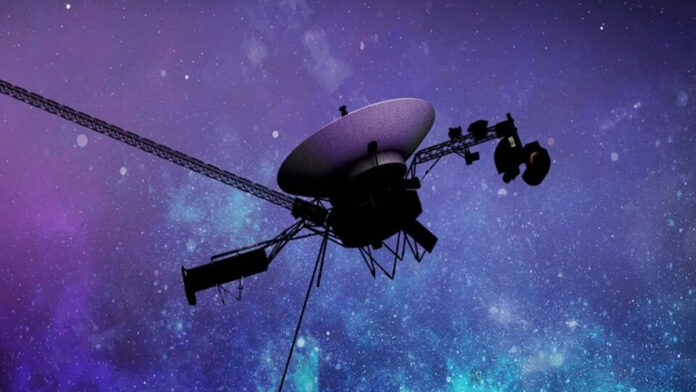
To extend the life of the Voyager 1 space probe, NASA is preparing a clever power-redistribution operation that takes advantage of the specific characteristics of its equipment, which was built back in the 1970s. NASA plans to carry out this so-called “big bang” – redirecting energy on humanity’s most distant spacecraft – after a successful test on Voyager 2.
Read also: AERONAUT – everything that flies above the ground: aviation, UAVs and drones, rockets, and space
Traveling rapidly through interstellar space at a speed of over 56,000 km/h, NASA’s Voyager 1 has already traveled more than 24 billion km from Earth. NASA’s Jet Propulsion Laboratory (JPL), located near Los Angeles, is actively working to ensure the probe remains operational for some time to come.
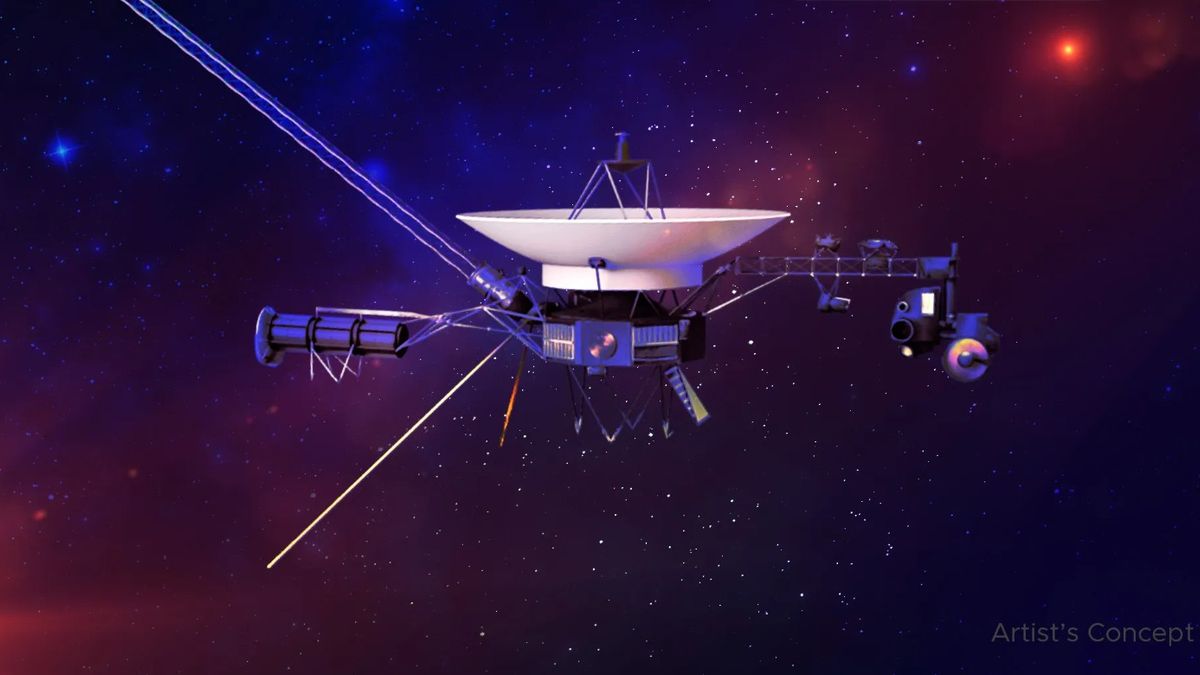
On Tuesday, Voyager mission engineers at JPL announced the successful completion of a critical energy-conservation maneuver on the sister spacecraft, Voyager 2. This procedure has been dubbed the “big bang,” and it involves the intricate sequential switching of Voyager 2’s key systems in groups of three. This approach conserves energy while preventing the fuel line and critical components from freezing in the harsh conditions of deep space. Essentially, this scheme turns the outdated mid-20th-century electronics installed on the Voyager series spacecraft before their launch in late summer 1977 into a significant advantage: thanks to ordinary residual heat, nearly every onboard instrument can be put to good use for heating the spacecraft’s structure.
Since Voyager 2 was closer to Earth and had a larger energy reserve, it was decided to test this risky move on it. However, according to NASA’s Voyager mission manager Karim Badruddin, JPL now plans to repeat this successful maneuver on the much more distant Voyager 1. Karim Badaruddin emphasized in a comment to Scientific American on Friday that this is the most important operation involving the Voyager spacecraft in recent decades. She noted that she didn’t want to jinx it, but the “big bang” test procedure went extremely smoothly.
Both Voyager spacecraft are powered by modest nuclear sources – radioisotope thermoelectric generators, which convert heat from the natural decay of plutonium-238 into electricity. However, as this isotope approaches its 88-year half-life, heat output decreases, causing each probe to lose about 4 watts of power each year.
The “big bang” maneuver carried out by JPL shuts down two heaters and an obsolete eight-track tape recorder belonging to the DTR (Digital Data Tape Recorder) system, while simultaneously and carefully activating two other heaters and one of the spacecraft’s onboard propulsion systems. This step saves nearly 10 watts of energy per year without risking the loss of vital equipment due to freezing.
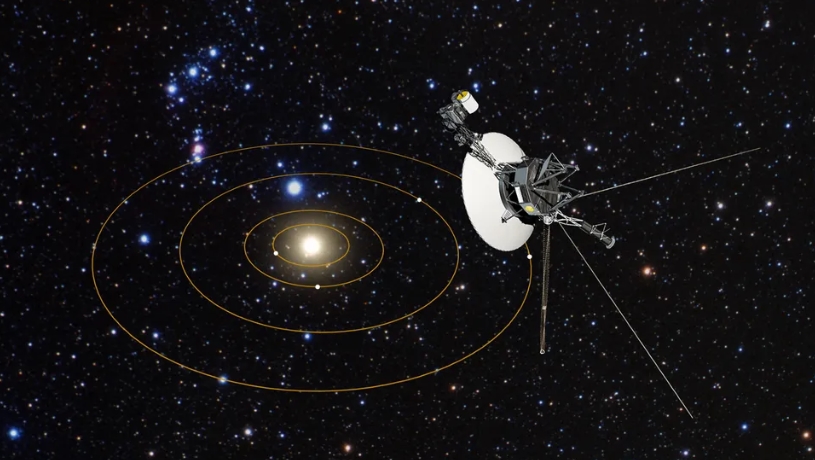
Both Voyager probes launched with 10 instruments on board each. Many of them were, quite logically, shut down during the early stages of the flight, as they had fully completed their missions during the “Grand Tour” of the Solar System’s planets. The Voyager mission team at NASA hopes that the energy reserve generated by the “big bang” will power one additional instrument on Voyager 1 – the Low-Energy Charged Particle (LECP), which measures particle density in the interstellar medium. This past spring, the LECP had to be shut down on Voyager 1 to prevent the probe’s entire system from automatically rebooting.
As Karim Badaruddin, who is also a systems engineer at JPL, in a NASA statement in April, two scientific instruments continue to operate on Voyager 1 – one detects plasma waves, and the other measures magnetic fields. She added that they are working perfectly and transmitting data from a region of space where no human-made object has ever been before. If Voyager 1 remains operational until November of this year, it will reach a historic milestone by traveling 1 light-day away from Earth. This distance can be thought of as a small fraction of a light-year or as a distance 173 times greater than the distance from Earth to the Sun. Beyond this boundary, a signal to Voyager 1 will take more than 24 hours to reach the spacecraft, provided it remains operational.
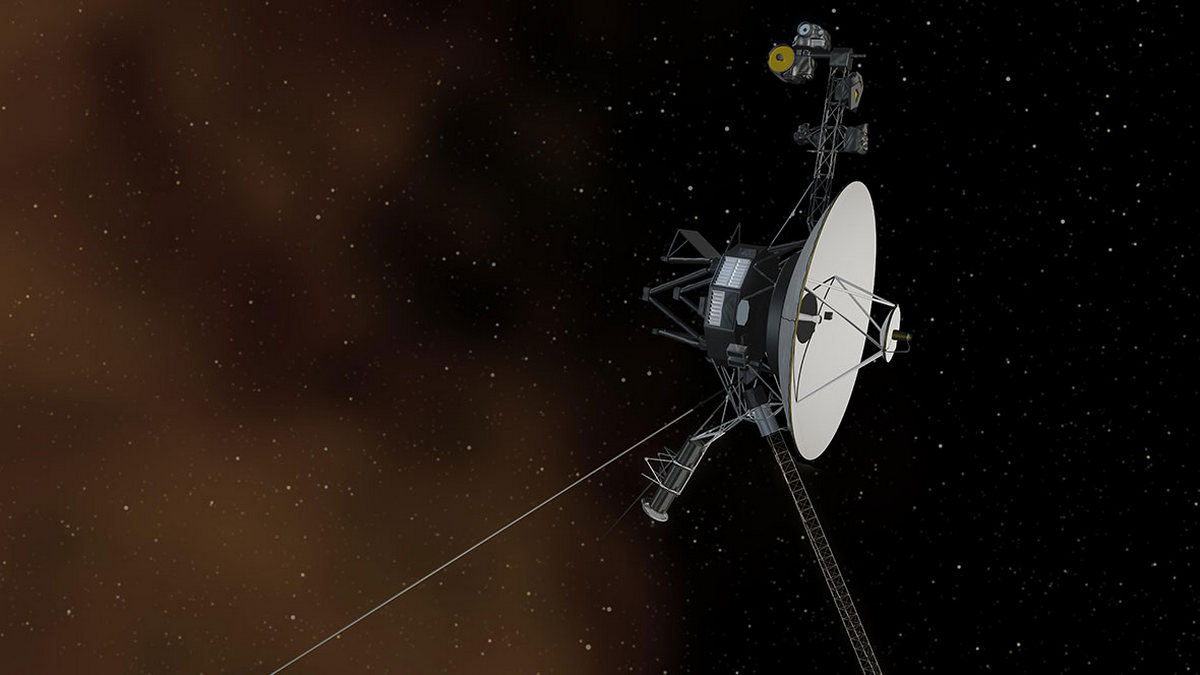
In 2022, Suzanne Dodd, the Voyager project manager at JPL, expressed confidence during a NASA broadcast that Voyager 1 would certainly make it to its 50th anniversary on September 5, 2027. That same year, she added in an interview with Space.com that, with a stroke of incredible luck, the probe could remain operational well into the 2030s.
Read also: Space Isolation for a Price: NASA Announces Call for Volunteers for an Extreme Experiment