





© ROOT-NATION.com - Use of content is permitted with a backlink.

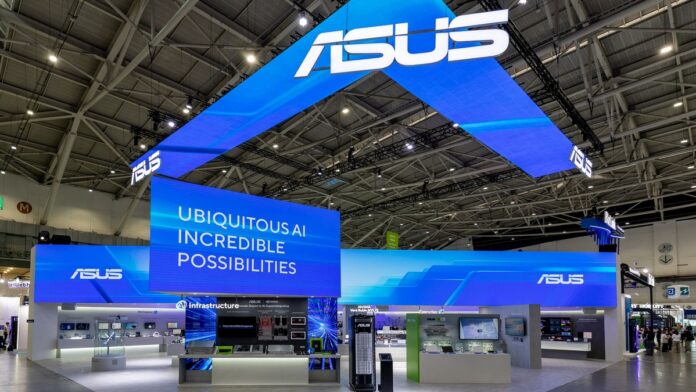
The ASUS AI ecosystem has undergone a major upgrade, which the company has demonstrated at trade shows as part of its global Ubiquitous AI concept. Incredible Possibilities. The Taiwanese manufacturer presented a comprehensive and end-to-end solution stack that combines corporate power with local computing on endpoints. The vendor combined hardware, software, and service support into a single infrastructure, offering customers tools for secure deployment and scaling of AI technologies from the cloud to the edge, including its own AI x ESG environmental platform.
TABLE OF CONTENTS:
Corporate infrastructure and AI x ESG
For large businesses, the company announced the AIXESG analytical platform. This solution combines three modules for proactive monitoring:
- Carbon Data Management – accounting of emission factors and control over their reduction
- Supply Chain Management – AI monitoring of supplier risks in real time
- ESG Integrated Management Platform – consolidation of environmental, social and governance indicators for comparison with global reporting standards.
In the hardware segment, ASUS AI POD computing system based on NVIDIA Vera Rubin NVL72 architecture made its debut. It is based on the XA VR721-E3, a liquid-cooled rack-scale platform for next-generation AI factories and trillion-parameter models integrated with NVIDIA DGX.

Also demonstrated:
- Servers based on NVIDIA HGX Rubin NVL8 and Intel Xeon 6 processors, including the XA NR1I-E12L hybrid-cooled model
- XA P8A-E14AXL server (6U format) – supports eight NVIDIA RTX PRO 6000 Blackwell Server Edition liquid-cooled GPUs
- XA P4N-E2 server (2U) – based on NVIDIA Vera processors for agent systems.
Personal devices and work solutions
The ASUS Zenni Claw app is designed as a personal AI platform for interacting with autonomous agents that dynamically distributes tasks between the local device and the cloud.

The following models are available in the line of laptops and compact PCs:
- ExpertBook B5 Flip G2 – a 2-in-1 transformer weighing 1.34 kg and 14.9 mm thick. It is equipped with a 360° screen, Intel Core 7 Series 3 processor with AI acceleration and ExpertGuardian security system
- ExpertBook Ultra is a business notebook based on Intel Core Ultra X9 Series 3 and Intel Arc Pro graphics, featuring a Digital Product Passport (DPP), ExpertLumi backlighting technology, and NIST SP 800-193 compliance

- Ascent GX10 – a petaflop-class portable supercomputer based on NVIDIA Blackwell with 128 GB of unified memory for running the NVIDIA NemoClaw platform and the NVIDIA OpenShell environment
- Ascent QN10 – mini-PC based on the Snapdragon X Elite processor (Qualcomm Oryon architecture, Qualcomm Adreno graphics) with an 80 TOPS NPU
- ExpertCenter PN55 – a mini-PC based on the XDNA 2 neuroprocessor (up to 55 TOPS) and AMD Radeon 800M graphics for local AI task processing
- NUC 16 Pro – a 600-gram mini-PC based on Intel Core Ultra x9 with a total capacity of up to 180 TOPS, supporting local processing in Intel orchestration
- NUC 16 is a computer based on Intel Core Series 3 with up to 40 TOPS and DDR5 memory. Its NUC 16 for Windows 365 version is designed for full integration with the Microsoft cloud platform

- Zenbook 14 – a laptop with a Ceraluminum body (new colors Arctic Blue and Komodo Coral), available on Intel, AMD and Qualcomm processors
- Vivobook S14/S16 and Vivobook S Flip – metal laptops with Lumina OLED displays, some of the modifications of which run on Snapdragon X chips
- ASUS Pad (T3201) – a 12.2-inch tablet with a thickness of 6.5 mm and weighing 523 g. It is equipped with a dual-layer OLED display (2.8K, 144 Hz), MediaTek Dimensity 8300 processor and support for Google Circle to Search
- V Series desktop PCs – includes the V700 Mini Tower (Intel Core Ultra 9, wood finish), V200 AiO monoblock (AMD Ryzen 5), and 27-inch V400 AiO monoblock (Snapdragon X)
- Chromebook CM14 – a 1.32 kg laptop based on MediaTek Kompanio 540 with a 180° hinge and MIL-STD-810H compliance
- ZenWiFi BN12 – a Wi-Fi 8 mesh router with a total speed of up to 19 Gbps, two 10 Gbps ports, and coverage of up to 650 square meters for a two-device set.
Tools for creativity and industrial AI
For content creators, ASUS has introduced the ProArt P16 (H7607) and P14 (H7407) laptops, as well as the ProArt Mini PC based on NVIDIA RTX Spark architecture with up to 1 petaflops of performance and up to 128 GB of memory. The ProArt P16 (H7606) features discrete graphics up to NVIDIA GeForce RTX 5090 for notebooks and a 120Hz Lumina Pro OLED screen with 1600 cd/m² brightness. The PX13 is optimized for local AI model training.

Software solutions for creators include the MuseTree application for generating images using FLUX models (NVFP4 modification from Black Forest Labs) and the MuseBox platform for remote access to local PCs with GeForce RTX 40 and RTX 50 series graphics cards (from 8 GB VRAM). The company also announced the ProArt B850-Creator WiFi Neo motherboard (ATX format) for AMD Ryzen 9000/8000/7000 and AMD EPYC 4005 chips, equipped with two 5G Ethernet ports and a Wi-Fi 7 module. The company announced the integration of apps with GoPro Cloud for automatic scene recognition.
In the industrial segment, the company presented:
Industrial computer PE3000N – based on the NVIDIA Jetson Thor platform with performance up to 2070 TFLOPS (FP4) and 128 GB of memory for humanoid robots and autonomous control systems

PE6000G workstation with NVIDIA RTX PRO graphics accelerators for digital modeling and validation.

RUC-2000 series rack systems are MIL-STD-810H protected. The 2U RUC-2000H base module is powered by Intel Core Ultra Series 3 (up to 180 TOPS), has 10 Gbps, 2.5 Gbps ports and a GMSL2 interface for up to 8 cameras. The RUC-2000G model supports the installation of a discrete graphics card with a power of up to 200 W and RAID arrays.
Robotics and medical technology
In the medical sector, the brand showcased service robots and intelligent platforms, including the second-generation ASUS Kairo robot companion and the ASUS Maestro coordination system.
The ASUS Kairo robot is a personal round-the-clock assistant that supports voice communication, helps manage notifications, makes video calls to check on the status, and structures user content. You can contact the robot via messengers while away from home. In the commercial sector, Kairo functions as an autonomous service unit with navigation support, owner tracking, and help desk capabilities thanks to its modular design. The device has been tested in healthcare facilities, but can be adapted to other service areas.

The ASUS Maestro software suite acts as a command center for managing a fleet of robotics and IoT devices using a single standardized API. The platform coordinates the collaboration of various robots and AI agents, including the Kairo service and the ASUS Sage virtual assistant, supporting the integration of third-party equipment in on-premises or cloud infrastructures.
The basis of the ASUS medical ecosystem remains accurate data, which is collected by specialized sensor devices. The ASUS DuoScan portable wireless ultrasound machine is designed for use in intensive care and emergency medicine. It is available in versions with a combination of linear and convex or linear and sectoral phased array transducers for heart, vascular, abdominal, and thyroid examinations. The housing is IP68-rated and provides up to 3 hours of continuous diagnostics at the patient’s bedside.

The ASUS VivoWatch 6 Plus smartwatch in a lightweight titanium case monitors cardiovascular health around the clock. In addition to ECG and blood pressure measurement, the device has learned to assess gait mobility and monitor breathing parameters during sleep, transmitting a massive amount of data to analyze health trends to the Healthcare AI system. These solutions are designed to automate clinical processes, which correlates with the expectations of healthcare professionals, two-thirds of whom predict a positive effect from the introduction of agent-based systems.
Gaming segment
In the gaming segment, Gaming AI technologies help to optimize computer parameters for esports. At the company’s booth, the company presented the TUF Gaming line of laptops, including the TUF Gaming A18, A16, F16, A14 models and the updated specifications of the A16 version, which are equipped with graphics up to the NVIDIA GeForce RTX 5070 level for laptops.

The G-Assist and Zenni Claw intelligent systems feature control of monitor, motherboard, and graphics settings via voice or text commands.
The finished desktop computer ASUS TUF Gaming T700 has a panoramic glass case and Aura Sync backlight. The design of the 40-liter system unit does not require any tools for upgrading and is designed for AAA gaming and rendering thanks to the new generation of Intel or AMD processors.
Read also:
- Insane battery life and next-gen AI: ASUS drops new gadgets that everyone will want
- Gold, crystal and 3000 watts of power: ASUS ROG’s Edition 20 anniversary collection is unveiled