





© ROOT-NATION.com - Use of content is permitted with a backlink.
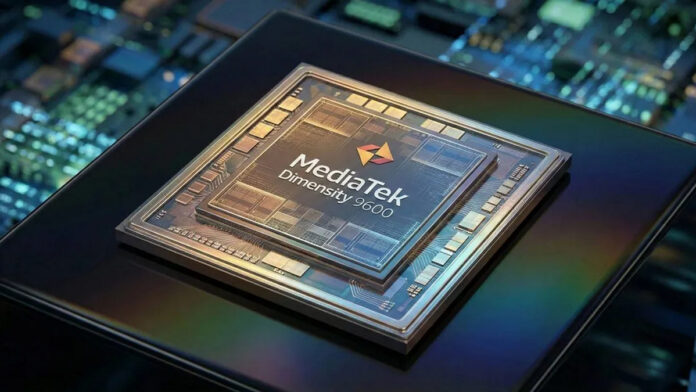
A new wave of technological confrontation in the mobile platform market is gaining momentum. The standard version of Dimensity 9600 and the Pro modification are distinguished not by a banal clock speed boost, but by global differences in memory architecture. The integration of the LPDDR6 standard in the premium model versus LPDDR5X in the base model results in a serious gap in data throughput.
This factor significantly determines the speed of AI inference processing, the pace of loading game resources, and the stability of work during intensive multitasking. At the same time, the use of UFS 5.0 drives in the Pro version provides a twofold advantage in the speed of internal data exchange compared to UFS 4.0, which is equipped with a regular chipset.
Qualcomm is implementing a similar division, releasing the standard Snapdragon 8 Elite Gen 6 and its Pro variant with support for LPDDR6 RAM. For the first time, global chipmakers have deliberately divided their flagship platforms by RAM classes, which creates a real hardware difference instead of the usual manipulation of processor frequencies.
The main unknown factor for the base processor is the supply volume. TSMC’s production capacity for the 2-nanometer process is quite limited. If the standard version of Dimensity 9600 has to be transferred to 3-nanometer rails, the lag in performance and energy efficiency from the Pro-modification will be much greater than the dry specifications show.
Particularly noteworthy is the graphics accelerator, which has become a hidden advantage of the release. The architecture of Arm Immortalis Magni offers two innovations that are more important than any dry numbers in benchmarks. The first is hardware playback of intermediate frames. By generating frames directly on the silicon level, rather than through software processing, 60fps games are transformed into 120fps with minimal signal delay and higher picture quality than using software methods. The second feature is native resolution upscaling built into the graphics engine, which eliminates visual defects and artifacts that previously occurred when software upscaling was performed at high zoom.

Improved ray tracing technology in both versions of the crystal guarantees more realistic display of light effects and shadows in mobile games that support this option. This functionality has long been a standard on consoles and personal computers, but has only now reached a competitive level on mobile semiconductors.
The Neural Shader Scheduler is responsible for load balancing, which balances AI calculations between the GPU and NPU in real time based on current performance. Such a system works as a hardware solution rather than a software simulation. This is critical for local AI processes when neural network operations are performed synchronously with 3D graphics rendering.
To understand the context, it is worth looking at the test results. Scores of 4200-4300 points in single-core Geekbench 6 mode put Dimensity 9600 Pro ahead of the predicted 4000 points of the previous generation chip. This allows it to compete on equal terms with the current results of Qualcomm’s Snapdragon 8 Elite Gen 5. For comparison, Apple’s A18 Pro platform demonstrates about 3900-4100 points. The potential advantage of the Dimensity 9600 Pro over its American competitor in single-threaded mode is the main sensation of preliminary analytical reports, although the estimates of engineering samples are often adjusted by the time the final silicon is released. In the multi-core test, a score of 12,000-1,500 points demonstrates significant progress against the approximately 11,000 points attributed to the previous generation of the platform.

The first commercial devices based on the new chips will be the vivo X500 smartphones with the base Dimensity 9600 and Vivo X500 Pro based on the Pro-modification of the processor. At the same time, OPPO Find X10 series will debut, where the standard model will get a regular platform and the Pro variant will be upgraded. Both lines of gadgets are expected to hit the market in September or October. This means that the Dimensity 9600 family will make its debut before the Snapdragon 8 Elite Gen 6 generation appears in the fourth quarter.
See also:
- AMD introduces Ryzen AI Halo platform and Ryzen AI Max PRO 400 processors
- Huawei introduces Tau Scaling Law as a response to US chip sanctions: What is known