





© ROOT-NATION.com - Use of content is permitted with a backlink.
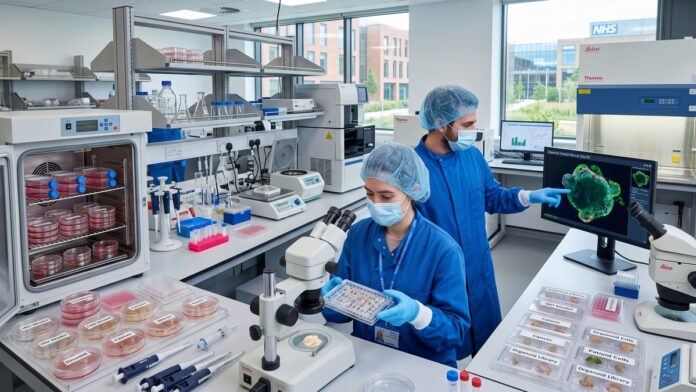
British researchers are growing microscopic samples of human tissue using patients’ cells to significantly improve the accuracy of drug testing. At a £20 million ($27 million) research center in Cambridge, a specialized platform featuring organoid models will be created to study inflammatory bowel diseases, cancer, and nervous system disorders.
Read also: AERONAUT – everything that flies above the ground: aviation, UAVs and drones, rockets, and space
This initiative aims to create a standardized catalog of organoids – compact cellular clusters capable of replicating the key properties and functions of real organs and tissues. University researchers, in collaboration with pharmaceutical companies, will have open access to these developments, which will help identify effective treatments with a high likelihood of successful application in humans.
The project is being implemented as part of a national strategy to reduce the number of animal experiments through the active development of new types of alternative methodologies. Such solutions include organoids, “organs-on-a-chip” systems, and AI-based digital tools designed to analyze biological data and computer-simulate disease progression.

Scientists have been cultivating organoids for over 10 years. Despite their tiny size – often less than 1 mm – these structures make it possible to track the impact of pathologies on cells and their response to various medications. Since they can be grown from tissue samples taken from people with specific diagnoses, experts are testing whether a given therapy will be effective for a broad range of patients or whether it will help only those with a specific subtype of the disease.
The team in Cambridge will focus on developing models for a variety of applications. Matthias Zilbauer, a professor of clinical pediatric gastroenterology at the Cambridge Institute for Stem Cell Research, is beginning work on creating models of inflammatory bowel diseases, specifically ulcerative colitis and Crohn’s disease.
Other research groups will work on tumor organoids for cancer testing and brain structures for studying neurological disorders. The program will also include heart cells and electrically active neurons.
The main goal is to shift drug testing to human tissues at much earlier stages of development. According to statistics, more than 90% of drugs that have shown successful results in animals fail completely during human trials. Scientists hope that organoids will help weed out ineffective compounds before animal studies or clinical trials begin.
As Zilbauer noted in a comment to The Guardian, many human diseases either do not occur in animals at all or progress very differently due to biological differences. According to him, scientists need diagnostic models capable of accurately showing which specific therapy will work for a particular group of people, since a mouse’s body is unable to provide such answers.

Animal testing will not disappear entirely in the near future, as certain complex issues still require the analysis of a whole living organism. However, Zilbauer is convinced that modern approaches will significantly reduce the number of animals used and radically transform the process of drug development in the future. He emphasized that a complete phase-out of animal testing is not possible in the near future due to the existence of processes that new systems are not yet capable of replicating; however, a real reduction in such procedures is undeniable.
Last year, 2.54 million animal testing procedures were recorded in the UK, representing a 3.8% decline compared to 2024 figures. More than 90% of these experiments involved mice, rats, fish, and birds, while approximately 1% involved species with special protection status – dogs, cats, horses, and monkeys.