





© ROOT-NATION.com - Use of content is permitted with a backlink.
Over the past decade, researchers have confirmed that nuclear fusion is physically feasible. This raises the following question: Can it prove to be financially viable? A paper co-authored by MIT professors Dennis White and Andrew W. Lo proposes a methodology for analyzing the factors necessary to turn fusion into a commercially viable product. This approach takes into account both the physical resources needed to sustain controlled fusion and the costs of building power plants capable of competing in the energy sector.
Read also: AERONAUT – everything that flies above the ground: aviation, UAVs and drones, rockets, and space
According to White, a professor of nuclear science and engineering at MIT and one of the leading scientists in this field, the process encompasses absolutely every aspect related to the sourcing, allocation, and expenditure of capital on this scale. He notes that this is of fundamental importance for the entire endeavor. If there is a desire to make this technology truly significant for the global economy, it is worth beginning to openly assess the relevant issues. The purpose of this article is to develop a framework in which all financial metrics are transparent, thereby providing a clear understanding of the prospects for any fusion power plant.
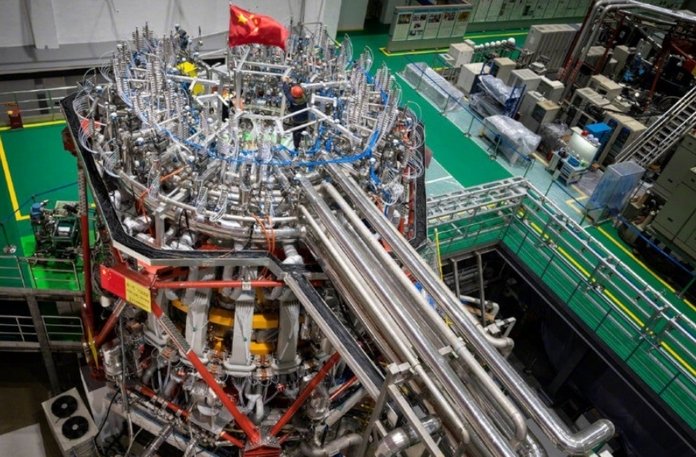
Fusion energy replicates the processes that power stars: the fusion of light atomic nuclei. It is often referred to as plasma fusion, since the fuel exists in a plasma state, which is typically confined by magnets or initiated by lasers. White notes that the goal is to generate a massive amount of energy while ensuring favorable conditions regarding safety, licensing, and site selection.
In 2022, experts at the National Laser Fusion Facility in Livermore, California, achieved a net energy gain. In recent years, significant venture capital has been directed toward this field, although the construction of viable commercial facilities still faces numerous obstacles.
Lo emphasizes the challenges of translating complex scientific and engineering requirements into monetary terms. However, he is convinced that without such a step, it will be impossible to attract the funding necessary to achieve the desired result.
The open-access paper “Criteria for the Economic Viability of Fusion Power Plants” was published in the Journal of Fusion Energy. The concept presented by the authors includes 10 parameters for assessing the economic viability of a fusion facility. Some of these relate to physical factors (energy consumption and generation). Most fall within the engineering and economic sphere, covering construction costs.
The main source of inspiration for this system was the Lawson criterion, derived in the 1950s. It describes the relationship between temperature, plasma density, and energy confinement time under which plasma is capable of producing net energy, regardless of its power or volume. Specifically, it calculates the plasma Q – the ratio of generated fusion power to the external energy expended to sustain the plasma. White explains that the Lawson criterion defines scientific success in plasma energy retention, while their methodology describes financial Q – the ratio of capital returned to capital invested.
The model’s parameters define the facility’s engineering characteristics (power density, efficiency of energy conversion into a marketable product, component durability), as well as market and financial indicators for assessing the costs and profitability of capital investments. The methodology focuses on the conditions for achieving a positive financial return in the practical design of power plants. Similar to the plasma index, the economic Q in this model must exceed 1 to ensure basic profitability.
Scientists have tested various approaches to generating and sustaining fusion energy. White emphasizes that their concept is universal for any fusion technology, since the physical essence lies in spending funds to build capacity for energy production. The parameters are not tied to the reactor’s dimensions, as the system is designed to be scaled to a specific project or production volume.
Lo notes that the size of the fusion facility is irrelevant: in both cases, the financial return must exceed the investment; otherwise, the project will not be sustainable in the long term.
The authors cite the desire to emphasize the importance of rigorous accounting for all costs as one of the motivations for this work. Although researchers have a good grasp of the costs of basic experiments, calculating the budget for a full-scale reactor is a somewhat different challenge, one to which industry leaders must pay increasing attention.
Lo acknowledges the presence of uncertainties and complex decisions during the development of the first commercial reactor. However, if successful, the industry could follow a path of improvement through practical experience – a common practice in the energy sector – thereby contributing to a gradual increase in the cost-effectiveness of enterprises.
According to Lo, this model of learning by doing is characteristic of all high-tech industries. He cites the example that sequencing the human genome now costs 1 million times less than it did about 25 years ago, and similar developments await fusion energy.
Regarding fusion, Lo notes that profitability can already be assessed today. And although building a commercial plant will require thousands of individual decisions, the authors are convinced that they have created a comprehensive approach for digitizing this work. White concludes that having a quantitative evaluation system makes it possible to understand the true value of each specific engineering decision – something that is critically important at this stage of the industry’s development and was previously neglected.
Read also: From Car Collisions to Boat Behavior: How AI Is Learning to Better Understand Real-World Physics