





© ROOT-NATION.com - Use of content is permitted with a backlink.
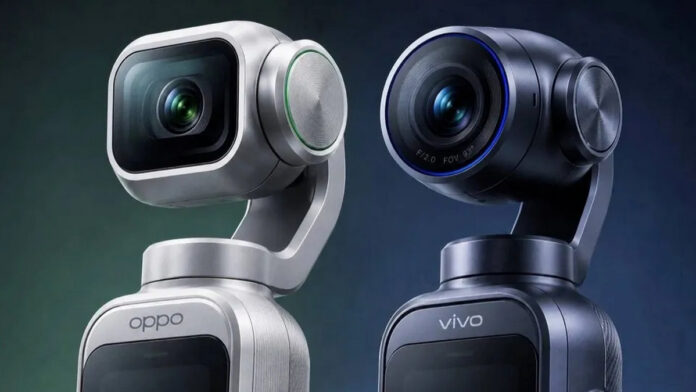
Two separate development teams are working on devices based on virtually identical sensors. With both brands under the same parent conglomerate, the situation in the compact camera niche with built-in stabilization is becoming more complicated. Representatives of OPPO and vivo have officially confirmed that each company is developing its own portable steadicams designed to compete directly with DJI’s Osmo Pocket line. Both new products are supposed to use a 200-megapixel 1/1.12-inch optical sensor, which indicates that they will share a common sensor, namely the Sony LYT-901.
OPPO’s pocket gadget is internally codenamed “Fuyao” and will be launched under the Hasselblad brand, as part of the same mobile photography collaboration that gave the Find X9 Ultra a five-camera system. In turn, the project from vivo is being developed under the working title “Vivo Pocket” and will be labeled Zeiss.

Both devices are focused on the integration of flagship processors and will offer quick synchronization with smartphones, allowing owners to instantly send footage and edit it directly on mobile devices from OPPO or vivo, respectively. The market conditions show a serious contrast, as in April, DJI Osmo Pocket 4 was released for $499 with a 1-inch sensor with a maximum resolution of 37 megapixels. The new 200-megapixel cameras from OPPO and vivo are able to more than double this figure, while having larger physical dimensions of the sensor itself.
According to calculations, the use of a 200-megapixel Sony LYT-901 sensor in a portable camera will allow you to take static images with detail that is about five times higher than the maximum capabilities of DJI Osmo Pocket 4. In addition, the 1/1.12-inch format is larger than the 1-inch chip of the main competitor. In theory, both products from BBK brands will outperform the current segment leader even before their official announcement.
As for the corporate aspect, which is usually kept quiet, OPPO and vivo belong to the same structure. They are subsidiaries of BBK Electronics, which also owns the OnePlus and realme brands. Despite the lack of formal exchange of plans between engineering departments, they cooperate with the same parts suppliers, share factories, and their steps are coordinated by the overall strategy of the parent company. The simultaneous emergence of two BBK representatives in a new niche with identical sensors may indicate both healthy internal competition and duplication of functions in the structure, which the top management should probably resolve before the release. The visual and marketing demarcation is clearly visible through optical partnerships, as OPPO engages Hasselblad and vivo relies on Zeiss. These alliances have already been implemented in their top-end phones, so the creation of pocket cameras is a logical extension of the established brand image.

Thanks to the QQBC (quad-quad Bayer) architecture, the Sony LYT-901 sensor provides four times zoom without loss of quality at the hardware level and shoots 4K video at up to 120 frames per second in pixel blending mode. The declared dynamic range exceeds 100 dB. All these advantages are practical and directly affect the quality of image capture. However, for OPPO and vivo, the challenge is that high resolution and sensor size do not automatically guarantee success in this class of devices. DJI has many years of experience in creating stabilization algorithms, gimbal drives, and a developed ecosystem for content creators that is extremely difficult to copy. Even Insta360’s Luna Ultra model, which combines a 1-inch main module with an additional 1/1.3-inch telephoto lens supported by Leica, now looks like a more dangerous competitor for DJI, as Insta360 already has mature software.
As for the timing of the new products, it is known that test samples from vivo have already been handed over to influencers for testing, and the release is scheduled for the end of 2026. OPPO’s plans for the Fuyao project are less specific: the management confirmed the development but did not give exact dates. Meanwhile, DJI is simultaneously launching the standard Osmo Pocket 4 and the enhanced Osmo Pocket 4P in an effort to fill different price points and stay ahead of the threat from smartphone manufacturers. This segment of technology, which remained static for a long time, has become one of the fastest growing sectors of the industry.
Read also:
- Honor is challenging Apple: The new MagicPad 3 Pro is thinner than the iPad Pro
- The secret weapon of the iPhone 18 Pro: Apple introduces the most expensive camera upgrade in the brand’s history