





© ROOT-NATION.com - Use of content is permitted with a backlink.
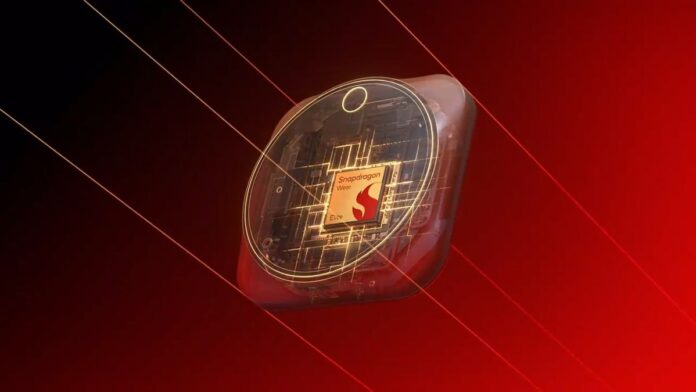
During MWC 2026, Qualcomm unveiled a new premium Snapdragon Wear Elite platform aimed at next-generation Wear OS devices and other AI-enabled gadgets. The new chip is located above the Snapdragon W5+ Gen 2, and the Elite designation is intended to emphasize a significant increase in performance and functionality. It does not use Oryon cores and has a thinner body compared to the previous generation.

Snapdragon Wear Elite is based on the 3 nm process technology and is the first to use the big.LITTLE architecture for this series. The configuration includes one large 2.1 GHz core that speeds up app launch, multitasking and device booting, as well as four 1.95 GHz cores. Compared to the W5+ Gen 2, the single-core performance of the central processor has increased five times.
The Adreno graphics accelerator provides an increase in the maximum frame rate by up to 7 times. The chip supports 1080p images at 60 frames per second.

The platform is designed to process AI directly on the device. It is equipped with a Hexagon neural processor capable of working with models of up to 2 billion parameters and generating up to 10 tokens per second. This opens up opportunities for computer vision, speech synthesis, and the use of AI agents. In practice, we are talking about personal assistants, tracking health, quality of life, activity, and sports activities, as well as local transcription or translation.
Read also: Trump vs. Claude AI: How the AI Debate Is Unfolding in the U.S.

The eNPU is a specialized accelerator for constantly active scenarios with low power consumption, including keyword recognition, activity detection, and noise reduction. Unlike the previous architecture, a different approach is now used. The eNPU belongs to the so-called low-power “islands” – units within the main system. Such islands are also responsible for audio, sensors, and display.

Qualcomm has announced six options for connectivity: Wi-Fi 802.11ax, Bluetooth 6.0, UWB, GNSS for location, 5G RedCap, and NB-NTN for satellite communications. The Wi-Fi module has an 80% lower power consumption threshold, which allows the radio module to be constantly active. In addition, for the first time in this series, UWB is integrated for unlocking scenarios.
The company says that for batteries with a capacity of 300 to 600 mAh, typical for such devices, it supports charging by 50% in 10 minutes. In particular, the fast charging function operates at a voltage of 9 V. In general, we can expect up to 30% more autonomy compared to the previous generation of the chip.

Snapdragon Wear Elite is compatible with Android, Wear OS, and Linux. During the announcement, Google noted that Wear OS “redefines the smartwatch experience and moves from an operating system to an intelligent system that is always with you, understands you, and works for you.” The company also emphasized that “the Snapdragon Wear Elite platform breaks new ground by delivering the performance, battery life, and connectivity required for the next generation of Wear OS.”
Samsung said that the next generation of Galaxy Watch will be powered by Snapdragon Wear Elite, which will make it “an even more comprehensive health companion”.
Read also: Samsung Saved the Galaxy? Report from the Presentation of the Samsung Galaxy S26 Ultra / S26+ / S26

Apart from smartwatches, Snapdragon Wear Elite can be used in other AI formats, such as smart glasses or compact devices with cameras. Depending on the camera and display configuration, the platform can be used in glasses instead of the Snapdragon AR1/2 family.
Qualcomm expects the first commercial devices based on Snapdragon Wear Elite to be available within the next few months.
Read also:
- New Garmin software is already available for several watch models
- Heart rate and SpO₂ monitoring: Reebok unveils its most affordable smartwatch