





© ROOT-NATION.com - Use of content is permitted with a backlink.

Scientists have developed an innovative night-vision device that converts infrared rays into a full-color image instead of the traditional monochrome green image. Thanks to the use of quantum dots and dual-layer OLEDs, different infrared wavelengths are converted into clearly distinguishable colors.
Read also: AERONAUT – everything that flies above the ground: aviation, UAVs and drones, rockets, and space
Researchers at the Beijing Institute of Technology have demonstrated a prototype capable of converting the infrared spectrum into a colorful image. This promising achievement offers a fresh perspective on night vision technology, moving beyond the limitations of conventional monochrome screens. The system is based on a combination of mercury telluride quantum dots and a dual-layer OLED structure. Instead of mapping infrared radiation to a single shade based on its brightness, the device assigns different wavelengths and intensity levels to specific visible colors.

It is precisely this separation that is crucial. Conventional infrared sensors detect a broad spectral range but are unable to capture detailed information about the waves themselves. As a result, the final image appears as a variation in the brightness of a single hue, most often green. Despite its effectiveness, this approach does not take advantage of the human eye’s remarkable ability to perceive the subtlest nuances of color.
The new concept overcomes this barrier at a fundamental materials science level. The quantum dots used by the scientists are only a few nanometers in size, which gives them discrete energy states. As a result, their response depends directly on the intensity and wavelength of the incoming infrared radiation. Low-energy, long-wavelength radiation generates fewer charge carriers, whereas short wavelengths and more powerful signals trigger more complex electronic transitions, generating significantly more carriers.
The generated pulses are directed toward two OLED layers. The first layer emits red light, while the second is responsible for blue light. The energy barrier between them regulates the movement of electric charges within the structure. The operation of this upconverter, which converts the infrared spectrum into a full-color image, was demonstrated in two forms: as wearable glasses and as a next-generation retinal photoreceptor. When the infrared signal is weak, the device produces a dim red color. When the signal becomes more intense or shifts toward shorter wavelengths, a greater number of charges overcome the barrier and activate the blue layer, resulting in increased brightness and a combined color palette.
Because the output color range is determined directly by the physical parameters of the input signal – rather than by a software-defined algorithm – the system conveys significantly more information. According to experts’ calculations, the device is capable of detecting much finer fluctuations in infrared radiation power than traditional counterparts, which focus solely on brightness.
To test the concept, the team assembled a lightweight prototype pair of glasses. Weighing 23 g, the design features a semi-transparent structure that allows the wearer to simultaneously view both their normal surroundings and an enhanced infrared image. During laboratory tests, the glasses produced vivid color images of simple textures and moving objects in the short-wavelength infrared range. The device supports several operating modes: it can overlay infrared data on top of the normal view or completely block out the visible spectrum for maximum immersion.

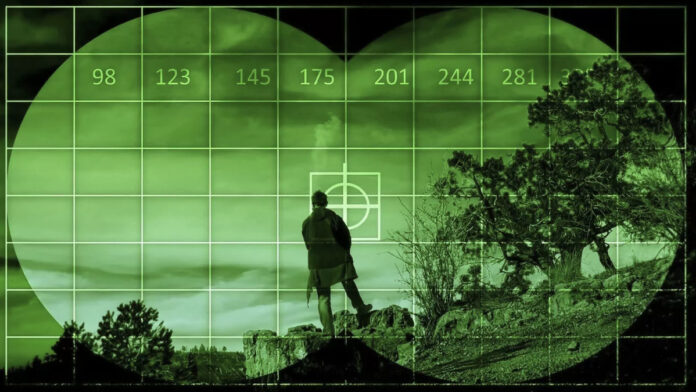
The researchers also investigated the ability of biological tissues to detect the transformed signal. Under laboratory conditions, the infrared light processed by the device elicited a clear response in modified cells sensitive to the visible spectrum. The experimental device converts infrared rays into a multicolored palette, whereas conventional night-vision devices display everything in a monochromatic green hue. Additional tests recorded distinct brain activity in rodents, as well as retinal responses in volunteers while observing infrared signals through the developed equipment. Infrared rays alone did not produce such effects.
In their scientific paper, the authors note that their invention “has redefined infrared vision” because it “has gone beyond the monochrome approach” and paved the way for “next-generation visual prosthetics.”
At the same time, the technology has certain limitations. Testing took place in a controlled environment using simple, high-contrast objects, so the system’s behavior in more complex real-world conditions remains unknown. In addition, the OLED component requires an external power source, which makes the current version more of a wearable display than a passive optical element.
There are also concerns regarding the safety of the materials. Mercury telluride is a heavy-metal compound, and the developers have not yet investigated its long-term effects or the possibility of safe use in devices that come into direct contact with the body. For now, this work demonstrates a fundamentally new approach to infrared image processing, where color is embedded directly into the light capture process rather than being artificially added after it is recorded.