





© ROOT-NATION.com - Use of content is permitted with a backlink.
The Mobile World Congress (MWC) 2026 took place in Barcelona from 2–5 March. Several reports from the event are available on our YouTube channel. The exhibition also featured a number of notable product announcements worth attention.
Xiaomi unveiled its flagship model with a Leica camera for €1,499. Lenovo showcased a modular laptop and a desktop AI robot. Qualcomm announced its Wi-Fi 8 chip and Snapdragon Wear Elite. Honor unveiled a phone with a mechanical arm. Nvidia formed a coalition of twelve operators around 6G. Here is the reaction of someone who, as always, asked a fundamental question before evaluating any specifications: why?
TABLE OF CONTENTS:
Xiaomi 17 Ultra
The Xiaomi 17 Ultra is a carefully engineered smartphone. It features a one-inch sensor, a partnership with Leica, and a 200-megapixel telephoto lens. On paper, the specifications are impressive. However, there is one issue – and it isn’t a technical one.

For years, Xiaomi has followed a familiar approach: combine top-tier components with a well-known brand from another industry, then set a price that reflects the positioning. In this case, however, Leica is more than just branding. Leica signals to mobile photographers that “we’re capable now.” It represents not merely a marketing exercise, but a genuine technological partnership.

The question isn’t whether the Xiaomi 17 Ultra is a good phone. The question is whether it has its own defining idea – what makes it itself, rather than just a collection of the best available components. And here, the answer is clear.
Lenovo: ThinkBook Modular AI PC and AI Workmate Concept
Lenovo brought two concept devices to Barcelona that are worth attention – but for different reasons.
The ThinkBook Modular AI PC represents a genuine attempt to address a real problem. It is a laptop featuring dual displays, a detachable keyboard, and swappable ports. The concept of “carry small, use big” is both clear and functionally justified. If Lenovo manages to turn this into a production product rather than leaving it as a concept, it will certainly spark meaningful discussion.
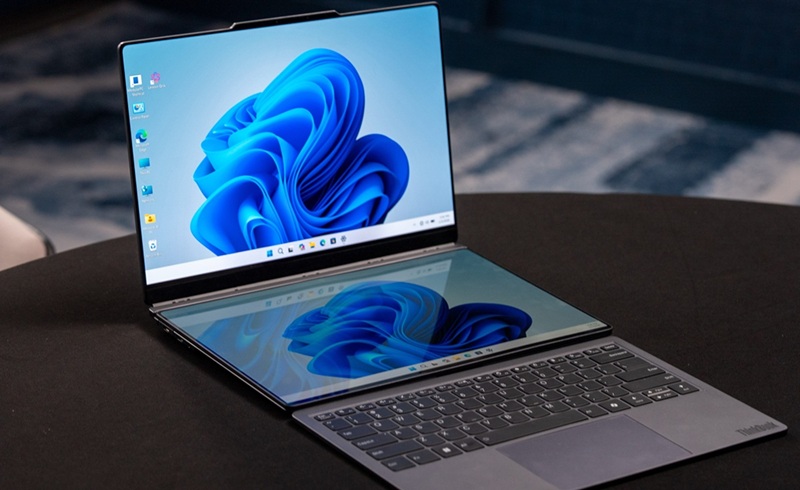
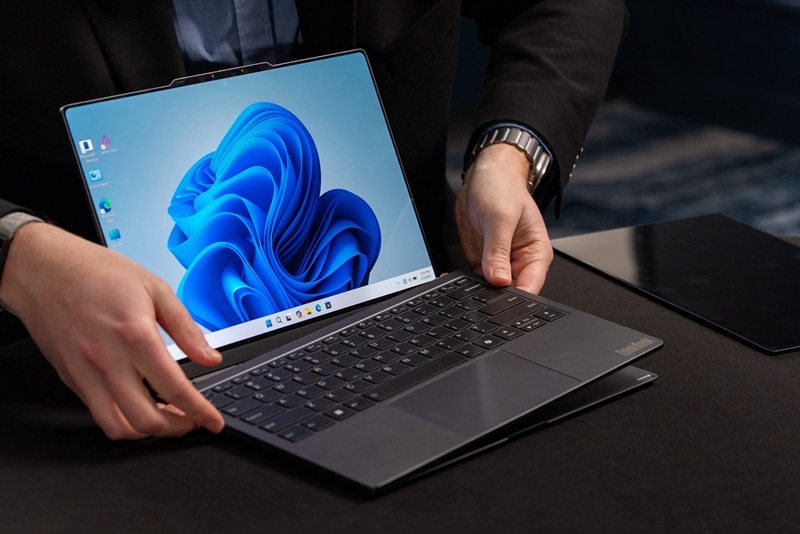
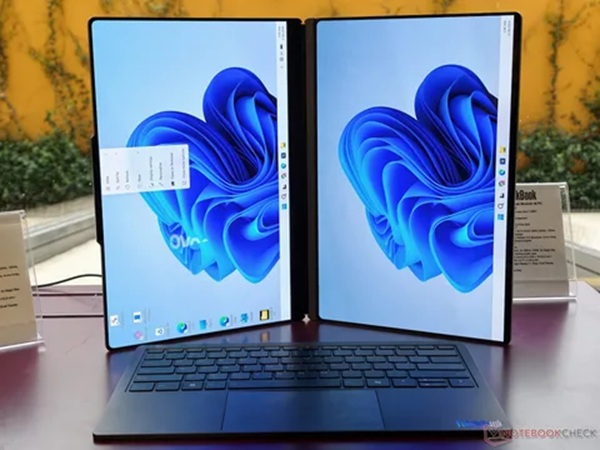
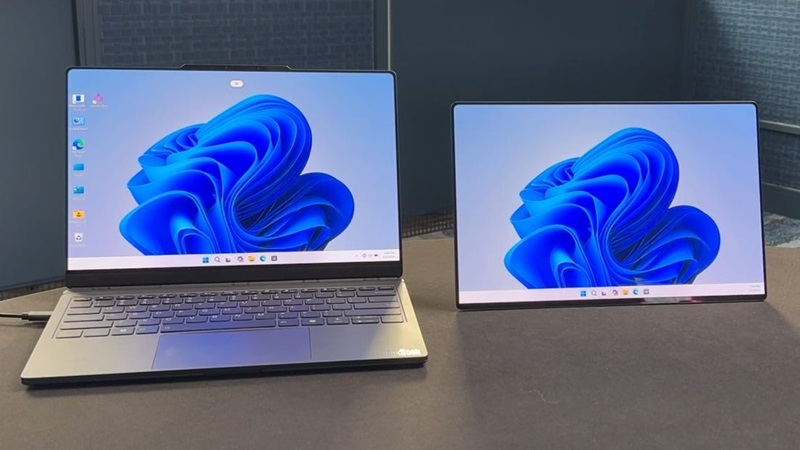
A concept poses a question, while a product provides an answer – and most companies stop at the question.
The AI Workmate Concept is a desktop robot designed to assist with work tasks. This belongs to a different category: it’s an interesting idea, but still in its early stages. Lenovo demonstrated that it can sign and print a document – but this highlights the core issue: the product doesn’t yet have a clear purpose. A standard printer can also sign and print documents – and at a much lower cost.

Nevertheless, among everything showcased at MWC 2026, Lenovo’s modular laptop is one of the few products that demonstrates a clear concept behind its form.
Qualcomm: Wi-Fi 8 + Snapdragon Wear Elite
Qualcomm announced the FastConnect 8800, the industry’s first Wi-Fi 8 chip offering peak speeds of up to 11.5 Gbps and support for Bluetooth 7.0. At the same time, the company introduced Snapdragon Wear Elite, the first 3 nm chip designed for wearable devices, targeting a new wave of AI gadgets from Google, Motorola, and Samsung.
Qualcomm excels at one thing: providing the industry with the tools needed to take the next step.

Wi-Fi 7 hasn’t even become standard yet, and Qualcomm is already demonstrating Wi-Fi 8. This isn’t wastefulness – it’s discipline. They understand that infrastructure needs to be built in advance, rather than playing catch-up with devices.

The platform matters more than any individual product. Whoever controls the platform, controls the future.

The Snapdragon Wear Elite is a more ambiguous proposition. Qualcomm is developing a chip for AI-enabled wearable devices that don’t yet exist as mature products. They are betting that the market will form and that their chip will be inside when it does. Perhaps it will. But a chip without a product remains potential unfulfilled.
Honor: Robot Phone
Honor showcased a concept phone with a mechanical arm and stabilizer that physically moves the camera. The device drew a strong reaction on the show floor, which is understandable.

It’s spectacular to watch. However, there’s a difference between generating a reaction on an exhibition floor and actually changing how people behave in real life. The mechanical arm on the phone addresses a very narrow problem – stabilizing the camera – using a method that complicates the form factor, increases cost, and introduces additional points of failure. It’s an engineering demonstration, not a practical product solution.
Complexity is not a sign of innovation; more often, it indicates that a simpler solution hasn’t been found. Presenting this as a concept at MWC was therefore the right decision – it’s an honest approach. But if Honor is seriously considering bringing it to production, they need to pause and ask: what problem does this actually solve better than existing solutions?
Nvidia + 6G: Operator Coalition
The most ambitious systemic announcement at MWC 2026 didn’t come from device manufacturers. Nvidia announced a coalition of more than twelve operators, including Deutsche Telekom, T-Mobile, BT Group, SoftBank, Ericsson, and Nokia, aimed at building 6G on AI-native, software-defined platforms.
At the same time, Ericsson presented its own approach: ten new AI-ready radio modules built on its own silicon – without relying on Nvidia GPUs.

This is a more interesting dynamic than any phone at the show: two very different approaches to the same question. Will AI in telecom rely on general-purpose GPUs or on specialized silicon? Nvidia and Nokia on one side, Ericsson with its own hardware on the other. Both camps have arguments – and both have something to lose.
Infrastructure is invisible until it breaks – or until someone builds a better one. 6G is expected around 2029 if everything goes according to plan. By then, this coalition will either form the foundation of a new communications architecture or collapse under the weight of competing interests. For now, Nvidia is signaling that it no longer wants to be just a chip supplier – it wants to be a platform. And that may be the most important takeaway from Barcelona.
Overall Assessment of MWC 2026
MWC 2026 confirmed what it does every year: the industry knows how to generate announcements. Modular laptops, AI robots, phones with mechanical arms, Wi-Fi 8, 6G coalitions – all of these exist, but primarily as prototypes, concepts, or roadmap visions.

But looking at it all together, one question emerges: how much of this will people actually use daily in two years – and not out of habit, but because it genuinely improves their experience? Right now, such products are few and far between. This indicates that the industry is still in a mode of exploration, rather than delivering clear solutions.
Read also:
- Report from the Xiaomi Booth at #MWC2026: Leica-Equipped Flagships, AI Tablets, and 1900 HP in the Vision GT
- Report from Motorola Booth at #MWC2026: Foldable Smartphones, Mid-Range Performers, and New Earbuds

 2026 took place in Barcelona on 2–5 March. There are several interesting new products at the exhibition that are worth paying attention to.)