





© ROOT-NATION.com - Use of content is permitted with a backlink.
If October feels like the only time suited for dark, unsettling reading, November can prove otherwise – especially one as disquieting as this year’s. The mood still fits, though in a different way: these books offer not supernatural horror, but dystopian unease. There are no vampires draining blood – only societies that drain the desire to live, and authorities that strip people of their agency.
Read also: All reviews and articles about books
In dystopian fiction, the world is often on the brink of crisis or ecological collapse – or already dealing with the aftermath. The state exerts strict control, monitors citizens, and manipulates information. Free will is largely absent, while fear and violence are constant. Culture and history are rewritten, and people are treated as a uniform mass rather than individuals.
These books highlight the risks worth acknowledging and outline the directions humanity could theoretically take – in some countries, those directions are no longer theoretical. This selection, as usual, includes titles available in Ukrainian translation. I also avoided the most widely referenced works like Brave New World or Fahrenheit 451, since you’re likely familiar with them already.
TABLE OF CONTENTS:
1984. The Graphic Novel, Xavier Coste, George Orwell
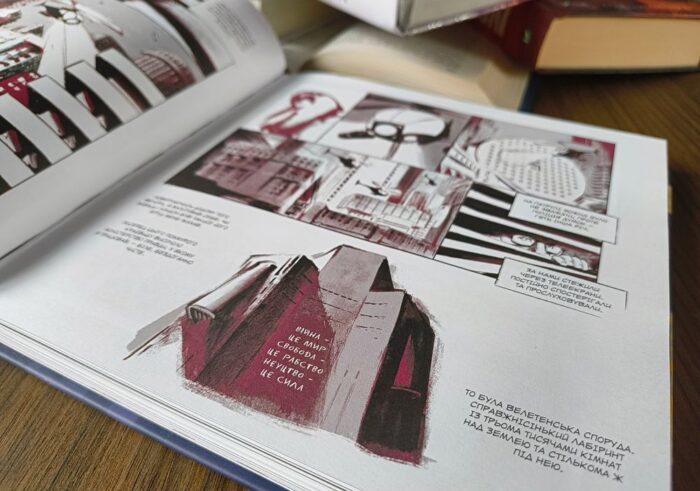
Yes, 1984 is a quintessential dystopian classic, but here we’re talking specifically about its graphic novel adaptation. It’s the kind of format that works well when you want to revisit the story you once read in school without going through the full text again. The Ukrainian edition from Vivat presents the material in a visually engaging format, and the illustrations help convey the oppressive atmosphere of the original narrative.
At the center of the story is Winston Smith, an ordinary state employee who, in a system built on total control, spends his days rewriting history to fit political demands. His growing awareness of the regime’s lies and the persistent sense of injustice push him toward resistance. Winston meets Julia, and their relationship – illegal under the regime’s rules – evolves into more than a personal connection; together, they become involved with an underground movement opposing the state.
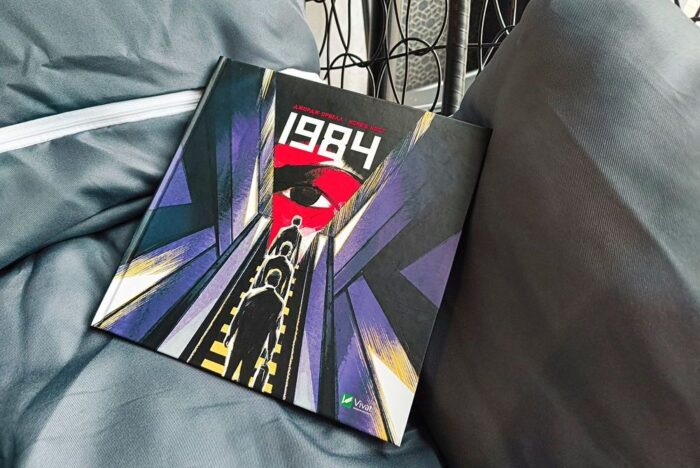
Of course, the graphic novel format can’t reproduce the full text – and it doesn’t aim to. Its purpose is different: it delivers the core ideas and provides a visual framework that helps the reader grasp the tone and tension of the story. In many scenes, words feel unnecessary; the imagery and color choices carry the meaning on their own. The color palette functions as an additional layer of narration: red highlights represent authority and Big Brother, blue signals the absence of freedom, burgundy marks the rare moments when the protagonist can be himself, and yellow reflects the bureaucratic machinery and state propaganda.
It’s a classic story presented through a contemporary visual interpretation that still preserves the essential themes of the original.
The Handmaid’s Tale, Margaret Atwood
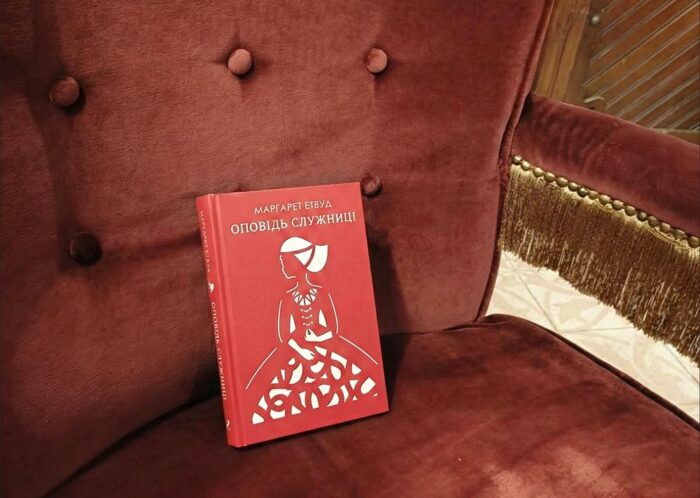
This dystopian novel has received multiple awards, several adaptations, and is often classified within the subgenre of feminist dystopian fiction. Margaret Atwood sets the story in the Republic of Gilead, a state governed by a military regime that has dismantled reproductive rights almost entirely. Most women in the country are infertile, and those who can still conceive are seized, confined to specialized camps, and later assigned to households of high-ranking officials. Their role is strictly defined: they serve as “handmaids,” coerced into sexual relations and expected to bear children for the ruling elite.
The narrative follows a woman who, after a failed attempt to flee the country, is captured and forced into this system. Through her perspective, the novel depicts the mechanisms of control, the erosion of personal autonomy, and the daily realities of living inside an authoritarian structure built on gender-based subjugation.
It might seem that humanity is far removed from this type of dystopian scenario. However, in an interview, Atwood remarked that every element in the book has a real-world precedent: “I didn’t include anything we haven’t already done, are doing now, or are trying to do, combined with trends that are already visible.”
The work was clearly influenced by historical and political events. The Islamic Revolution in Iran – which led to a severe rollback of women’s rights – is often cited as a major reference point. Early American Puritanism, as well as elements drawn from the histories of the Philippines, Romania, and post-war Canada, also contributed to the novel’s conceptual background.
The Power, Naomi Alderman
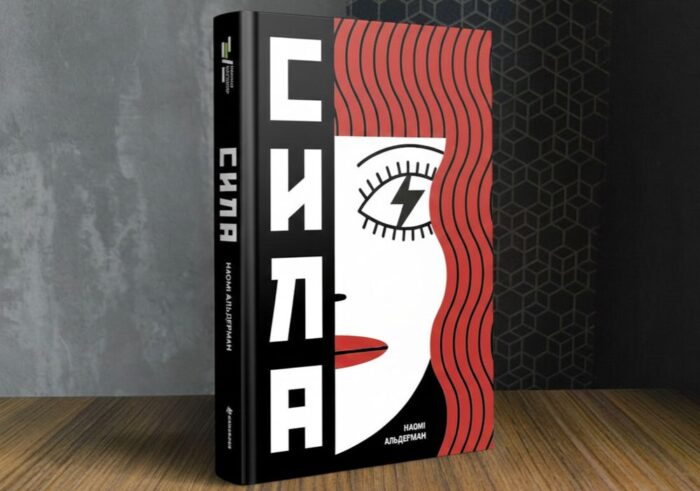
Alderman has openly acknowledged that her relationship with Margaret Atwood influenced the creation of this novel – and the connection is noticeable – though the book takes a different direction. In The Power, gender inequality shifts the other way: women become the dominant group.
The novel uses a “book within a book” structure. A young male writer presents his manuscript to a more experienced female author. His story describes a world that transforms into a matriarchy after women develop the biological ability to generate electrical shocks strong enough to injure or overpower men.
Now women possess a means of defense and a form of power to assert themselves. Yet, as the famous phrase from Uncle Ben in Spider-Man reminds us, “With great power comes great responsibility.” Power can be wielded for protection or for aggression. In The Power, this is exemplified by Tatiana, a former first lady who kills her husband and rises to become president, illustrating how the pursuit of dominance can corrupt.
The novel explores not only the societal consequences of a reversed gender hierarchy but also the personal effects of unchecked authority. In the closing moments, the experienced author within the story advises the amateur male writer that his book is compelling but would achieve greater impact if published under a female name – highlighting how perception and credibility are intertwined with identity in a world shaped by power dynamics.
The Angel Trilogy, Marah Woolf
No discussion of dystopias would be complete without mentioning young adult dystopian fiction. I chose The Angel Trilogy over The Hunger Games, as the latter is widely known, while Wolff’s series remains less familiar. Though it can be classified as fantasy or dark fantasy, the books exhibit clear dystopian elements.
Woolf sets the story in Venice, where angels are sent to Earth – but these are far from benevolent beings. They seize control, outlaw technology, and establish a new authoritarian order. Humanity is reduced to mere survival, and the most daring individuals participate in gladiatorial contests. One such participant is Moon, a young woman forced to fight in the arena against the angels to earn money and secure her family’s escape from the city.
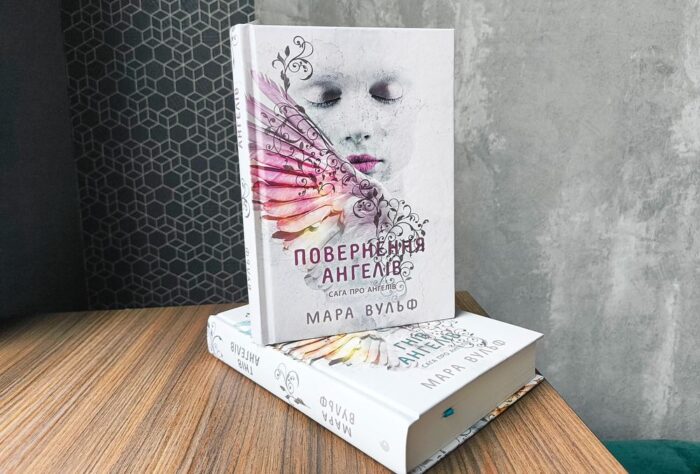
As one might expect, humans are far from fond of the angels. Yet when one of them is injured and nearly killed, it is Moon who decides to intervene – unaware of the consequences her actions will trigger. Even young adult dystopias can be emotionally intense; for instance, a friend jokingly nicknamed one character “UN” because of his excessively peaceful and forgiving nature.
The series conveys a strong sense of decay and hopelessness, with humans treated almost like animals by the powerful angels, creating a distinctly oppressive atmosphere.
Cat’s Cradle, Kurt Vonnegut
One of Kurt Vonnegut’s most well-known works examines humanity’s capacity for self-delusion and overconfidence, highlighting how easily people can pursue self-destructive paths while neglecting responsibility – seemingly oblivious to the lessons Uncle Ben once phrased so succinctly. Humanity’s greatest threat, Vonnegut suggests, comes from itself. The author’s tone is not merely humorous; it carries a sharp critical edge, using satire to scrutinize human behavior wherever possible.
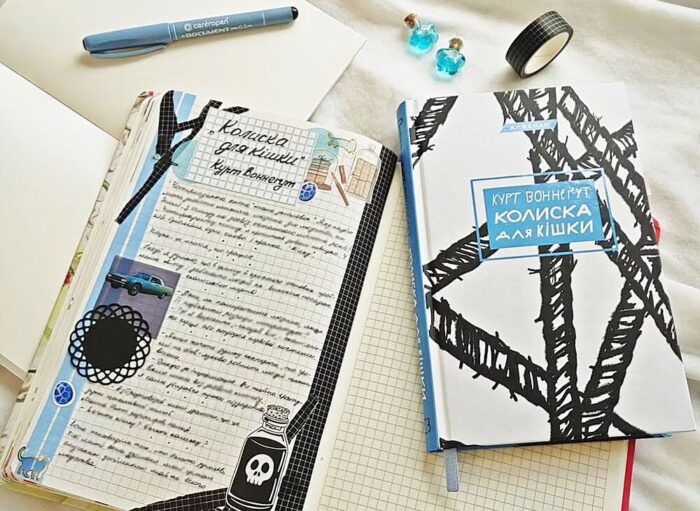
It begins with a short-sighted scientist who first develops the atomic bomb and then invents the substance Ice-Nine – a material capable of freezing water at room temperature on any scale. Ice-Nine, presented almost as the antithesis of a nuclear mushroom cloud, carries catastrophic potential, perhaps even exceeding that of conventional weapons. The wisdom of creating such a formula is questionable at best, particularly when samples fall into the wrong hands.
To enhance the story’s atmosphere, Vonnegut sets part of the narrative on an island of partially ruined buildings, inhabited by people practicing a religion built entirely on universal falsehoods. Through absurdity, satire, and concise but meaningful chapters, the novel delivers a narrative that is both horrifying and darkly reflective – disturbing in content, yet not entirely implausible.
Kallocain, Karin Boye
In Kallocain, there is also a groundbreaking invention, one the author – chemist Leo Kall – takes great pride in and eagerly anticipates testing on humans. He develops a substance “that compels every person to reveal all their secrets, every truth they have been forced to hide out of fear or shame.” The creation is intended to serve the World State, under the premise that “our thoughts will become public property, whereas until now we have unjustly considered them our own.”
However, the actual outcome is far from what Kall expected, raising questions about the ethical and social consequences of such absolute transparency.
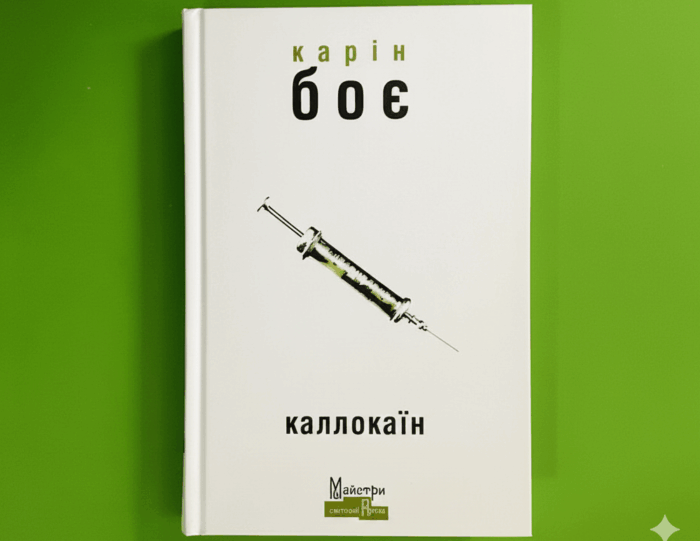
This oppressive story, presented in diary format, illustrates the dangers of a state that seeks maximum control over its citizens. House workers monitor families and file reports, children as young as seven are taken from their parents and sent to specialized camps, toy bombs are dropped on buildings in kindergartens, boys are trained as future soldiers, and everyone wears a uniform. It depicts a highly structured society under the complete control of the World State.
Karin Boye herself was disturbed by the world she imagined, which was inspired by both the Soviet Union and Nazi Germany. The novel was published in 1940, eight years before 1984, demonstrating that Boye had already recognized the trajectory of totalitarian regimes. The parallels to contemporary neighboring states are striking, highlighting the enduring relevance of her warnings.
Honourable Mention: House of Salt, Svitlana Taratorina
I included this book in the selection because, while it is primarily post-apocalyptic fiction, it also contains dystopian elements. Following an ecological catastrophe, the Kimmerik Peninsula becomes an isolated and inhospitable environment. Yet people continue to survive there, despite unusual genetic mutations.
At the same time, the remnants of humanity are closely monitored from above by the “Elder Brothers.” One of these Brothers awakens after losing his memory and returns to Kimmerik to investigate the disappearance of an ancient artifact, setting the stage for a story that blends survival, mystery, and subtle dystopian oversight.
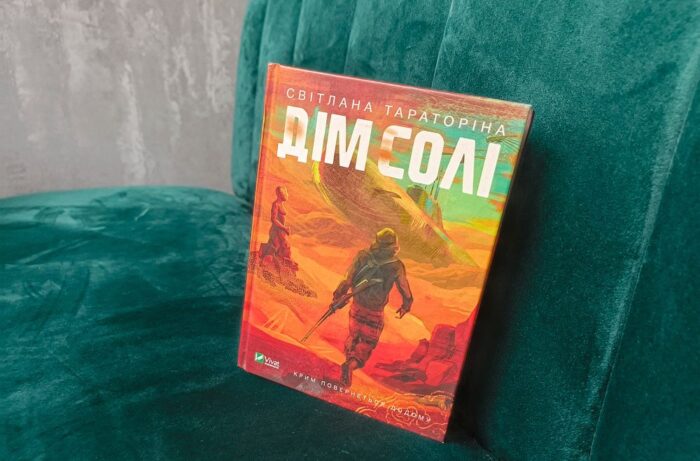
It’s an impressive story – complex, layered, and richly detailed. I recommend paying close attention to the glossary and the list of characters at the end of the book, as they are essential for following all the references. The narrative is deeply intertwined with myths and legends, and readers will likely find themselves looking for hidden meanings, symbols, and parallels throughout. This is a book to savor; it’s emotionally demanding but thoughtfully crafted and well-executed. It’s available not only in Ukrainian but also in Polish as Dom soli.
Dystopian fiction can be approached as a form of educational literature, offering examples of how societies should not function. It’s often better to learn from others’ mistakes – even fictional ones. I rarely read this genre myself, so feel free to share in the comments which dystopian works you would recommend.
Read also:
- Doesn’t Bark, But Bites: A Selection of Creepy, Fascinating (and Lustful) Vampire Books
- TV Show Enthusiast, a Mechanic Cinderella, and a Gosling Mother: A Selection of Notable Books Featuring Robots

