





© ROOT-NATION.com - Use of content is permitted with a backlink.
Home Theater Just Got a Major Update with Dolby Atmos FlexConnect – And It’s Simpler Than You Think.
Your TV is evolving, and it’s no longer just about screen size or resolution. It’s about immersion – the feeling of being right in the middle of the action, whether you’re on the couch, the floor, in a spacious living room, or a small corner of your home.
For years, many have dreamed of having cinema-style surround sound at home. But that dream often hits a wall: too many wires, complicated setup processes, and the challenge of positioning speakers just right. The good news? That phase may finally be coming to an end.
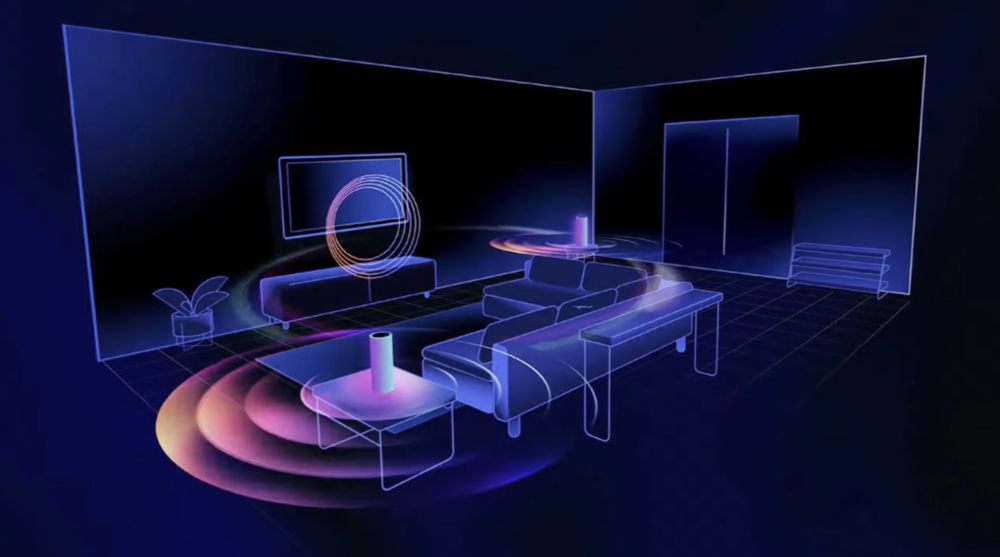
Dolby Atmos FlexConnect is designed to remove many of the traditional hurdles of home audio setup. It allows wireless speakers to connect directly to your TV and create a spatial Dolby Atmos soundstage – without the usual setup headaches. There’s no need to worry about exact speaker placement or running cables under the floorboards. Instead, the system adapts to your room’s layout and adjusts the sound accordingly.
TCL is one of the early adopters of this technology, and the implementation looks promising. The idea is straightforward: place the speakers wherever it’s convenient for you, and the system will automatically calibrate the audio for optimal performance.
This isn’t just another feature – it’s a step toward making home theater truly feel at home: more practical, more flexible, and still capable of delivering an immersive experience. For many users, this might be the kind of solution they’ve been waiting for.
Read alsо: Civilization at Risk: Donald Trump’s Policies Are Undermining the Scientific World
TABLE OF CONTENTS:
What is Dolby Atmos FlexConnect?
Dolby Atmos FlexConnect is all about sound adapting to you – not the other way around. At its core, this is a smart wireless audio solution designed to bring genuine Dolby Atmos surround sound into your home without the hassle of running cables or perfectly positioning speakers based on geometry.
Put simply, FlexConnect lets you place wireless speakers wherever you like in the room. The system then automatically detects their position and calibrates the audio to deliver an immersive experience – no matter where you’re sitting. As Dolby puts it, the goal is to make “every seat the best seat in the room.”

Traditional Dolby Atmos setups typically require precise speaker placement – especially for the overhead channels responsible for height effects. But that ideal layout doesn’t always work in a real living room, where space is shared with furniture, plants, and maybe a ceiling that’s anything but symmetrical. That’s where FlexConnect proves its value. You place the speakers wherever it makes sense for your space, and the TV takes care of the rest. The system analyzes the room and adjusts the audio output to ensure an immersive experience, regardless of layout constraints.
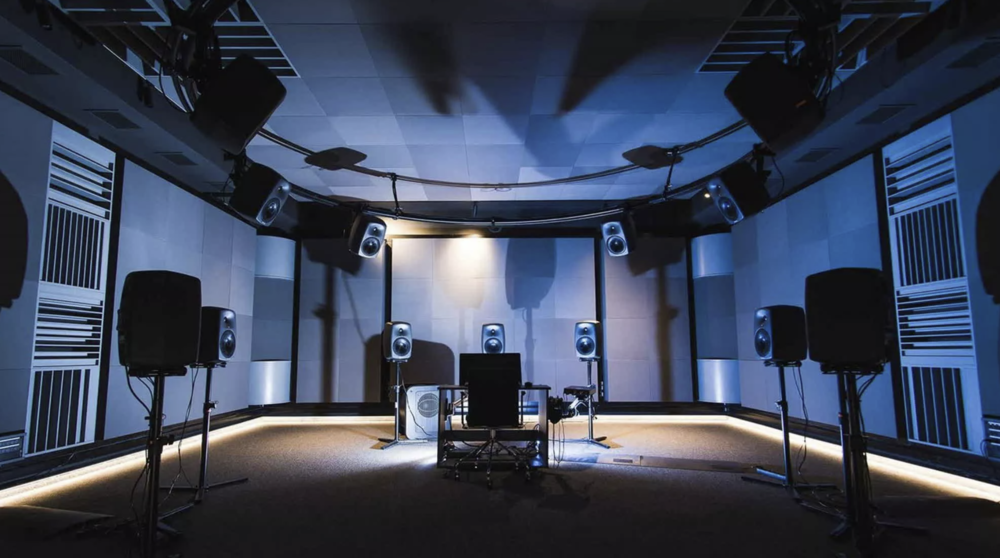
FlexConnect is built directly into supported TVs – TCL being one of the first manufacturers to adopt it – and works with wireless speakers to create a personalized sound environment that adapts to your room. Think of it as having an invisible sound engineer inside your TV, continuously fine-tuning the audio to match your actual space, not some idealized setup. The goal isn’t perfection on paper – it’s sound that works in your living room, the way it’s really laid out.
In other words, Dolby Atmos FlexConnect brings the “big theater” experience home – without the need to run cables along your baseboards or rearrange your furniture. Just turn on your TV, place the speakers where it makes sense for your space, and the system takes care of the rest. It’s designed for minimal hassle and maximum impact.
Read also: AI Hallucinations: What They Are and Why They Matter
How Dolby Atmos FlexConnect works
You don’t need to be an engineer to understand how Dolby Atmos FlexConnect works. The process is straightforward and user-friendly – just what you want from a modern home theater setup.
The basic concept is simple: take a compatible TV and wireless speakers, place the speakers wherever it’s convenient in your room, and that’s it. The speakers connect to the TV via Wi-Fi, so there’s no need for cables running across the floor. The only cord you have to worry about is the power cable, which you can plug into any nearby outlet.
Then the system’s real magic begins. The TV acts as the “brain” of the setup and starts an automatic calibration process. Using built-in microphones – either in the TV or the speakers, depending on the configuration – the system “listens” to the room by playing test signals to determine the exact position of each speaker.
In the case of TCL, the TV itself picks up the sound reflections and analyzes how the audio spreads throughout the room. The process takes only a few minutes – you simply hear a series of test tones, and then a visualization appears on the screen showing where the system “detects” your speakers. The detection is quite accurate; even if a speaker is placed off to the side or in a corner, FlexConnect still locates it and adjusts accordingly.
No measuring tapes, no manual adjustments of angles or distances. You simply press “Start,” and within a few minutes, everything is set up.
What’s more interesting is what happens next. Dolby Atmos FlexConnect doesn’t just detect where the speakers are – it adapts the sound to their placement. Using Dolby’s proprietary algorithms, the system creates the illusion that sounds are coming from the intended directions, even if a speaker isn’t physically positioned there.
For example, if a speaker is placed near the floor but is supposed to deliver an overhead effect, the system will create the sensation of a helicopter flying above your head, even though there’s no speaker on the ceiling. Similarly, if you don’t have a speaker directly in front of the TV, dialogue will still appear to come from that direction.
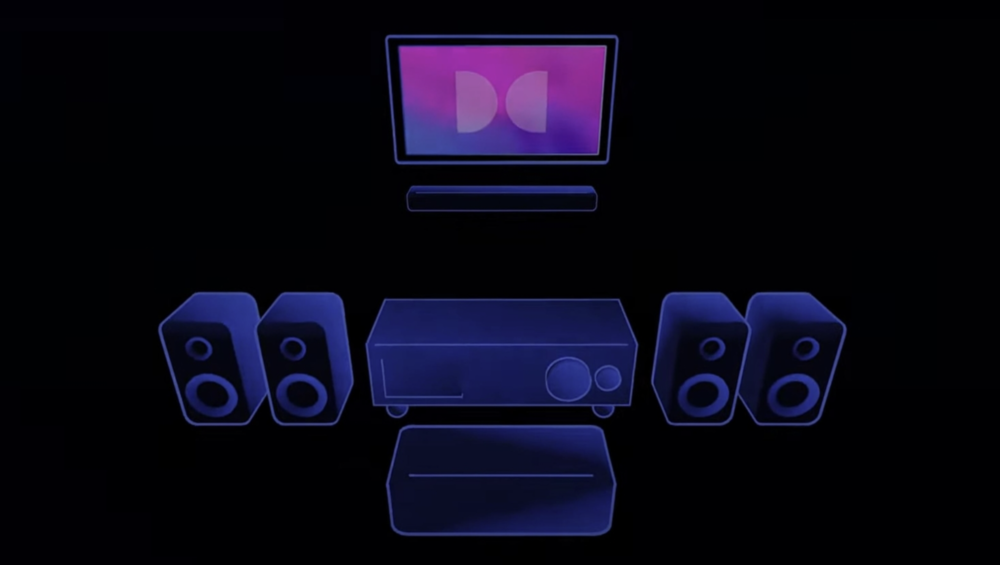
The TV’s built-in speakers also play a role in shaping the soundstage. They usually act as the center channel, delivering clear dialogue and details. Everything works together seamlessly – the TV and the speakers “communicate” to create a surround audio environment, essentially forming a Dolby Atmos “sound bubble” around you.
All you have to do is place the speakers, turn on the system, and enjoy. There’s no need for complicated setup, no compromises, and no cables. It’s essentially a home theater that automatically configures itself.
One of the key advantages of Dolby Atmos FlexConnect is its scalability. You don’t have to start with a full array of speakers; the system lets you begin with a minimal setup and expand over time.
At the start, this could be just the TV paired with a couple of wireless speakers. That’s enough to deliver surround sound that’s noticeably better than what the TV alone can produce. Later, if you add one or two more speakers, FlexConnect automatically recalibrates and adapts the sound to the new setup. There’s no need to reconnect cables or reset settings – everything works intuitively. You simply turn on the new speaker, and the system detects the change and adjusts accordingly.
Currently, the system supports up to four wireless speakers simultaneously, in addition to the built-in TV speakers, which remain an active part of the setup. This limitation isn’t due to Dolby’s technology itself but rather the processing capabilities of the TV – and for a typical living room, this is more than sufficient.
For example, with three or four speakers, you get a fully immersive experience: sound envelops the space, creating a sense of movement, direction, and depth. Adding a subwoofer further enhances this, making your living room sound better than some small theaters. TCL has also confirmed that a wireless subwoofer will soon be part of the Dolby Atmos FlexConnect ecosystem.
The key point is that none of this requires an AV receiver. You don’t need a soundbar, you don’t have to run cables, and there’s no need to figure out complicated audio output formats. The TV handles all the heavy lifting – from decoding the audio to precisely synchronizing sound delivery to each speaker. It acts as the central hub, essentially conducting the entire system: delivering dialogue, effects, and music at the right time and in the right place.
From a user perspective, it’s straightforward: place the speakers, turn the system on, complete a brief calibration, and enjoy. The system is flexible, intelligent, and doesn’t require any technical expertise. This is what a home theater should be like in 2025 – effortless by default.
Read also: Techno-feudalism – A New Form of World Order
TCL + FlexConnect: the first step into a new era of wireless audio
The first TVs and speakers supporting Dolby Atmos FlexConnect came from TCL, a major player in the global TV market. Back in 2023, TCL and Dolby announced their partnership, and at the IFA trade show in Berlin, they demonstrated live how wireless immersive sound without complex setup isn’t science fiction – it’s nearly a reality.
Now, finally in 2025, this technology is reaching consumers. TCL’s premium TV lineup for 2025 – including the QD-Mini LED models from the QM6K, QM7K, and QM8K series – will be the first to offer full support for Dolby Atmos FlexConnect. A software update enabling this feature is scheduled for summer 2025. So, if you buy one of these TVs, FlexConnect will be available either out of the box or through a simple firmware update delivered over Wi-Fi – no USB drives or complicated setup required.
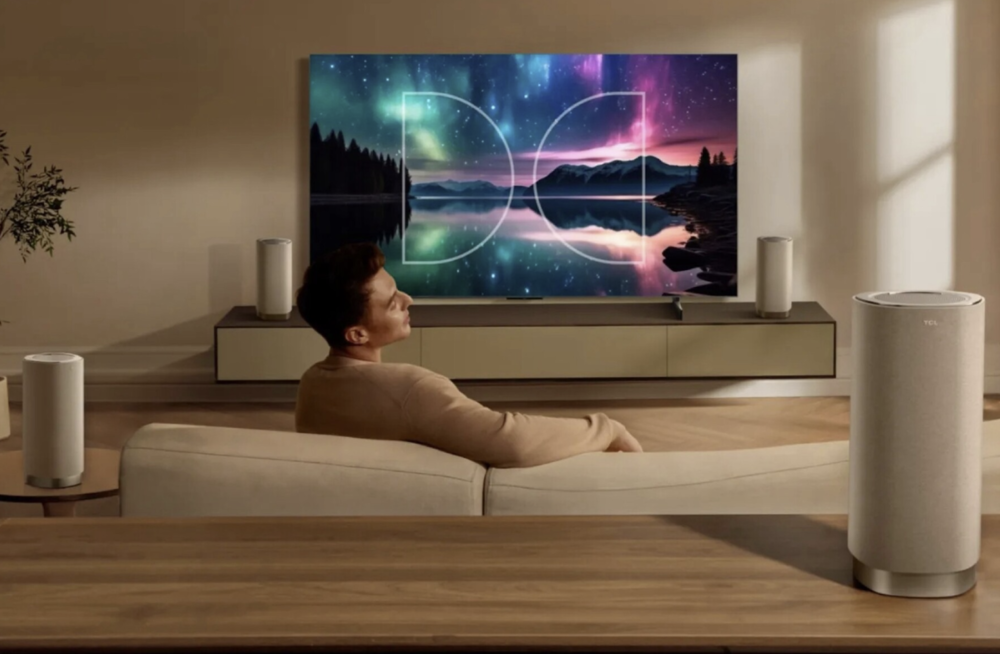
At the same time, TCL is introducing its first wireless speaker designed specifically to work with FlexConnect TVs. The model, called TCL Z100, is more than just a speaker – it’s a compact, cylindrical audio module featuring multiple drivers, including upward-firing speakers to deliver Atmos height effects.
The system supports up to four of these speakers simultaneously, and importantly, the TV’s built-in speakers remain active participants in the audio setup. For example, you can start with just two TCL Z100 speakers placed on either side of your couch and already get a fairly convincing sound. When you add one or two more speakers, the system automatically recalibrates, widening and deepening the soundstage.
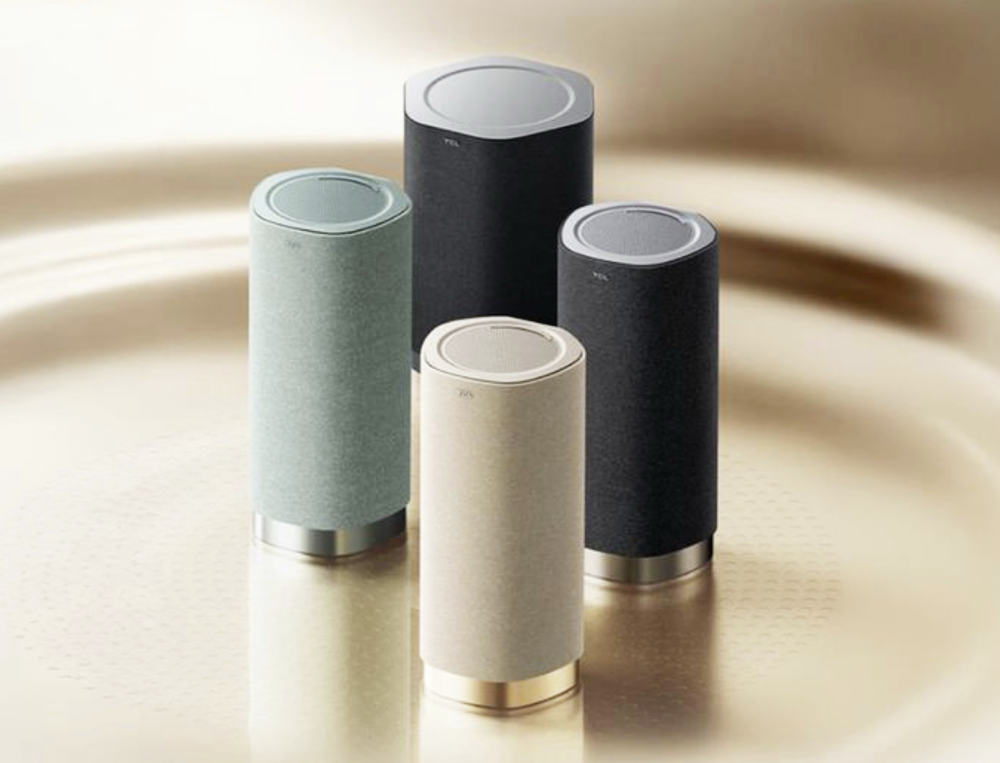
TCL representatives say the FlexConnect setup will remain “simple and quick” regardless of the number of speakers. Users just place the speakers, turn on the TV, complete a quick calibration, and that’s it. The entire process is designed to avoid frustration and doesn’t require any expertise in home audio.
At the time of writing, the official price for the TCL Z100 has not been announced. However, reports from European presentations suggest a price range of around €200–250 per speaker. While this isn’t the most affordable option on the market, it is comparable to quality components found in premium soundbars – with the added flexibility of scaling the system gradually rather than paying the full amount upfront.
It’s important to note that the TCL Z100 speakers don’t work with just any TV. They are not compatible with other brands or TCL models that lack FlexConnect support. This is a closed ecosystem, which is why it operates with such precision and coordination. Unfortunately, FlexConnect cannot be integrated into existing home audio systems or older soundbars. It’s a new platform that requires both specialized speakers and a compatible TV.
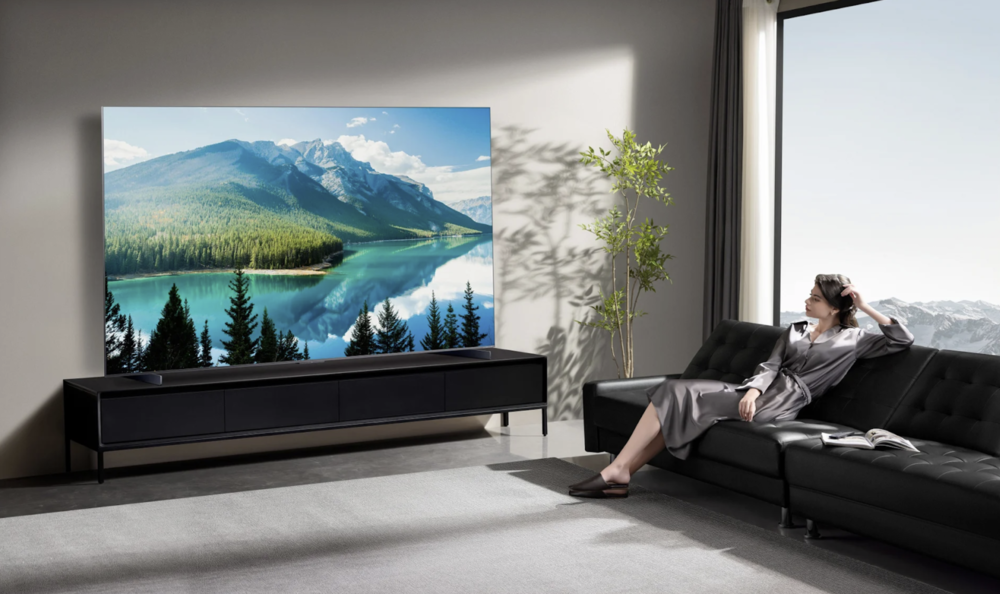
Currently, TCL holds exclusive rights for the initial launch of FlexConnect, but Dolby has designed the platform to be open. It can be integrated into TVs from other brands, especially since it’s based on widely used processors like those from MediaTek. This suggests that we’ll likely see other manufacturers adopting FlexConnect in the future. For now, TCL is the pioneer, which makes sense given the company’s longstanding collaboration with Dolby on features like Dolby Vision HDR, Dolby Atmos, and now FlexConnect.
If you’re planning to upgrade your TV in 2025 and are interested in immersive sound without the clutter of cables, TCL’s offerings are worth considering. Their models seem poised to deliver a glimpse of what the future of home audio might sound like.
The TCL Z100 speakers and compatible TVs create a fully wireless Atmos home theater system right out of the box, with no need for extra components. This represents a significant step forward, blurring the line between the TV and the audio system – making the TV the central hub for both high-quality picture and sound.
Read also: Are Noise-Canceling Headphones Harmful? Insights from Audiologists
How Dolby Atmos FlexConnect is changing the way we think about home cinema
For everyday users seeking better sound at home without having to become audio experts, Dolby Atmos FlexConnect could be a genuine breakthrough. It’s not just another “smart” technology – it’s a system that truly simplifies and improves the way we experience movies, games, and music in the living room. Here’s why.
Forget about precise speaker placement
Traditional surround sound setups require speakers to be positioned at specific angles and heights, sometimes even mounted on the ceiling for a full Atmos experience. But the reality is that not everyone has an ideal room for this. Some people don’t want to drill into walls, while others might have furniture or a playpen getting in the way.
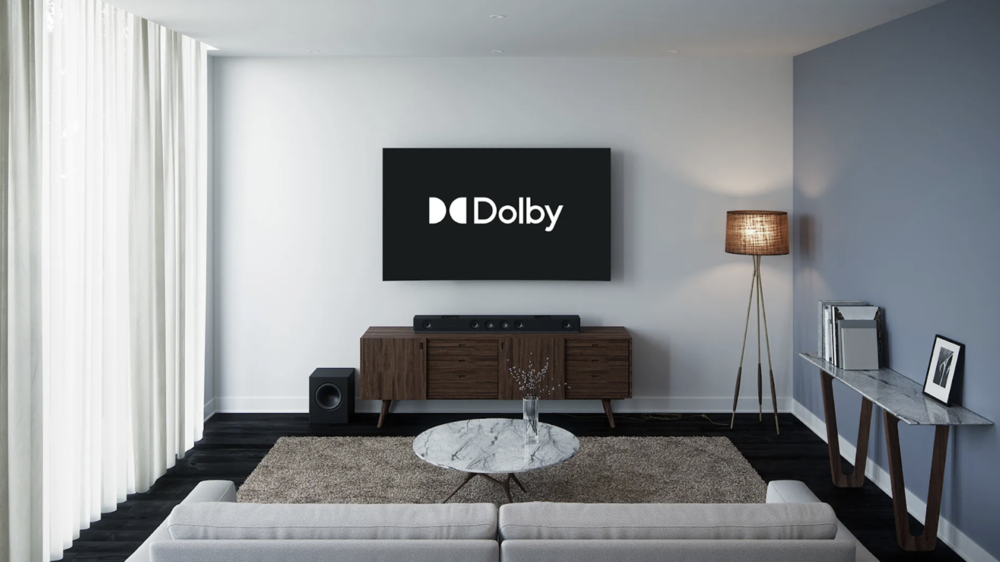
This is where FlexConnect comes in. You can place the speakers wherever it’s convenient – on a shelf, table, cabinet, or even under the bed – and the system automatically accounts for their placement. The TV measures and calibrates everything, delivering balanced sound tailored to the specific room. This offers a level of flexibility that traditional setups simply don’t allow.
Setting up for people, not techies
Anyone who has ever tried setting up an AV receiver, running cables to every speaker, and going through manual calibration knows how tedious the process can be. FlexConnect simplifies this to the maximum. You just turn on the TV, plug the speakers into power, and the system handles the rest almost automatically.
No need for microphones on stands or measuring tapes. You simply place the speakers, and the TV “listens,” detects their positions, and adjusts the soundstage accordingly. This isn’t just convenient – it means the technology becomes accessible to everyone.
Minimum wires – maximum comfort
One of the biggest headaches in home theater setups is dealing with cables. They either get hidden under baseboards, stretched across the room, or people simply give up on rear speakers altogether. FlexConnect addresses this issue by offering a wireless connection, meaning the audio signal is transmitted through the air, eliminating the need for any cables.
You just plug the speaker into a power outlet, and that’s it. You can place it in a corner, on a high shelf, wherever you like, without worrying about running wires. This makes the setup cleaner, safer, and more convenient – especially if you have kids or pets.
An atmosphere that truly immerses
The main goal of FlexConnect is to deliver convincing, multidimensional audio – and in this area, the system delivers noticeable results. Even with just two speakers, the sound fills the room, creating a sense of depth, movement, and space. Adding one or two more speakers enhances this effect further, producing a true home theater experience where sounds surround you – planes fly overhead, footsteps come from behind.
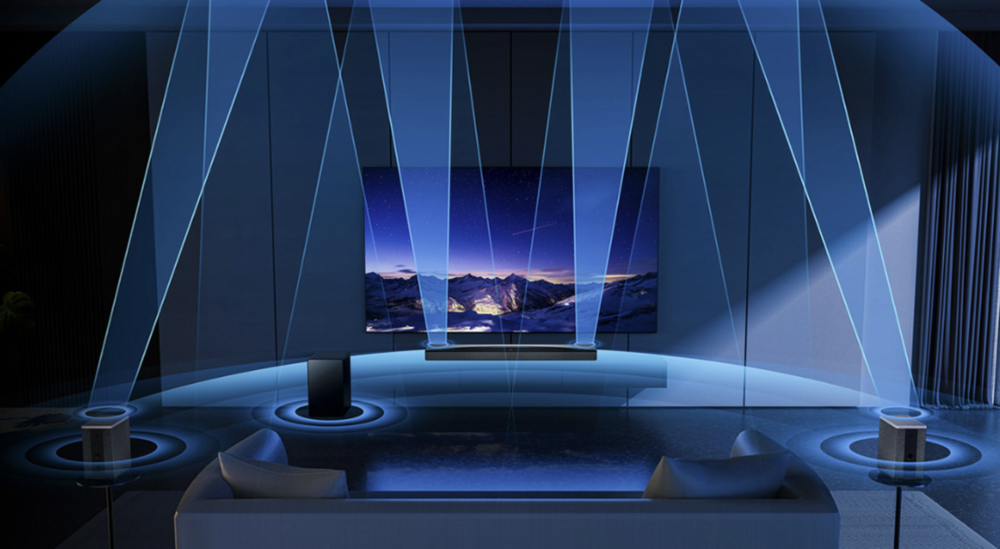
This is a significant improvement over built-in TV speakers or even basic soundbars. The soundstage genuinely comes to life around you.
Gradual upgrade – without stress
Another advantage of FlexConnect is that you don’t have to buy the entire system at once. You can start with a single speaker and add more over time. Each time you add speakers, the system recalibrates itself, adjusting the balance and optimizing the soundspace.
This approach works well for those who don’t want to make a large upfront investment or who live in rented apartments. You can start small and expand later if you move or want more sound. The system automatically figures out how to integrate everything.
How it differs from other systems
FlexConnect isn’t the only wireless audio technology on the market, but its key advantage lies in adaptability. While most systems require precise speaker placement, FlexConnect works with whatever setup you have. This level of flexibility is rare in competing solutions.
Systems like Sony’s HT-A9 or Apple’s dual HomePods with Apple TV also offer automatic calibration and wireless connectivity, but they’re locked into their own ecosystems. FlexConnect, on the other hand, is a Dolby platform that many brands can adopt. This opens up much broader potential – starting with TCL and possibly extending to brands like LG or Samsung in the future.
Additionally, there’s no need for a separate AV receiver or external streamer. All you need is a TV that supports FlexConnect and wireless speakers.
For real homes, not showrooms
One of the best things about FlexConnect is how naturally it fits into everyday life. You don’t have to turn your living room into a studio – no need for speaker stands, drilling holes in walls, or sacrificing aesthetics for sound quality.
You can place a speaker next to a plant or on a bookshelf, and it will perform as if it belongs there. If you move furniture or even relocate to a new place, just recalibrate the system, and it will sound optimal again.
Read also: Use It or Lose It: How AI is Changing Human Thinking
What’s next?
Dolby Atmos FlexConnect has strong potential to bring immersive audio to a wider audience – not just as a luxury for enthusiasts with dedicated home theaters, but as a practical option for everyday living rooms. Its wireless design, automatic calibration, and spatial adaptation remove many technical hurdles, simplifying what was once complex. Finally, the technology adapts to users, rather than forcing users to adapt to it.
FlexConnect aims to make high-quality home audio accessible to most people. It’s not designed for audiophiles building elaborate 11.2 setups costing thousands of dollars, but it suits those who want better sound without cables, hassle, or compromise. This is a technology that genuinely adjusts to you, not the other way around.
Initially, FlexConnect will be available only on new TCL TVs, but this is just the first step. The core idea – using the TV as the central hub combined with flexible wireless expansion – has the potential to become a new standard. If Dolby can successfully bring more manufacturers into this ecosystem, we could see a fully developed platform for the future of home audio.
For those who have avoided setting up a home theater for years due to tangled cables, complicated setups, or limited space, FlexConnect offers a way to enjoy quality surround sound without the hassle. It simplifies a technically complex process into something intuitive and natural. This is Atmos on the user’s terms – delivering no compromises in sound quality while giving full freedom to listen how and where you want.
Ultimately, this is how modern technology should work: not by forcing you to adapt, but by fitting seamlessly into your life. FlexConnect isn’t just another feature – it’s a rethink of what home audio can be. And this isn’t the future anymore – it’s happening right now.
Read also:
- Panama Canal: History of Its Construction and Basis of U.S. Claims
- All About Microsoft’s Majorana 1 Quantum Processor: Breakthrough or Evolution?

