





© ROOT-NATION.com - Use of content is permitted with a backlink.
Today, we’re taking a closer look at the NPU – a chip that has quietly found its way into almost every new laptop over the past two years and has become a major selling point in marketing presentations. Yet most users still don’t fully understand what it actually does or whether it’s worth paying extra for. So let’s take a closer look without the hype: what this technology can genuinely do today, and where we’re still mostly talking about promises for the future.
Read also: NVIDIA N1 and N1X: The Moment Windows Has Been Waiting for for Twenty Years
TABLE OF CONTENTS:
A Quiet Revolution Under the Laptop’s Hood
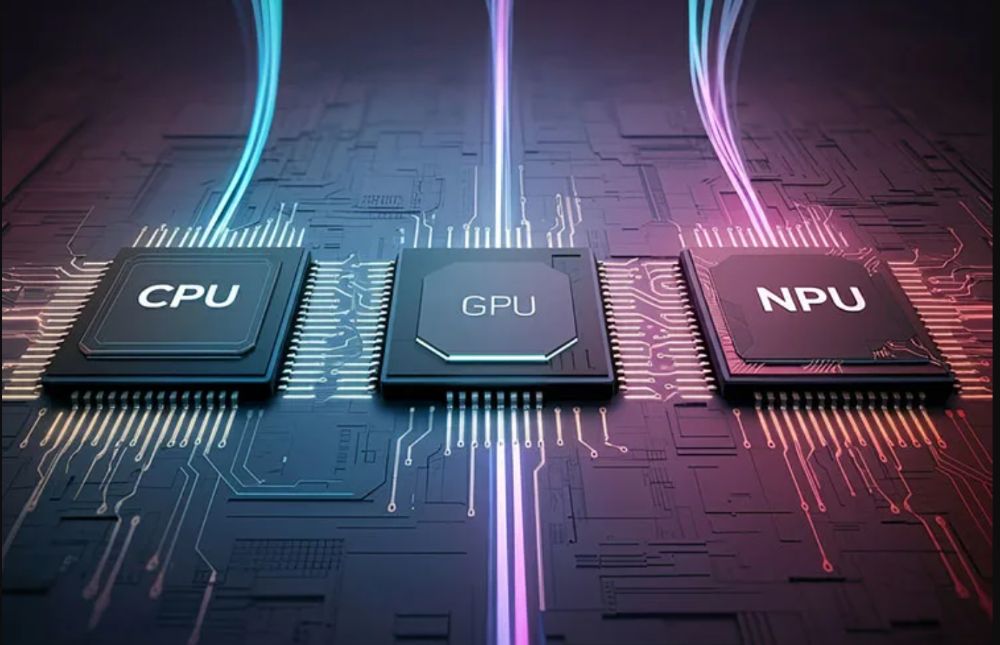
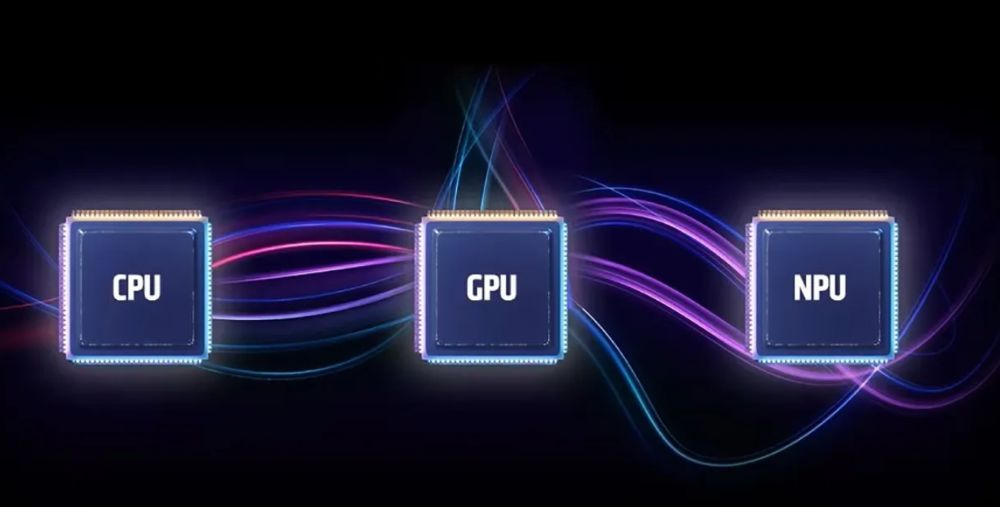
Over the past two years, the laptop industry has undergone perhaps its most significant architectural transformation since the transition to SSD storage. This is not about a new processor with a higher clock speed or another battery-life record. Instead, it is about the emergence of a third computing engine alongside the familiar CPU and GPU duo.
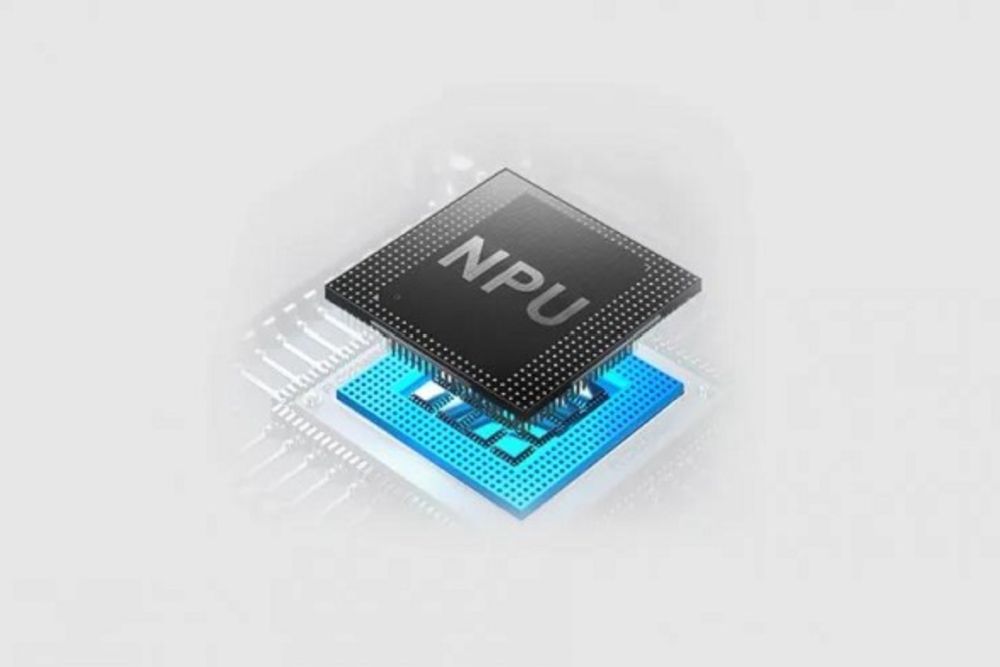
This component is called the NPU, or Neural Processing Unit, and it has become a central technological and marketing feature of the new generation of laptops.
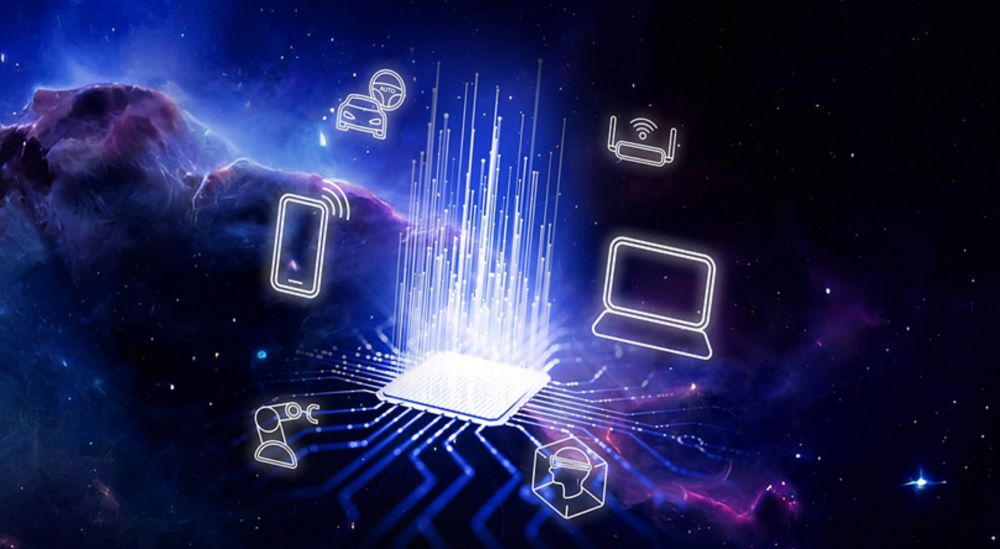
Intel, AMD, Qualcomm, and Apple have all, more or less simultaneously, bet on the idea that the future of the personal computer is a device that processes AI not in a remote data center, but directly on the device itself. The question that naturally arises for any buyer in 2026 is whether this represents a genuine technological leap or simply another marketing label of the kind the industry has been producing for decades.
Read also:Everything About NVIDIA RTX Spark: The Superchip Redefining Personal Computing
What Is an NPU, and How Is It Fundamentally Different from a CPU and GPU?
The central processing unit is a general-purpose tool, optimized for the sequential execution of diverse instructions. It can handle everything from opening a browser to compiling code and unpacking archives. The graphics processing unit, by contrast, specializes in massively parallel execution of similar mathematical operations, which historically made it ideal for rendering 3D graphics and later for training neural networks, where enormous matrices of numbers need to be multiplied. The NPU takes specialization a step further: it is designed primarily for inference – running an already trained neural network model to produce a result – rather than for training the model itself.
The fundamental difference lies in the data-processing architecture. NPUs primarily use low-precision integer arithmetic, most commonly INT8 or even INT4, whereas conventional machine-learning models are trained using high-precision FP32. Converting a model to an NPU-compatible format is known as quantization – a process that sacrifices some mathematical precision in exchange for a substantial increase in energy efficiency.
The result of this trade-off can be significant: according to manufacturer estimates, running the same inference workloads on an NPU consumes four to five times less energy than on a GPU, and even less compared with a CPU. For a battery-powered portable device, this difference is far from cosmetic. It can determine whether a laptop can make it through a working day without recharging while simultaneously handling background blur during video calls, local speech transcription, and background file indexing.
Read also: Key You’ve Been Ignoring for Years: Hidden Potential of Windows Key
TOPS as the New Currency of Marketing
With the arrival of NPUs, a new metric began appearing in laptop specifications: TOPS, or trillion operations per second. This number has become to NPUs what gigahertz once were to CPUs: a simple, easy-to-print figure that nevertheless conceals a much more complicated reality. Microsoft set 40 TOPS as the minimum requirement for a device to qualify as a Copilot+ PC – a category that provides access to exclusive operating-system features unavailable on conventional hardware. Virtually all current platforms now meet that threshold: Qualcomm’s Snapdragon X Elite offers 45 TOPS, Intel’s Core Ultra processors based on Lunar Lake reach 48 TOPS, and AMD’s Ryzen AI 300 series delivers around 50–55 TOPS. Newer models, such as the Snapdragon X2 Elite and AMD Ryzen AI 400, have already moved into the 60–85 TOPS range, while Intel has publicly stated its intention to bring desktop chip performance to 74 TOPS.

However, the raw TOPS figure, much like clock speed in the past, does not tell the whole story. Actual inference performance also depends on memory bandwidth, cache architecture, and driver quality – and this is where different platforms can deliver some surprising results. For example, Apple’s latest M5 Neural Engine, with a nominal performance of around 38–40 TOPS, can outperform some technically more powerful chips in the Windows ecosystem thanks to its unified memory architecture, which eliminates the data-transfer bottleneck between system memory and the compute engine. This is a reminder that, in hardware, a single marketing metric rarely captures real-world performance in full. Buyers should therefore look beyond the TOPS figure and consider the system’s overall memory configuration as well.
Read also: Privacy as a Business Model: Proton Services and Efforts Toward a Surveillance-Free Internet
What Is the NPU Actually Doing Right Now?
Whilst the tech press discusses the abstract potential of artificial intelligence on devices, the specific list of tasks that are actually performed on the NPU today appears considerably more modest, albeit practically useful. Windows Studio Effects – a feature that automatically frames faces in real time during video calls, blurs the background and even simulates eye contact with the camera when the user is actually looking at their notes – relies entirely on the NPU, thereby relieving the energy-intensive graphics processor of this task. Live Captions, with real-time translation into over forty languages, works on the same principle of local inference, requiring no internet connection and without transmitting audio stream data to a third-party cloud. The Recall feature, which periodically takes snapshots of the user’s activity and then allows them to search these by content, is also built around on-device image processing by a neural network.
It is also worth mentioning generative tools such as Cocreator in Paint, which allow users to create or edit images directly on the device without relying on cloud-based image-generation services. For developers, meanwhile, the NPU is gradually becoming a platform for running smaller language models locally. Systems with 50+ TOPS can handle models in the 7–13 billion parameter range reasonably well, while full-scale operation of models with 70 billion parameters or more generally requires either 85+ TOPS of compute performance or a dedicated discrete GPU. In other words, NPUs are already well suited to background, specialized, continuously running AI workloads, but for demanding generative workloads they remain a complement to the GPU rather than a full replacement for it.
Read also: Microsoft Build 2026: From Language Models to New OS-Level Security Architecture
Energy Efficiency Is the NPU’s Strongest Practical Argument
If we strip away the marketing slogans, the main practical advantage of an NPU is not raw speed, but the ratio of performance to power consumption. According to industry benchmarks, continuous video processing on a GPU can consume around 35 watts, while the same workload on an NPU requires only about 8 watts – a reduction of more than 77 percent. A similar pattern can be seen in local document indexing and in generative image workloads such as Stable Diffusion, where moving computation to an NPU can reduce energy consumption by 70–80 percent compared with running the same workload on a GPU.
This efficiency, rather than abstract AI performance, is a key driver of the battery life offered by the new generation of ARM-based Snapdragon laptops, which can deliver 15–20 hours or more in some workloads. The operating system is now designed to distribute tasks across three computing engines: Windows ML, the successor to DirectML, automatically selects the most power-efficient execution engine for a given inference workload and, when that engine is unavailable, can fall back to the GPU or CPU. The user does not see this process, but it is precisely this workload distribution that allows a modern NPU-equipped laptop to keep background speech recognition or video-processing tasks running for hours without a noticeable impact on battery life.
The Privacy Question: Local Intelligence as a Security Argument
Another aspect of NPUs that is less frequently mentioned in marketing materials concerns data privacy. When speech transcription, screenshot analysis for Recall, or face recognition during video calls takes place locally on the device, the user’s data, in principle, does not leave the machine or get transmitted to a cloud computing provider’s servers. For journalists, analysts, lawyers, and other professionals who work with sensitive information, this argument carries significance far beyond mere technological curiosity – it offers a genuine alternative to routinely sending drafts, notes, and recordings to third-party cloud services.
At the same time, Recall itself, despite its local processing model, has faced and continues to face serious criticism from cybersecurity experts because of the risks associated with storing a large archive of screenshots on the local drive. In certain scenarios involving device compromise, that archive could itself become an attractive target for attackers. This is a useful reminder that local processing addresses the problem of transmitting data to third parties, but it does not eliminate the need for strong encryption and robust access controls on the device itself.
Read also: Prospects for DDR SDRAM: Future Developments and Key Challenges
Does an Average User Actually Need an NPU? A Sober Assessment
This is where it is worth separating industry rhetoric from the practical reality of everyday use. If a user’s workload is limited to web browsing, office applications, video playback, and occasional video calls, they are unlikely to notice any significant, tangible benefit from having a powerful NPU today. Most everyday tasks are handled perfectly well by the CPU, just as they were five years ago. In this context, buying a laptop solely for the Copilot+ label, when the typical workday consists mainly of email and spreadsheets, amounts to paying extra for functionality the user is unlikely to make much use of in the near future.
Another matter is users whose everyday work involves extended video conferences, real-time speech translation or captioning, working with people with hearing impairments, or an interest in running language models locally without relying on an internet connection or sending confidential documents to the cloud. For them, an NPU already provides a practical, measurable benefit – both in terms of functionality and longer battery life throughout the day. For analysts and journalists working with interview recordings, these capabilities can also have direct practical value: local transcription eliminates the need to upload sensitive audio recordings to third-party servers.
There is also a third, purely strategic argument that goes beyond immediate usefulness: laptops typically remain in service for three to four years, while Microsoft and the rest of the industry are steadily increasing the share of operating-system features that rely specifically on NPUs. Windows 12 is expected to raise the certification threshold to 50 TOPS or more, while the number of third-party applications supporting hardware-accelerated AI has, according to industry observers, already surpassed 200 and continues to grow. In this context, buying a laptop with additional NPU performance headroom today can be seen as an investment in the device’s long-term relevance – much like buying a graphics card with ray-tracing support in 2020 might have seemed excessive until the technology became an industry standard by 2022.
Managing Expectations: What an NPU Definitely Won’t Change
It is important to be realistic about what an NPU is not designed to do. For demanding gaming workloads, complex 3D rendering, or professional video editing, a neural processor is not – and is unlikely to become – a replacement for a discrete GPU. Most modern games still rely primarily on GPU computation, while the role of AI in gaming today is focused more on development tools and auxiliary features than on the actual rendering pipeline. ARM-based Copilot+ laptops running on Snapdragon platforms, despite their excellent battery life, still rely on the Prism emulator to run x86 applications and games. This can result in real performance losses and, in some cases, compatibility issues with specialized software designed for a particular processor architecture.
Likewise, simply having an NPU does not guarantee that a particular application will take advantage of hardware acceleration. The developer must specifically optimize the software for NPU execution, including converting the model into an appropriate quantized format. As of mid-2026, this ecosystem is still taking shape, and a significant number of applications, despite being theoretically compatible with the hardware, continue to rely on cloud computing or use the GPU by default.
Read also: How Wearables and AI Glasses Are Rewriting the Logic of Technological Civilization
Infrastructure for a Future That Has Already Begun
The NPU should be viewed not as a one-off technological gimmick, but as a fundamental change in personal-computer architecture, comparable to the emergence of integrated graphics two decades ago. Today, the chip already justifies its existence in several clearly defined scenarios – energy-efficient video processing, local transcription and translation, and privacy-sensitive document processing without reliance on cloud services. At the same time, for a significant proportion of users whose daily workloads remain conventional, the NPU still functions more like an insurance policy for the future than a technology that fundamentally changes the user experience today.
The value of a neural processor is not static, however – it grows as operating systems and applications gradually move more workloads onto this third computing engine. A laptop with a modern NPU purchased in 2026 should therefore be viewed as infrastructure for a software ecosystem that is still taking shape. The value of that additional hardware capability will become clearer over the next year and a half to two years, as the industry continues to determine what the personal computer will actually look like in an era of ubiquitous AI.
Read also: Weapons of Ukraine’s Victory: “Vyrivniuvach” Guided Glide Bomb

