





© ROOT-NATION.com - Use of content is permitted with a backlink.
After more than fifty years of dominance in the luxury SUV segment, Range Rover has finally launched a fully electric model. Representatives from Jaguar Land Rover note that the company has been working on this project for the past decade, filing more than 300 patents during development.
The new model is built on the MLA-Flex aluminum platform and is equipped with two permanent-magnet electric motors with a base output of 348 k.s., which deliver 542 k.s. at peak. and an impressive 850 Nm of torque. These figures ensure confident driving both on high-speed highways and when tackling challenging off-road terrain, enabling acceleration from 0 to 97 km/h in just 4.3 seconds, with ample power reserves to support the torque vectoring system.

Comfortable travel over sand and mud in the appropriate driving modes is ensured by the soft dual-chamber air suspension. The integrated traction control system allows the vehicle to effortlessly climb slopes at a 45° angle, controlling each of the 4 wheels in real time and responding to changing conditions in just 50 ms to adjust engine speed.

This technology works in tandem with Jaguar Land Rover’s signature one-pedal driving mode, making it as easy as possible to tackle 45-degree inclines. A specially designed 118.5 kWh battery ensures a range of 536 km according to EPA standards. Thanks to support for NACS fast charging, you can add 201 km of range in 20 minutes, and charging from 10% to 80% takes 22 minutes. Using the company’s mobile app, you can schedule charging to take advantage of cheaper nighttime rates, activate cabin air purification before a trip, and remotely check the remaining battery capacity.
The manufacturer took great care to ensure that the electric version is just as capable in off-road terrain as the internal combustion engine models. To achieve this, the vehicle underwent testing over a distance of approximately 1,448,410 km, covering everything from freezing mountain ranges to extremely hot deserts. It’s impressive that this model weighs the same as the V8 version and has lost almost no ground clearance – it’s only decreased by about 2.5 cm. Despite the massive battery pack being located under the floor, the car is capable of easily crossing water obstacles up to 889 mm deep.

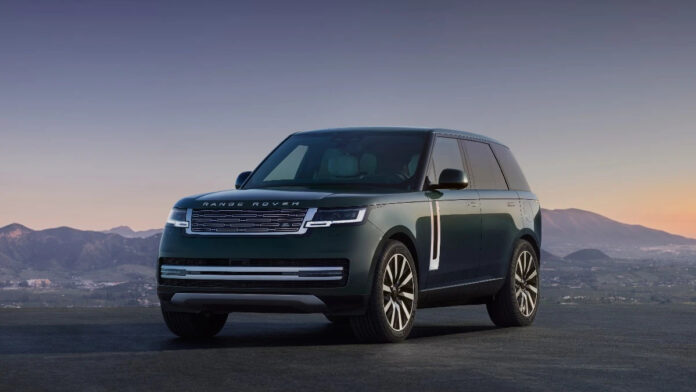
Externally, the electric Range Rover is almost indistinguishable from the V8 model. The vehicle has retained a virtually identical interior and exterior, with the exception of a closed radiator grille, as well as an updated underbody and wheel rims that improve aerodynamics to increase range.
The difference lies in the price. The base price of the electric version is $138,000 (or $140,550 including delivery), which is approximately $25,000 more than the gasoline-powered model and nearly $10,000 more than the P550e plug-in hybrid. For buyers who carefully manage their finances, this could be a reason not to buy, but the Range Rover audience typically doesn’t worry about such details.

The Jaguar Land Rover plant in Solihull has been retooled for large-scale production of the new model. The model will be available in both standard and long-wheelbase versions, with the first deliveries to customers scheduled for the end of this year.