





© ROOT-NATION.com - Use of content is permitted with a backlink.
Hard to believe just how long it’s been since the original Nintendo Switch launched. Chances are, your life looked completely different back then – and so did the gaming industry. We’ve waited for a proper successor longer than most console generations, and now that it’s finally here, it almost feels surreal. Am I really holding the Nintendo Switch 2 in my hands? Yes, it’s real. But was the wait worth it? Let’s find out.
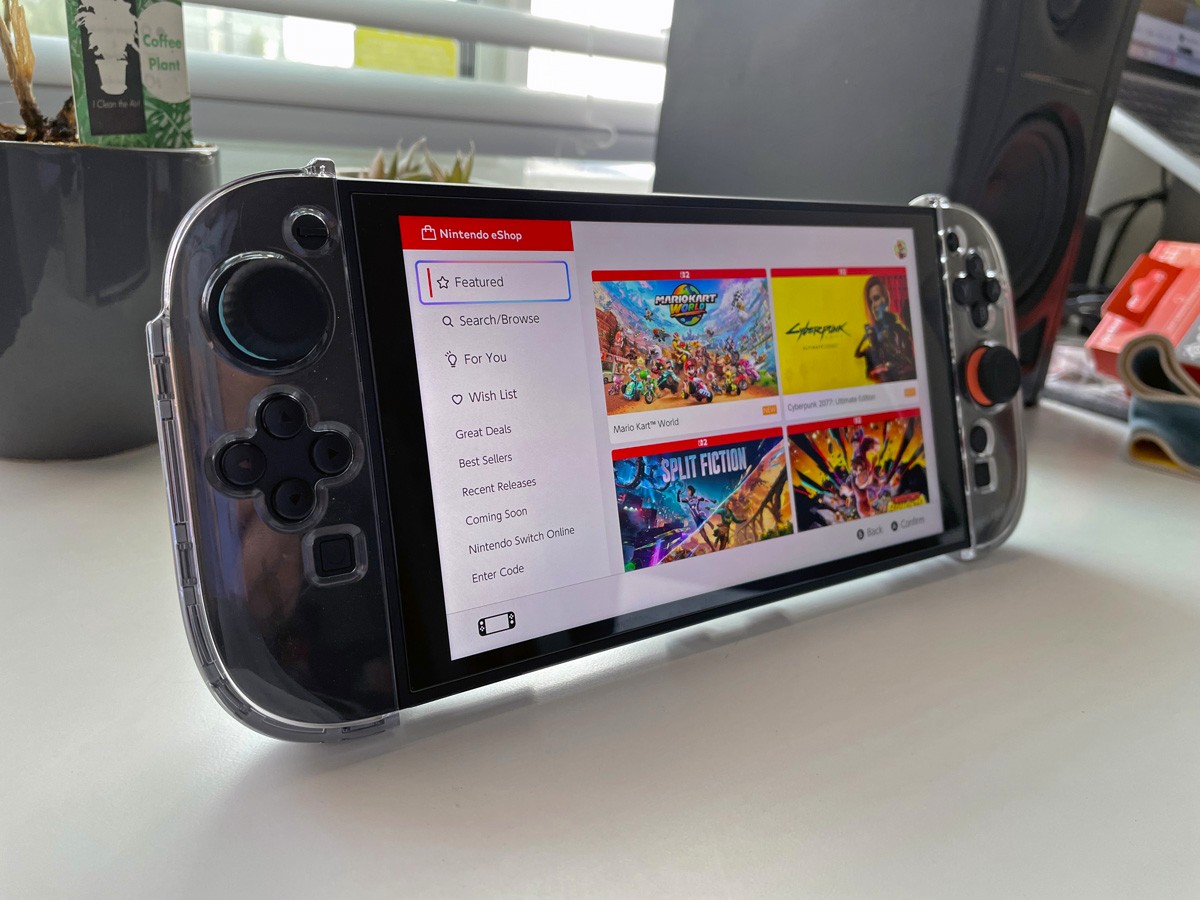
People often ask me whether they should buy – or start saving up for – the Nintendo Switch 2. My answer is always the same: it depends entirely on your personal preferences. Just like with gaming smartphones, you’re not buying the hardware for its specs alone – you’re buying it for the games you want to play.
The same logic applies here. You probably won’t buy a console until there are at least a few titles that genuinely interest you. In my case, it wasn’t even a question – I wasn’t buying the Switch 2, I was buying Super Mario World. I’ve been waiting more than a decade for that game. But if that genre doesn’t appeal to you, and you’re not a fan of 3D platformers in general, there’s no harm in holding off. Still, let’s take a closer look at what the Switch 2 has to offer.
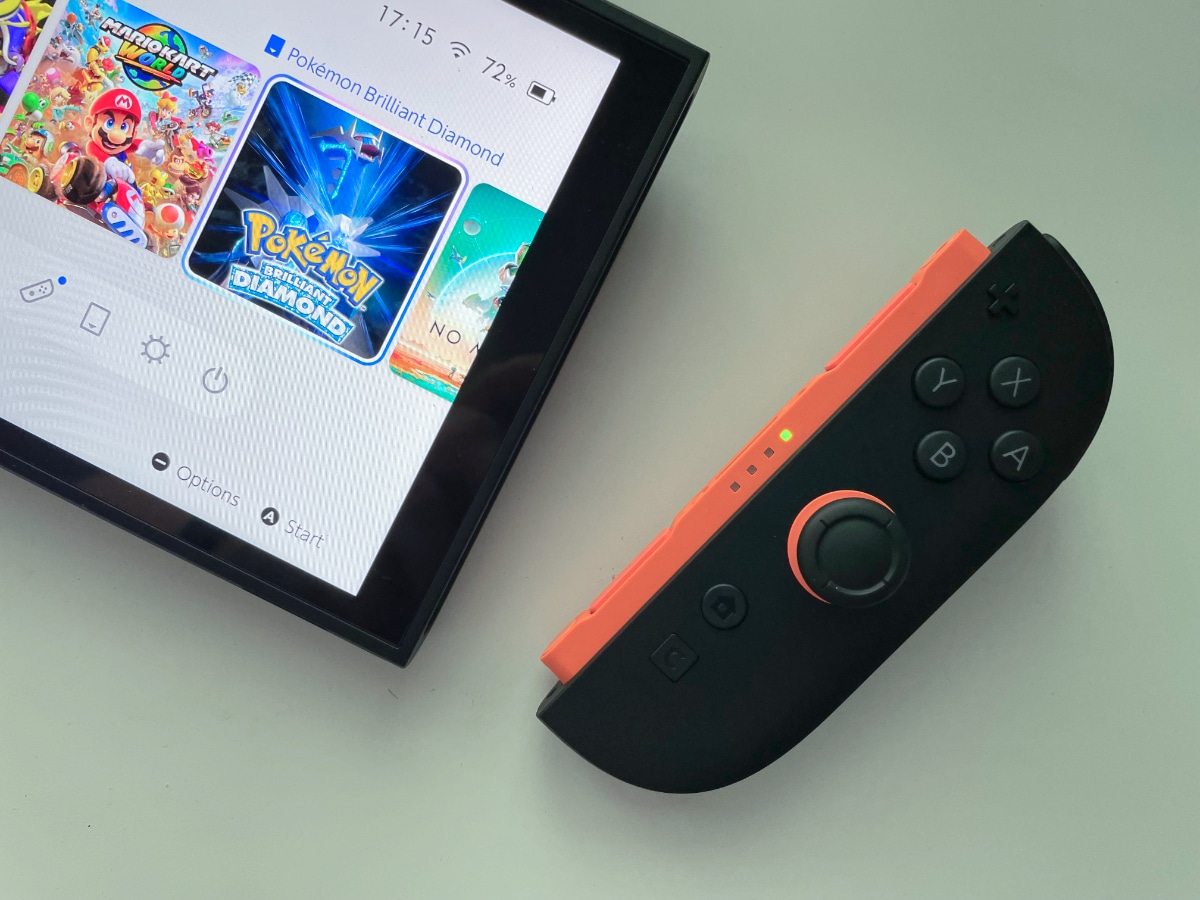
TABLE OF CONTENTS:
Positioning and price
I’ve heard plenty of complaints about the price of the new console – and yes, it’s definitely gone up. But there are a few very valid reasons for that. Hard as it may be to believe, the Nintendo Switch 2 is powerful enough to compete with most of its direct rivals, and its $449.99 (or €469.99) price tag starts to look more reasonable when you consider what’s included.
You’re not just getting a high-performance handheld; you’re also getting a complete setup: a dock for TV output and two Joy-Con controllers. That means the console works as a home system right out of the box – and supports two-player gaming from the start. By comparison, most Windows-based handheld gaming PCs don’t come with a dock or extra controllers in the base configuration. If you want to replicate the Switch 2’s versatility – portable and docked multiplayer – you’ll likely need to spend extra on accessories. That’s worth keeping in mind.
Of course, there’s also the unavoidable topic of game pricing. And here, there’s really no way to sugarcoat it – games for the Switch 2 are expensive. Prices vary, but ultimately, it’s up to you to decide whether a particular title is worth the asking price.
Design and package contents
It looks like the Nintendo Switch 2’s packaging has actually gotten a bit smaller. Inside, the tablet-style console fits snugly right up against the edges. As for what’s in the box – it’s the same setup as before: the console itself, two detachable controllers, the dock, a grip for the controllers, and wrist straps for them as well.
One of the first things you’ll notice is how much larger – and heavier – the Switch 2 is compared to the original model. Even Nintendo couldn’t resist current trends and ended up making a bit of a “slab.” That said, the hybrid console still looks compact next to bulkier devices like the Steam Deck, which is a relief. However, keep in mind that your old case likely won’t fit. Unless you already own a larger case designed for accessories – mine, for example, was originally meant for the Mobapad M6 HD and turned out to be a perfect match.
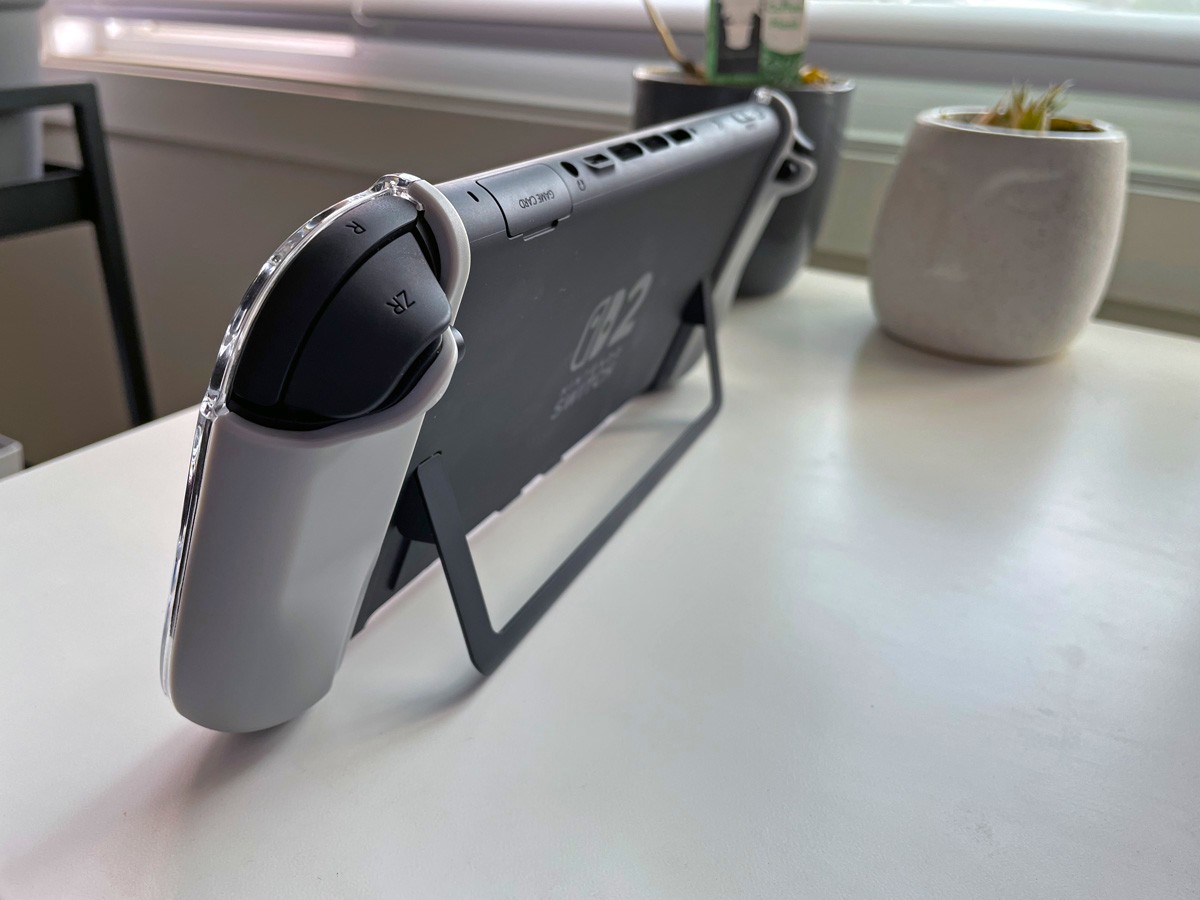
There’s not much point in going over the tablet section in detail – the core idea hasn’t changed. The screen remains the same, and the rear kickstand has once again been redesigned.
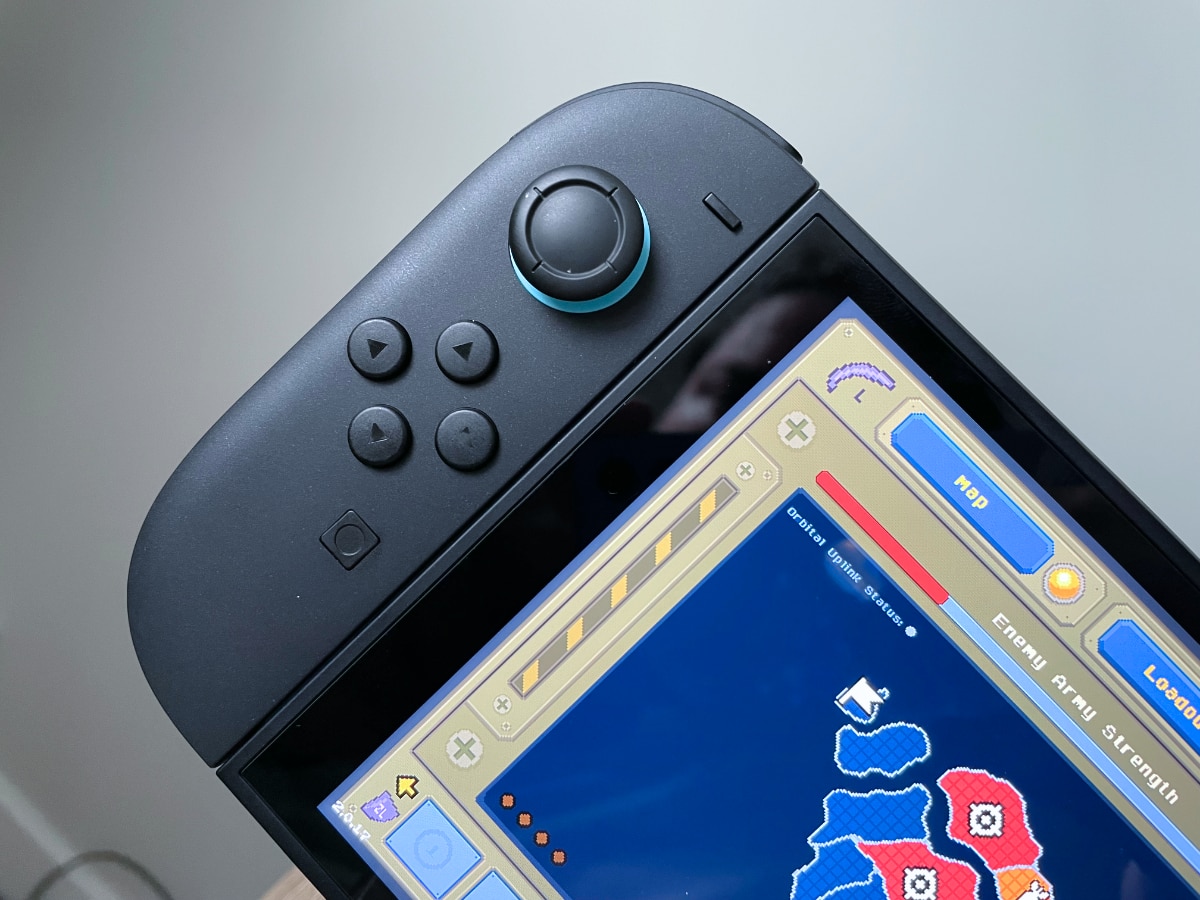
It’s much more interesting to take a closer look at the Joy-Con – the detachable controllers. The first-generation Joy-Con didn’t exactly earn rave reviews; they were criticized for being unreliable and ergonomically awkward. Fundamentally, the second iteration (let’s call them Joy-Con 2) doesn’t stray too far from that original concept. They’re still compact controllers designed to be used in multiple configurations.
However, this time around, they’re slightly larger – and that makes a noticeable difference in comfort. That said, true ergonomics are still lacking. Nintendo clearly prioritized the overall size of the console, which means you’ll likely need time to adjust to how these feel in hand. Still, there are improvements. The analog sticks are larger and more comfortable, the haptics are more advanced, and perhaps most notably, attaching the Joy-Con to the console now feels smoother – not just easier, but more satisfying.
Read also: Logitech Flip Folio review: iPad Case with a Removable Wireless Keyboard
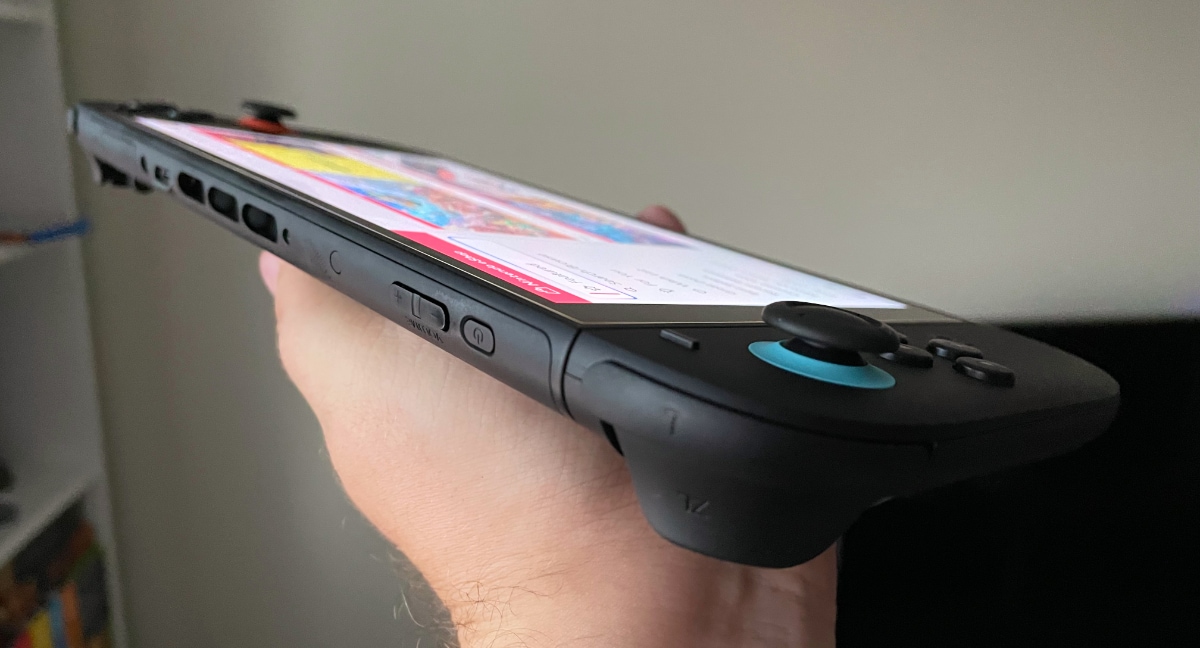
The attachment mechanism has been completely redesigned. Previously, you had to slide the controllers down from the top in a somewhat awkward motion – though to be fair, I never had major issues with it. That system is now gone, replaced by magnets. As a result, attaching or removing the controllers takes just a second or two, and the connection actually feels more secure. The annoying wobble from the original Switch is gone, and the magnets are surprisingly strong. Honestly, this might be one of the best improvements in the new model.
From a design standpoint, nothing drastic has changed – the Switch 2 still clearly looks like a Switch. I do miss some of the flashy touches, like the colorful controllers, but the console retains its distinctive character. You won’t confuse it with the growing number of handheld gaming PCs flooding the market. It’s worth noting that in just one week, the Switch 2 has outsold all Steam Decks and their competitors combined, which isn’t surprising. Just looking at it, you can tell it’s a refined product – sleeker, tidier, and more comfortable to hold than many alternatives, many of which are actually more expensive.
Screen and sound
Since the console’s announcement, one question has lingered: what about the screen? After getting used to the excellent OLED display on the previous model, no one really wanted to go back to a more basic LCD. But that’s exactly what we’re dealing with here – at least until a new iteration is released.
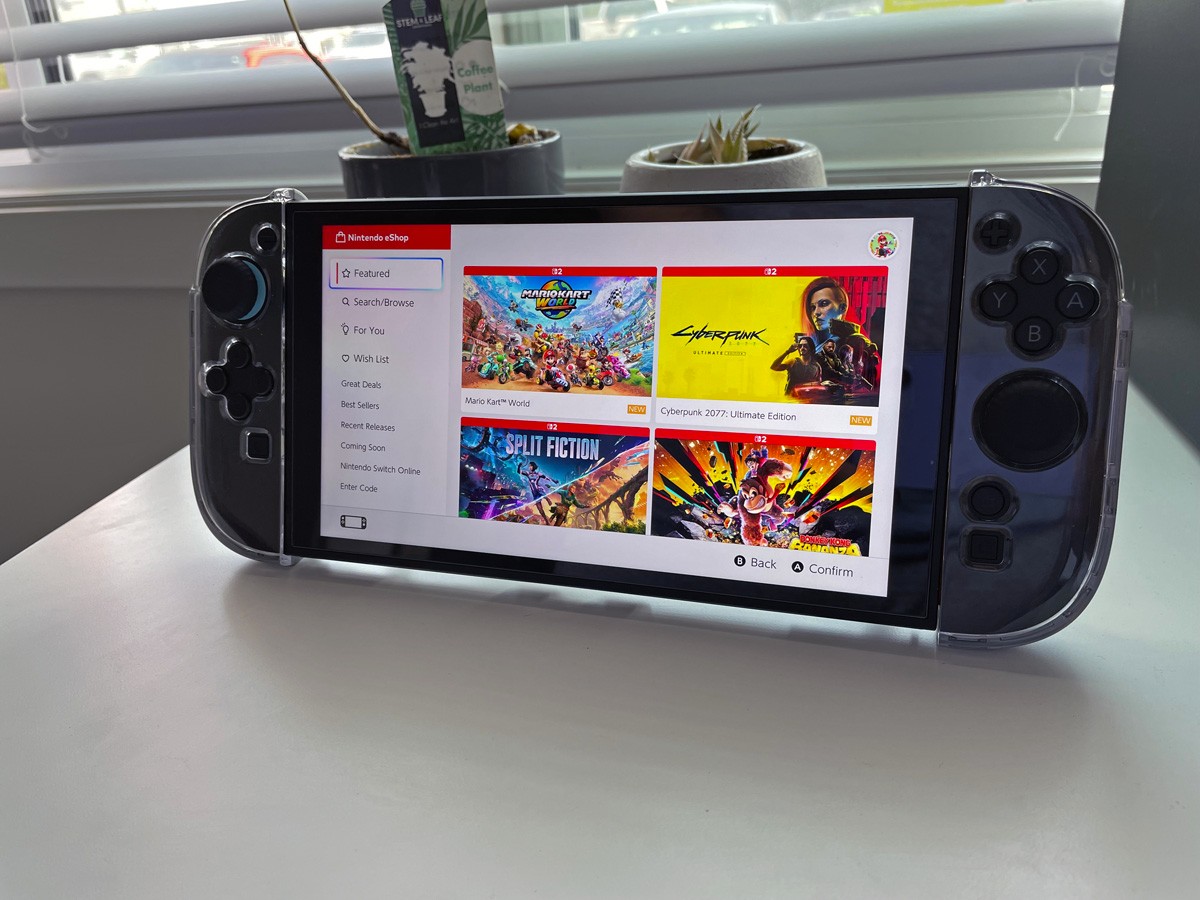
The reasons behind choosing this screen are straightforward: Nintendo wanted to include VRR (variable refresh rate), but using an OLED panel would have sent the price through the roof. ASUS recently confirmed a similar trade-off when they chose to avoid OLED in the ROG Xbox Ally X to keep costs manageable.
That said, the screen here is good. While it doesn’t have the perfect blacks or contrast of OLED, it offers high brightness and vibrant colors. Overall, it’s a big step up compared to the original Switch or Switch Lite. It’s a modern, high-quality Full HD display that looks impressive – even next to OLED panels – though it does still fall short in some areas.
What surprised me more was the sound. Yes, the sound. Something has definitely changed – Switch 2 is noticeably louder, clearer, and has a more spacious feel. It’s clear they’ve added some kind of simulated surround sound technology, especially noticeable in certain games. It’s a small detail, but a welcome one.
Interface and gameplay
I have to admit, like many others, I was a bit disappointed that the console’s interface hasn’t changed much. After eight years, you expect something more fundamentally new, but Nintendo took a different approach. It’s largely the same system, with all the familiar elements in their usual places. There are still only two themes – light and dark – and folders are still missing. That said, there are some subtle improvements: the interface feels more refined and vibrant. Icons are now framed with rainbow-colored borders, which remind me of Apple’s AI interface elements. Most importantly, Nintendo has revamped and fixed the digital store. It no longer lags and has become much more user-friendly.

Screenshots can now be sent directly to the companion smartphone app. There’s also a new game chat feature, which, judging by its performance, might be better than what Sony or Microsoft offer. It’s accessed with a single button and works smoothly – even without a microphone, since the console has a built-in mic that works at a distance.
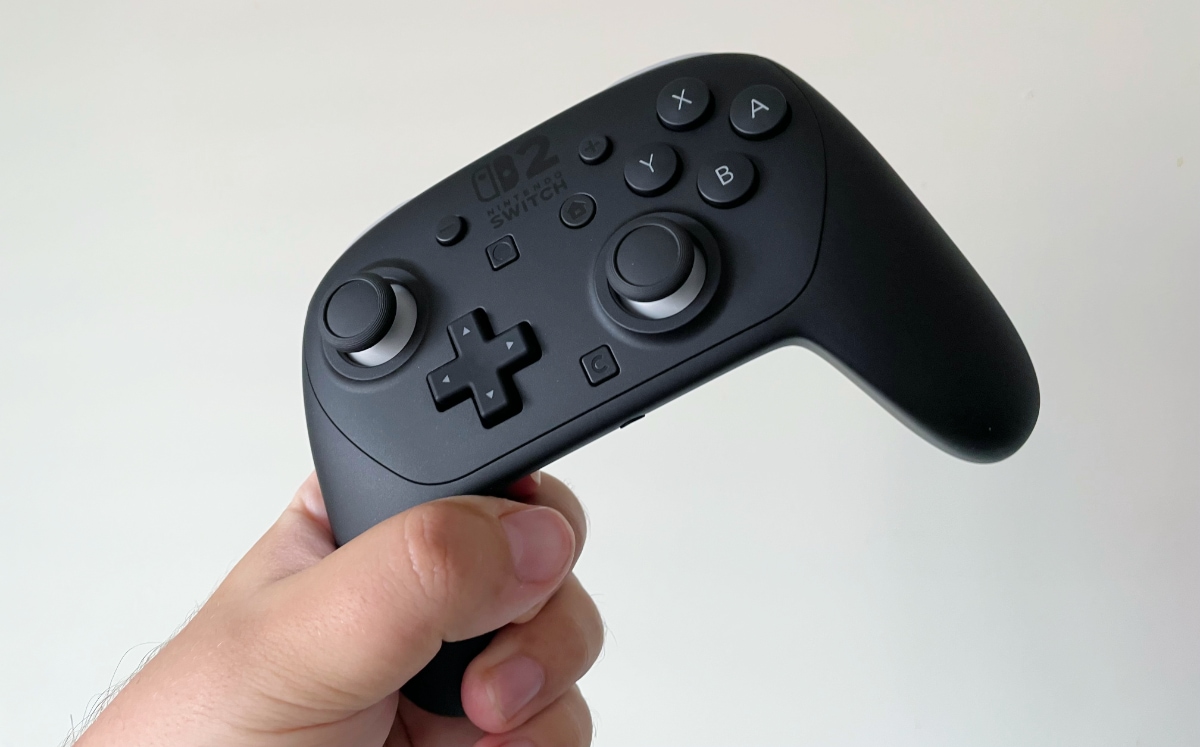
If you want, you can connect a webcam – either an official one or any USB-compatible model. The same flexibility applies to controllers: you can use new ones, older models, or even third-party options. One caveat: the console can only be powered on using the new controllers.
Read also: ASUS ROG Tessen Gaming Controller Review

“What about games?” you might ask. So far, there aren’t that many releases that fully showcase the console’s power, but a few stand out. I’m not going to compare it to gaming PCs; instead, I’ll focus on the original Switch.
One of the most impressive titles Nintendo seems to have overlooked is No Man’s Sky. This space simulator, which receives regular updates, launched a next-gen patch on day one that brought the portable version close to PS5-level visuals for free. I’m not exaggerating – aside from frame rate differences, the graphics quality is impressive enough to make you forget you’re playing on the go. Other games also look great visually, including Super Mario World, Fast Fusion, and Tears of the Kingdom.
The jump in performance is significant. On top of that, games that struggled on the original Switch now run much more smoothly. The Witcher 3 runs effortlessly, Doom Eternal no longer suffers from frame rate drops, and Animal Crossing loads twice as fast.
Interestingly, you can now play games using a mouse – or more precisely, use the Joy-Con controllers as a mouse, which works on any surface. I haven’t quite figured out the practical use for this feature yet, though I admit it could be interesting in games like Super Mario Maker 2.
The storage capacity has noticeably increased: 256 GB isn’t huge, but it’s enough to hold all my games from the original Switch – which, by the way, had a memory card as well. However, you can’t just use any microSD card anymore; the Switch 2 requires faster microSD Express cards, supporting up to 2 TB. I don’t have one of those yet, but for now, the built-in storage will do. At least for the time being.
Not everything is perfect, of course. One noticeable downside is battery life. While the console is larger, it isn’t thicker, and the battery hasn’t improved – in fact, it hasn’t even maintained the previous generation’s endurance. At maximum brightness, you can drain the battery in about two to three hours, especially if you’re using the new power-saving feature that limits charging to 90%.
For me, this isn’t a big deal since I mostly use the handheld mode while lounging in bed. But if you’re constantly on the move, a good power bank will be essential.
Verdict
I don’t know about you, but I’m satisfied with the Switch 2. Unlike many others, I’m not interested in pointless comparisons with devices like the Steam Deck. Since the ’90s, the word “handheld” has meant Nintendo, and even Sony never quite changed that – though they had their chances. It’s reassuring to see that the team in Kyoto continues to deliver: this is a quality, modern, attractive, and powerful console. But should you buy it? That really depends on how much you value Nintendo exclusives. If those don’t appeal to you, then it’s probably not worth it. For me, though, the choice was never really in question.
Read also:
- Combo Touch for iPad Pro review: Still better – and cheaper
- GameSir G8 Plus review: There’s a New King In Town

