





© ROOT-NATION.com - Use of content is permitted with a backlink.
The European Space Agency (ESA) and OHB System AG have officially signed a contract to develop LISA – the world’s first space-based observatory designed to detect gravitational waves. This mission is expected to usher in a new era in fundamental physics and astrophysics.
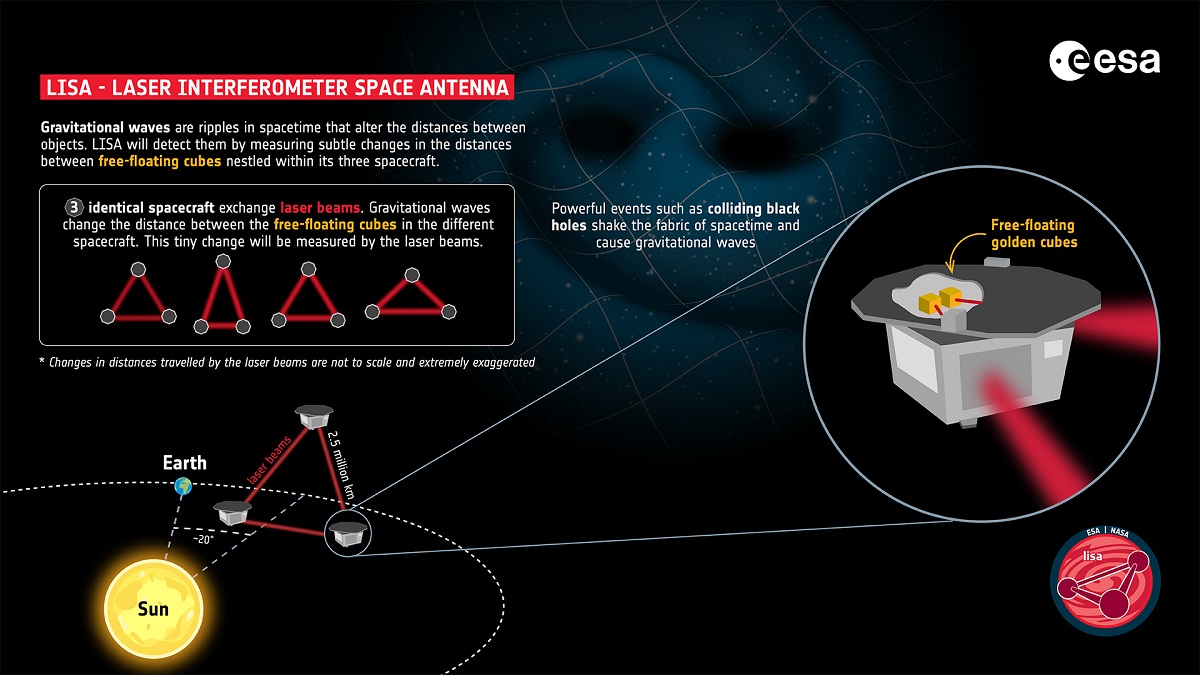
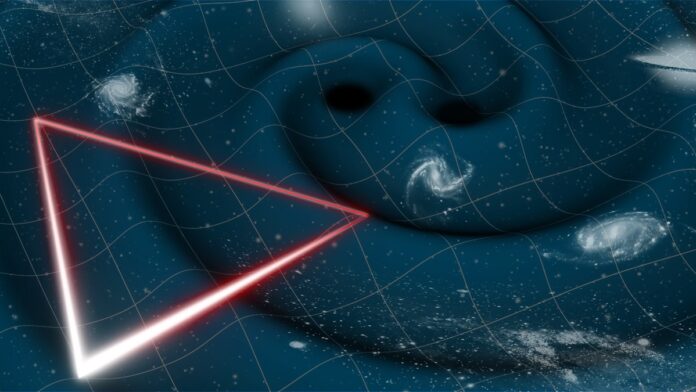
LISA (Laser Interferometer Space Antenna) is an ambitious mission consisting of three spacecraft arranged in an equilateral triangle with sides 2.5 million kilometers long. The formation will orbit the Sun, trailing behind Earth. Using laser interferometry, LISA will be capable of “listening” to gravitational waves – tiny ripples in space-time caused by massive cosmic events, such as the collisions of supermassive black holes.
The contract was signed on June 17 at the Paris Air Show, officially marking the start of the project’s industrial phase. The mission is scheduled to launch in 2035 aboard an Ariane 6 rocket.
“We are proud to contribute to this scientific milestone. LISA will allow us to explore the universe through gravitational waves and view space from an entirely new perspective,” said OHB CEO Chiara Pedersoli.
Unlike ground-based detectors, LISA will be able to detect low-frequency gravitational waves – those generated by the mergers of black holes in the early universe or from compact stellar systems within our galaxy. This capability will allow scientists to trace the growth of black holes over billions of years and put Einstein’s theory of relativity to the test at its most extreme limits.
Each spacecraft in the mission will carry two ultra-precise test masses made of a gold-platinum alloy. These masses will “float” freely inside specialized capsules, shielded from all external forces. A highly accurate laser system will measure minuscule changes in the distances between the masses – smaller than the diameter of an atom – caused by passing gravitational waves.
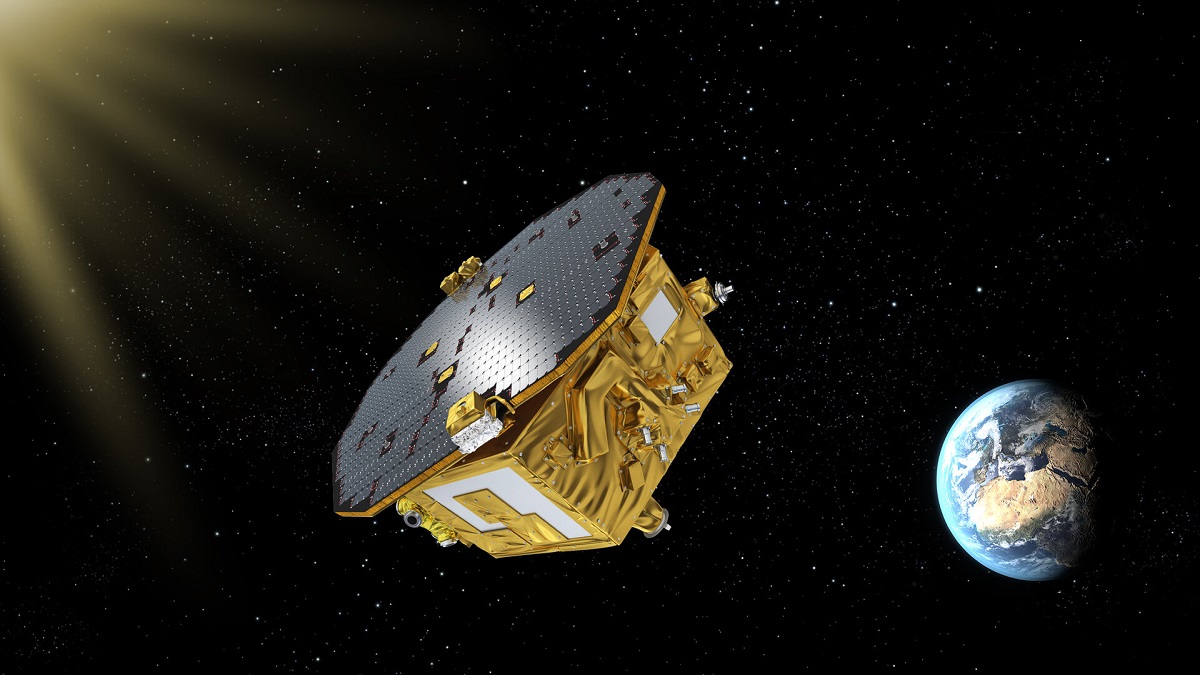
The project brings together some of Europe’s leading aerospace companies. OHB is overseeing the overall mission implementation, with Thales Alenia Space providing support. ESA member states are contributing key technologies: Italy and Switzerland are supplying the test masses, while Germany, France, the UK, and others are responsible for the laser systems, optics, and sensors. LISA is set to become a symbol of European scientific and technological progress, a milestone in international collaboration, and a powerful new tool for exploring the “dark” universe.
Read also:
- Airbus and Leonardo Begin Study on NH90 Block 2 Helicopter Upgrade
- China Unveils the World’s First Electronic Warfare System Capable of Jamming F-35 Radar