





© ROOT-NATION.com - Use of content is permitted with a backlink.
While the global gaming industry at least tries to keep its distance from Russian “cultural” waste, Steam continues its own routine. The platform has once again hosted a festival of games from Russia, this time – as usual – explaining it away with a familiar disclaimer: “it’s organized by a third party, not by us.”
The official organizer is the Russian studio Blackbalance Games, but it’s clear that none of this would have happened without Valve’s approval. The company distances itself from the event, yet still provides the tools, the platform, and the visibility that make it possible.
The irony is that this entire situation is unfolding on a platform that also features a prominently displayed “Caution: Russian Games” page. It’s a contradictory approach: on one hand, Steam warns users about potentially problematic content, and on the other, it provides that same content with an official festival slot. This isn’t just a case of mixed signals – it looks more like a management decision aimed at appearing neutral while still accommodating one side. It’s the kind of inconsistency that could easily serve as a case study in business schools on how attempts at neutrality can end up looking like active support.
In 2025, a global platform could reasonably be expected to maintain at least a basic level of ethical consistency. Instead, Steam often appears to operate in a parallel reality where it can claim to be “just a game store” while overlooking the fact that its infrastructure is actively used to promote content from an aggressor state. And when revenue becomes part of the equation, Valve’s moral compass seems to fade from view.
Meanwhile, as Valve tries not to alienate its Russian audience, Russia’s Prosecutor General’s Office has added the Ukrainian studio GSC Game World – the developer behind the S.T.A.L.K.E.R. series – to its list of “undesirable organizations.” According to Russian authorities, the studio has somehow become “a threat to the constitutional order” and “a danger to state security.”
In their statement, officials repeated familiar rhetoric, accusing GSC Game World of financially supporting the Ukrainian Armed Forces and of including what they call “aggressive Russophobia” in its projects, including S.T.A.L.K.E.R. 2: Heart of Chornobyl. Practically, this decision means a full ban on any business activity by the studio within Russia and creates potential risks for anyone who interacts with its products.
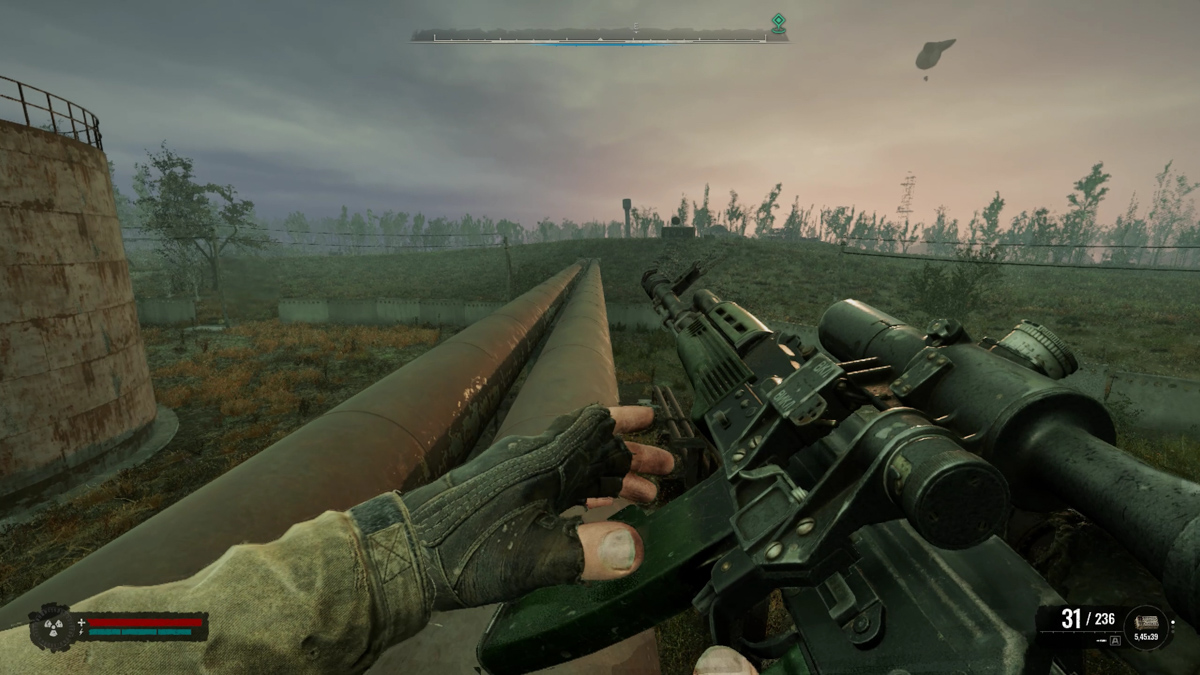
And frankly, that’s for the best. The S.T.A.L.K.E.R. series – whose developers blocked purchases from Russian accounts after the full-scale invasion – is more than a game. It has become a recognizable cultural touchpoint: the atmosphere of the Zone, its self-sustaining ecosystem, and its distinct narrative style have earned global recognition. It’s a rare example of Ukrainian creative work developing into an international phenomenon.
The contrast feels even sharper when remembering that one of the people behind the series, Volodymyr Yezhov, was killed in 2022 while defending Ukraine near Bakhmut as part of the Armed Forces. A developer who built fictional worlds chose to protect the real one. His death is a reminder of who is fighting for the future – and who continues to mass-produce low-quality cultural output under the label of “festivals.” For Steam, it’s a moment that deserves serious reflection, not another attempt to avoid accountability.
Read also:
- “Morale In The Studio Is At Rock Bottom.” Rockstar Games Accused of “Union Busting” After Mass Firing of Over 34 Staff
- The Walking Dead by AMC Networks Comes to World of Tanks