





© ROOT-NATION.com - Use of content is permitted with a backlink.
Since the start of Russia’s full-scale invasion, over 45,000 attack drones have been launched against Ukraine. Explosive-laden drones, often costing only a few thousand dollars, strike nearly every day, targeting energy facilities, civilian infrastructure, and residential areas. To defend against these threats, Ukraine relies on Western air defense systems, fighter jets, rapid response fire teams, and interceptor drones. However, these measures are not enough to fully counter the scale of the attacks. In response, Ukrainian engineers have developed a new type of weapon – a domestically produced air defense system called Sky Sentinel.
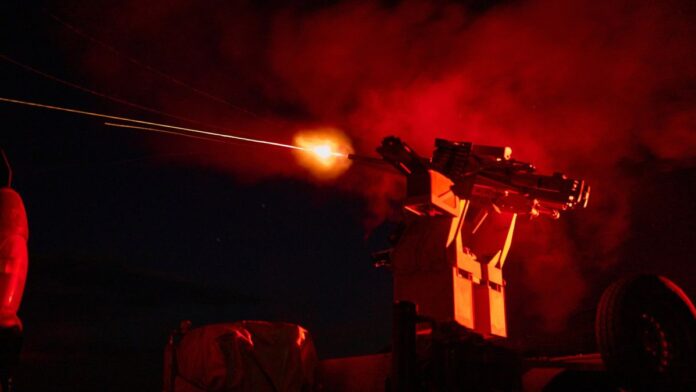
At first glance, the Sky Sentinel looks like a conventional turret, but it is actually an autonomous anti-aircraft tower equipped with AI and a heavy-caliber machine gun, capable of 360-degree rotation. It’s designed to engage small, fast-moving targets traveling at speeds of up to 800 km/h. This includes Shahed drones, reconnaissance UAVs, loitering munitions, and even drones half their size. Within its effective range, the Sky Sentinel can also intercept cruise missiles.
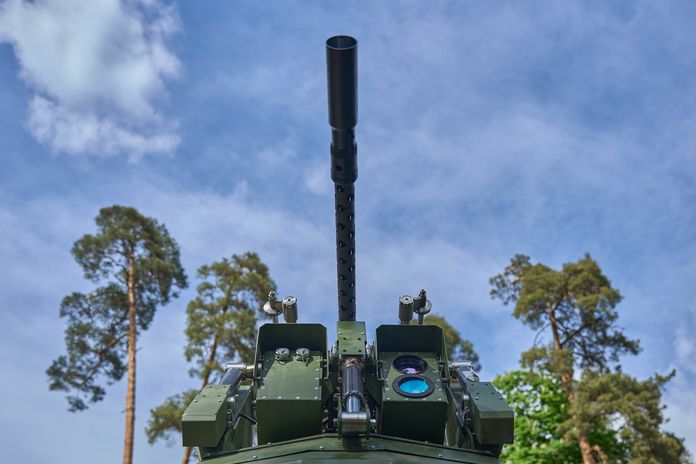
The system operates fully autonomously – manual control or targeting by an operator is not required. Once deployed to a combat position and supplied with radar data, Sky Sentinel handles the rest: it detects incoming targets, locks on, tracks their flight paths, calculates firing solutions, and opens fire – all without human intervention.
The engineering team behind Sky Sentinel shared insights into the development process and some of the technical challenges they faced. “One of the biggest engineering hurdles for this kind of weapon is mechanical play,” they explained. Even a slight shift in the turret’s mechanisms can result in a targeting error of several dozen meters. With so many moving parts involved, keeping the system mechanically stable proved to be a particularly difficult task.
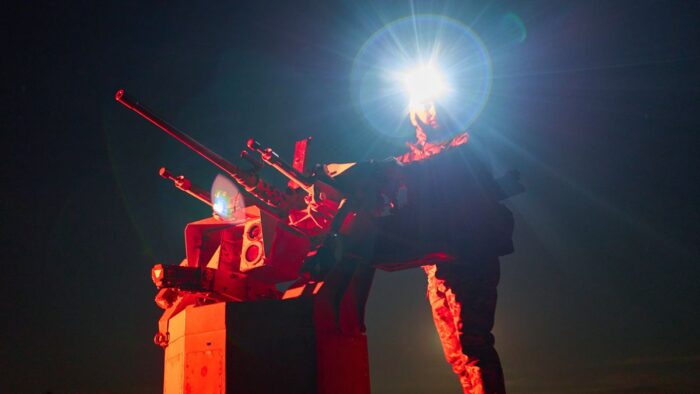
“We had to build a system with zero mechanical play, despite the fact that it moves constantly,” one of the engineers explained. “And not just moves – it fires. That means it also has to manage recoil effectively.”
The mechanics behind Sky Sentinel were developed and tested entirely in Ukraine, both on training grounds and in live combat situations. One prototype has already seen action on the front line, successfully intercepting four Shahed drones.
“We’re solving dozens of micro-issues to make everything function as one flawless system,” the engineers said. “No mechanical slack, no software lag, precise optics, and accurate fire control. Everything needs to work in perfect sync.”
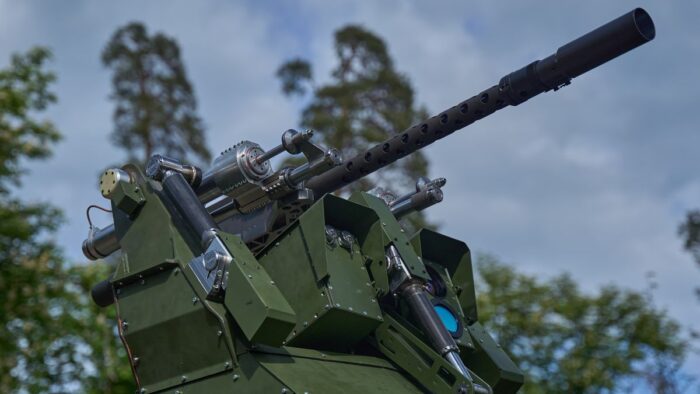
For critical systems such as targeting and rangefinding, Sky Sentinel relies on imported components – these currently have no domestically produced equivalents in Ukraine. However, all the software powering the system was developed entirely by Ukrainian engineers. During engagement, the weapon must maintain constant visual tracking of the target to ensure the projectile strikes at the right moment. The turret is equipped with heavy machine guns that use standard ammunition, and successful hits rely on real-time ballistic calculations handled by the onboard software.
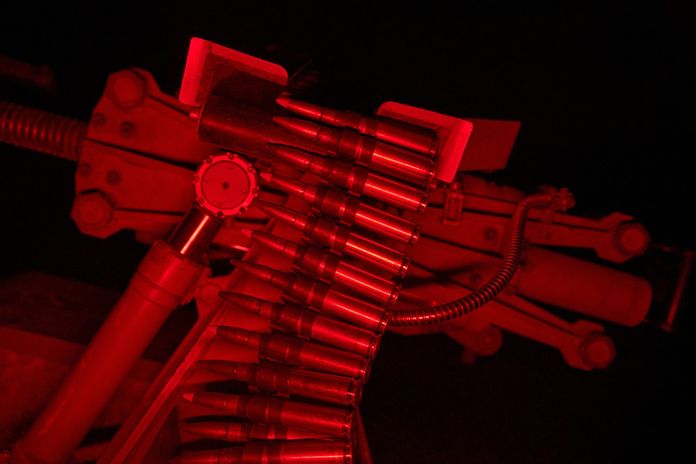
Sky Sentinel is capable of defending both densely populated urban centers and high-risk frontline zones. Its maximum engagement range remains classified. Each turret costs approximately \$150,000, and protecting a single city effectively would require between 10 and 30 units. Despite the cost, it is still more affordable than a single interceptor missile used by many traditional air defense systems.
The developers plan to scale up production to manufacture dozens of units per month. This is a significant challenge, as eliminating mechanical backlash is easier on a single prototype than in mass production. However, the team is confident that it’s entirely feasible. Currently, a fundraising campaign is underway on the UNITED24 platform to finance 10 of these turrets to help protect Ukrainians from aerial threats.
Read also:
- Ukraine Testing New Kamikaze Strike Drones
- Ukraine Unveils Drone Capable of Shooting Down Iranian “Shaheds”