





© ROOT-NATION.com - Use of content is permitted with a backlink.
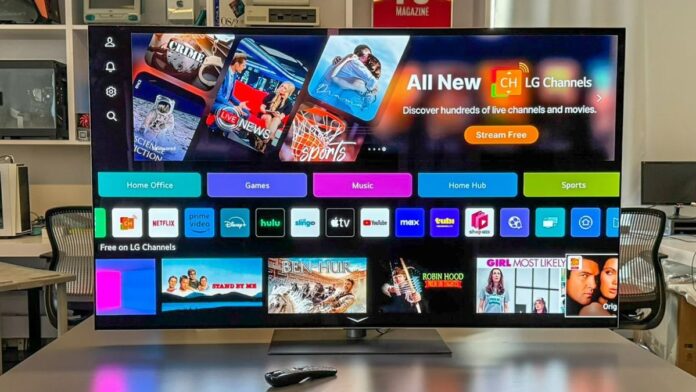
Gamers Nexus recently published an investigation revealing that LG smart TVs can continuously monitor home networks and record audio through their microphones even when turned off. LG stated that this investigation could create a misconception about how its Smart TVs work, so it explained how its TVs operate and how the company approaches protecting user privacy.
The tech giant noted that its Smart TVs do not continuously record or transmit users’ conversations. Speech-to-text conversion is triggered only after the user initiates voice interaction: either by saying the wake word or by pressing the voice control or AI button on the remote control. The audio used to recognize the wake word is processed on the TV, and if the algorithm fails to recognize it, the audio is not converted to text, stored, or transmitted.

During the processing of a voice command, speech recognition results and related technical logs may be generated. This data pertains to specific voice interactions and does not indicate continuous recording of conversations outside of an active voice recognition session. The company states that speech recognition results may be used to enable voice features, but they are not transmitted anywhere afterward – neither while the TV is offline nor after the connection is restored.
Read also: How to Set Up Your IPTV: A Step‑By‑Step Guide for Smart TVs, Android, and Firestick
Features such as Automatic Content Recognition (ACR), voice recognition, and interest-based advertising are optional and disabled by default. Users can enable them themselves, as well as manage or withdraw their consent through the TV’s settings at any time.

ACR identifies content using audio fingerprinting technology, relying on the TV’s built-in audio processor rather than its speaker. This feature does not collect screenshots, screen recordings, video recordings, voice recordings, or other audio recordings from the TV. If ACR is available and enabled, the associated information may be used to segment audiences or analyze viewing trends or audience behavior. Interest-based advertising and cross-device advertising require separate user consent through the relevant agreements.
LG emphasizes that protecting user privacy is one of the fundamental principles embedded in the design and operation of the company’s products and services. Its approach to privacy is based on transparency, freedom of choice, informed consent, and continuous improvement.
Read also: Top 10 Smart TVs for 2026
Transparency involves helping users understand how Smart TV features work and how the associated data is used. Freedom of choice means giving users real control over optional features and services. Informed consent involves creating the conditions for making informed decisions through clear and manageable consent settings. And continuous improvement involves constantly strengthening privacy and data protection and ensuring greater transparency.

Privacy considerations are taken into account throughout the entire product lifecycle – from planning and development to testing, deployment, and ongoing operation.
Today’s Smart TVs are no longer limited to simply viewing content. They help users discover entertainment, interact with content in more convenient ways, connect devices and services, and personalize their viewing experience. Features such as voice recognition, content recommendations, interaction with connected devices, and personalized services are designed to make finding and accessing content easier. At the same time, as with most interconnected technologies, certain information must be processed for individual features to function properly.
Read also: One Screen Instead of Three: LG Unveils a 40-Inch Curved Monitor for Medical Diagnostics
Users can decide for themselves whether to use optional features such as voice recognition, ACR, and interest-based advertising. These features require separate agreements, and you can view, manage, and withdraw your consent at any time in your TV settings. Declining these optional agreements does not prevent you from using the basic Smart TV features.

As Smart TVs become increasingly interconnected and feature-rich, security remains a critical part of the user experience. No connected product can be completely immune to vulnerabilities, so the company continuously monitors, tests, and improves its products.
LG also operates a Bug Bounty program and collaborates with external security researchers to identify and address potential vulnerabilities. As part of its responsible disclosure programs and other security processes, LG regularly reviews reports of identified issues, assesses their potential impact on users, and, when necessary, develops measures to address them or releases software updates.
Users are advised to keep their TV software up to date and install security updates as soon as they become available. Currently, LG provides security updates for supported TV models for up to five years from the initial release of the relevant webOS platform version, subject to product support policies and applicable requirements.
Read also: Search History Is Now Safer: YouTube Adds a PIN for Smart TV Profiles