





© ROOT-NATION.com - Use of content is permitted with a backlink.
In late spring and early summer, nearly 160,000 applicants took the entrance exam for Mexico’s largest university, UNAM. For the first time in history, the process was conducted entirely online from May through June, using a specialized secure web browser and AI-powered monitoring systems via webcams.
The results were disastrous.
Read also: AERONAUT – everything that flies above the ground: aviation, UAVs and drones, rockets, and space
The test results differed drastically from those of previous years, especially among the top performers. Between 2021 and 2025, 3.5% of participants scored 100 out of a possible 120 points. This year, 16.3% of applicants reached this level. The situation among those with the highest scores was even more striking. Previously, only 0.9% of applicants received 110 points or more, whereas during the current session, that percentage reached 5.5%.

The sudden surge in success rates sparked a wave of accusations of widespread fraud, prompting UNAM’s leadership to establish an expert panel to investigate. A special commission with the lengthy official name la Comisión Técnica de Personas Expertas para la Revisión del Proceso de Selección de Ingreso a Licenciatura para el Ciclo Escolar 2026-2027/1 prepared a final report. The experts concluded that the only appropriate step to dispel doubts is to conduct a re-examination in the traditional in-person format.
The retest will affect not only applicants who achieved a passing score this year but also all individuals whose results met the minimum admission requirements for their chosen programs starting in 2021. This decision will affect approximately 58,000 applicants, and their admission will depend on the results of the new exam session. Details are to be announced as soon as possible, as the start of the academic year is scheduled for August 10, so the procedure will have to be expedited or the start dates postponed.
According to a publication in Gaceta UNAM, the university’s rector apologized to the honest applicants who will have to retake the exam through no fault of their own. At the same time, he emphasized that the re-evaluation is a necessary measure to ensure fairness and equal conditions for admission.
The exact methods of cheating have not yet been determined. Since the test consisted of multiple-choice questions rather than essay writing, it is difficult to detect direct use of AI (such as the instant insertion of pre-written text). Students could have used both cheat sheets and traditional methods of cheating.
New York Times reporters noted in their article that tips on how to circumvent the monitoring were actively circulating even before the exams began. Online advice included placing additional monitors outside the camera’s field of view to use ChatGPT or other AI tools, hiding micro-earpieces under one’s hair, or enlisting third parties to take the test off-camera.

To ensure integrity during remote exams, applicants installed security software. According to El País, the LockDown Browser app from Respondus was used. The developer claims that this service blocks printing, copying, navigating to other websites, launching programs, search queries, and messaging apps, returning the PC to its normal state only after the session ends.
Additionally, UNAM integrated a monitoring system from Territorium, where AI analyzed video feeds from webcams. It detected instances of participants being replaced, the use of phones or headphones, or a person leaving the frame. A single proctor monitored 150 applicants and received automatic notifications of violations to forward to management.
However, the measures taken proved ineffective, even though UNAM invalidated nearly 2% of the exams due to rule violations. The university acknowledged a high probability that a significant portion of the applicants had received outside assistance. AI expert Raúl Rojas noted in a comment to NPR that statistical models indicate manipulation by nearly half of the online test takers.
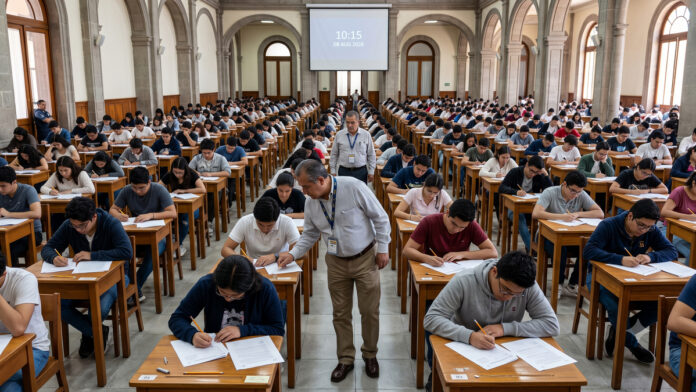
Now, nearly 58,000 candidates will be required to demonstrate their knowledge in classrooms under the personal supervision of examiners.
Read also: AI-Managed Passwords: Google Is Rolling Out Deep Integration of Spark with the Chrome Browser