





© ROOT-NATION.com - Use of content is permitted with a backlink.
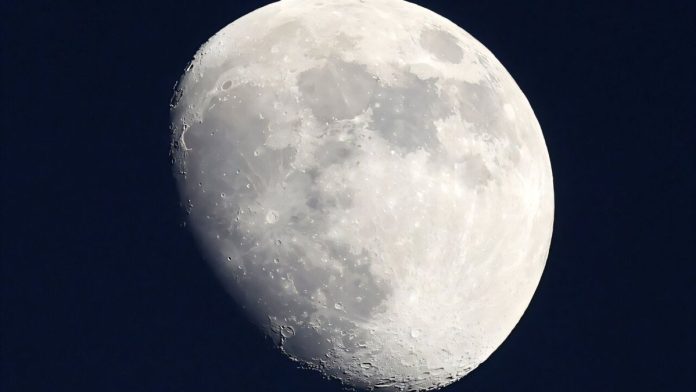
One day, approximately 4.5 billion years ago, turned out to be an extremely eventful one for our planet, as it may have suddenly acquired a moon while simultaneously withstanding a colossal upheaval.
The Moon may have formed in just a few hours following a massive collision between Earth and a Mars-sized protoplanet at the very beginning of the Solar System’s existence. This hypothesis is based on recent computer models that account for the influence of the internal temperatures of young protoplanets on their geological parameters and the nature of cosmic collisions.

The giant-impact hypothesis has become the leading theory of the Moon’s origin largely thanks to the research of planetary scientist Robin Kanap. Since 2001, she has conducted and refined numerous computer simulations explaining how a Mars-sized celestial body named Theia struck the Earth at a specific angle, ejecting debris into Earth’s orbit. Other experts have now joined the study of this topic. A team of scientists led by Adin Denton has performed some of the most detailed simulations of the impact, better accounting for the geological properties of the colliding objects.
According to Denton, previous models had begun to account for the strength of materials – a factor that is extremely important when analyzing collisions involving smaller bodies such as asteroids, or in her earlier work on the formation of the Pluto–Charon system. Researchers were unsure whether this would affect the situation with the Moon, but the simulations demonstrated the significance of this factor.
As it turned out, hotter celestial bodies are significantly more brittle than colder ones. After the planet’s formation was complete, they retained a high internal temperature, which affected the strength of their rocks. Since the collision occurred shortly after the formation of the Solar System, this affected the nature of the impact with Theia, although the final outcome was determined by the exact timing of the event and the degree to which Theia had cooled. During its collision with Earth, the protoplanet Theia was completely destroyed. Most of its shattered iron core sank deep into Earth, while a vast layer of debris enveloped the planet, forming the Moon.
The higher temperature in Theia’s outer layers – several hundred kilometers thick – affected its ability to deform during the impact and absorb the collision’s kinetic energy. This, in turn, determined how material was scattered around Earth, leading to the subsequent formation of the Moon. Thus, incorporating varying temperatures and material strengths into the simulations allowed Denton’s team to gain a deeper understanding of the impact process and the Moon’s formation.
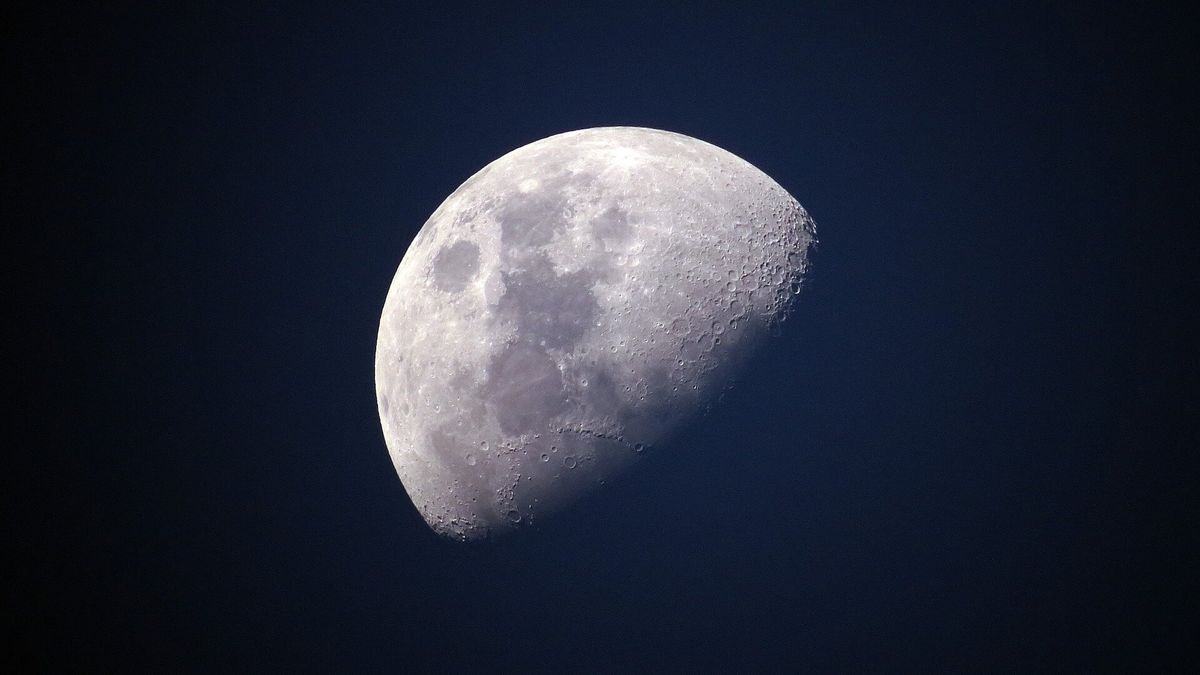
Previous calculations pointed to two possible scenarios. According to the first, a debris ring existed for a long time, allowing the Moon to gradually accumulate mass. The second scenario, first demonstrated in simulations led by NASA in 2022, posited that the Moon formed from this debris in a matter of hours. Denton’s current calculations strongly support this astonishing possibility.
If Theia had been cooler – which would indicate a collision at a later stage in the history of the Solar System (approximately 100–150 million years after the formation of the planets) – the debris disk would have formed in a way that would have allowed for a prolonged accretion of the Moon. Due to its greater strength, most of Theia would have remained intact and merged with Earth.
Conversely, a warmer Theia that collided with Earth less than 60 million years after the formation of the planets would create conditions for the Moon’s ultra-rapid formation, provided that Theia itself was completely destroyed.
Denton notes that depending on how hot the Earth and Theia were before the catastrophe, the impact could have destroyed Theia and created a giant disk of debris, which subsequently formed the Moon. However, using the initial simulation parameters with an equal temperature distribution inside both bodies, a fully formed Moon emerged in about 5 hours. It was truly a unique day for our planet, which in an instant gained a satellite and experienced a powerful shock.
Robin Kanap, who did not participate in this specific study, emphasized that these unexpected results point to a possible connection between the Moon’s current physical properties – including its volatile content – and the thermal state of Earth and Theia during the impact. This will help more precisely determine the timing of this massive event.
In both scenarios, the Moon consists primarily of material from Theia’s mantle with a minor admixture of Earth’s mantle. The latter fact is surprising, given the similarity in the compositions of the Moon and Earth’s mantle. However, scientific studies highlight the complexity of this story, as despite the similarities, there are puzzling discrepancies in the isotopic composition that are difficult to explain with current simulations, including Denton’s models.
These calculations may influence the search for exomoons. If our moon truly formed in a matter of hours, the search for exomoon formation disks around rocky exoplanets may prove futile due to their short lifespans. At the same time, disks around gas giants are a completely different matter, as they arise not from impacts but from the remnants of material left over from the formation of the planets themselves.
Read also: Second Time’s the Charm: Isar Aerospace Becomes the First European Private Company to Reach Orbit