





© ROOT-NATION.com - Use of content is permitted with a backlink.
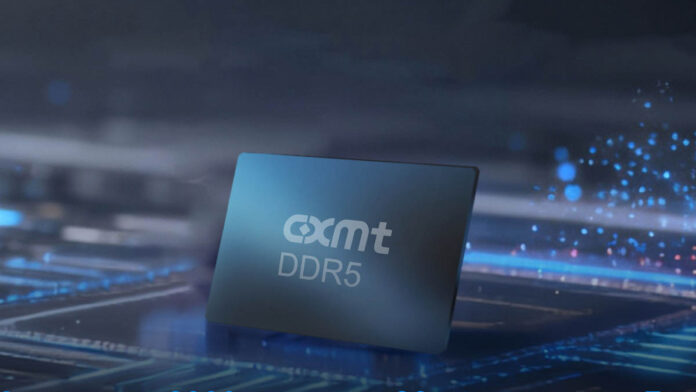
China’s CXMT has beaten Western chipmakers to the punch by announcing the start of mass production of LPDDR6 RAM, which will debut in new Xiaomi smartphones. Production of the new standard began less than a year after CXMT launched mass production of LPDDR5 memory.
According to a Reuters report, ChangXin Memory Technologies (CXMT) announced on its social media channels the start of mass production of LPDDR6 memory intended for Xiaomi devices. Although this move fits within the overall timeline for the standard’s rollout, the announcement still came as a surprise, as two Chinese companies managed to beat global announcements from the entire semiconductor industry. However, there are certain nuances to this situation.

The LPDDR6 standard can be considered perhaps the most significant evolutionary leap in the mobile RAM family. First, it uses PAM3 signaling, which allows for encoding 3 bits of data using 2 symbols, unlike the NRZ system used in LPDDR5 and LPDDR5X. Second, the data transfer rate has increased to 43.2 GT/s. Third, the narrowing of the I/O bus from 32 bits to 24 bits requires a significant redesign of both hardware and software. Given the fundamental differences between LPDDR5 and LPDDR6, what matters most here is not the mere fact that new chips are being manufactured, but the broader context.
On the one hand, CXMT reached the mass production stage for LPDDR6 practically at the same time as the recognized global leaders in the DRAM market. This indicates that it is keeping pace with them or even surpassing them. This state of affairs demonstrates a radical shift compared to previous generations, when the technologies of Chinese DRAM developers lagged significantly behind those of Samsung, SK hynix, and Micron.
On the other hand, the transition to mass production does not yet mean that CXMT has achieved full technological or industrial parity with its larger competitors. The official announcement covers only one smartphone manufacturer and one specific model, which means that CXMT’s LPDDR6 modules still need to undergo validation for other mobile devices and other brands.
Nevertheless, the significance of CXMT’s announcement cannot be overstated. The company is no longer playing catch-up, introducing new generations of memory several years after its international rivals. With the launch of LPDDR6, CXMT is entering the market right at the moment of the standard’s initial commercialization, indicating a significant narrowing of the technology gap between the leading Chinese DRAM manufacturer and the industry’s long-standing players.

All of this raises the question of whether CXMT will be able to maintain this pace going forward. Developing a competitive LPDDR6 chip is one thing, but mass-producing it with a high yield rate and in volumes sufficient to meet the needs of major customers is quite another. Currently, we’re only talking about a single niche smartphone equipped with this memory, whose performance specifications have not yet been disclosed.
If CXMT manages to ramp up mass production of LPDDR6 for the entire market and multiple vendors, it would signal a change in the industry leadership. However, it is too early to draw such conclusions at this point.
Read also: Why USB-C Matters in Monitors: Small Feature That Improves the Workflow