





© ROOT-NATION.com - Use of content is permitted with a backlink.
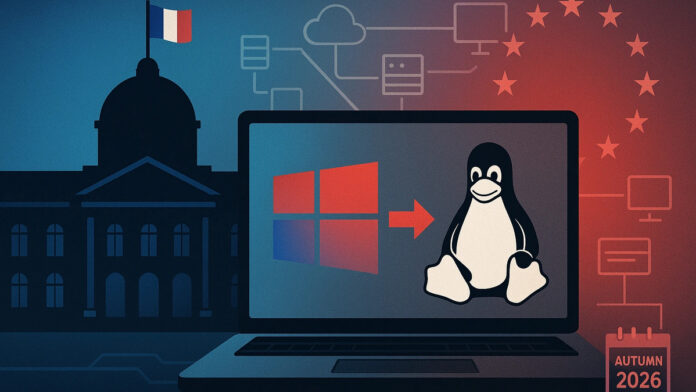
France is officially saying goodbye to Microsoft products. As part of a nationwide strategy to displace technologies originating outside the European Union, the country’s government has initiated a switch from Windows to Linux for its computer systems.
The French government is embarking on a large-scale migration from Windows to Linux. The move is part of a broader strategy aimed at weaning itself off non-European digital services and reducing its technological dependence on foreign countries, especially the United States.
According to the interdepartmental digital service Direction interministérielle du numérique (DINUM), the government plans to completely abandon Windows and replace it with Linux-based workstations. This decision is part of a course to reduce so-called “extra-European digital dependencies,” which actually means switching to software solutions created within the eurozone.

DINUM is promoting an initiative that requires all government agencies to complete the phase-out of non-European technologies by the fall. The focus of this policy is primarily on America as a key source of such solutions.
Minister of State Action and Public Accounts David Amiel said that the state can no longer ignore its dependence and must immediately get rid of it. According to him, the country needs to distance itself from American tools and regain control over its digital destiny, as it is unacceptable to depend on solutions whose cost, rules and risks France cannot control. According to him, the transformation process has already been launched, and government agencies, together with partners, have begun unprecedented work to analyze dependencies and strengthen digital sovereignty. He emphasized that digital sovereignty is not an option but a necessity.

France joins other countries in the European Union, including Denmark and certain regions of Germany, which are also moving toward the use of free and open source software. While the transition of desktop computers to Linux seems logical within this strategy, the question remains what software solutions the state will choose in other critical technology segments, including mobile platforms where proprietary systems dominate.
Read also:
- Air launch systems and hypersonic missiles: Ukraine outlines new developments in space mission capabilities
- Ukraine deploys part of a private air defense system: how the technology works