





© ROOT-NATION.com - Use of content is permitted with a backlink.
One thing that my ADHD brain responds to exceptionally well is a challenge. So when NVIDIA invited me to spend more time exploring DLSS 4.5, I proposed a different approach. Instead of another feature overview, I wanted to evaluate how versatile the technology really is. Once again, I conducted my testing using the ASUS GeForce RTX 5070 Prime graphics card, just as I did last time.
TABLE OF CONTENTS:
A video about the versatility of DLSS 4.5
General Classification
I want you to understand the logic behind this analysis. DLSS 4 is now supported in more than 250 games, and I can guarantee that its implementation varies significantly from one title to another. Just looking at recent releases, there’s Crimson Desert, Forza Horizon 6, Pragmata, and 007 First Light. Each of them showcases the technology in its own way.

Each of these games supports DLSS 4.5 with its full feature set, including Dynamic Multi Frame Generation. I already covered this in a previous article, where I explained that the latest version of DLSS doesn’t just deliver higher performance – it also improves image quality. In other words, what used to be a simple “give me more FPS” button has evolved into a “make everything better” button.
Forza Horizon 6
At the same time, there are obviously entire genres where that level of sophistication is not really necessary, and you could comfortably enable even older transformer models. Take Forza Horizon 6, for example. It would still look perfectly satisfactory – much like it would with virtually any version of DLSS or any frame-generation technology from other vendors – simply because of one thing: speed.

You simply don’t have time to admire the bushes, grass, or gravel along the roadside when you’re blasting past them at speeds that would make a speed camera burst into flames. In this kind of game, even NVIDIA Reflex isn’t as critical – although it’s still a welcome addition.
Crimson Desert
Open-world games are the exact opposite. In many ways, they’re the ultimate benchmark for technologies like DLSS 4.5. Titles such as Crimson Desert or S.T.A.L.K.E.R. 2 are good examples. The reason is simple: DLSS 4.5 cannot compensate for fundamentally broken graphics or an unstable game engine. And, to be honest, I can’t remember a modern open-world release that launched without at least some significant technical issues.

And that’s not something that’s going away, is it? These problems existed long before DLSS. It’s not just about titles like Cyberpunk 2077. Even the legendary Fallout: New Vegas was effectively impossible to complete before its early patches because a quest-blocking bug prevented players from progressing. No version of DLSS – whether it’s 4.5, a future DLSS 5, or anything else – can solve problems like that.
007 First Light
Controlled action games are a different story. Titles such as Resident Evil Requiem, Pragmata, and 007 First Light offer a much more suitable environment for evaluation. They are relatively cinematic, more deliberately paced, and feature very different lighting conditions. Lighting, after all, is the foundation of path tracing, ray tracing, and photorealistic rendering as a whole.

I’ll use Pragmata as the reference point because it sits somewhere in the middle of that spectrum. On one end, you have the horror-focused Resident Evil Requiem. On the other, there’s 007 First Light – an almost linear blend of Hitman, Uncharted, and an interactive James Bond movie. Considering that IO Interactive is the studio behind Hitman, that combination comes as no surprise.

James Bond, in this case, is all about luxury, glamour, and visual brilliance – alongside a native implementation of DLSS 4.5, without any forced overrides in the settings. On the opposite end of the spectrum, you have something like Resident Evil 7, which is dark, unsettling, and heavily atmospheric. And then there’s Pragmata – positioned right in the middle. It’s a third-person game set on a space station, with a sense of scale, openness, and a distinct sci-fi aesthetic that leans into both clean industrial design and futuristic environments.
Pragmata
The game doesn’t just look excellent with DLSS 4.5 enabled – it also benefits significantly from Path Tracing. In fact, one of the core visual pillars of sci-fi design is material representation: glossy walls, reflective ceilings, polished floors. To achieve convincing realism in these surfaces, Path Tracing becomes essential. Without physically accurate reflections, “gloss” simply doesn’t exist in a meaningful way – it turns into a flat approximation rather than a true mirror-like response to light and environment. In other words, if you remove realistic global reflections, you don’t just reduce image quality – you effectively break one of the key visual languages of the sci-fi aesthetic.

You remember how mirrors looked in Mafia III, for example. Now imagine entire levels where the floor is basically lava… or rather, a mirror. And without ray tracing, gloss can only be faked. You can approximate it, but it’s not the same thing – because the illusion breaks very quickly to the human eye. The inconsistency, the missing reflections, the wrong lighting response… it all becomes noticeable the moment you know what real physically accurate reflection should look like.


From a technical standpoint, Pragmata would not have been feasible just a few years ago. However, at present, the game appears exactly as it is meant to. This is largely made possible by NVIDIA DLSS 4.5 and graphics cards such as the ASUS GeForce RTX 5070 Prime.

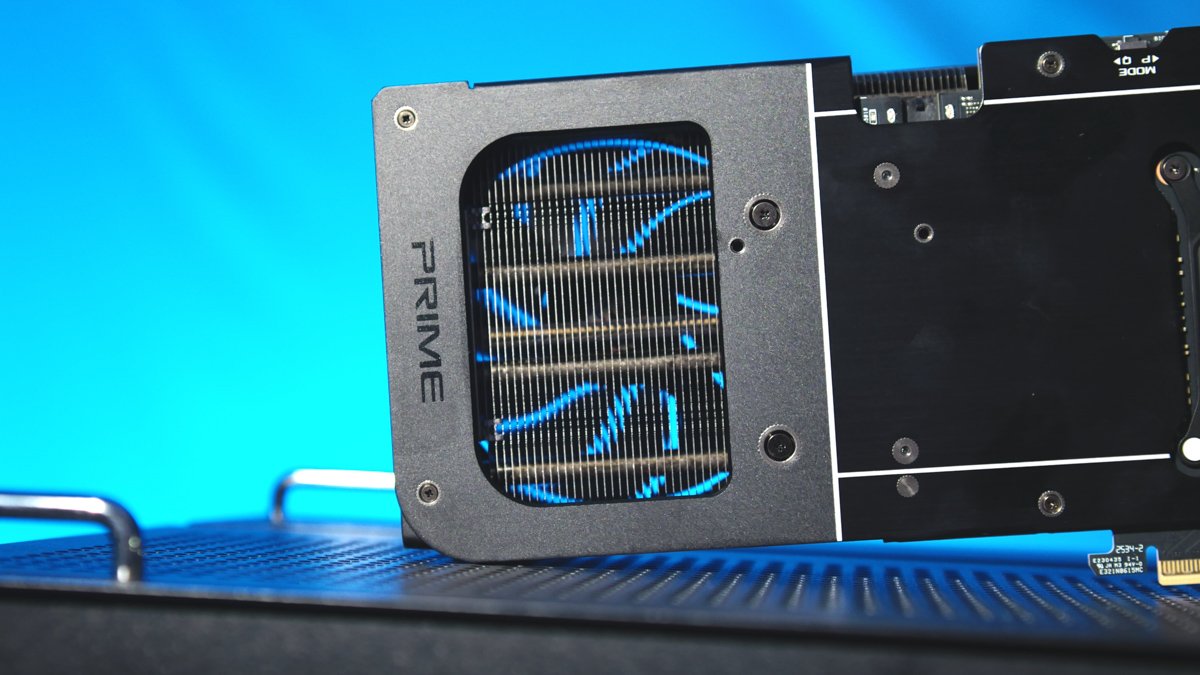
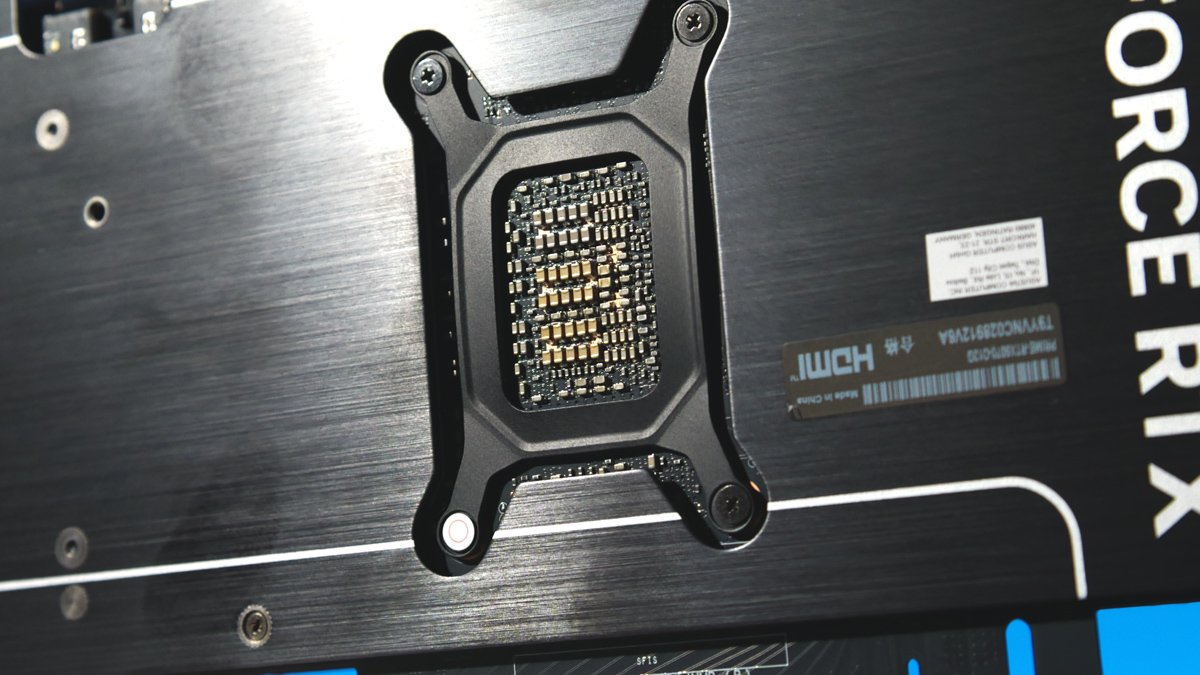
These are not top-tier graphics cards; however, they represent an excellent and reliable mid-range option that does not strain the budget, while still allowing the full visual potential of NVIDIA technologies to be realized in the games I mentioned. A link to this card is provided below.
Summary of DLSS 4.5 and ASUS GeForce RTX 5070 Prime
And this is a great opportunity to draw conclusions. Indeed, NVIDIA’s DLSS technology allows games to look as they are intended to, without artificial constraints imposed by hardware limitations. In the case of Pragmata – which I often find myself mistakenly referring to as Nier: Pragmata – this becomes especially noticeable. Against this backdrop, the impact is particularly clear, as NVIDIA DLSS 4.5 together with path tracing fundamentally changes how modern in-game computer graphics are perceived. This effect is evident even on mid-range hardware such as the ASUS GeForce RTX 5070 Prime, demonstrating that advanced rendering technologies can now deliver high-end visual quality beyond the traditional top-tier segment.
Read also:
- DLSS 4.5: Why This Technology Changes the Approach to Path Tracing
- Against the Current: My Thoughts on DLSS 5 (ft. Goodram Move Ridge)
- My Thoughts on NVIDIA RTX Spark (and What Goodram Has to Do with It)

