





© ROOT-NATION.com - Use of content is permitted with a backlink.
If you’re in the market for a mechanical keyboard that could probably survive a minor apocalypse – or at least several years of heavy office use – the Epomaker Galaxy 100 wants your attention. This is not a keyboard for the faint of heart or weak of biceps. It’s a 2-kilogram slab of aluminum, switches, and sound-dampening ambition, aiming to deliver a custom keyboard experience straight out of the box. But does it actually live up to its “built like a tank” reputation, or is it just another heavy hitter in a crowded field of mechanical boards? Let’s dive in.
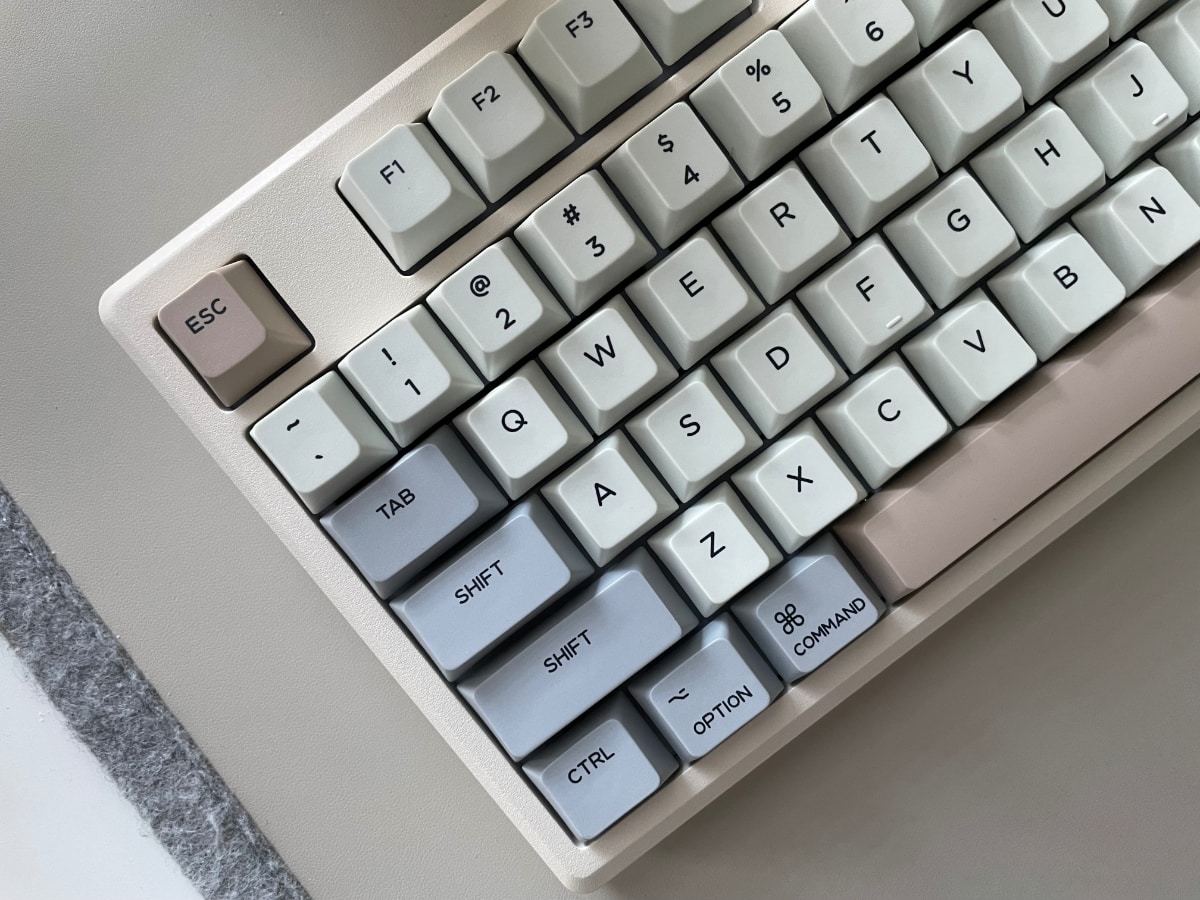
TABLE OF CONTENTS:
First Impressions
Unboxing the Galaxy 100 feels a little like unboxing a high-end power tool. The packaging is utilitarian but protective, and the keyboard itself immediately commands attention with its sheer heft. At 2kg, this thing is not moving unless you want it to. In fact, when doing my standard against-the-wall photo for the article, I almost sprained my arm. I don’t know if that says more about the keyboard or myself. Probably both.
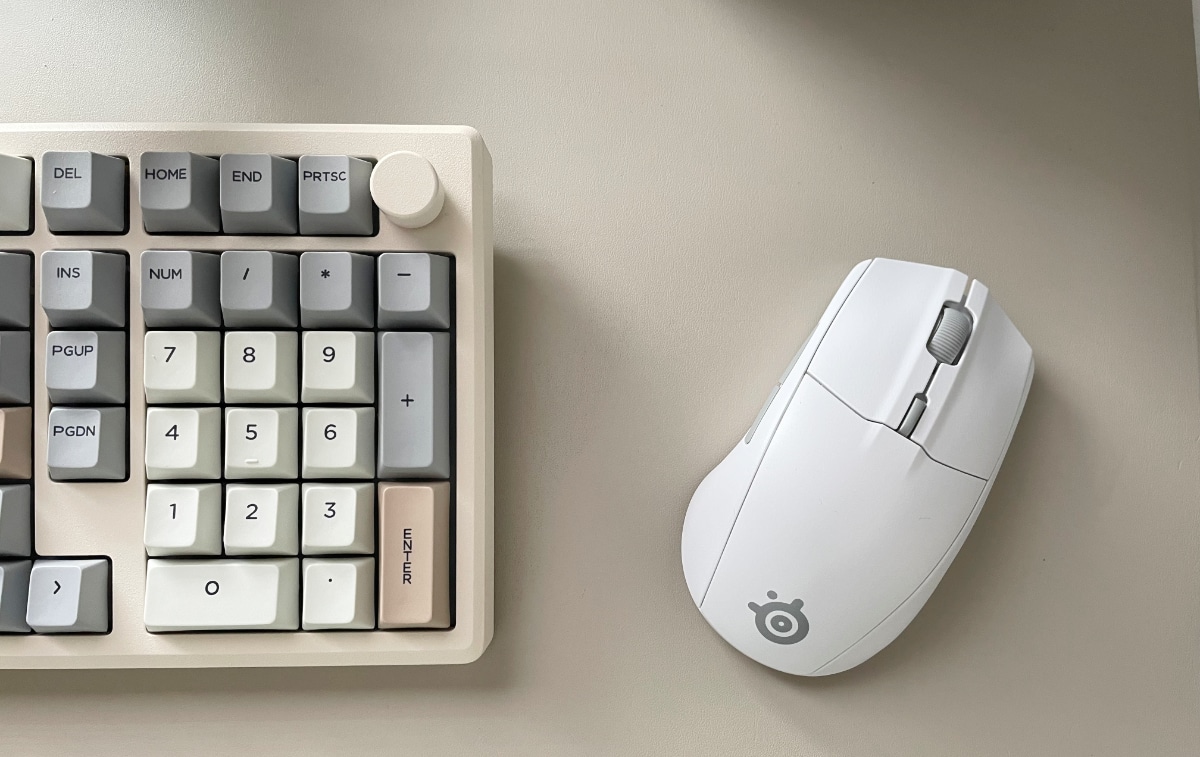
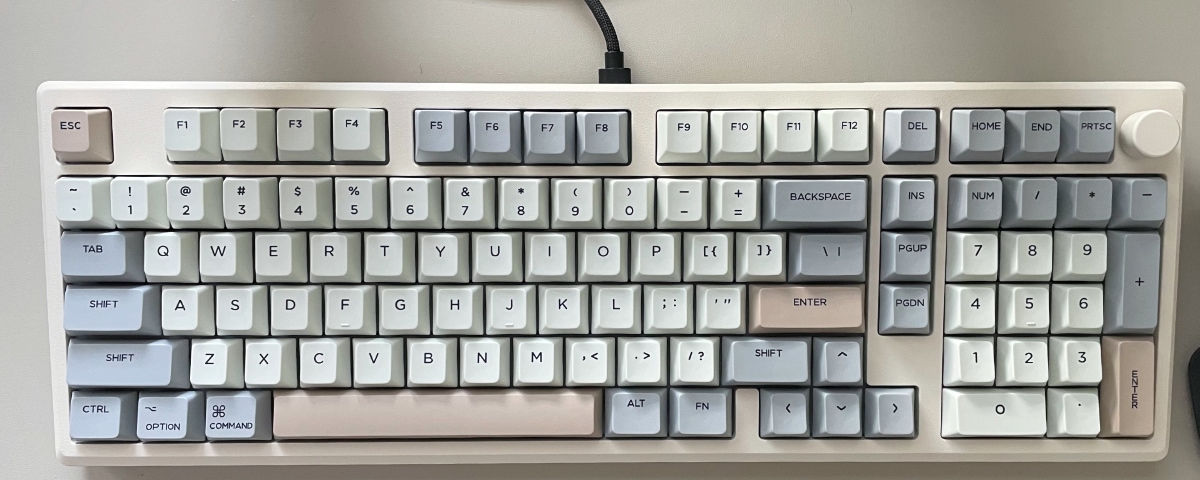
The powder-coated CNC aluminum case is smooth, cool to the touch, and looks like it could take a beating. The design is understated, available in grey or black, with clean lines and a slightly compacted 1800 ANSI US layout. You get all the keys of a full-size board – including a numpad and a tactile volume knob – but the right side is trimmed down just enough to save space without sacrificing utility. It’s a smart compromise for anyone who wants the functionality of a full-size keyboard without the desk-hogging footprint.
I’ve chosen the grey design which looks very good indeed, with a hint of retro. I have to give Epomaker here bonus points for including the Mac-specific keys. It’s not a big deal, but I always appreciate it.
Read also: SteelSeries Apex Pro TKL Gen 3 White review: Gorgeous Update

Typing Experience: A Symphony of Thock
Mechanical keyboards live and die by their sound and feel. The Galaxy 100 delivers both in spades. You can choose between Feker Marble White or Wisteria linear switches, both pre-lubed at the factory for that smooth, creamy keystroke. My test unit came with the Wisteria switches, which produce a deeply satisfying “thock” that sounds like productivity and feels like luxury. Five layers of sound-dampening materials ensure that you get all the tactile feedback without the high-pitched clatter that can drive coworkers to despair.
The gasket mount structure gives the board a gentle bounce, absorbing some of the impact and making long typing sessions genuinely comfortable. Keycaps are double-shot PBT, available in MDA (black) or Cherry (white) profiles, and the pitch spacing is perfect – no awkward stretches or finger confusion here. Stabilizers are plate-mounted (not screw-in, which might disappoint hardcore modders), but there’s no rattle, and the spacebar feels as solid as the rest of the board. Honestly, I wouldn’t even want to mod it.
Features: Everything You Want, Nothing You Don’t
Epomaker didn’t skimp on features. The Galaxy 100 offers triple-mode connectivity: wired USB-C, Bluetooth 5.0, and 2.4GHz wireless. Switching between devices is seamless, and the keyboard works with Windows, macOS, Android, and iOS. In the box, you’ll find extra modifier keycaps for both major operating systems, a keycap puller, and a switch puller – because of course, the switches are fully hot-swappable (3- and 5-pin compatible).
Customization is a breeze thanks to QMK/VIA support, allowing you to remap keys, create macros, and set up custom layers with one of the best configuration tools in the business. The south-facing RGB backlighting is bright and customizable, though not quite as dazzling as some gaming boards. Which is fine, as it only suits its understated nature.
And then there’s the battery. At 8,000mAh, you won’t need to charge often, and you can use the keyboard while it’s plugged in. Wireless performance is solid, with polling rates up to 1000Hz (wired/2.4GHz) and impressively low latency for a board in this price range.
No review would be complete without a few caveats, and the Galaxy 100 has some. First, the weight: at 2kg, this is not a travel keyboard. It’s not even a “move it to the couch for a bit” keyboard. It’s a “find a spot on your desk and leave it there” keyboard. That’s fine for most, but worth noting if you’re hoping for portability. But at this size, why would you. I honestly prefer a slab of metal that refuses to move… you know, I don’t even know why I called it a caveat. I am reaching here.
Read also: Epomaker Carbon 60 review: Premium Materials Meet Portable Design
Real-World Use
In daily use, the Galaxy 100 is a joy. Typing is fast, accurate, and fatigue-free, even during long writing sessions. The sound profile is rich and satisfying, with none of the harshness you get from cheaper boards. For gaming, the low latency and responsive switches make it more than capable, though hardcore FPS players might prefer something lighter. I use it with a Mac, so I mostly used it for typing.
The triple-mode connectivity is genuinely useful, especially if you switch between a desktop, laptop, or tablet. The battery lasts for ages, and the RGB lighting is a nice touch without being over the top.
The Competition: How Does It Stack Up?
At about $100, the Galaxy 100 is punching way above its weight. You’d be hard-pressed to find another keyboard in this price range that offers this level of build quality, customization, and out-of-the-box typing experience. Most competitors either compromise on materials, skip the hot-swap feature, or charge a premium for QMK/VIA support. Honestly, it’s one of the best-feeling and best-built keyboards I’ve tried – for any price.

The Verdict
The Epomaker Galaxy 100 is not just a keyboard – it’s a commitment. It’s the kind of board that makes you want to find excuses to type, whether it’s finishing that review, tackling a mountain of spreadsheets, or just sending longer emails. It’s built to last, feels fantastic, and offers a level of customization and connectivity that’s rare at this price.
If you need something portable, you might want to look elsewhere (like the excellent Epomaker Magforce 68). But if you want a full-size keyboard that feels like a luxury product and performs like a workhorse, the Galaxy 100 is an easy recommendation.



Merci pour cet article édifiant. J’aurais acheté ce clavier les yeux fermés … s’il existait en AZERTY, ce qui n’est malheureusement pas le cas.
This keyboard is built like a tank. I swear it could survive being dropped off my desk mid-rage quit.
Your floor might not!
Exactly why I’ve been eyeing it too. I take breaks from work to play some videogames and honestly, I need keys that won’t flake out under pressure.