





© ROOT-NATION.com - Use of content is permitted with a backlink.

The University of California, San Diego, was the site of a historic medical breakthrough, where a humanoid robot participated in a surgical procedure for the first time. For a long time, artificial intelligence has been actively transforming various fields, from programming to customer support. Now, AI technologies are beginning to radically change working conditions in operating rooms. For the first time in officially documented medical practice, an anthropomorphic robot assisted in the removal of a gallbladder from a living patient. This procedure was part of a series of surgical trials organized by researchers at a California institution.
Read also: AERONAUT – everything that flies above the ground: aviation, UAVs and drones, rockets, and space
The experiments took place in early July 2026 at the Advanced Robotics and Control Laboratory (ARCLab) at the University of California, San Diego, USA. In total, the specialists performed seven medical procedures of varying degrees of complexity: from standard medical examinations to delicate surgical operations. This success demonstrates the potential for humanoid devices to eventually assist doctors by ensuring high precision during remote control.
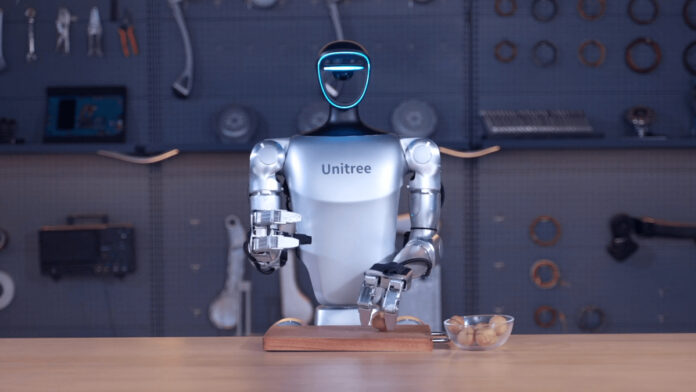
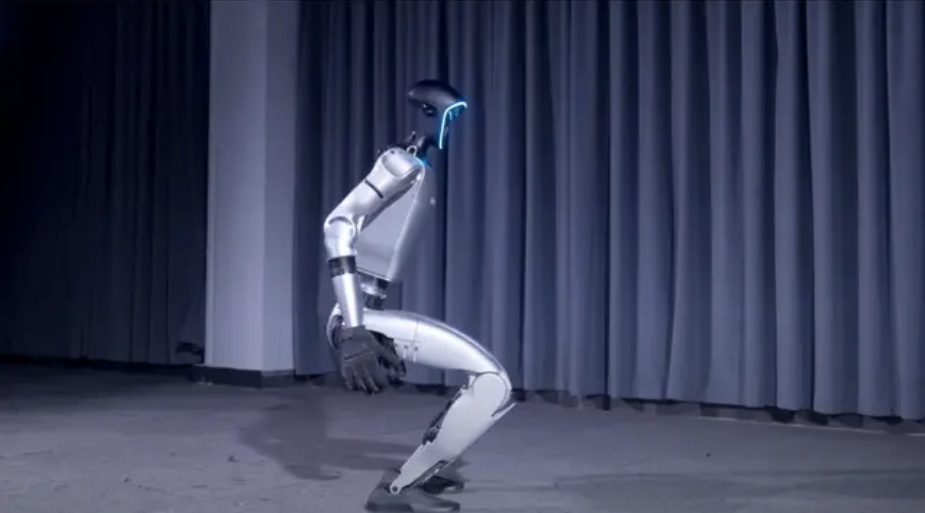
For the current tests, the engineering team used Unitree G1 humanoid robots. The robots operated under full human control, utilizing motion-tracking technology, special foot pedals, and optical tracking systems. This setup allowed the robots to synchronize the movements of both upper limbs simultaneously. The robots performed very delicate surgical procedures; for example, they held tissue in place with one manipulator arm while making an incision with the other, fully replicating the technique of a human surgeon.

The study’s authors specifically noted that the robotic system did not operate autonomously. Every micro-movement was controlled by the surgeon in real time, so the anthropomorphic system served only as a technological extension of the specialist’s hands and did not make independent decisions at the operating table.
This successful demonstration of the technology’s capabilities is a significant milestone on the path toward broader adoption of automated assistants in healthcare. This is particularly relevant in cases where specialists need to operate on patients from a great distance or make highly precise incisions with a higher level of instrument control.

While researchers at the University of California, San Diego are focusing on humanoid models to assist doctors, other research centers are developing alternative methods to address this challenge. For example, Johns Hopkins University is creating fully autonomous surgical systems that do not resemble humans. This confirms that there is currently no single approach to the development of robotic medicine for the future.
However, the San Diego team’s approach has a key distinction: they use humanoid robots designed to operate in spaces that are inherently adapted to human dimensions. Unlike specialized medical platforms that require the purchase of specific ancillary equipment or major hospital renovations, humanoid robots can be integrated into existing operating rooms with minimal modifications, making their practical implementation much simpler.
Despite the success of the initial procedures, it will still be many years before this technology is used routinely in clinics. All procedures were performed in a strictly controlled laboratory environment. The introduction of such systems in regular hospitals will only be possible after extensive clinical trials, the granting of official licenses by regulatory agencies, and comprehensive safety testing. In addition, public healthcare systems will have to adopt new regulations governing staff training, the allocation of legal liability, and insurance before surgeries involving humanoid robots become standard practice.
Read also:
- Are people no longer needed? The new Claude Code can program robots in minutes instead of hours
- Slapping the Mask: NVIDIA names the real king of robotics