





© ROOT-NATION.com - Use of content is permitted with a backlink.
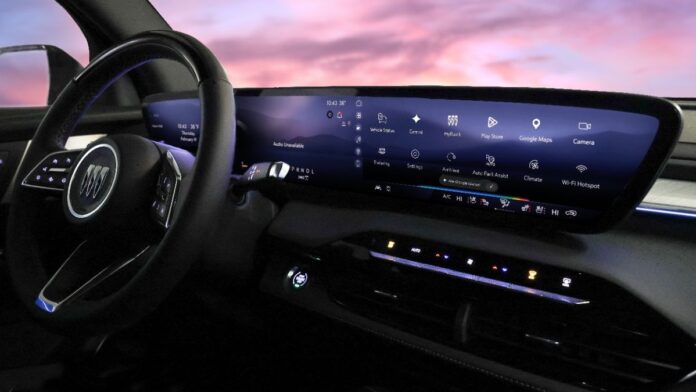
General Motors has announced the launch of Google Gemini on approximately 4 million vehicles in the US, which will be one of the largest rollouts of the generative AI assistant in the automotive industry. The upgrade will replace the existing Google Assistant in Cadillac, Chevrolet, Buick, and GMC models released in 2022 and later equipped with the Google Built-in platform.
“Gemini brings conversational artificial intelligence capabilities to millions of drivers across all market segments and price points to meet a wide range of everyday needs,” said Tim Tverdal, global vice president of product management at General Motors. – “This scale is only possible because of the connected car base that GM has built with OnStar over the past 30 years.
This level of coverage has been made possible by GM’s decade-long investment in Android Automotive OS, the Google Built-in platform that provides Buick, Chevrolet, Cadillac and GMC vehicles with native access to Google applications and services, as well as the OnStar connectivity infrastructure that has been the backbone of the connectivity system in General Motors vehicles since 1996.
In practice, the difference between Google Assistant and Gemini is the depth of the dialog. In its current form, Google Assistant in cars works like a command recognition system: it is effective when the driver uses familiar phrases, but fails when they deviate from them. But Gemini is a large language model that can process free-form queries, preserve the context of the conversation, and support clarification without restarting the interaction. In addition, it works much better with different accents and non-standard wording.

Read also: Car Reviews
For drivers, the most noticeable change will be the processing of complex requests and switching between tasks within a single conversation. GM gave the following example: within a single voice request, a route can be plotted with a simultaneous message to a family member, and a subsequent route adjustment with the addition of a coffee stop with an outdoor terrace. The assistant integrates with in-car apps, including Amazon Music, Apple Music, Spotify, YouTube, HBO Max, Hulu, and Prime Video, and uses search to answer queries based on location and context.
To receive the update, drivers must be connected to OnStar, sign in to the Google Play Store on the multimedia system, and use American English as the assistant’s language. The rollout will take several months and will initially cover only the United States, but the company notes that the update will expand to other markets and languages in the future. For 2025 and later models, basic OnStar voice features, and therefore access to Gemini, will be included in the standard OnStar Basics package at no additional cost for eight years.

GM notes that Gemini is an interim step. The company is planning to introduce its own AI assistant adapted to specific car data and connected via OnStar. Such a system will be able to know all car features, warn about technical problems before they occur, and gradually learn individual driver preferences. Its architecture involves the use of a basic model, its training on car specifications, further optimization, and launch in the vehicle.
Read also: Car articles
The hybrid architecture, which combines in-car and cloud computing, will become increasingly important as the model range grows, regulatory control over car data increases, and the quality of connectivity varies across markets. The segment is developing rapidly. Stellantis cooperates with the French AI company Mistral, Mercedes-Benz has integrated ChatGPT, Tesla has implemented Grok, and BMW is developing its own AI assistant. GM’s approach is more gradual than Tesla’s, for example, but the scale of 4 million cars cannot be replicated by any competitor.

The announcement comes amid a major data scandal. In January 2025, the U.S. Federal Trade Commission took action against GM and OnStar for collecting and selling accurate geolocation data and driving style information to insurance companies, allegedly without explicit user consent. The decision prohibits GM from selling such data without explicit authorization for five years.
The launch of an AI assistant, which by its nature works with car data and is able to learn personal preferences, raises the importance of this issue. GM claims that drivers will control access to their data and that the integration is privacy-oriented. Whether these assurances are true will be shown by the convenience and clarity of privacy settings, default settings, and whether owners receive full information and real choice before data processing.
Read also:
- For “any lawful government purpose”: Google signs classified AI deal with the Pentagon
- Google Translate turns 20: interesting facts, tips and new features