





© ROOT-NATION.com - Use of content is permitted with a backlink.
Japanese automaker Honda has unexpectedly placed its bet on solid-state batteries by signing a new research and development agreement with QuantumScape, a developer of innovative batteries. Although Honda scaled back its ambitions for electric vehicle production earlier this year, its R&D division continues to invest in breakthrough battery technologies.
Read also: AERONAUT – everything that flies above the ground: aviation, UAVs and drones, rockets, and space
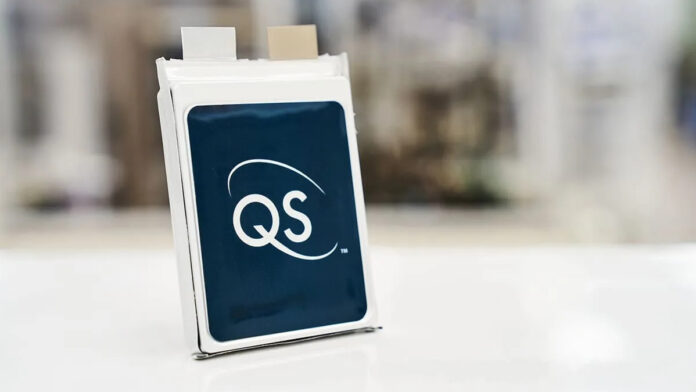
Honda R&D, an autonomous division operating as the independent research arm of parent company Honda Motor Company, has signed a long-term joint research agreement with California-based QuantumScape. As part of the partnership, experts will focus on the design and manufacture of solid-state battery cells. This move was preceded by a detailed analysis of QuantumScape’s solutions by Honda, which served as strong confirmation of the American startup’s promising developments.

Solid-state systems are considered one of the most promising areas in the development of energy storage technologies. They are capable of providing electric vehicles with significantly greater range, substantially faster capacity recovery, and a higher level of fire safety compared to lithium-ion counterparts. Their potential applications are not limited to passenger cars – such technologies can power modern defense systems, aircraft, and high-performance AI data centers.
However, not all high-profile claims in this field are accepted unconditionally by experts. For example, earlier this year, the Finnish startup Donut Lab attracted attention with the announcement of the world’s first mass-production-ready solid-state battery. However, industry researcher Ryan Inis Hughes, who runs a YouTube channel under the pseudonym Ziroth, cast doubt on this announcement. He argued that the demonstrated cell actually operates on conventional lithium-ion chemistry, rather than on a sodium-ion solid-state architecture, as the company had implied.
Unlike its competitors, QuantumScape has more substantial evidence of the viability of its technology. A previously signed technology licensing agreement with PowerCo SE, the battery division of the German Volkswagen Group, marked the startup’s first major foray into the automotive market. The latest expert assessment and research agreement with Honda only reinforce the conclusion that the developments are successfully passing the most rigorous engineering tests.

Atsushi Ogawa, Chief Operating Officer of Honda R&D, noted that during internal testing, QS’s technological solutions demonstrated undeniable and unique advantages. He added that management sees enormous potential in QS’s developments for improving efficiency across various sectors, including the automotive industry, so the team is pleased to move on to the next phase of collaboration.
This agreement marks a significant milestone on the path to integrating solid-state batteries into mass-produced passenger vehicles. Earlier this year, QuantumScape launched its Eagle Line pilot production line at its headquarters in Silicon Valley. This facility will produce QSE-5 battery prototypes for testing by partners and will also serve as a technical blueprint for future production before major customers such as Honda make a final decision to license these technologies.
Interestingly, the deal was struck at an unexpected time for the Japanese brand. Earlier this year, Honda scaled back a number of ambitious electric vehicle projects for the North American market, including the Zero-series concept crossover and sedan, the Acura RSX electric SUV, as well as a joint development project with Sony Corporation under the Sony Honda Mobility umbrella called Afeela.
Read also:
- How Škoda Driver Assistance Systems Work: From Sensors to Algorithms
- Škoda Auto will unveil its new electric flagship, the Peaq, tomorrow: Where to watch the livestream