





© ROOT-NATION.com - Use of content is permitted with a backlink.
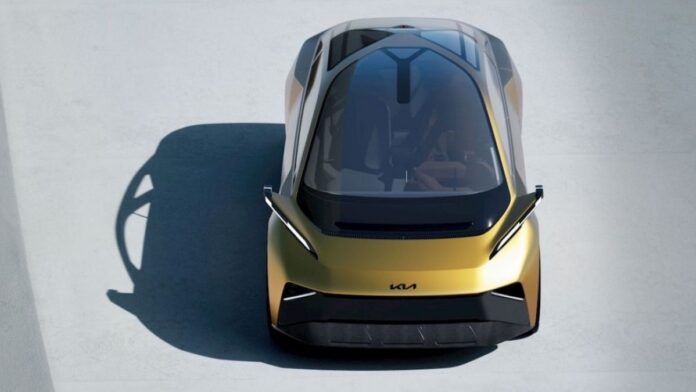
Kia held its CEO Investor Day 2026 event in Seoul on the same day as the 25% US tariffs on imports from South Korea came into effect and presented an updated strategy adapted to the new environment.
The company actually revised its priorities: slightly lowered its electric vehicle sales targets by 2030, significantly expanded its focus on hybrid models, for the first time officially confirmed the development of an electric pickup truck for North America, and announced its intention to integrate Boston Dynamics’ Atlas humanoid robots at its Georgia facilities starting in 2028. The total investment for 5 years is $37.7 billion, and by 2030, the company expects to reach revenues of about $130.8 billion.

Kia President and CEO Ho Sung Song outlined the strategic vector of development, emphasizing that electric vehicles, hybrids, autonomous technologies and robotics will be the key drivers of the company’s fastest growth. This approach demonstrates a paradigm shift: the company is now focusing not only on battery electric cars, but on a diversified portfolio of technologies that should ensure that it achieves its financial and market goals by the end of the decade.
The most noticeable change was the correction of electric vehicle targets. By 2030, Kia plans to sell 1 million electric cars annually, forming a lineup of 14 models. This is about 20% less than last year’s target of 1.26 million units, and significantly lower than the 1.6 million that was discussed in 2023. The reasons for this revision lie in the market and regulatory policy: the removal of subsidies in the United States, slowing demand for electric vehicles, and the impact of import duties, which cost the company about $2.5 billion in 2025 alone.
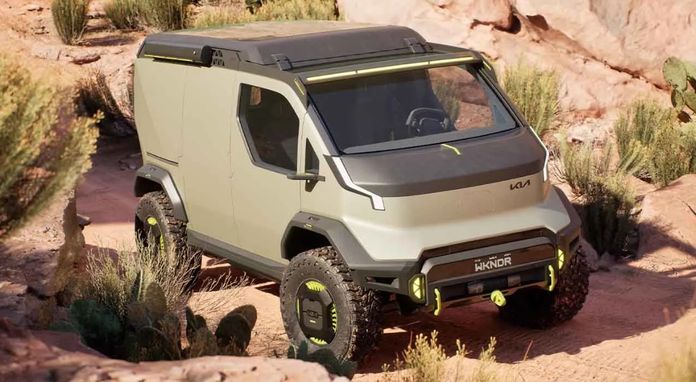
Kia is compensating for the lost volume by aggressively expanding its hybrid portfolio. By 2030, HEV sales are expected to reach 1.1 million vehicles per year, and the model range will increase to 13 positions. In total, electrified passenger cars should provide 2.1 million sales annually. The company’s total sales are planned at 4.13 million vehicles with a global market share of 4.5%. The commercial PBV models PV5, PV7 and PV9 make up a separate segment, with a target of 232 thousand units by 2030. Regionally, Kia expects to sell 1.02 million vehicles in the US, 746 thousand in Europe and 1.48 million in emerging markets.

The short-term financial picture remains critical. In 2026, the company forecasts revenues of about $94.1 billion and operating profit of about $7.8 billion. This should be a recovery from the difficult year of 2025, when the business was hit by duties. The calculation is based on the new 15% rate agreed as part of the Korea-US trade agreement at the end of 2025. At the same time, the stability of this rate remains in question due to further pressure in the field of trade policy.
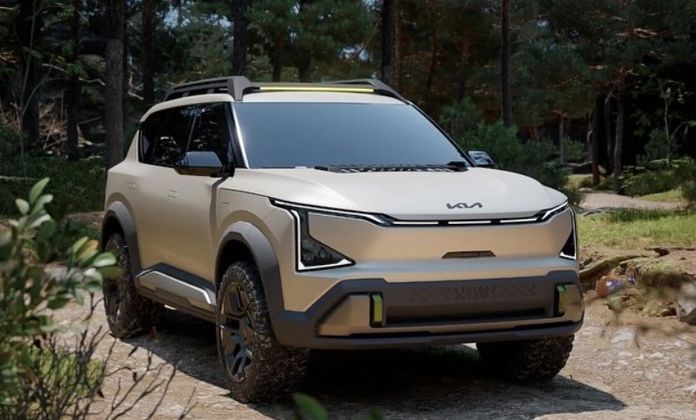
One of the key announcements was the confirmation of the launch of a midsize electric pickup truck for the North American market. The model will be based on a new electric vehicle platform, and the company is targeting a 7% share in the pickup truck segment, which corresponds to about 90,000 sales per year in the medium term. The production site has not yet been named, but the strategy is clear: using Hyundai Motor Group’s American plants in Georgia, including Metaplant America and Kia’s West Point facility, avoids import duties, including the so-called Chicken Tax and new tariffs on electric vehicles. The very fact that the 25% tariffs were announced on the day of the introduction of the duties emphasizes how deeply the product strategy is tied to the localization of production in the United States.
A special emphasis was placed on the introduction of Atlas humanoid robots into production processes. The robots trained at the Robotics Metaplant Application Center will start performing production sequencing operations at the HMGMA plant in 2028, with more complex assembly tasks planned for 2030. The program will then be scaled up to Kia AutoLand Georgia in the second half of 2029. The introduction of humanoid robotics into manufacturing is becoming a key trend, and the automotive industry is seen as one of the first sectors to be massively adopted due to the standardized structure of production lines. Boston Dynamics has already unveiled the production version of Atlas at CES 2026 and announced that all deliveries for 2026 are scheduled. Kia’s approach involves a phased integration: first, basic operations, then complex production processes.
Boston Dynamics is part of the Hyundai Motor Group, which provides Kia with priority access to the technology. At the same time, the company is exploring scenarios for use in last-mile logistics, combining PBV transport with Stretch robots for warehouses and Spot robots for on-site delivery.
In terms of technology, Kia is moving towards software-defined vehicles. The first such model with Level 2+ autonomous driving support for highways is expected to be completed by the end of 2027. Level 2++ urban scenarios are expected to be available from the beginning of 2029. Competition in the field of autonomous vehicles is rapidly intensifying, especially as robotics services are scaling up, and the gap between technology leaders and traditional manufacturers is becoming more and more noticeable. Kia’s strategy is to integrate driver assistance functions into mass models rather than limiting them to separate experimental fleets.
The financial basis for these changes is an investment program of approximately $37.7 billion in the period from 2026 to 2030, of which about $16.2 billion is directed to promising areas, including robotics, SDV and autonomous driving. The year 2025 showed an uneven distribution of benefits from AI and technology development between industries, and Kia is trying to gain a foothold among those who receive this added value rather than pass it on to technology companies. By 2030, the company plans to achieve an operating margin of 10%, which means approximately $13.1 billion in profit. The realism of this figure depends on the development of trade policy, the dynamics of demand for electric vehicles and the growth rate of the hybrid segment. In general, Kia’s strategy is a bet on the ability of the traditional car industry to compete in a world where cars are increasingly determined by software and AI.
Read also:
- Škoda Karoq Sportline Test Drive: Just a Visual Refresh?
- Škoda Kodiaq Sportline (2025) Review: Balanced Family SUV with Sporty Character