
© ROOT-NATION.com - Use of content is permitted with a backlink.
The Škoda Kodiaq Sportline (2025) concludes this series of reviews covering the brand’s 2024–2025 SUV lineup. At present, it is the largest and most expensive SUV with an internal combustion engine in Škoda’s portfolio. For context, earlier reviews covered the smaller Kamiq, followed by the compact Karoq and its updated Karoq Sportline 2025 version. Readers interested in a structured overview of the full lineup may find it useful to refer to those models first. However, this review can also be approached independently, focusing solely on the Kodiaq Sportline.

TABLE OF CONTENTS:
Positioning
In essence, the key points were already outlined in the introduction: the largest and most expensive Škoda crossover with an internal combustion engine, excluding the electric Enyaq. It is also among the more popular vehicles in this class on the Ukrainian market. As part of the Volkswagen Group, the model is built on the MQB platform (MQB Evo), which is shared by a number of vehicles. One of the closest relatives is the Volkswagen Tiguan, although similarly sized models can also be found within the Audi, SEAT, and Cupra lineups. Within this context, Škoda is often positioned as offering a competitive balance of specifications, equipment, and pricing within the segment.

Overall, the Škoda Kodiaq is a mid-size crossover with a body length approaching 5 meters. The test vehicle is one of the higher-end versions, the Sportline. This configuration includes all-wheel drive and one of the more powerful gasoline engines available in the lineup.
The estimated price of this version is around $47,000, while more basic Kodiaq trims start at approximately $40,000. Considering the pricing of competitors in the same segment and the level of equipment offered, the model is positioned relatively competitively. The following sections take a closer look at what the latest Kodiaq offers.

Exterior
Design of the 2025 Škoda Kodiaq Sportline
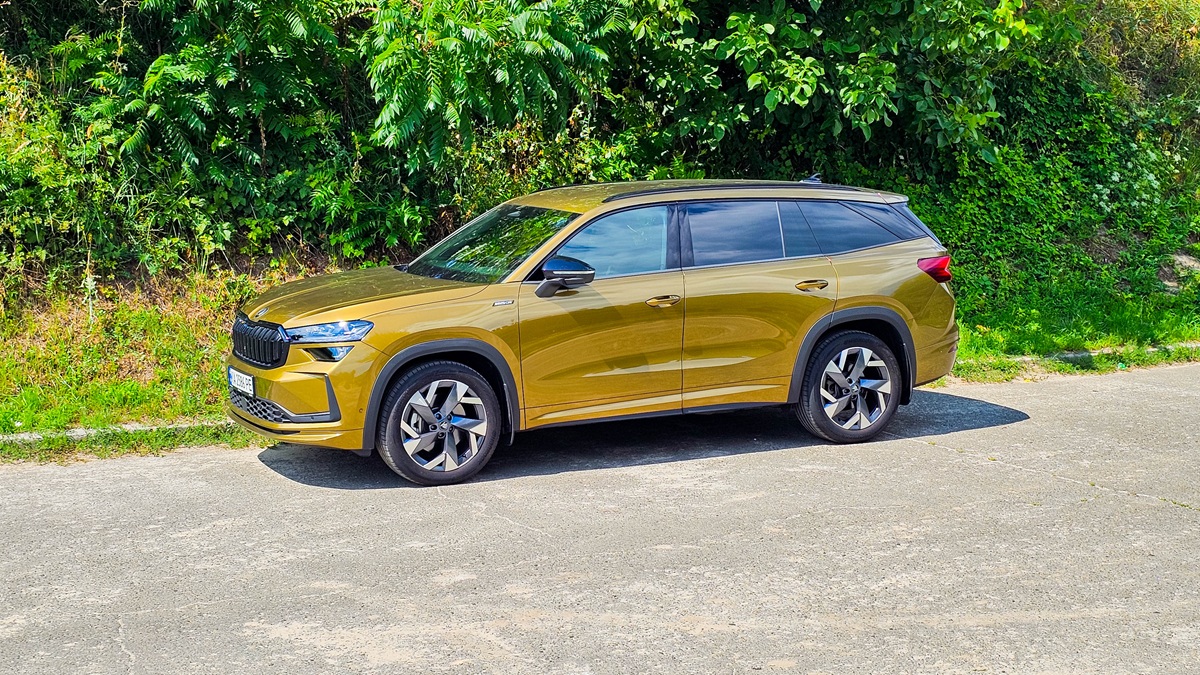
The restrained and classic appearance of previous Škoda Kodiaq generations has generally been well received. In the latest version, however, the model has undergone one of its most significant design updates. As with most styling changes, perceptions are largely subjective. At first glance, the new design may seem unfamiliar, especially for those accustomed to the previous look. Overall, the redesign can leave mixed impressions depending on personal preferences.

But gradually I got used to the new body and began to like it. Now I look at these bright summer photos and have to admit that the car looks stunning, especially in this golden mustard colour. Of course, you may disagree with me. But I really like it.


The designers managed to preserve the overall character and identity of the Škoda Kodiaq, and the model remains easily recognizable. On several occasions, people approached to ask whether it was the new Kodiaq, indicating that the update attracts attention. At the same time, the vehicle’s appearance has been noticeably revised, with styling that feels more modern and refined. The crossover now gives the impression of a more premium product, as if positioned slightly higher in the segment. Overall, the update appears to achieve its intended goal: the design feels refreshed while maintaining continuity with the previous generation.

Read also: Škoda Karoq Review: Compact City SUV Focused on Comfort and Safety
Headlights
The headlight configuration follows the characteristic “two-tier” layout typical of the Škoda Kodiaq. It includes daytime running lights, the main headlight units, dynamic turn signals, and fog lights. The lighting system is fully LED.

In addition, the grille incorporates small LED elements that form a light strip between the two headlights. They illuminate when the driver approaches the vehicle with the key, as part of the welcome lighting function. These elements also act as an additional segment of the daytime running lights.

Functionally, the headlights of the Škoda Kodiaq are controlled by light sensors and a camera mounted in the windshield. The main lighting system uses adaptive matrix technology that selectively adjusts the light beam to avoid dazzling oncoming or preceding vehicles. The headlights also provide cornering illumination by turning in the direction of the steering input.

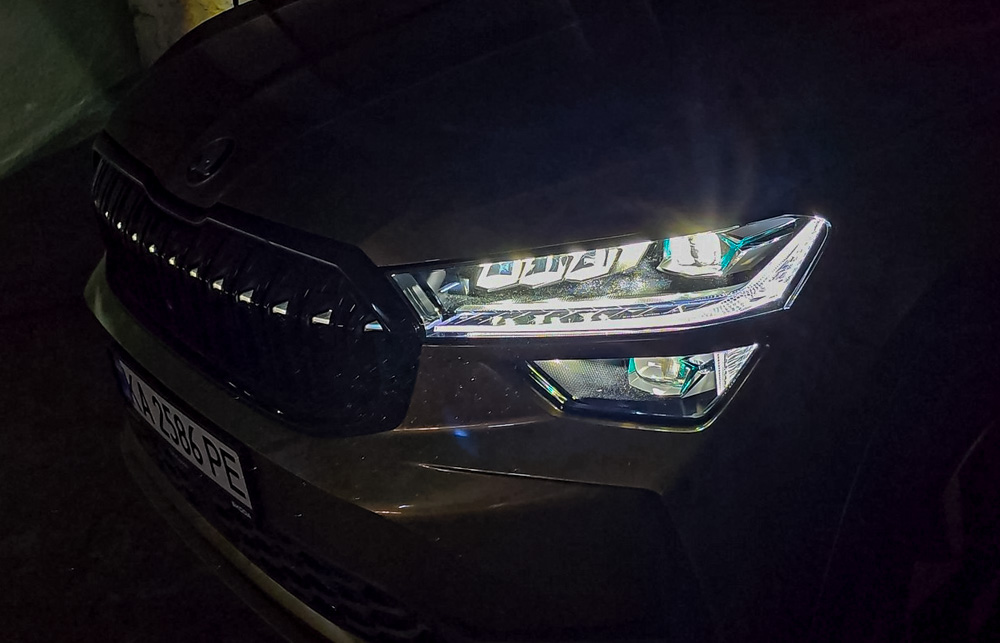
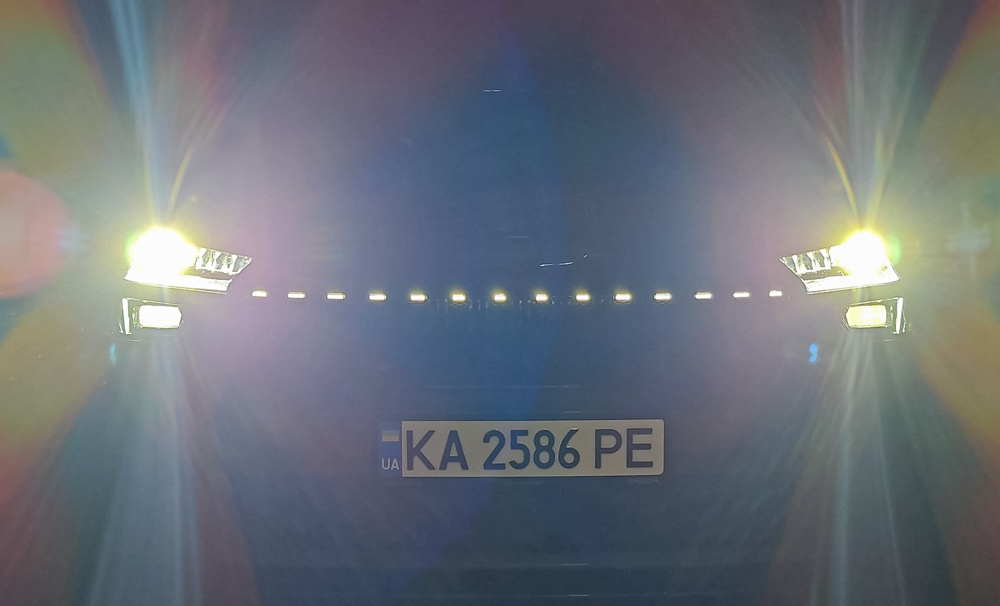
Overall, this is typical Škoda behavior – regardless of the vehicle class, the lighting system performs consistently well across all models. There’s little reason to adjust the lights manually, as the fully automatic system works effectively in all conditions.
Read also: Škoda Octavia A8 Review: When You Get More Than You Expect
Side Mirrors
The Škoda Kodiaq comes equipped with standard European-style mirrors, offering wide viewing angles and a long LED turn signal strip that is clearly visible from both the front and the side. Since the test vehicle is the Sportline version, the mirror housings are finished in glossy black.

On the interior side, there is a large, bright orange indicator for the blind spot monitoring system.

The mirrors can be folded manually or automatically in conjunction with the central locking system. Additionally, cameras for the 360º surround-view system are integrated into the lower part of the mirror housings.

Door Handles and Locks
The vehicle features Škoda’s signature protruding door handles, equipped with a keyless entry system.

The fuel filler flap is also equipped with a lock that unlocks along with the doors. While we’re on the topic, it’s worth noting that the fuel cap includes a small scraper for removing ice from the windshield.

Wheels
Our test Škoda Kodiaq Sportline is equipped with 7.5×19″ Aero TIRSULI alloy wheels.

The wheel design is striking, finished in anthracite with silver accents, and the rims have a glossy paint. Tire specifications are 235/50 R19 99V. Overall, the wheels complement the vehicle’s modern and sporty styling.

Taillights
The taillights have also undergone a significant design update, perhaps the most controversial change. At first, I wasn’t particularly fond of the “crab claw” configuration, but over time I got used to it, and now I find the rear end of the vehicle quite appealing.


Unfortunately, the red lens that stretches across the tailgate and connects the taillights on both sides does not illuminate. In my view, this seems like a missed opportunity – the manufacturer could consider offering lighting for this element, at least as an optional feature.

Technically, the taillights are top-tier: fully LED and equipped with standard functions, including position lights, brake lights, dynamic turn signals, a reverse light, and a rear fog lamp.

Tailgate and Cargo Area
The tailgate is powered, but it can only be opened using buttons – either on the tailgate near the rear camera, from inside the cabin, or via the key fob. The hands-free opening function is not included on our test vehicle, although it is likely available as an optional feature.

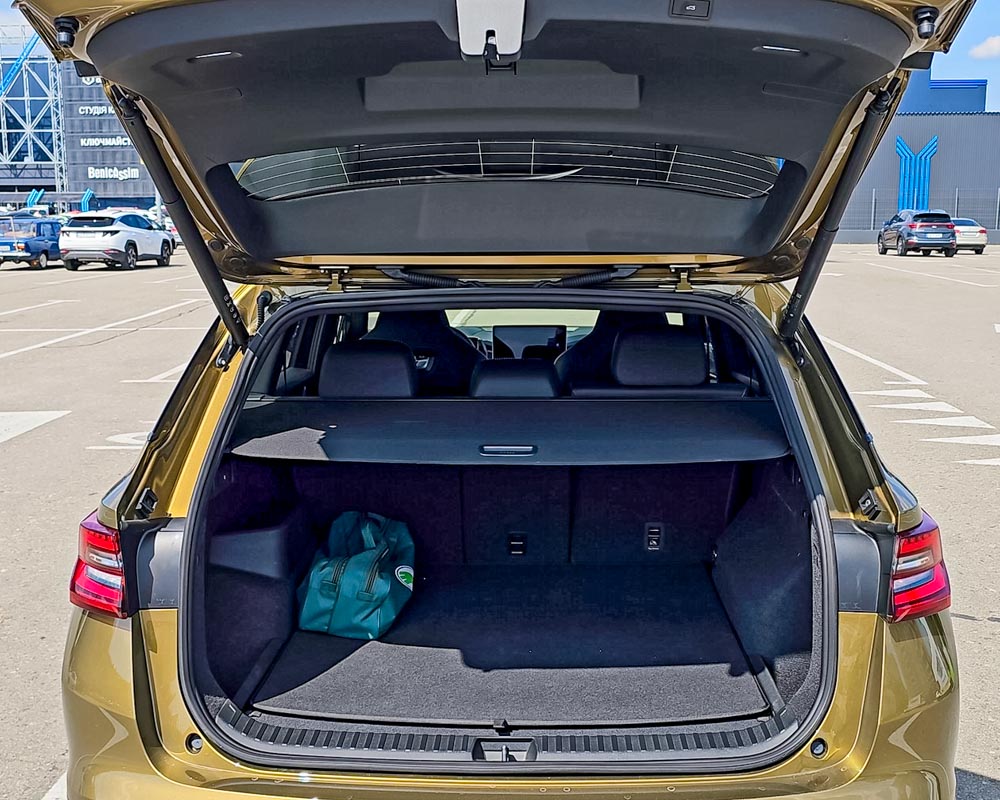
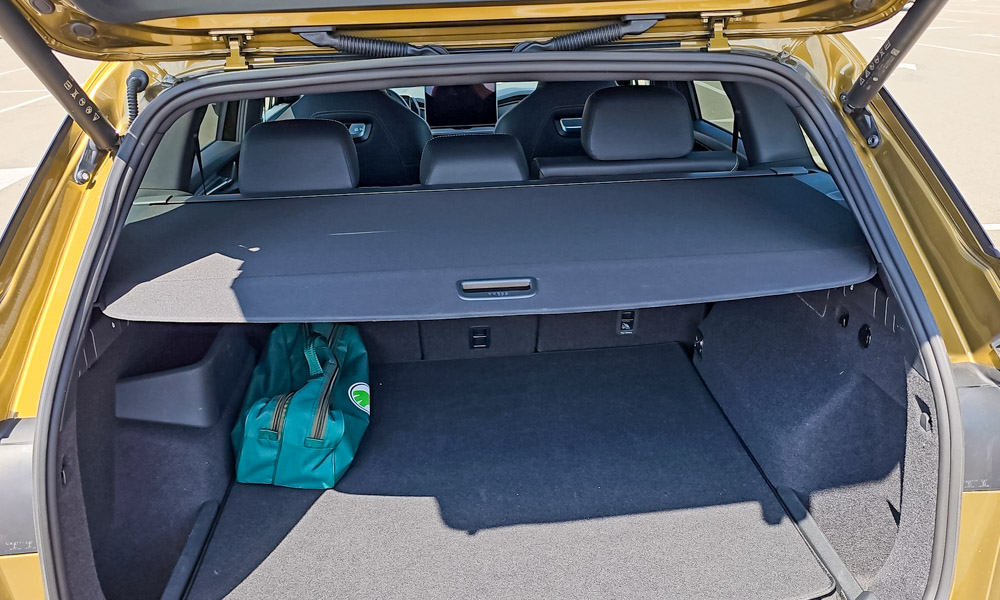
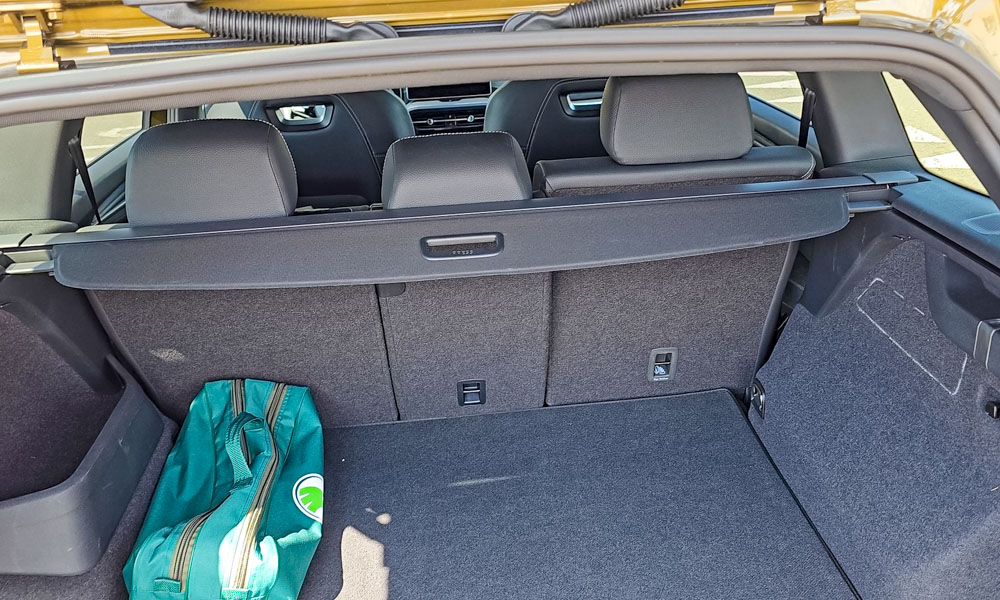
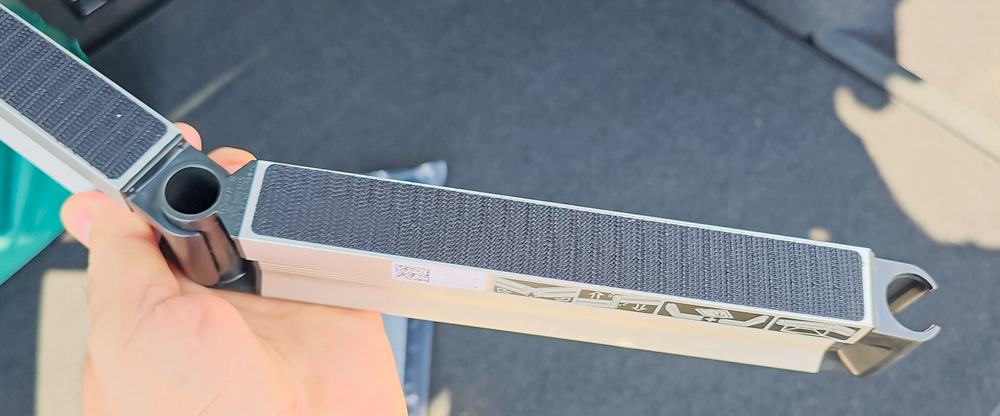
The cargo area of the new Kodiaq is genuinely spacious and practical, fully lined with carpeting. There are also three side compartments for smaller items and a retractable upper cover. Our test vehicle was equipped with additional accessories, including cargo anchors attached to the floor with Velcro strips. These are very convenient, helping to keep supermarket bags and other items from sliding around during transit.
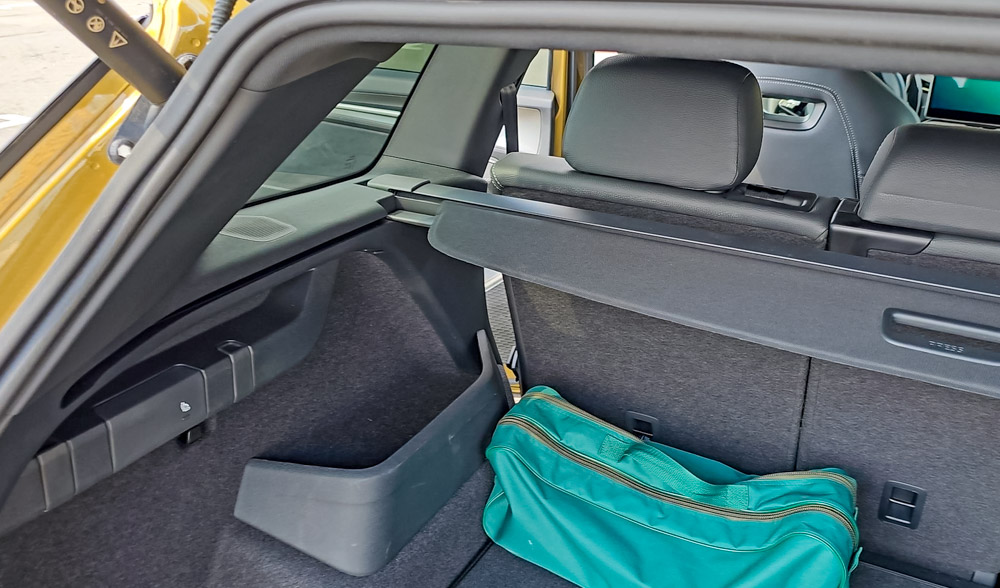
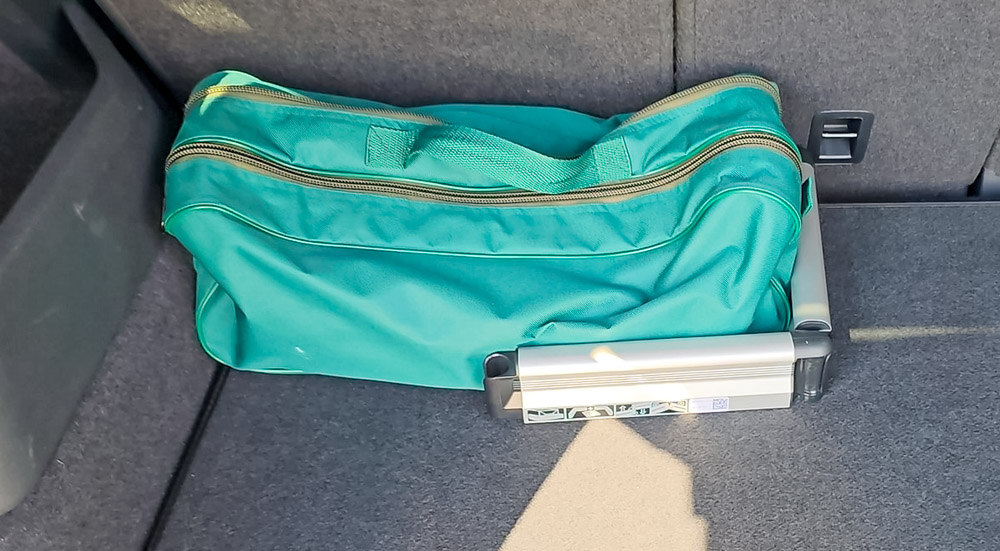
It’s also worth noting the relatively good level of cargo area lighting. In this regard, the Kodiaq performs above the segment average.

There are two lights inside the cargo compartment mounted on the upper side panels, and two additional lights in the tailgate itself. When the tailgate is open, they provide good illumination of the loading area.

Read also: Mazda CX-60 Premium-Sport Review: Not Enough Premium, But Too Much Sport
Under the Hood – 2.0 TFSI Engine (140 kW / 190 hp)
Here, there’s an unusual situation: besides a few 2.0-liter TDI diesel engines, which differ noticeably in power – 150 hp (360 Nm) and 193 hp (400 Nm) – the Kodiaq lineup also offers two nearly identical 2.0-liter TFSI gasoline engines: 190 hp and 204 hp, both with 320 Nm of torque. It appears these are simply different revisions of the same engine with slightly different tuning.
Interestingly, the choice between these two gasoline units does not affect the final vehicle price. I wasn’t able to get a clear explanation from Škoda’s marketing department regarding why both engines are offered in the same model. It’s likely just an internal option configuration detail – the engines exist side by side in the lineup.
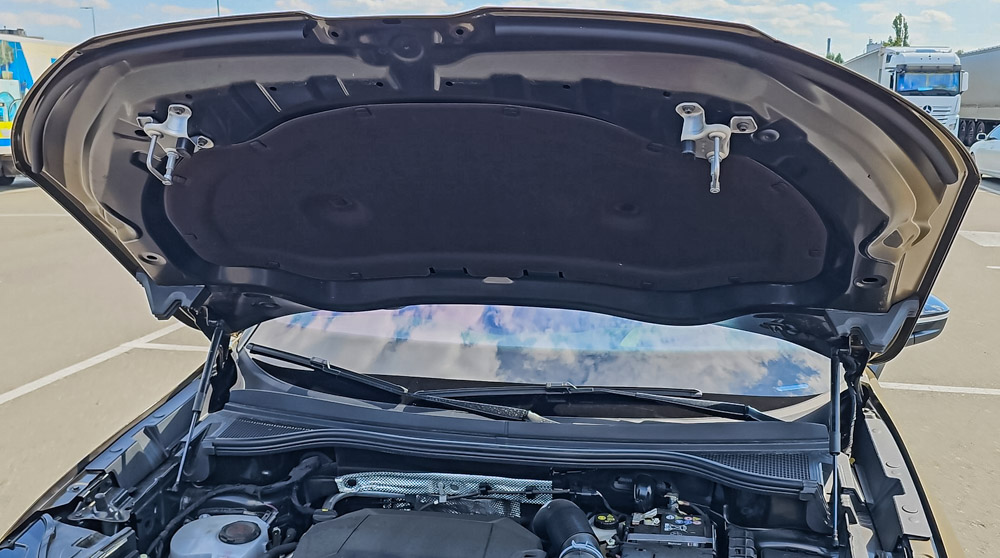
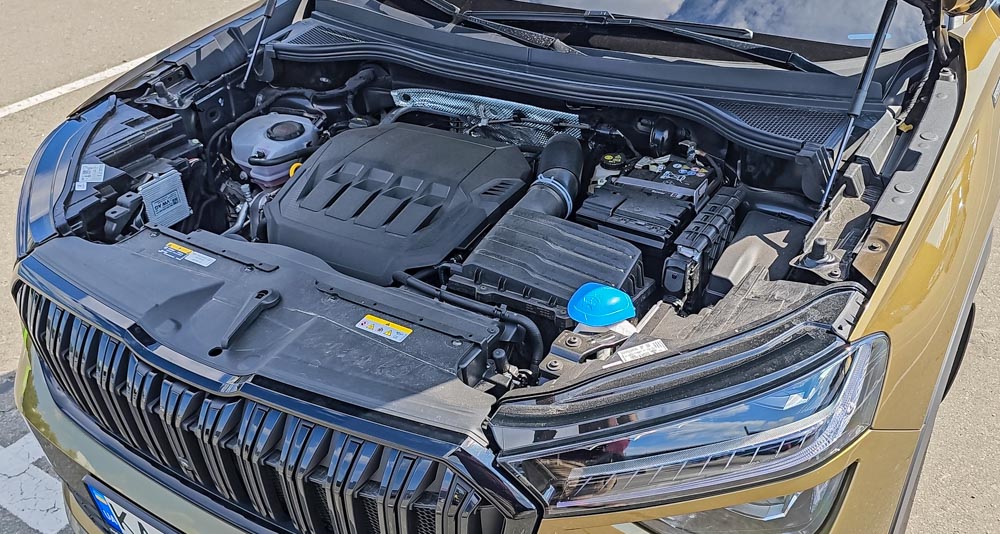
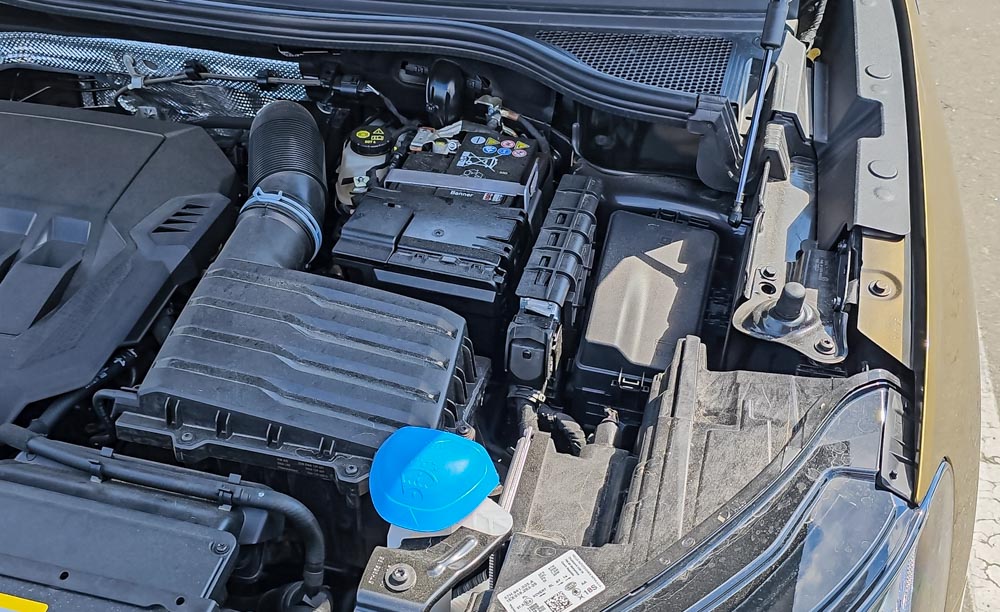
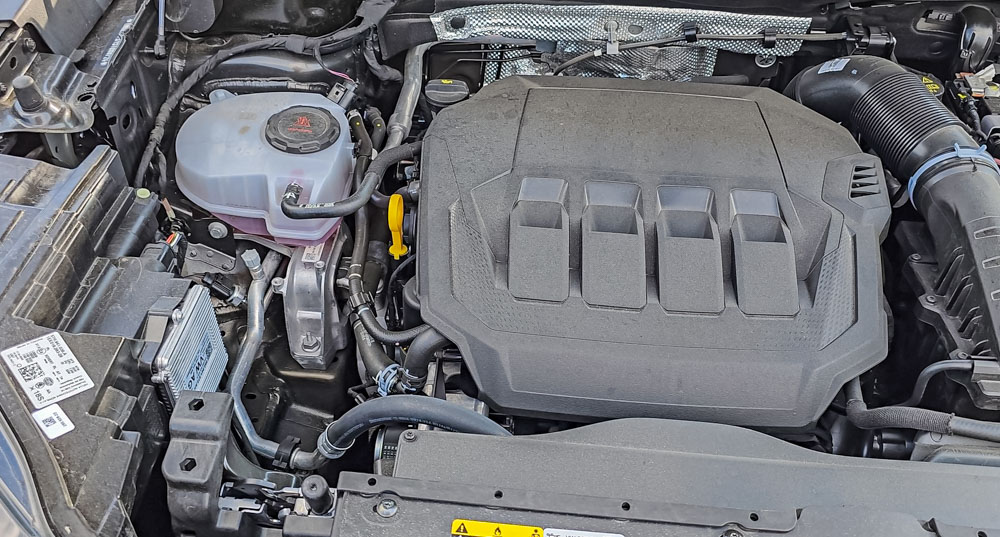
Overall, the engine bay is traditionally tidy and practical for everyday use. The hood features gas struts and a sound-insulating cover, while the engine is mounted transversely and shielded by a plastic cover. All fluid fill points are conveniently located, and the washer fluid reservoir has Škoda’s signature rubber funnel cap. Access to the battery and fuse box is straightforward as well.
Read also: Mitsubishi Eclipse Cross Review: True Japanese Car – Modern on Outside, Conservative on Inside
Interior of the 2025 Škoda Kodiaq Sportline
Overall, the cabin design leaves a positive impression. It reflects a typical modern interior without excessive futurism, which I find appealing. The materials aren’t exactly premium, but they are high-quality and practical. I was also impressed by Škoda’s traditional attention to detail – there are many thoughtful touches throughout the cabin, and I’ll try to cover the most notable ones.

The dashboard features a four-layer design. At the top is soft vinyl, followed by a suede-like trim with white cross-stitching. Below that is silver-colored plastic with a vinyl belt, and at the bottom, standard matte textured plastic.

Similar materials are used on the door panels, with the lines starting at the front and continuing around the entire interior. Overall, the design feels cohesive and visually harmonious.

In the Sportline version, following modern trends, the headliner is finished in black.

Read also: Škoda Kamiq (2024) Review: Is This Compact SUV Crossover Worth Your Attention?
Door Panels and Handles
The door armrests are also wrapped in suede, which continues onto portions of the interior panels. It’s a practical and appealing detail – whether it’s genuine leather or a synthetic material isn’t clear, but it works well and adds a touch of refinement.

Of course, the doors include window controls, and each door houses two speakers. Convenient felt-lined pockets are built in, which is great for keeping a water bottle from rattling while driving. The driver’s door, as usual, features additional controls for the central locking system, mirrors, and all window switches.
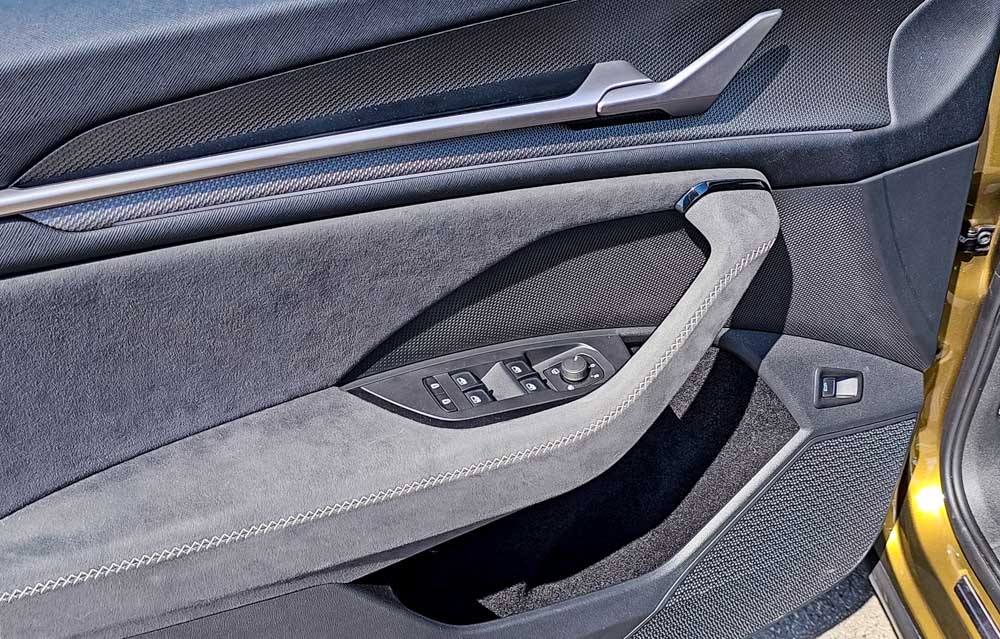
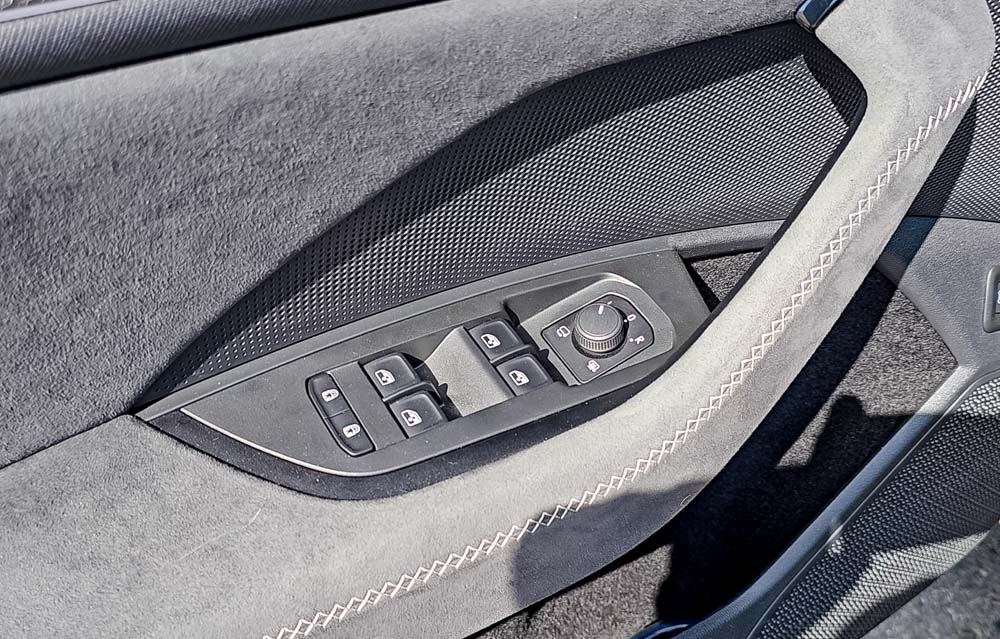
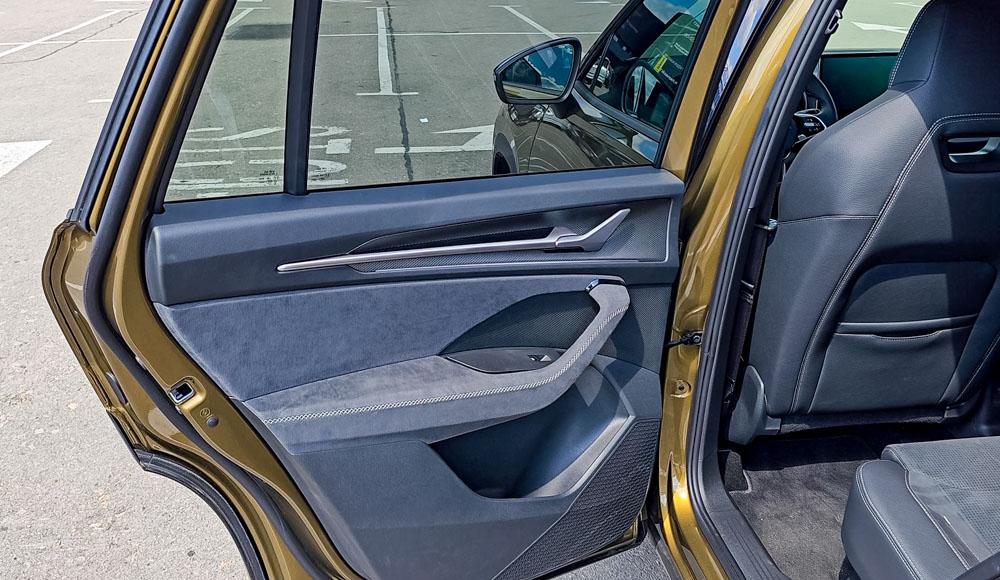
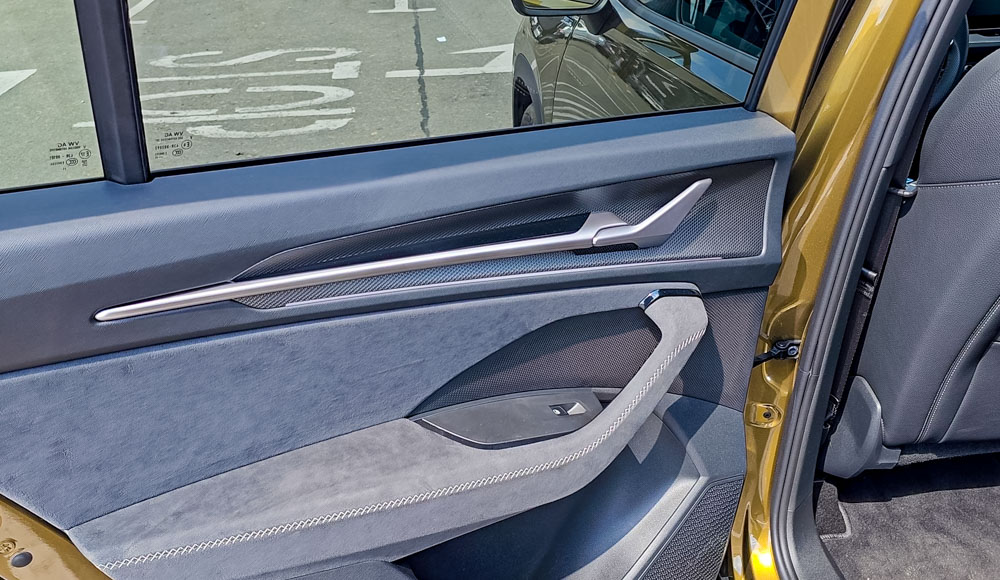
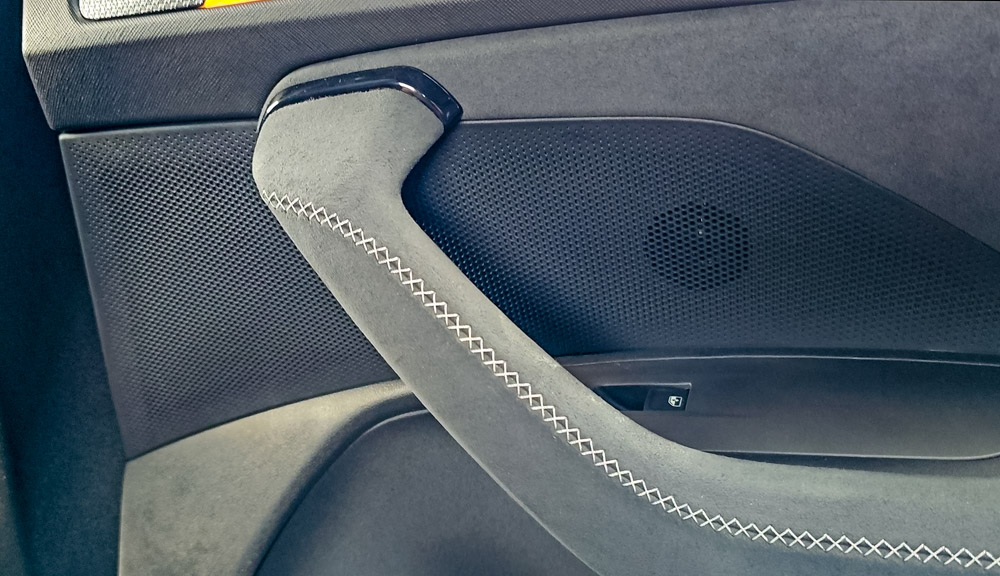
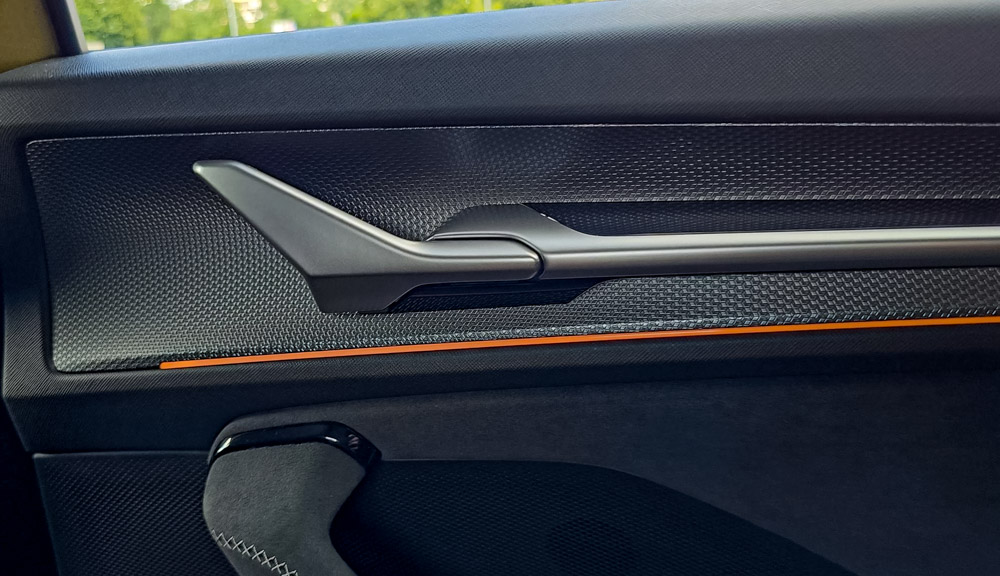
Another classic Škoda touch: the driver’s door edge includes a hidden compartment for storing the brand’s standard umbrella.
Read also: Škoda Octavia A8 (2025) Test Drive: Updated Bestseller with 1.5 TSI m-HEV Engine
Front Seats
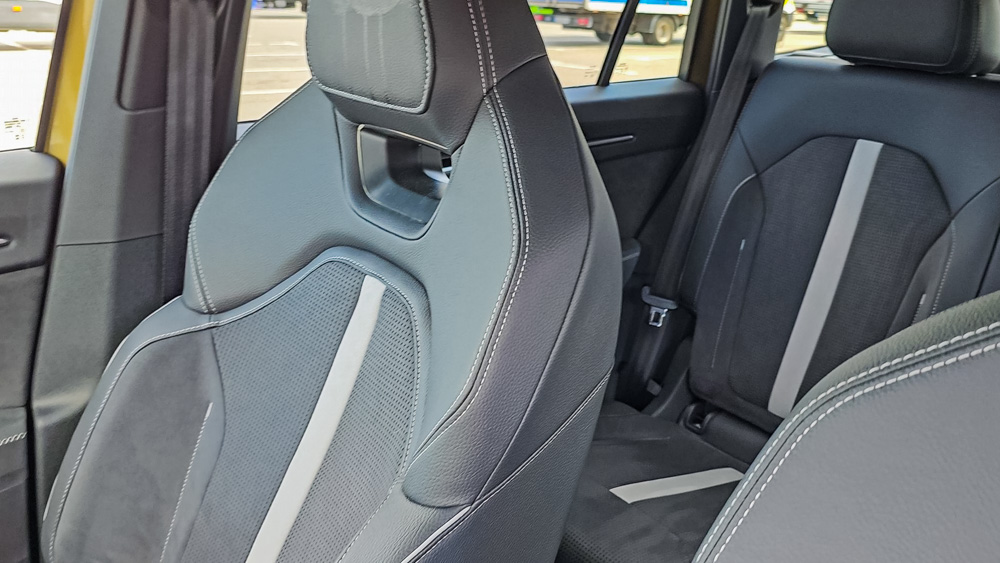
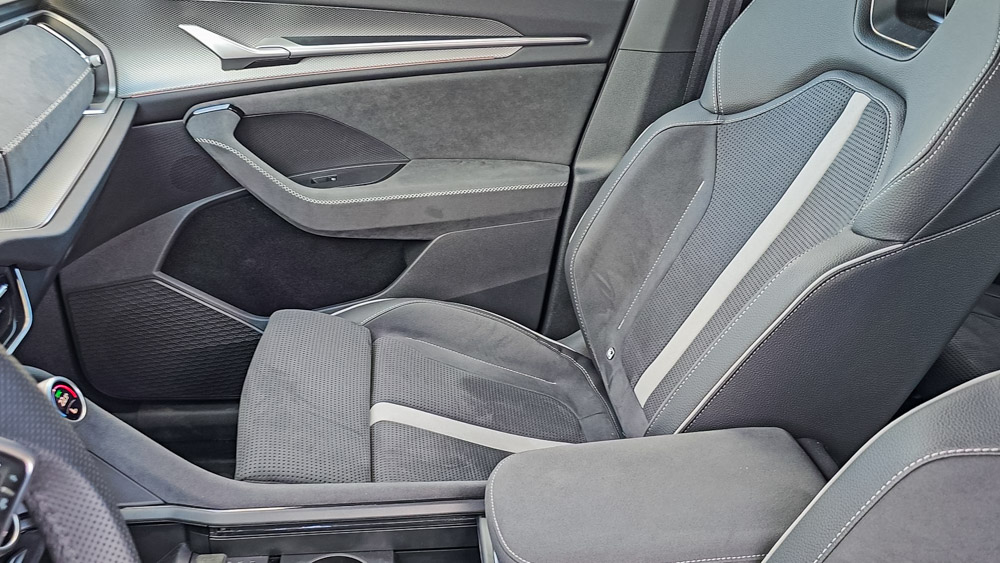
In the Sportline version, the front seats are arguably one of the highlights of this trim. They have a sporty appearance without compromising comfort for longer drives. The upholstery combines suede and leather inserts, complemented by contrast stitching and integrated headrests. Visually, the seats are neat, modern, and well-executed.

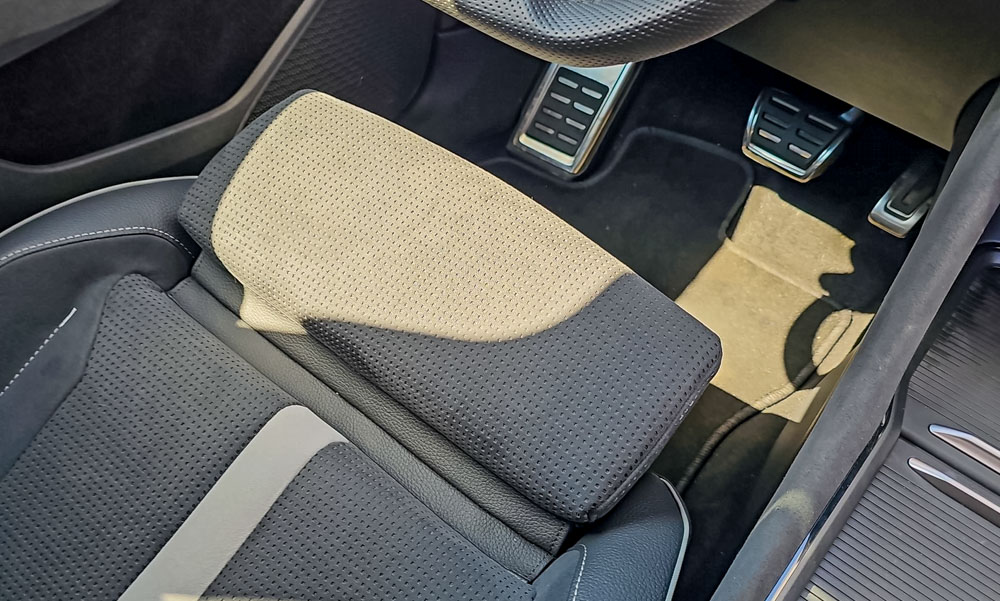
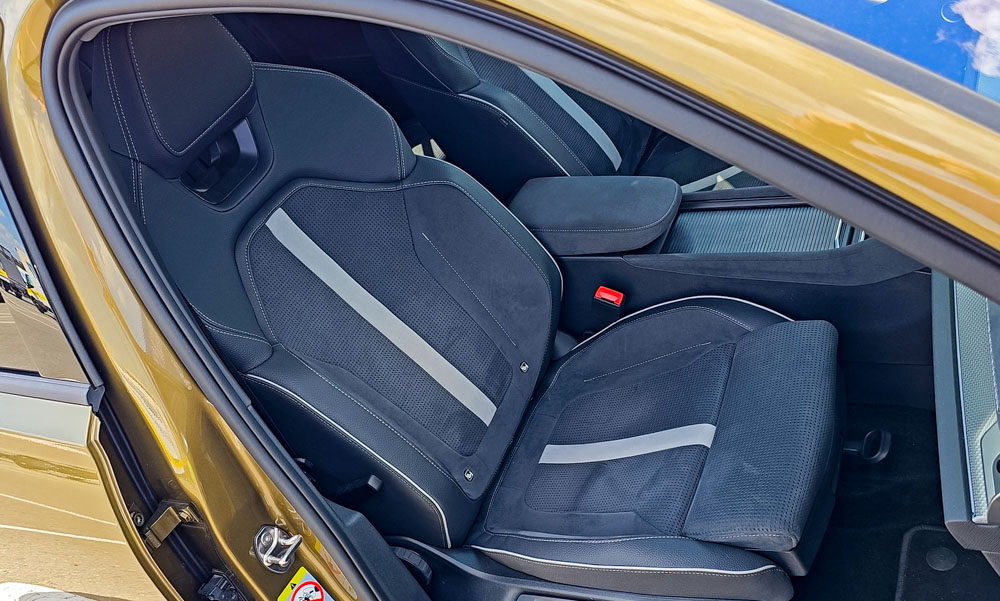
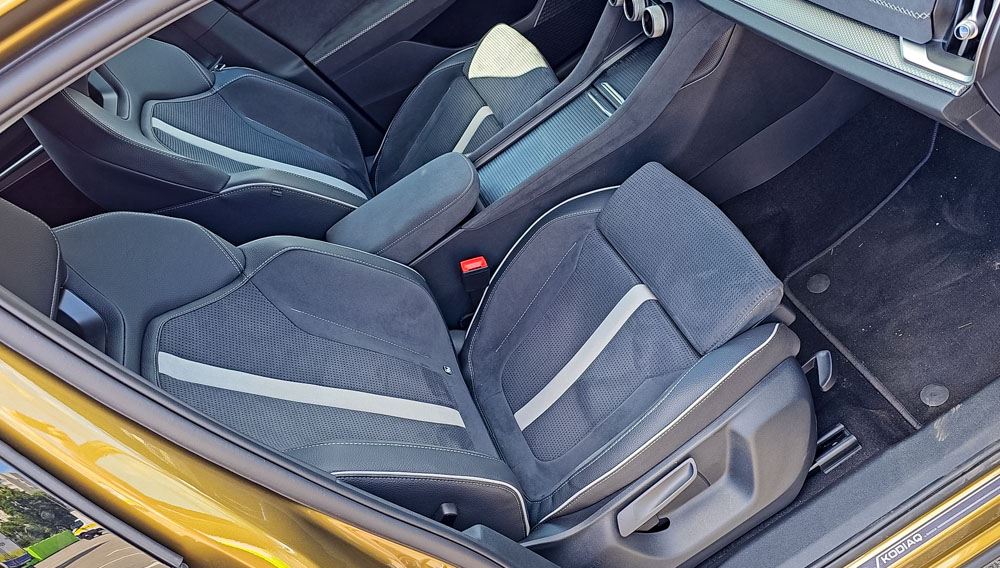
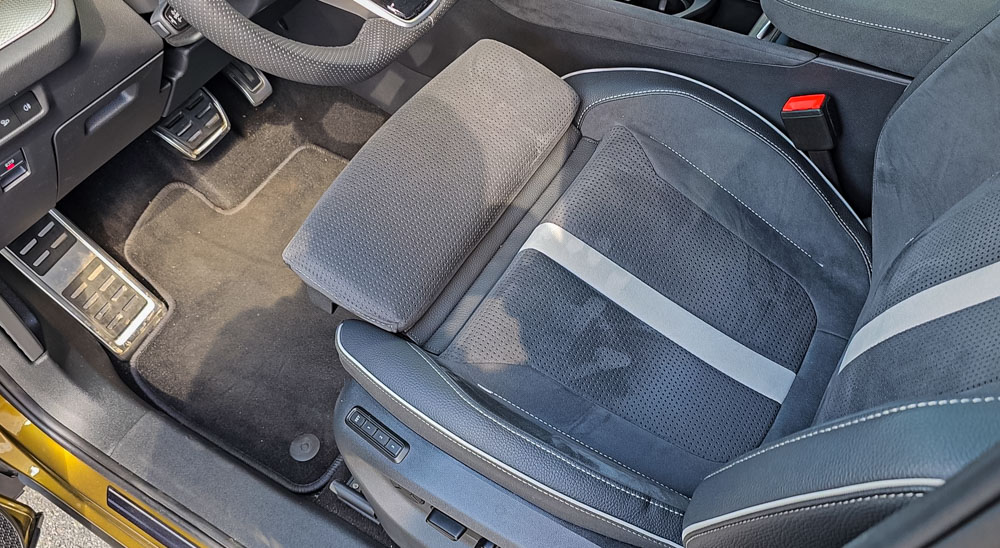
The seating position is high, providing a good forward view. Adjustments are fully electric for the driver, with memory functions included. In our test vehicle, the front passenger seat had manual adjustments. The adjustment range is wide, accommodating both those who prefer a low, stretched-out seating position and those who like to sit upright – finding a comfortable position is easy for either preference.

It’s also worth noting the adjustable lumbar support and the manually extendable thigh cushion, which add an extra level of comfort.

The lateral support is noticeable but not overly aggressive. This is important – Škoda Kodiaq Sportline isn’t a hot hatch, so excessive clamping would feel out of place. During quick maneuvers, the body is held securely, yet over long drives there’s no uncomfortable pressure. After several hours behind the wheel, I didn’t feel any fatigue, which is arguably the highest compliment for a seat.
Rear Seats
The second row has always been a strong point for the Kodiaq, and the new generation continues this tradition. Legroom is generous – even with a driver around 185–190 cm tall, rear passengers still have ample space. The headroom feels unrestricted, and the sense of openness is well maintained.

The rear seatbacks are reclinable, a very practical feature for a family vehicle. Heated seats are available, along with a separate climate control zone and USB-C ports for charging. The central armrest includes cupholders and is functional rather than purely decorative.
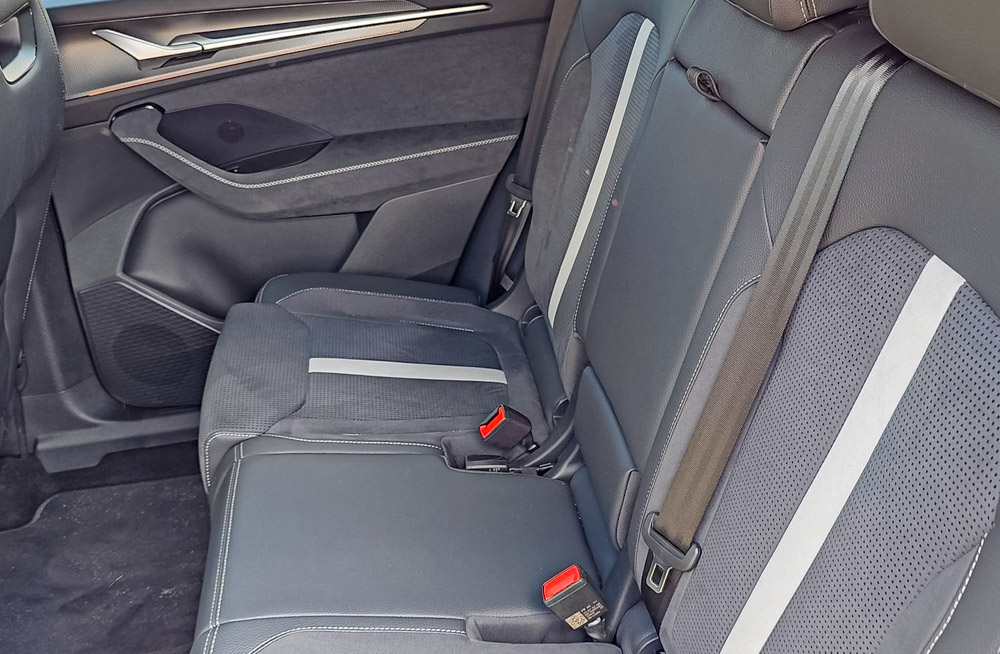
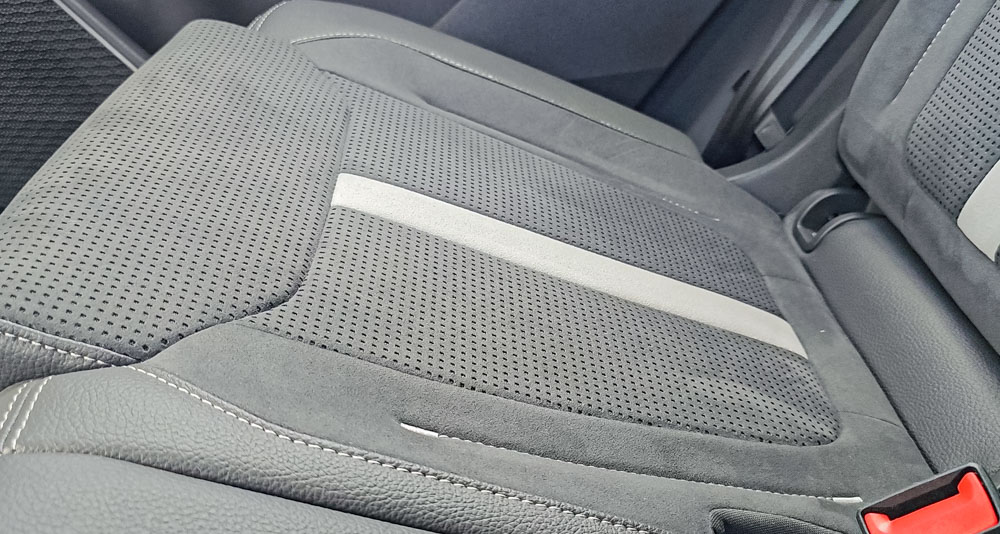
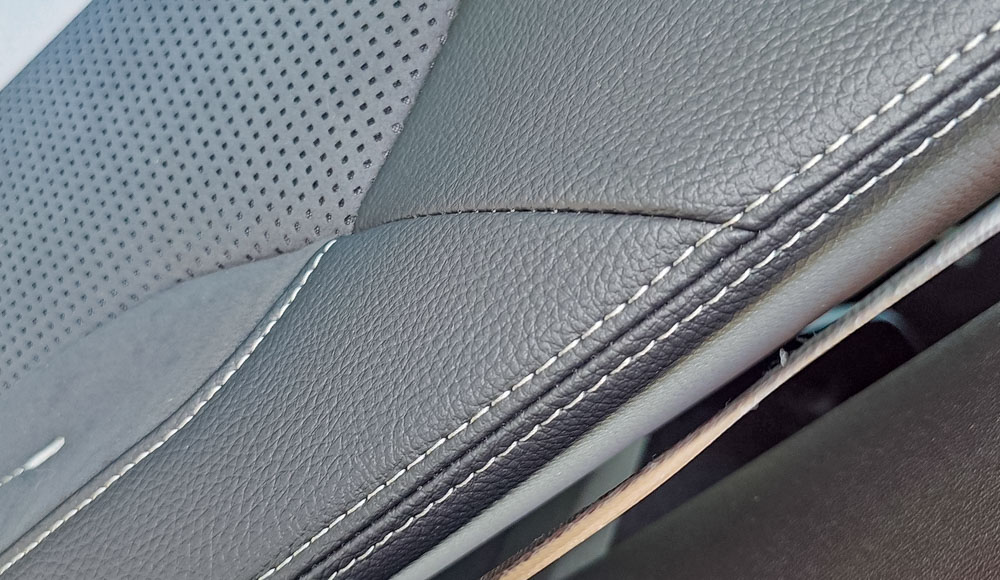
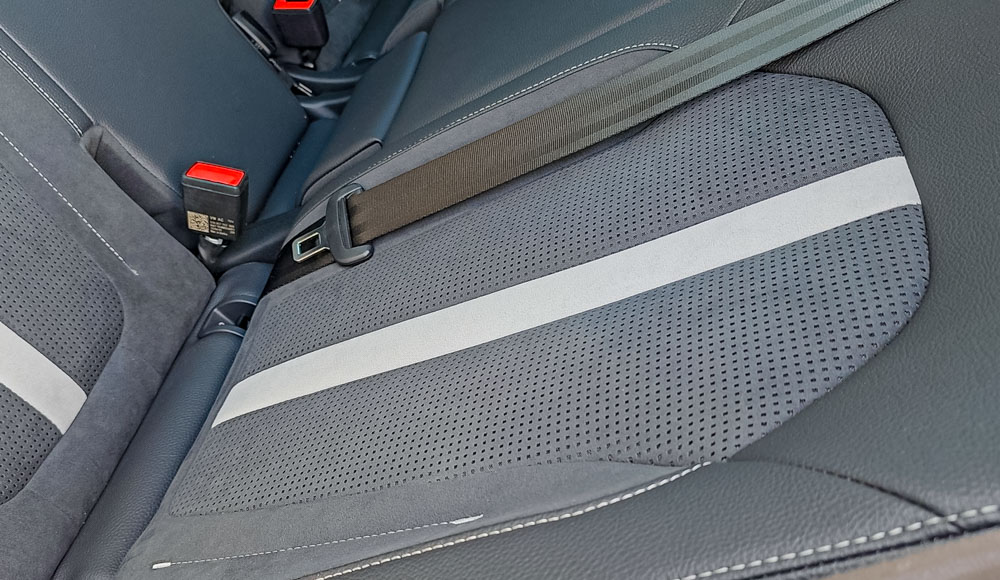
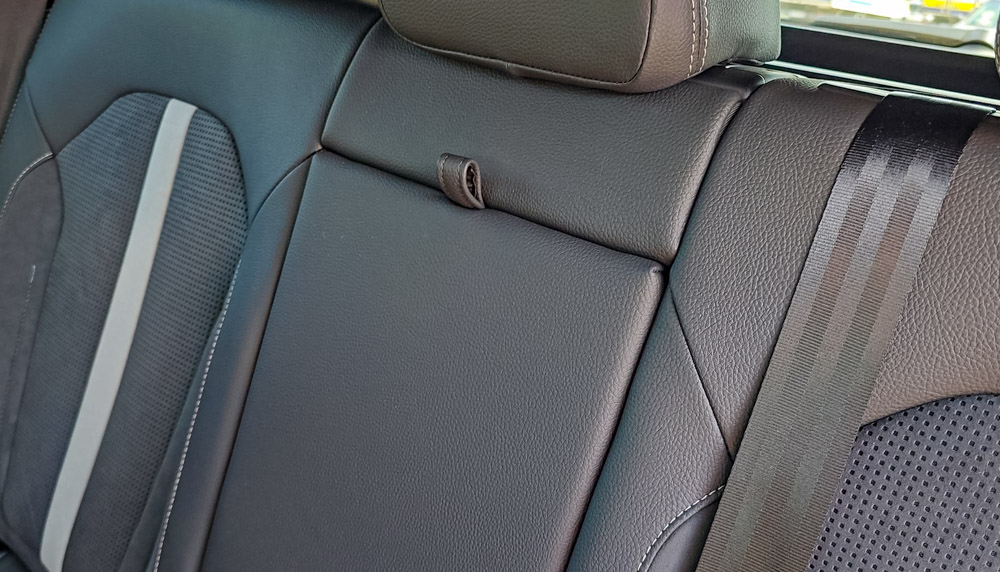
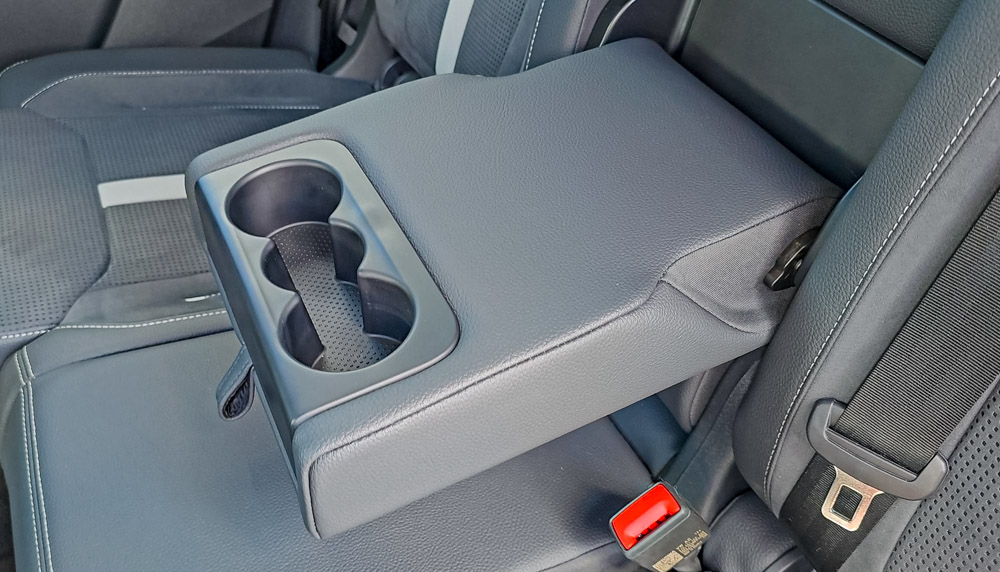
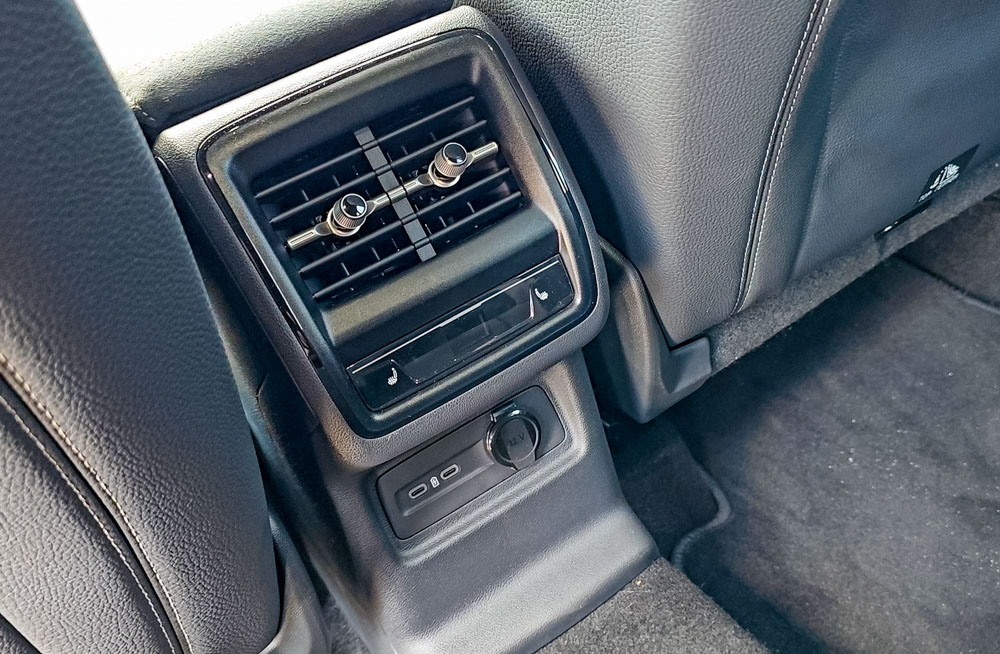
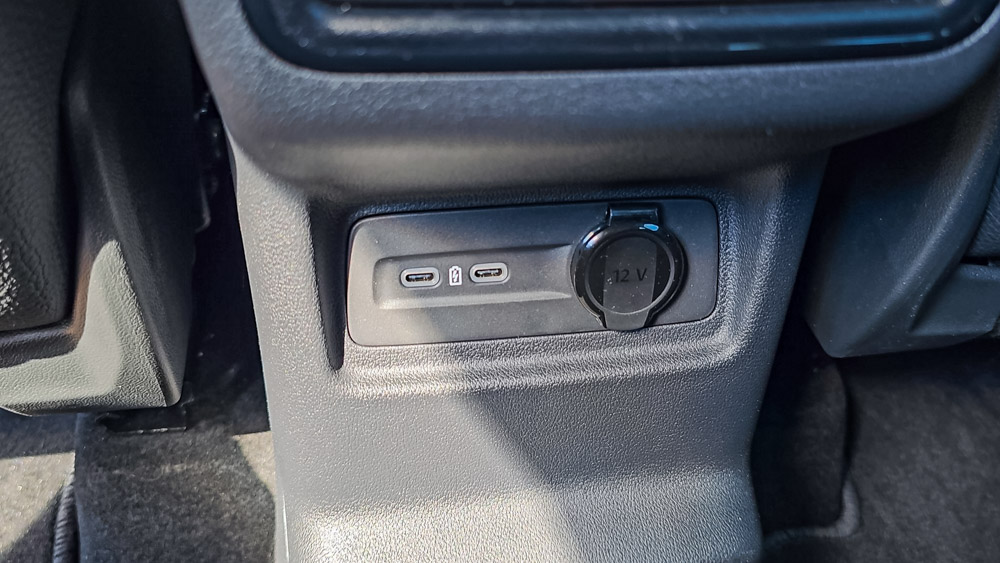
In short, the rear seats in the Škoda Kodiaq Sportline are genuinely good. They’re not just compromise seating for extra passengers – they offer a fully comfortable space.
Read also: Škoda Karoq Sportline Test Drive: Just a Visual Refresh?
Dashboard, Center Console, Upper Console, and Storage Compartments
Škoda has always excelled in practicality. There’s no ostentatious luxury, but the design is thoughtful and highly functional.

I really liked the dashboard trim and the convenient control of the ventilation and air conditioning vents via a single rotary lever, which simultaneously adjusts both the airflow direction and intensity.


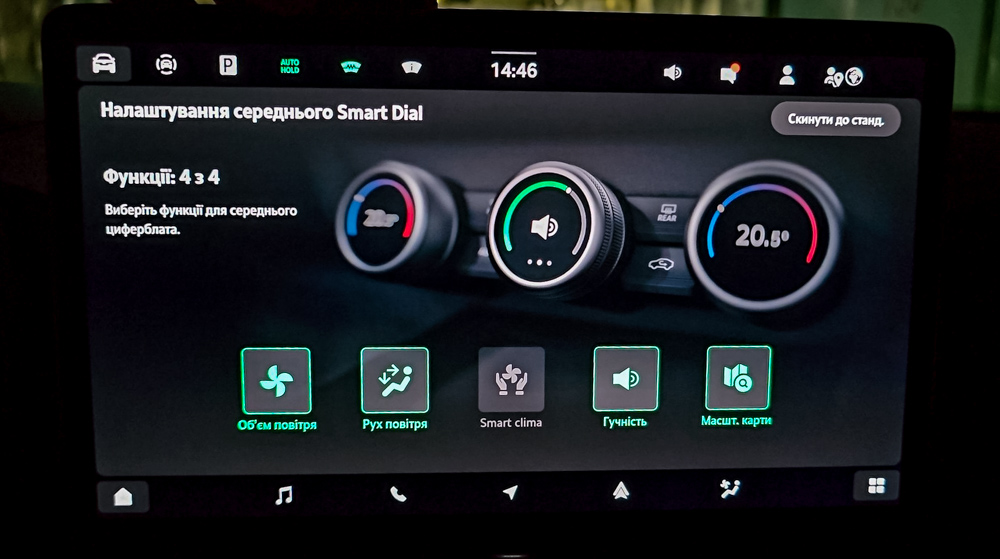
It’s also worth highlighting the multifunction Smart Dial controls for climate, comfort, and audio settings. These consist of three rotary knobs with circular information displays that resemble integrated smartwatches and also function as buttons. They’re very convenient – you can switch between functions with a press and adjust settings by turning the dial.

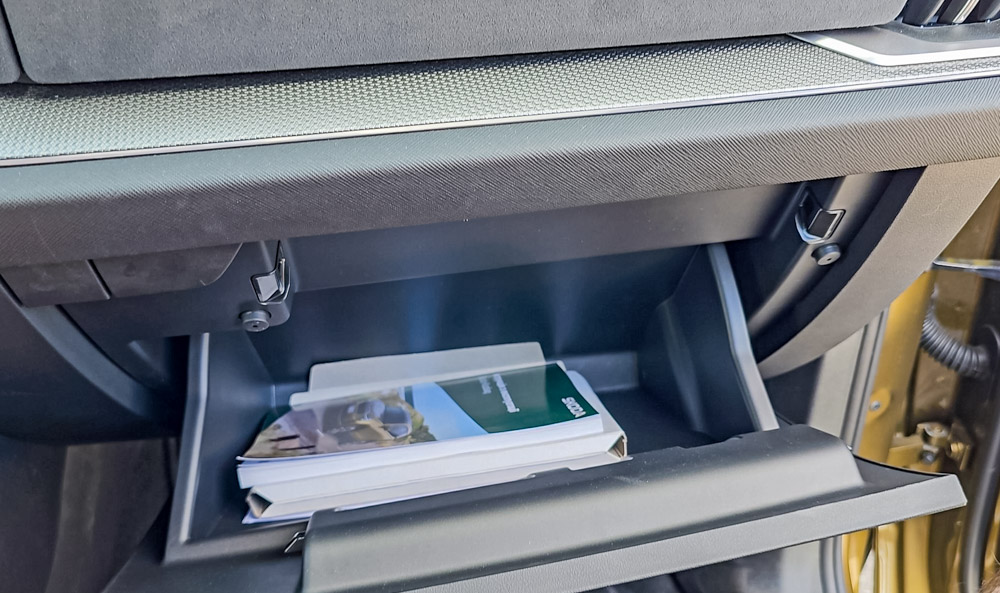
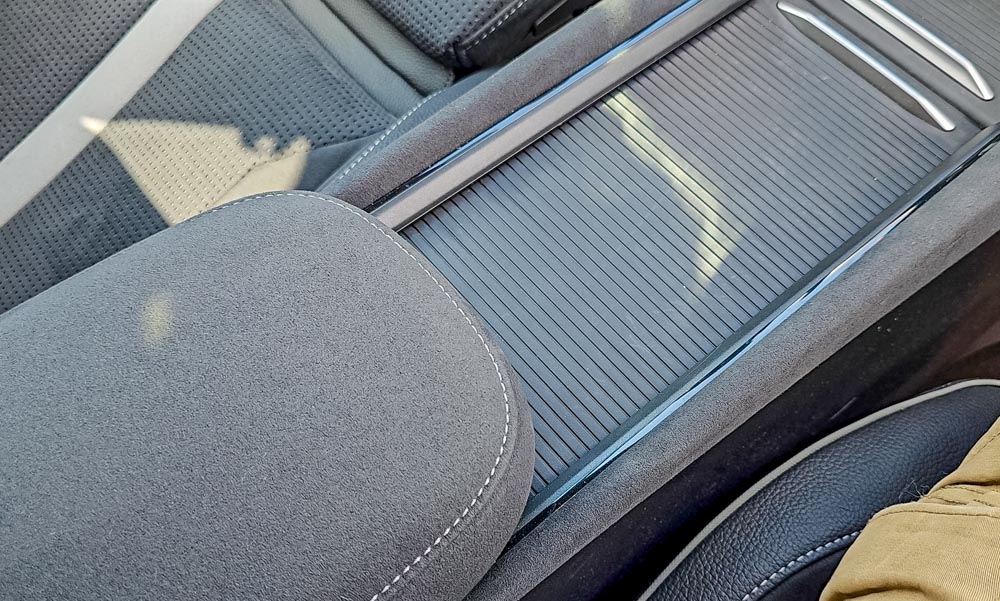
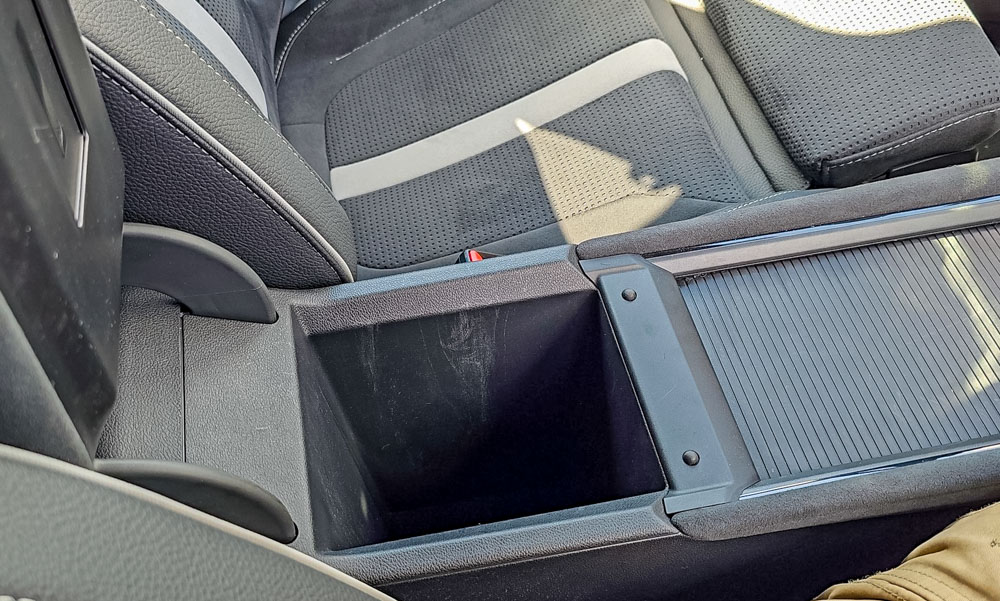
The glove compartment is spacious and illuminated. The center console is deep, with rubber inserts, and is fully covered by two sliding panels, giving it a neat appearance when closed while offering plenty of functionality when open. The central glovebox features a soft suede-covered armrest. Cupholders include retainers to keep bottles from moving around while driving. There are also several small compartments for coins, which is handy for quick toll payments.
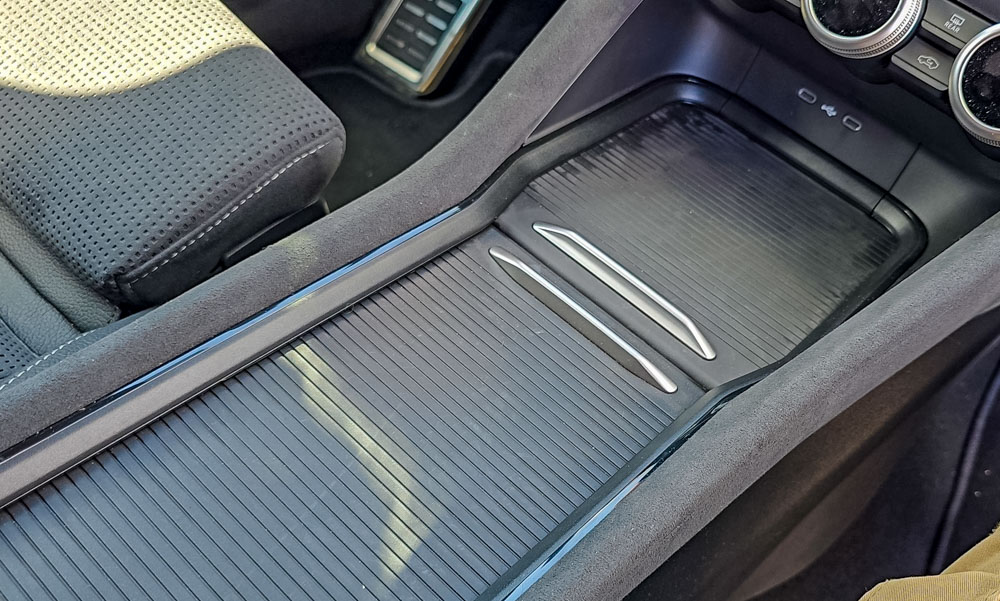
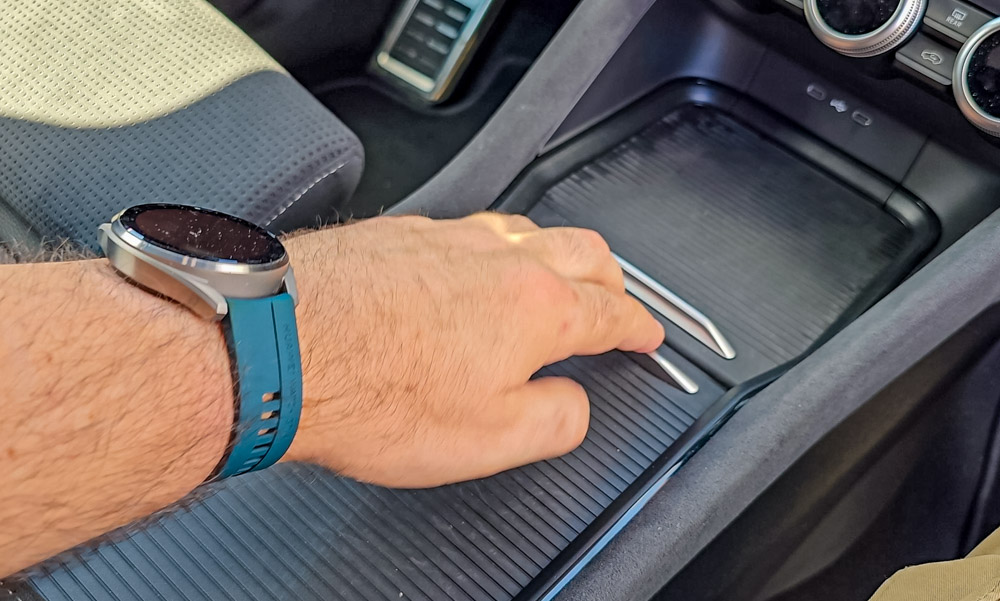
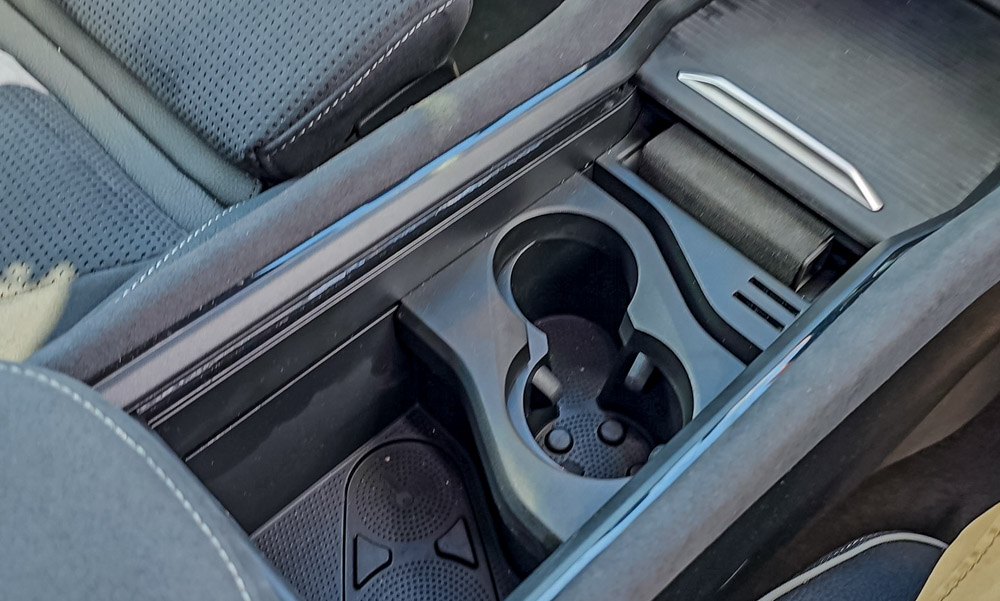
In front of the smartphone compartment, there’s an unusual accessory – a parallelepiped covered in suede-like fabric. At first, I couldn’t figure out what it was. A quick search revealed it’s a cleaning tool for the main display. Neat, and it actually works!


The upper console features fully touch-sensitive buttons for interior lighting control, a compartment for sunglasses, and integrated lighting in the sun visors, which activates when the mirror cover is slid open.


Read also: First Impressions of the Volvo EX30 EV Electric Car: Safety and Space
Steering Wheel and Column
The Škoda Kodiaq Sportline features a sporty steering wheel with a flat bottom, wrapped in genuine leather. It feels comfortable in hand, with an optimally thick rim. Perforation in the grip area adds tactile feedback. The height and reach adjustments are sufficient, allowing the driver to easily set a personalized seating position.

As for the steering wheel buttons, Škoda offers one of the most convenient layouts. The controls are easy to memorize and intuitive to operate by touch, thanks to clearly separated zones with rotary dials in the center. This directly enhances both comfort and safety.


Beneath the steering wheel, there are manual shift paddles and two multifunction stalks for controlling various driving systems. They move up and down, forward and backward, and also have buttons on the ends. The left stalk includes a top switch for controlling lights, washers, wipers, and, of course, turn signals. The right stalk functions as an electronic shift lever for the automatic transmission, rotating around its axis. Initially, it feels a bit unusual and takes some getting used to, but once familiar, it proves to be very convenient and quite intuitive.


Instrument Cluster
The Virtual Cockpit is already familiar territory for VAG vehicles. The graphics are crisp and the animations smooth. You can display the navigation map across the full screen, minimize the gauges, or stick with the classic layout featuring the tachometer and speedometer. I like that it provides plenty of information without overwhelming the driver’s attention.


Infotainment Display and Entertainment System
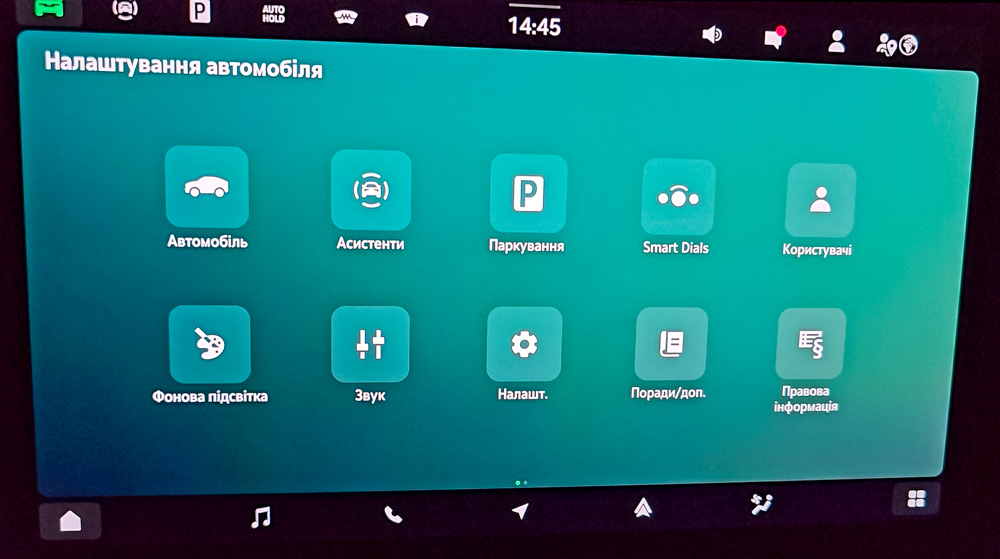
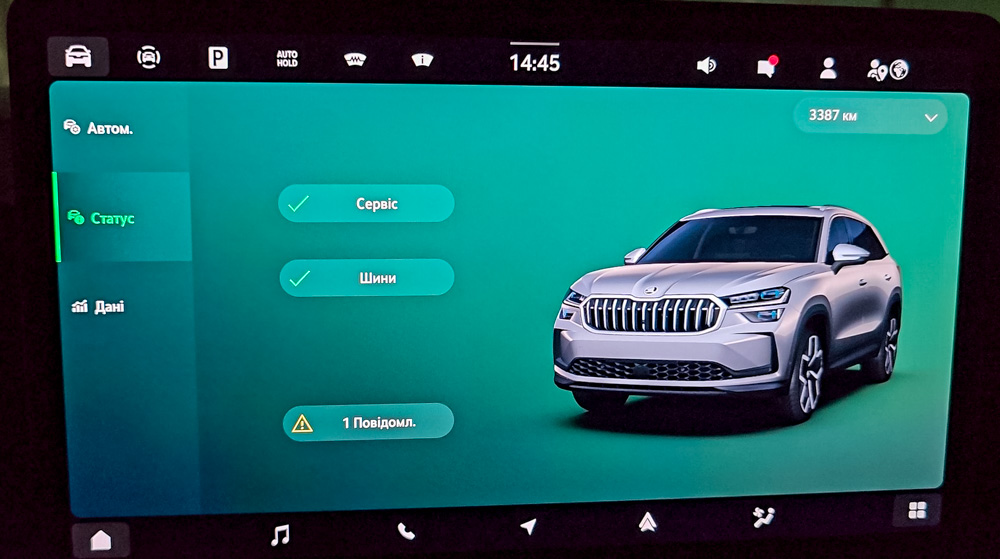
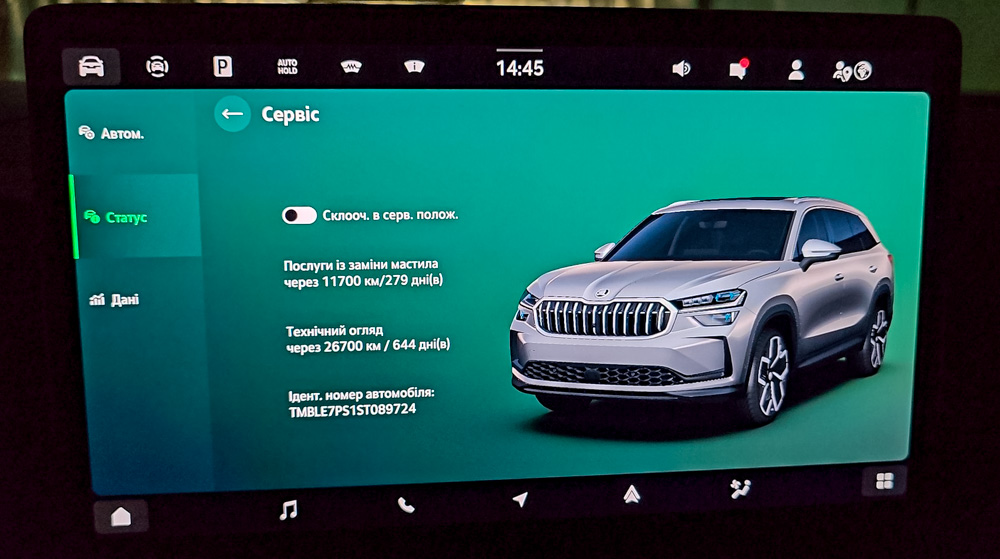
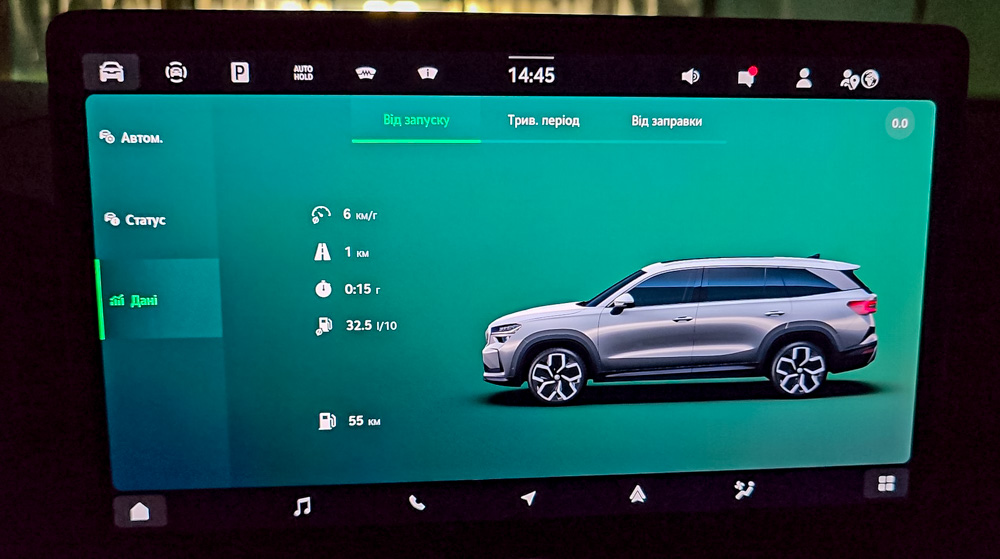
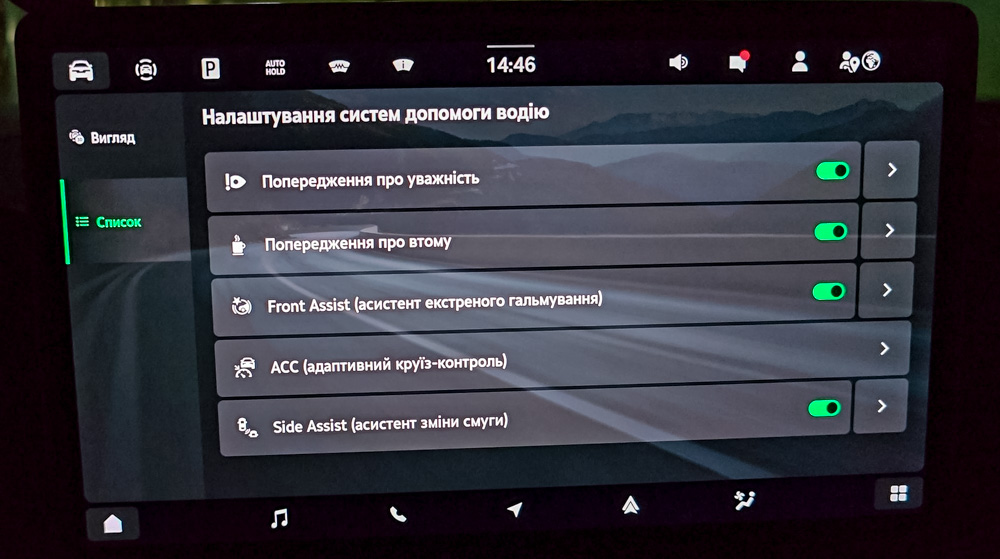
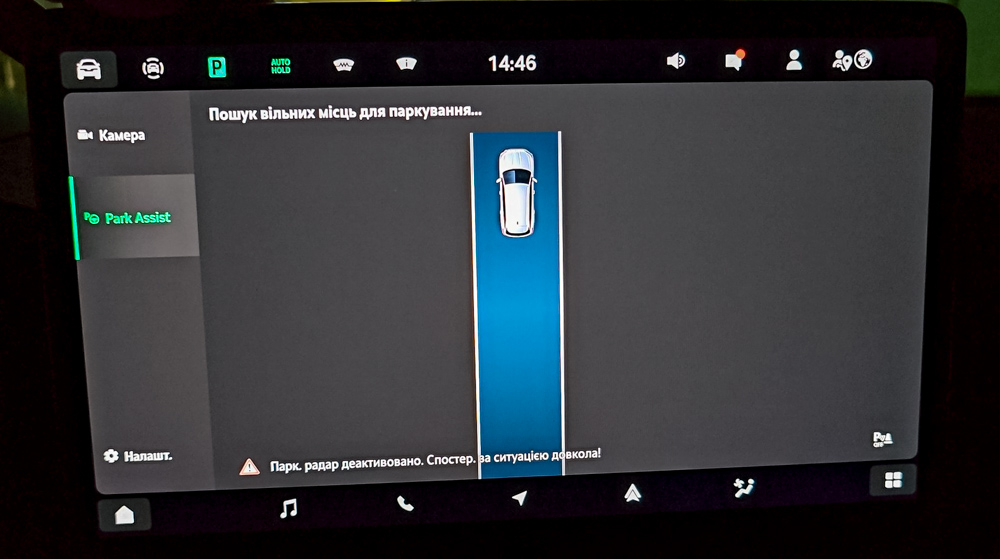
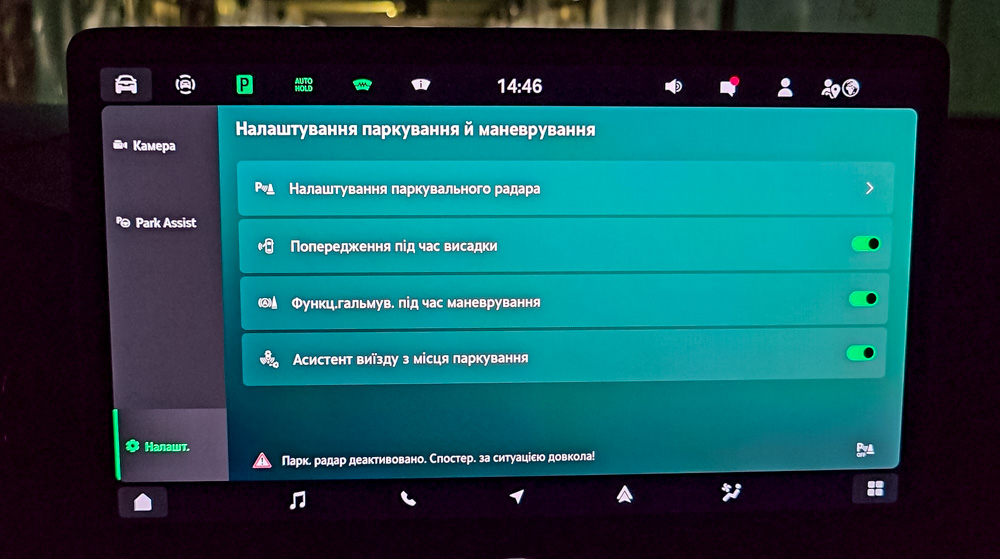
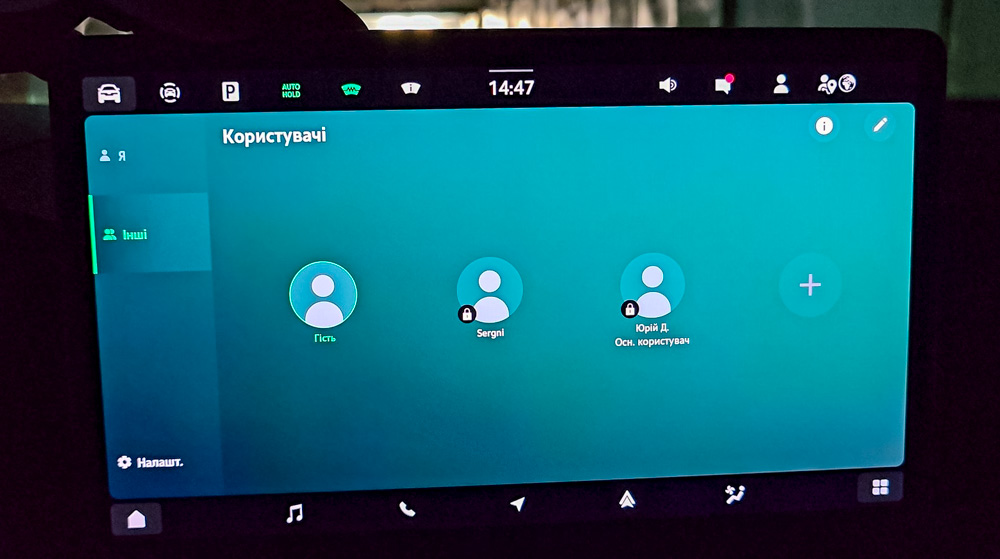
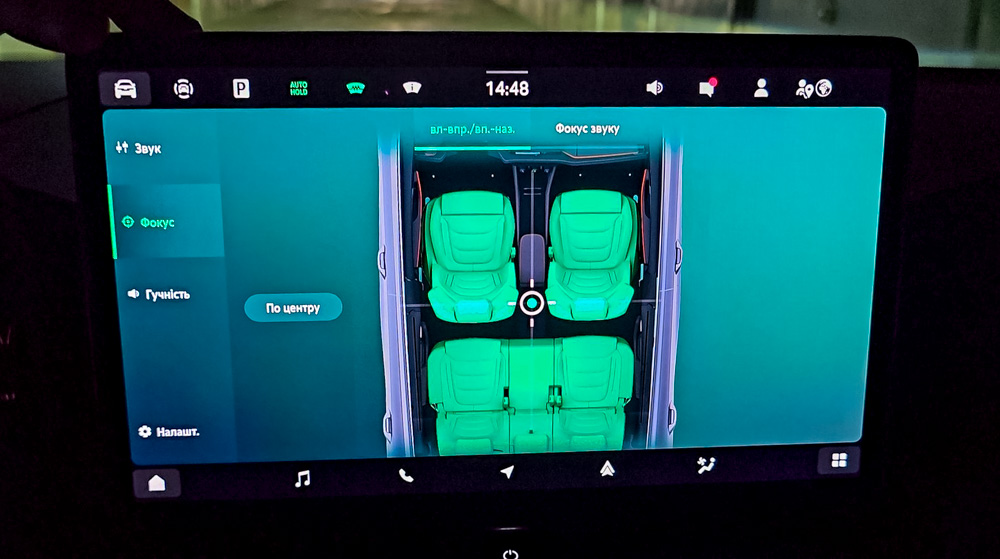
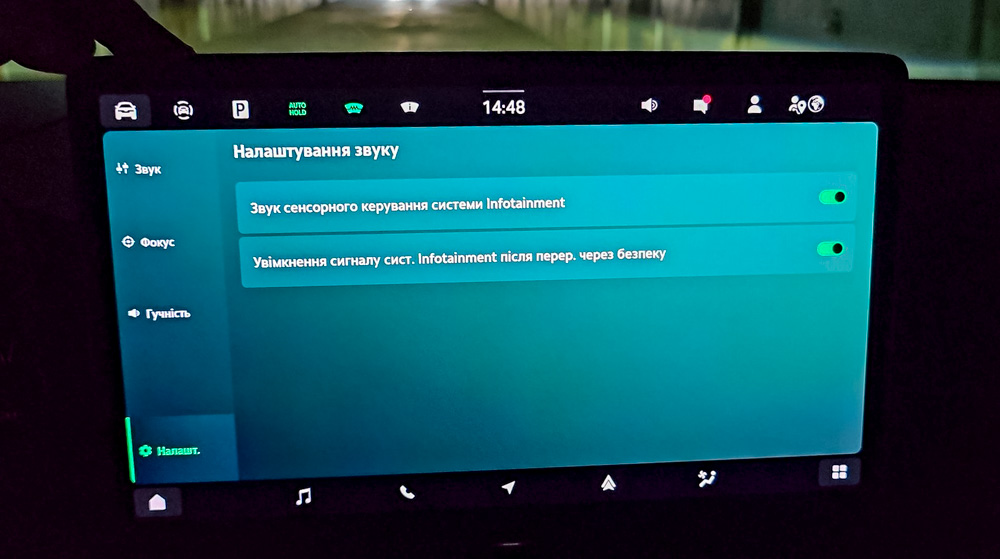
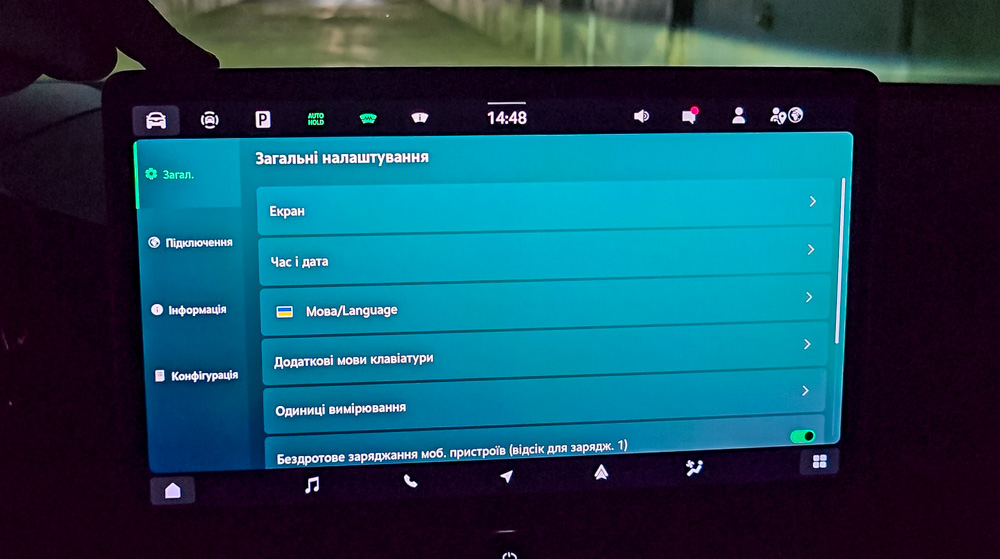
The 13-inch central display is large, bright, and responsive. Touch inputs are instantaneous, and I didn’t notice any lag. The interface is intuitive, with deep but logical menus that are easy to navigate without confusion.
Smartphone Connectivity and USB
Below the central display there is a compartment designed to hold two smartphones, both of which can be charged via wireless charging. There is also an additional small shelf above it for storing smaller items or a phone.
USB-C ports are located both at the front and rear – modern and practical.

Wireless Apple CarPlay and Android Auto work reliably. The connection stays stable, and audio is transmitted without any noticeable delay.

Read also: User Experience of the KOVI ADT 300 Motorcycle After 10,000 km of Use
Audio System
The Škoda Kodiaq Sportline is equipped with an 8-speaker Canton audio system that delivers clear and spacious sound. Even at high volumes, there’s no noticeable distortion. The bass is present but not deep, due to the absence of a subwoofer. Midrange frequencies are well-defined, and the highs are crisp. Overall, the sound quality is above average – more than sufficient for daily music listening, though not quite at a premium level.

Ambient Interior Lighting
Škoda Kodiaq Sportline 2025 does very well in this regard. Light strips run along the perimeter of the doors and dashboard, creating a pleasant and cohesive ambient glow throughout the cabin.


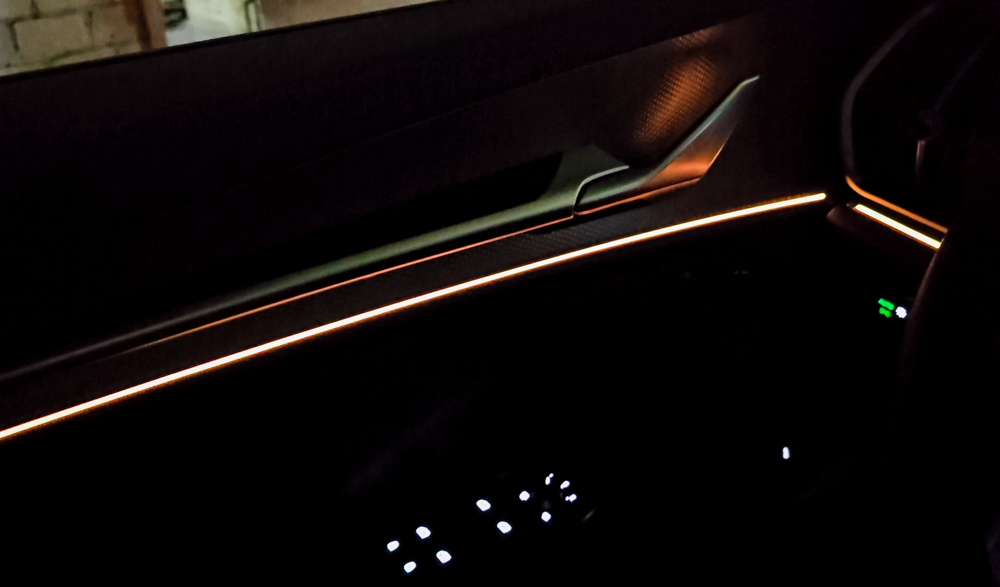
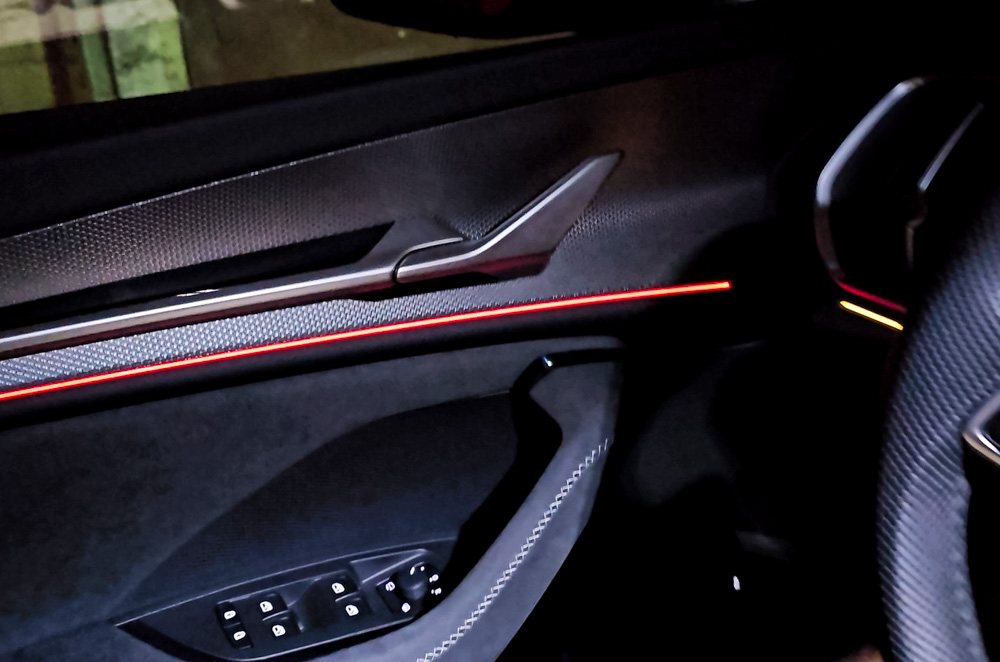
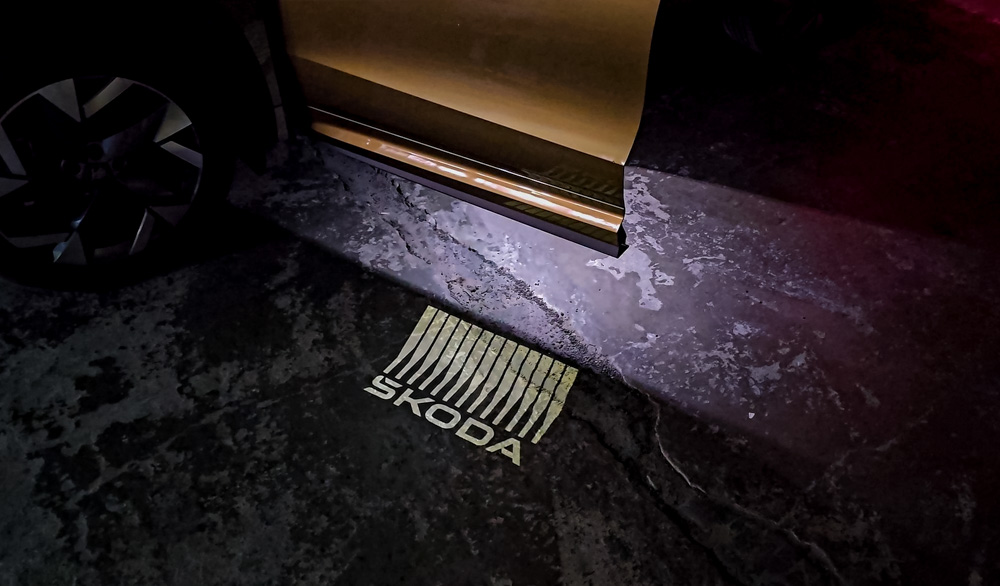
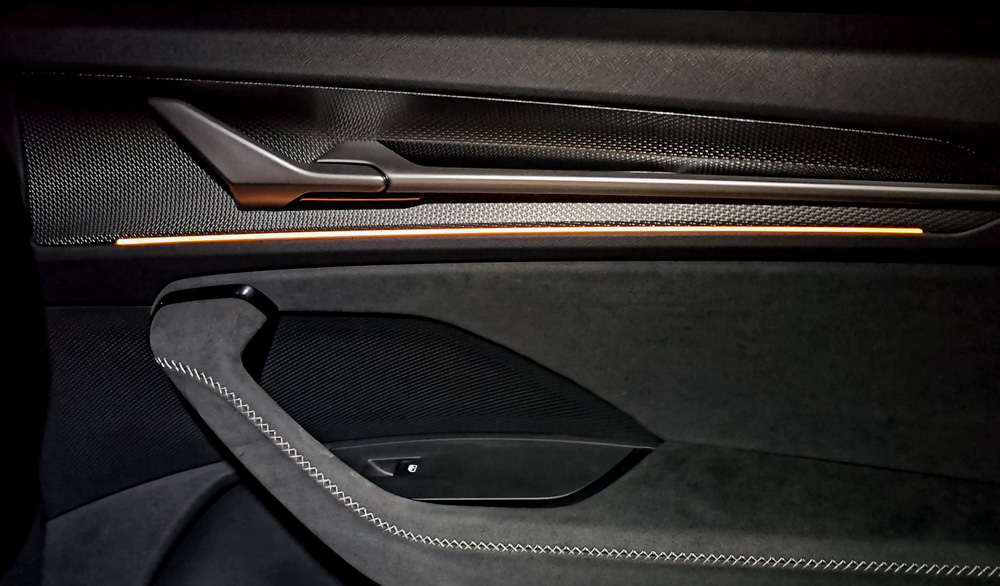
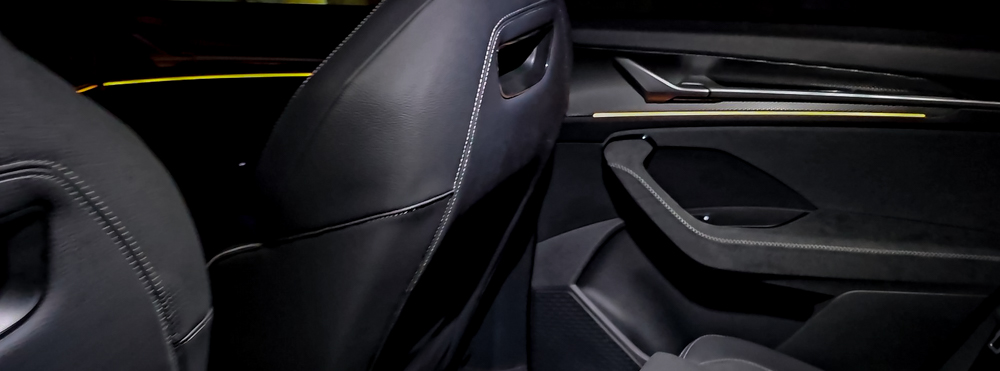
The ambient lighting is fully customizable through the infotainment system. You can choose from preset schemes or manually select colors and adjust the brightness to your preference.


Read also: Mazda CX-30 SPORT BLACK Review – What Can a Compact SUV Do?
Driving Impressions
Performance
190 hp in a large SUV strikes an optimal balance. Acceleration feels confident and composed, without any nervousness. The DSG gearbox shifts quickly and almost imperceptibly. In city driving, the car moves smoothly without jerks, while on the highway overtaking is effortless – the power reserve is noticeable and reassuring.

Handling and Stability
Despite its size, the Kodiaq doesn’t feel like a “barge.” The steering is informative, and responses are predictable. All-wheel drive adds confidence on wet roads. The suspension is comfortable yet composed, with minimal body roll. While it’s not a sports SUV, it drives very steadily and confidently.

Here’s a video I recorded showing the Škoda Kodiaq Sportline 2025 accelerating in Sport mode, trimmed from 0 to 100 km/h. The result is quite impressive – just 6 seconds. Of course, this method isn’t perfectly precise: it doesn’t account for reaction time on the accelerator, I was driving alone, and the fuel tank was nearly empty after a week of testing. Still, it’s a very solid result.
Fuel Consumption
- City (without traffic): around 9–10 L/100 km; in heavy traffic or with dynamic driving, it rises to 12–14 L/100 km.
- Highway: 7.5–8 L/100 km
- Combined cycle: 8–9 L/100 km
For an all-wheel-drive SUV weighing nearly 2 tons, these are quite reasonable figures.

Driver Assistance and Safety Systems
Adaptive cruise control, lane keeping, blind spot monitoring, automatic braking – a full set of modern assistants: forward collision warning system with braking when detecting cars, pedestrians, cyclists, rear traffic alert system, lane change and rear object departure warning, driver attention and fatigue monitoring system. Additionally, it features a full set of airbags and a 360° camera system, covering all angles for safety and convenience.


The Škoda Kodiaq Sportline 2025 offers good sound insulation. On the highway, the cabin remains sufficiently quiet, providing a comfortable and serene driving environment.

Read also: Neideso AI Dash Cam N900-4CH Review: Four Cameras for Comprehensive Coverage
MyŠkoda Mobile App
The app lets you check your vehicle’s status, lock the doors, view mileage, and receive service reminders. It works reliably, without any unexpected crashes or glitches.

Android:


iOS: Link
Read also: AUTO-VOX Kit Review: Solar Wireless Rear View Camera Installed in 5 Minutes
Conclusions
The Škoda Kodiaq Sportline 2025 is the natural flagship of the brand’s crossover lineup. It’s a large, modern, well-equipped vehicle without any unnecessary pretension. It doesn’t try to be something it’s not – just a genuine family SUV offering maximum practicality, comfort, and technology for a reasonable price.

Pros:
- Spacious and comfortable interior
- Large, practical trunk
- Powerful yet efficient 2.0 TFSI engine
- All-wheel drive
- Modern infotainment system
- Thoughtful “Simply Clever” solutions
- Reasonable balance of price and equipment
Cons:
- Rear design may not appeal to everyone
- Some controls are moved to touch-sensitive panels
- No hands-free trunk opening in the tested version
- Lower interior materials are not premium

And you know what? After a week of driving, I realized the main thing: the Kodiaq Sportline 2025 doesn’t wow you with a single standout “wow feature.” It simply does everything right. And that, perhaps, is its greatest strength. It’s a car that doesn’t shout about itself, but once you start using it daily, you understand why it’s so popular. If this is how you wrap up a cycle of Škoda crossover reviews, then this is the model to do it with – big, mature, and well-balanced.