




© ROOT-NATION.com - Use of content is permitted with a backlink.
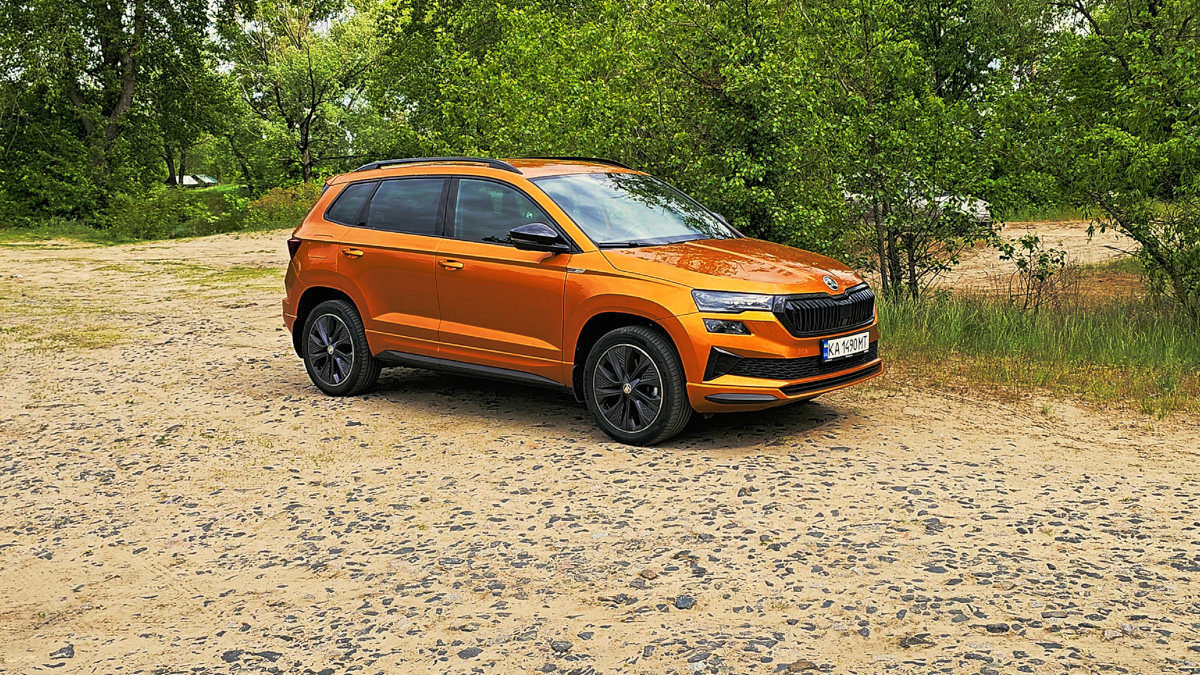
Hello everyone! I’ve previously done a detailed review of the Škoda Karoq, which you can find on our website, along with a video covering the same model. Recently, however, I had the chance to get behind the wheel of the updated version – the Škoda Karoq Sportline. This version brings a noticeable exterior facelift and some changes inside the cabin. So what exactly sets the new version apart? Let’s take a closer look and find out together.

Read also: Škoda Octavia A8 (2025) Test Drive: Updated Bestseller with 1.5 TSI m-HEV Engine
TABLE OF CONTENTS:
Video: Škoda Karoq (2024) review
To start, I’d recommend going back and checking out the detailed video review of the original 2024 Škoda Karoq. It’s a good refresher on the key features and characteristics of the base model. Once you’re caught up, we can move on to exploring what’s changed in the updated version. Of course, if you’re already familiar with the car, feel free to skip ahead to the next section – no harm in that.
Video: What’s new in the Škoda Karoq Sportline (2025)
And this is a video about the updated version of the car. If you don’t want to read the text, watch the video!
Exterior of Škoda Karoq Sportline (2025)
Let’s start with the exterior changes, as they’re the most immediately noticeable. In reality, there are no major alterations to the core metal body panels – the overall structure remains the same.
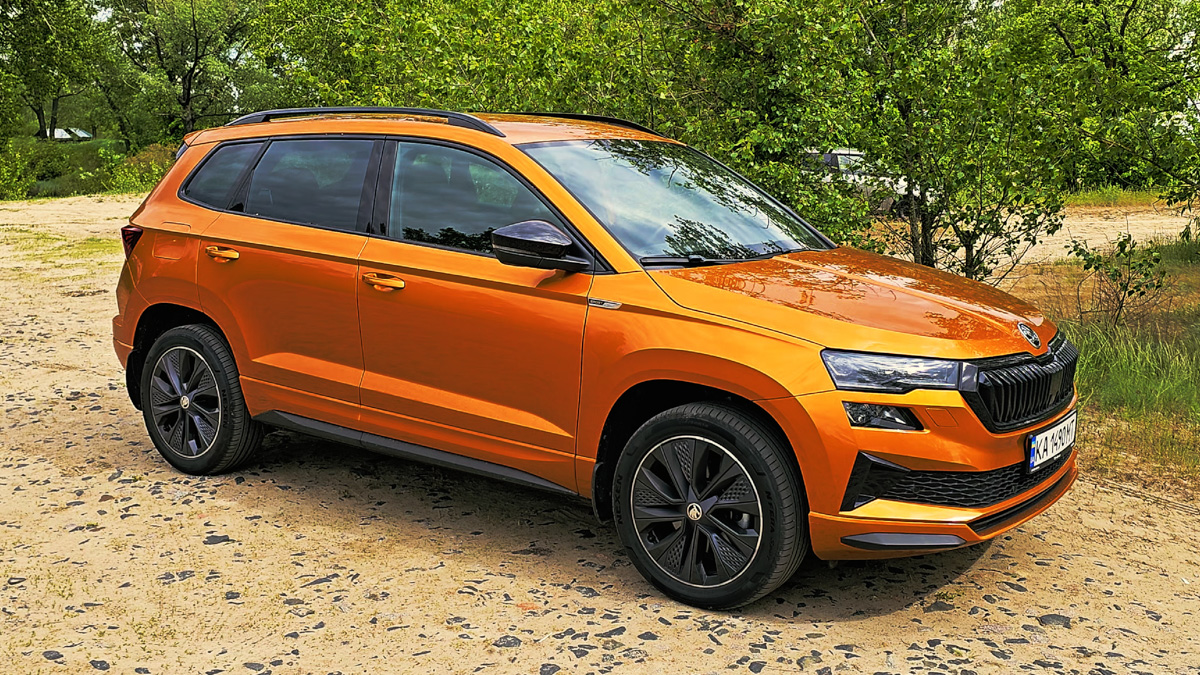
In other words, the overall body shape remains unchanged. However, some of the exterior elements – mostly plastic components – have been refreshed and updated.
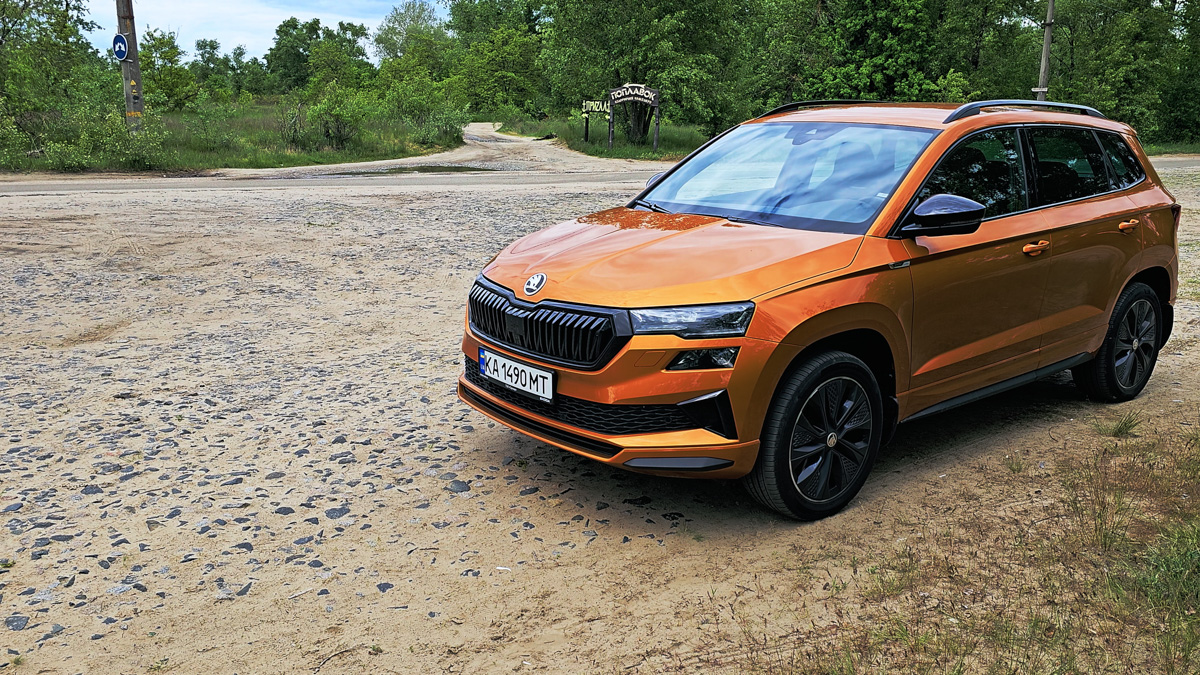
Front view
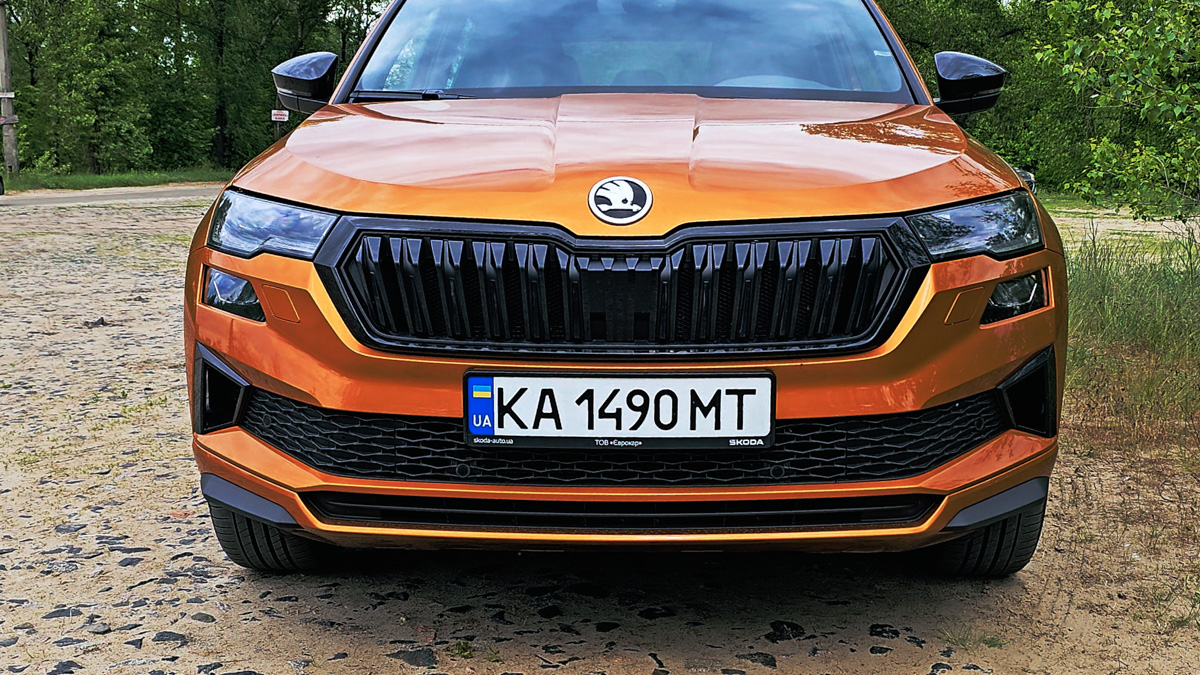
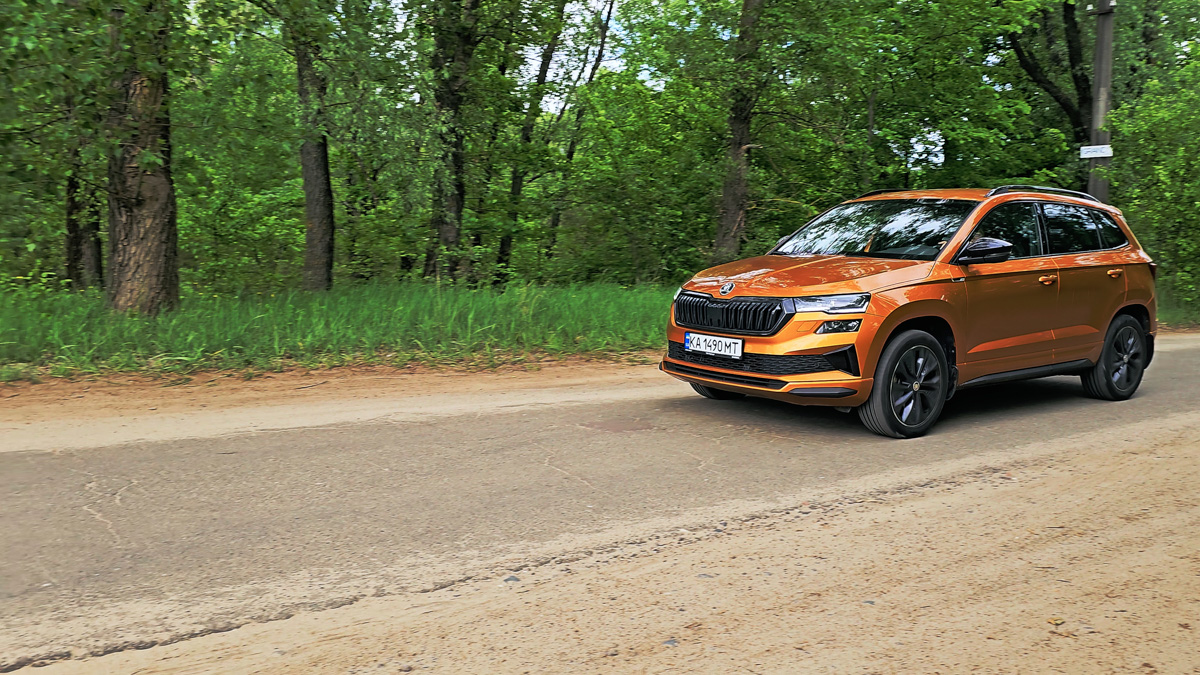
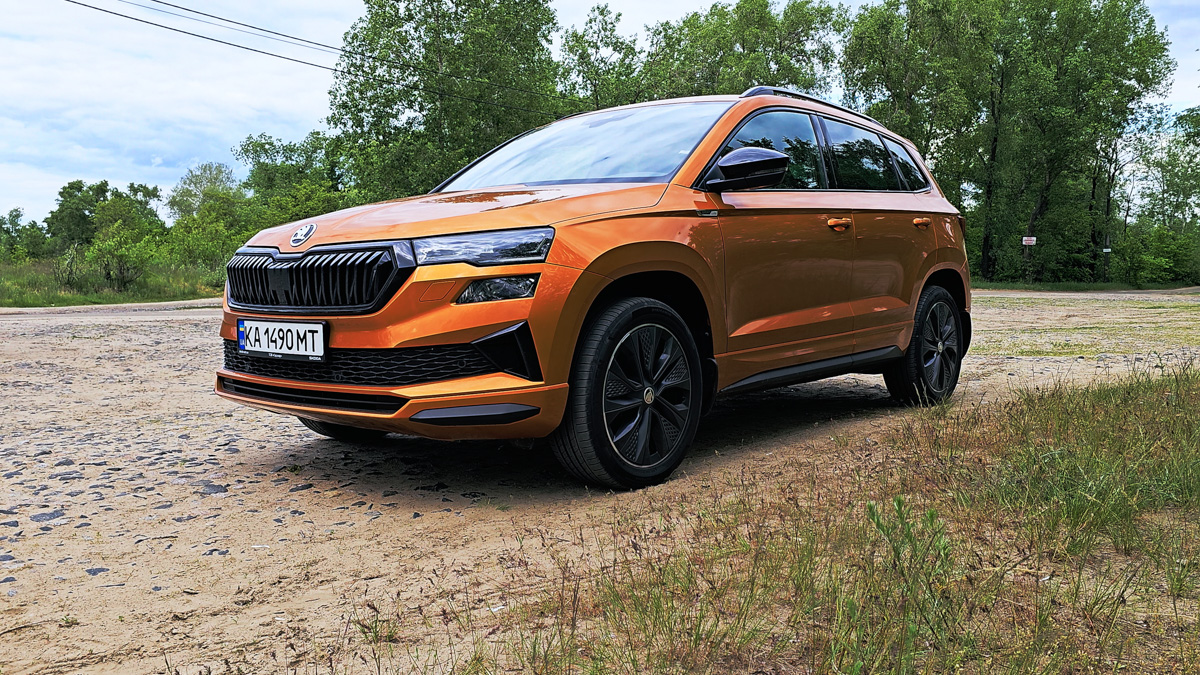
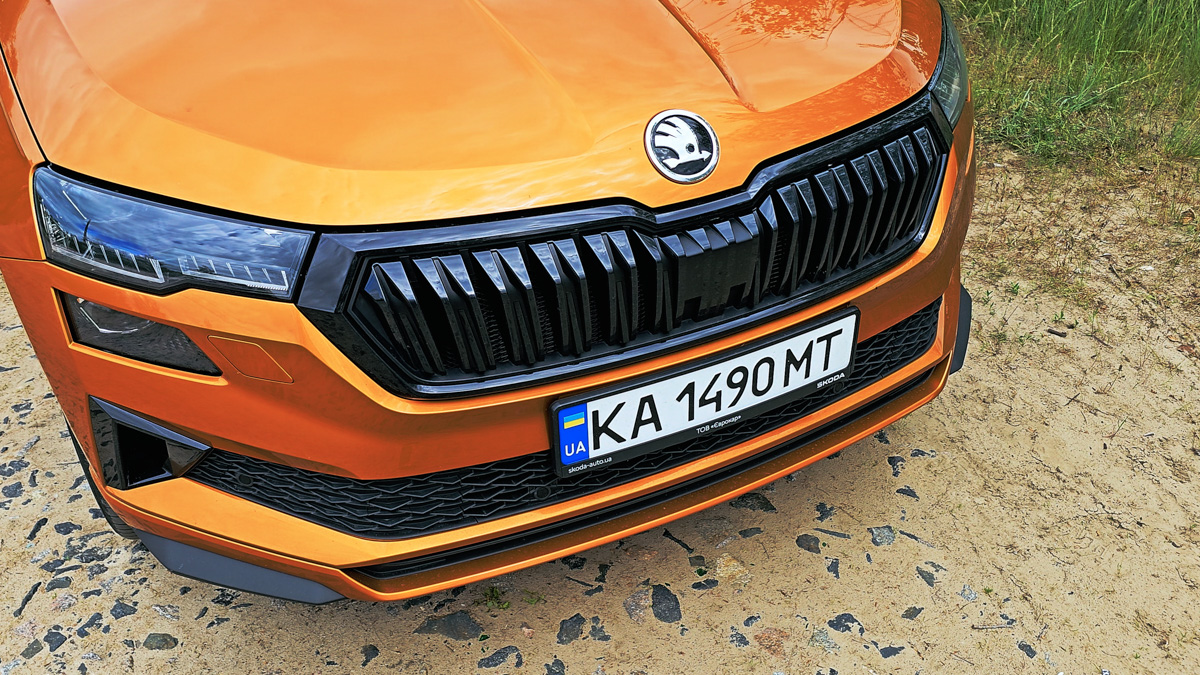
Previously, the grille featured a chrome surround – it’s now finished in glossy black. The lower lip of the front bumper, which used to be made of matte black plastic, has been slightly reshaped. It’s now painted in the body color and includes two black side spoilers, giving the front end a sportier look.
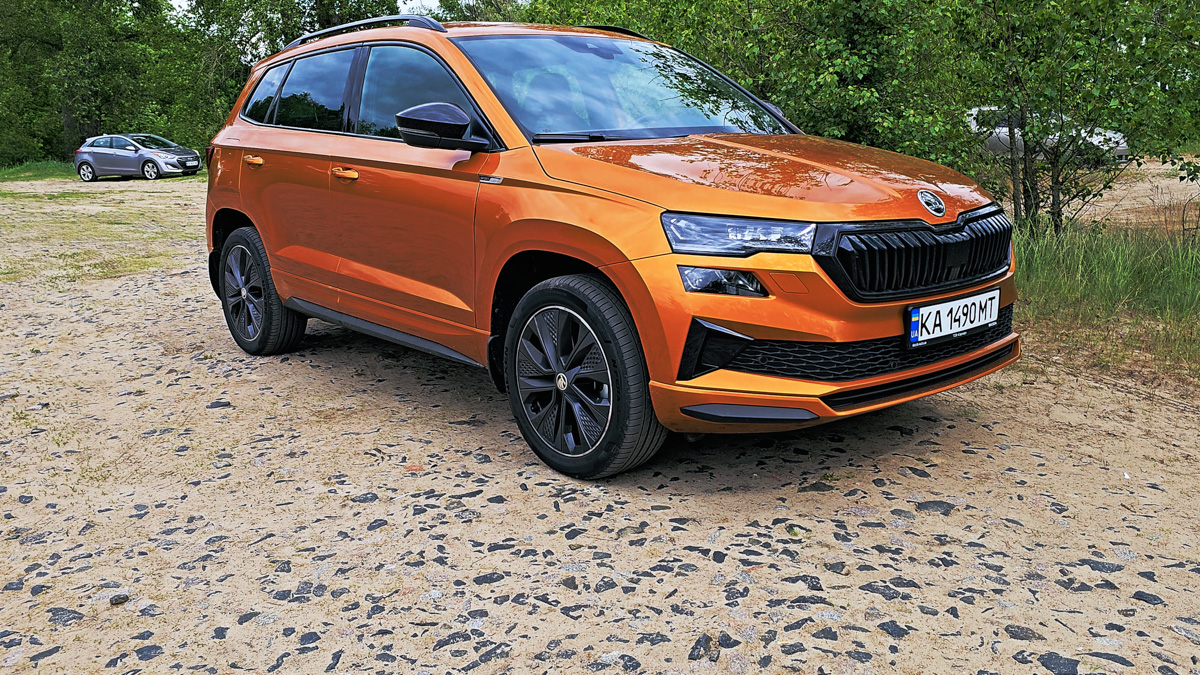
Thanks to this facelift, the front end does take on a slightly more aggressive and sporty appearance.
Side view
There are also a few other changes here – minor on their own, but together they noticeably alter the car’s character, giving it a more dynamic and sporty feel.
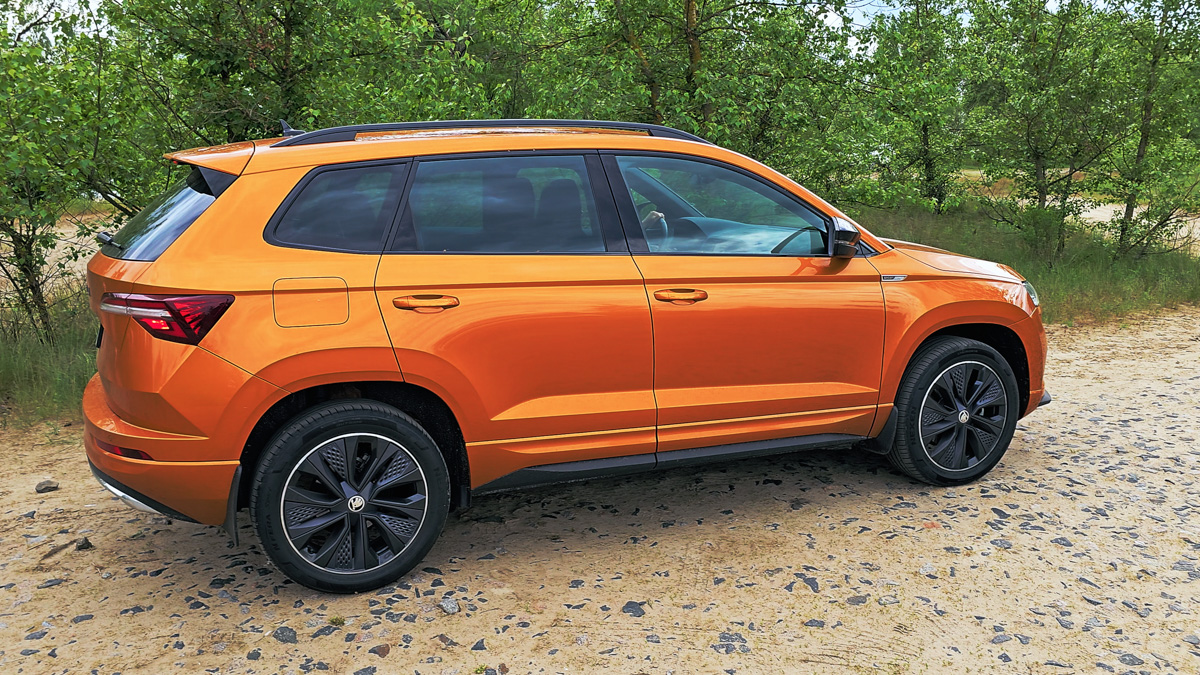
Starting from the top, one of the key updates is the switch to glossy black side mirror housings, replacing the previous body-colored ones. As expected, the mirrors still support both manual and automatic folding.
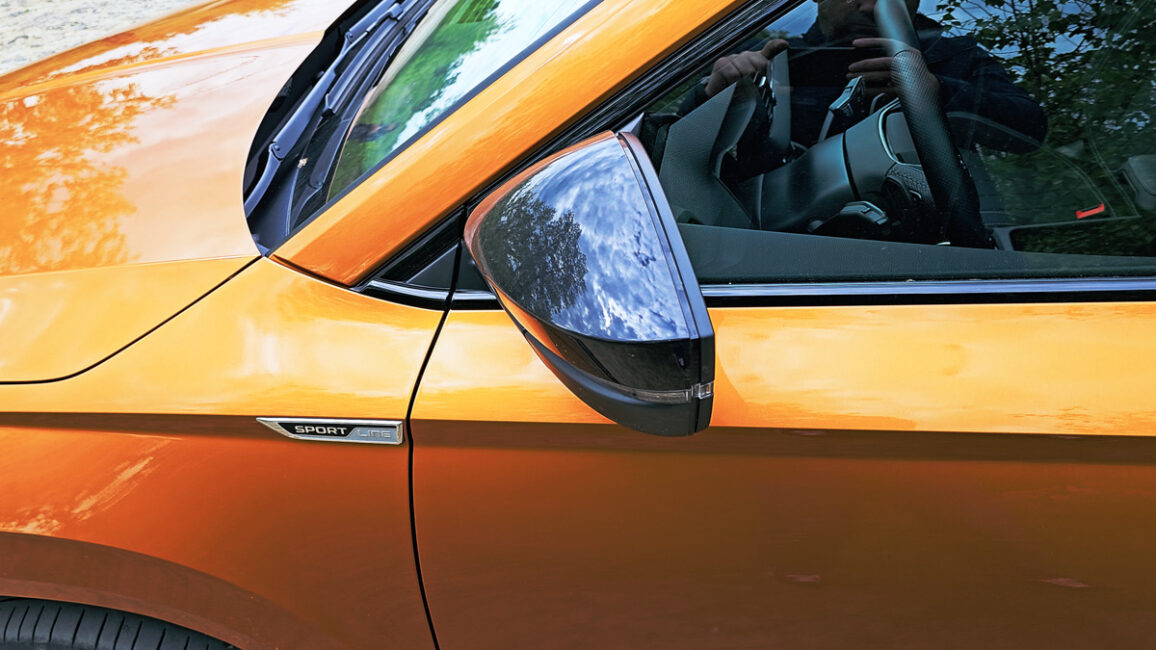
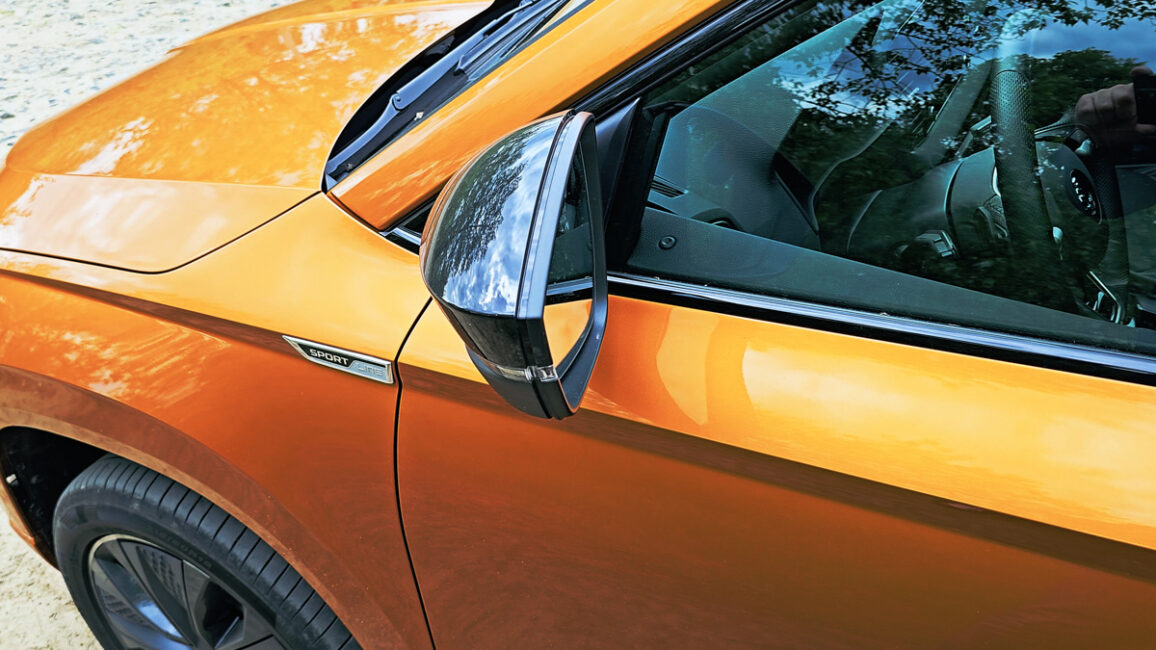
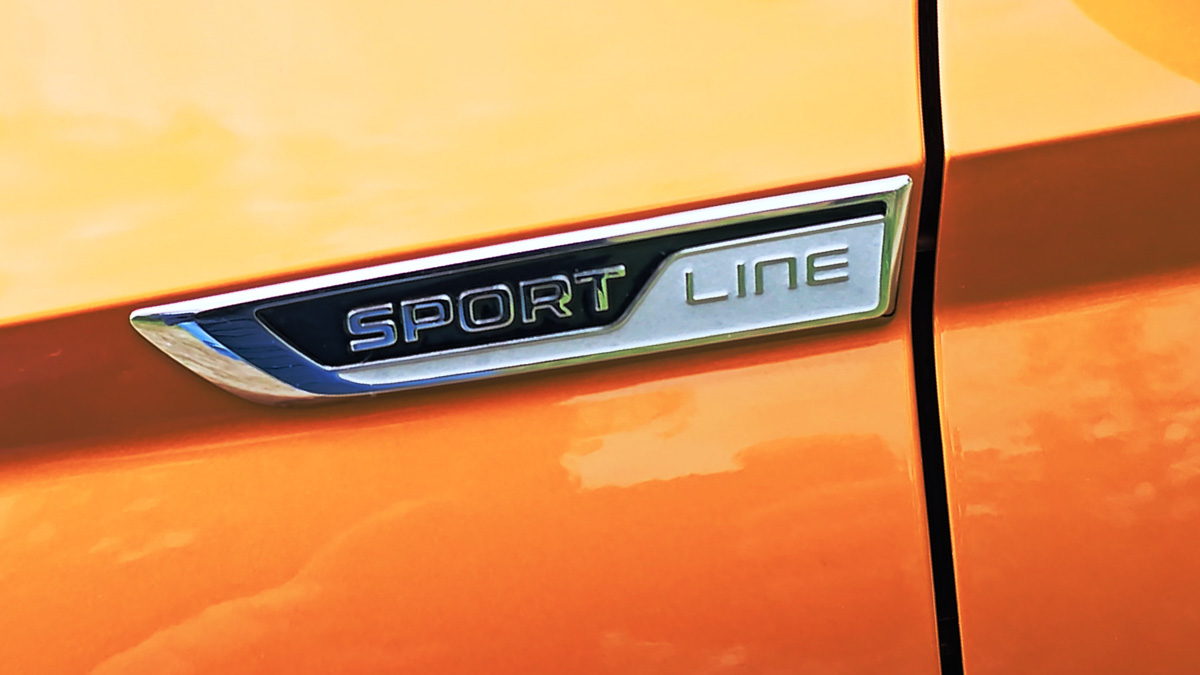
Moving down, just below the A-pillars on both front fenders, there’s a Sportline badge finished in chrome with black and white enamel accents.
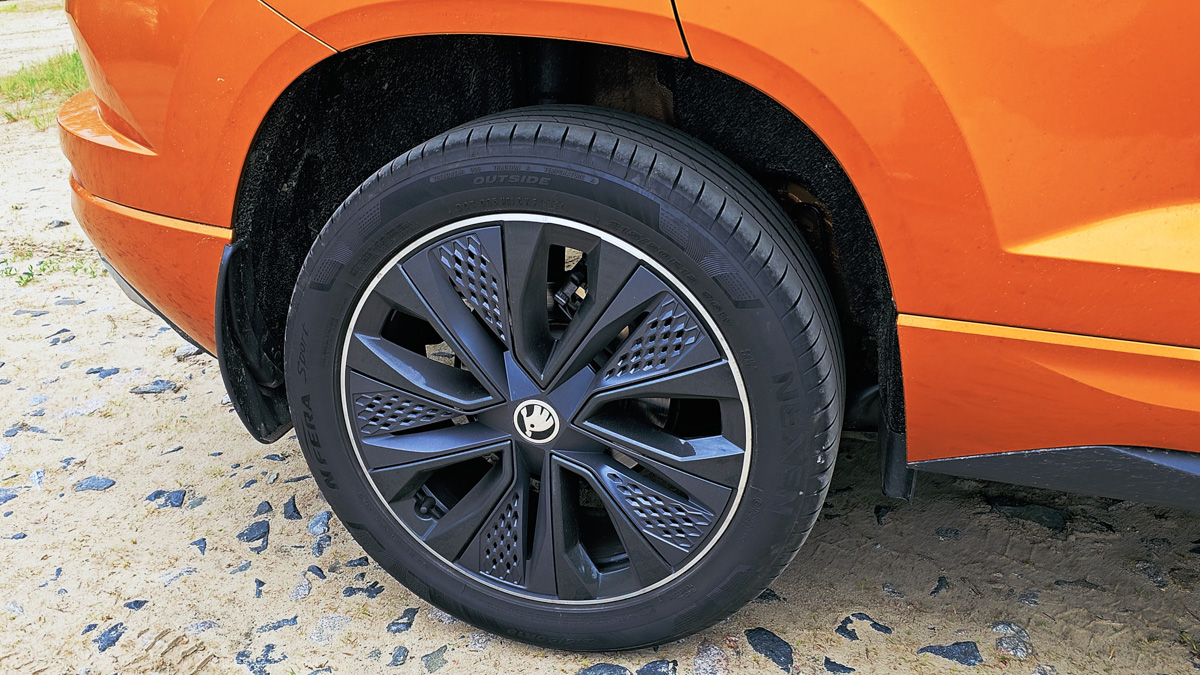
The wheel arches no longer have the black plastic trim around their edges.
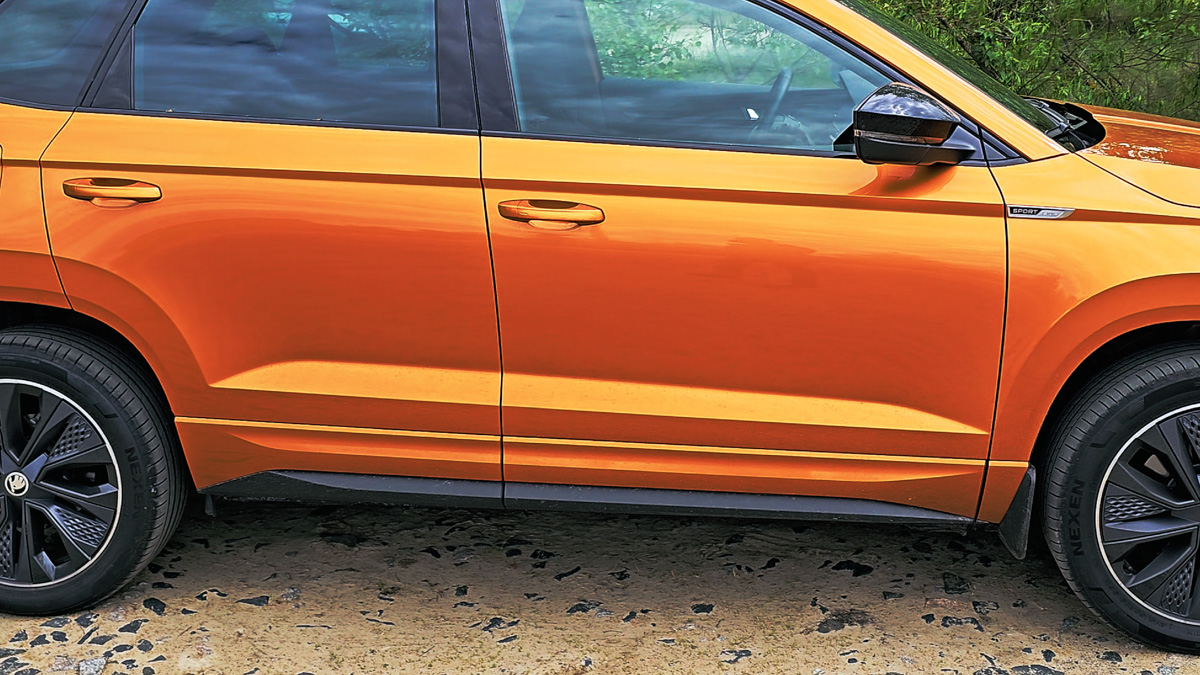
The side skirts, which were previously fully black, are now mostly painted in the body color and feature a small black spoiler along the bottom edge.
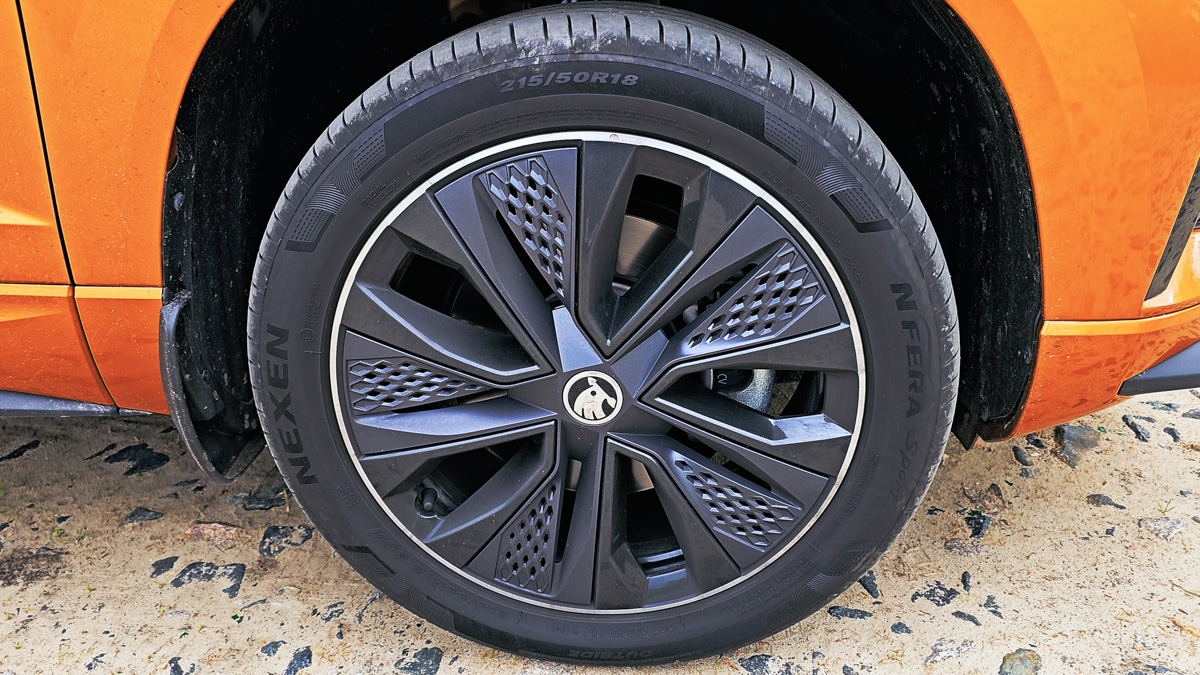
Finally, the 18-inch alloy wheels retain their original shape with aerodynamic plastic covers, but the chrome accents have been replaced with dark gray metallic finishes. There’s also a silver rim around the edge between the wheel and the tire, which helps emphasize the wheel’s size and prevents it from blending into the tire – a subtle but effective detail.
Rear view
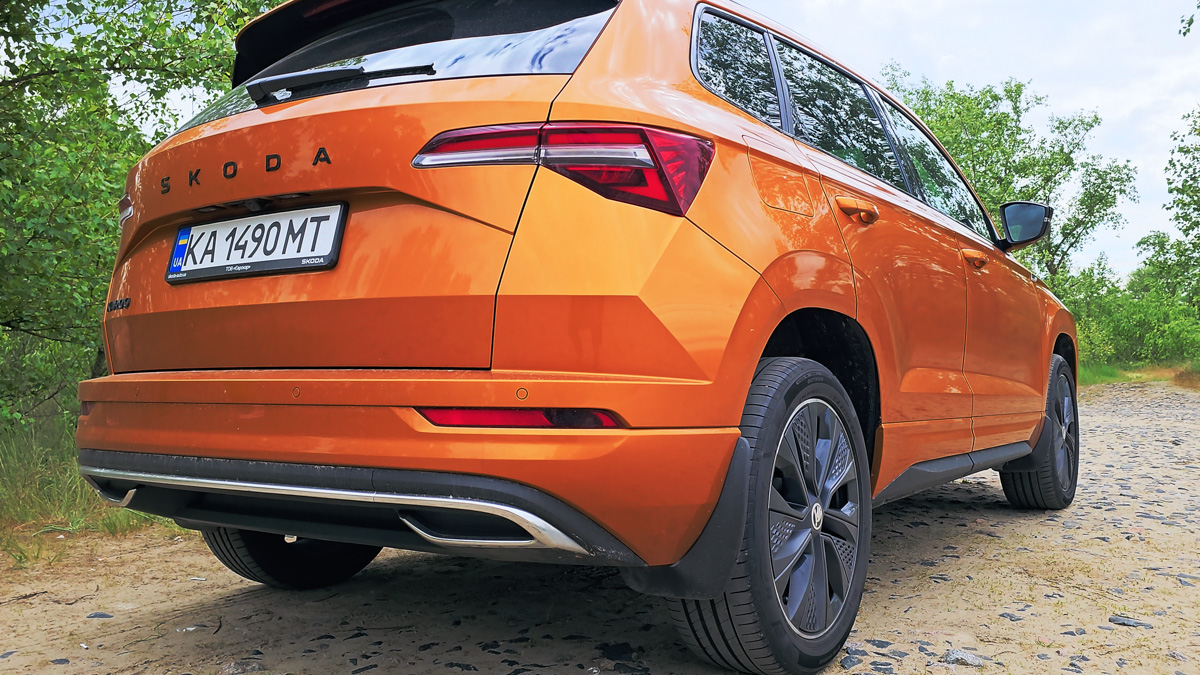
The chrome badges have been replaced with black ones. Additionally, the lower part of the bumper has been redesigned – it used to be entirely matte black but is now painted in the body color. Below that, there’s a thin black strip and a chrome spoiler that extends to frame the exhaust tips on either side. The overall effect is quite striking.
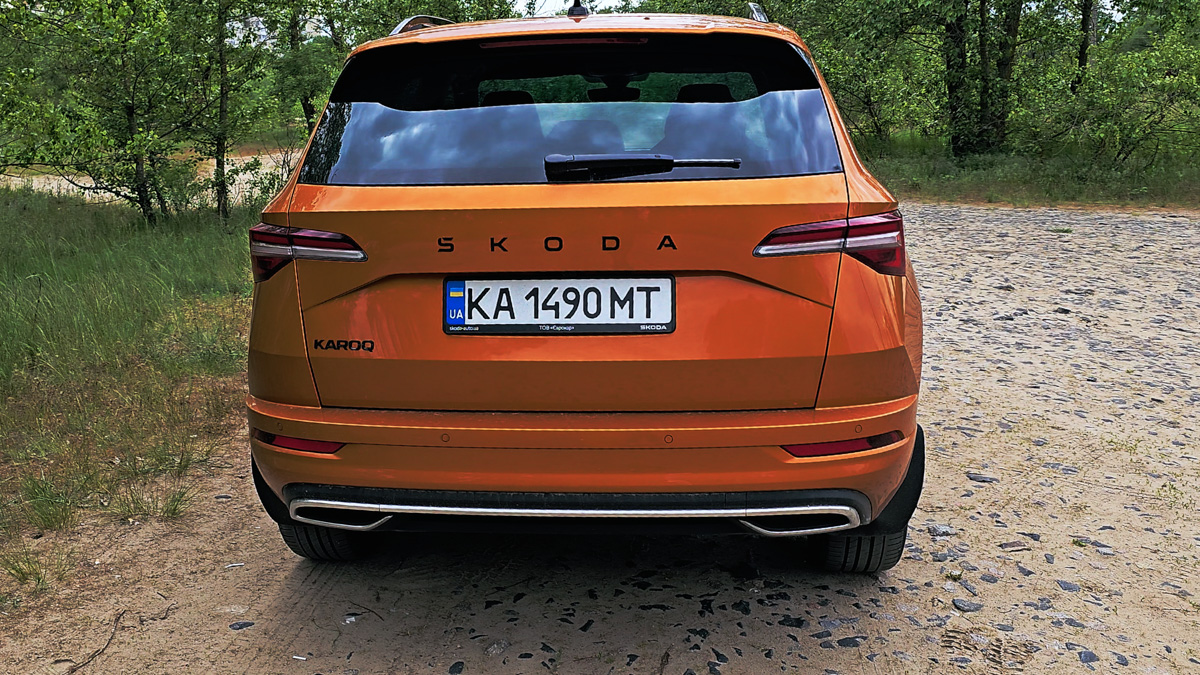
There are no changes in the trunk area. The test vehicle is equipped with a sensor that allows the tailgate to be opened with a foot swipe.
Read also: Škoda Kamiq (2024) Review: Is This Compact SUV Crossover Worth Your Attention?
Interior of Škoda Karoq Sportline (2025)
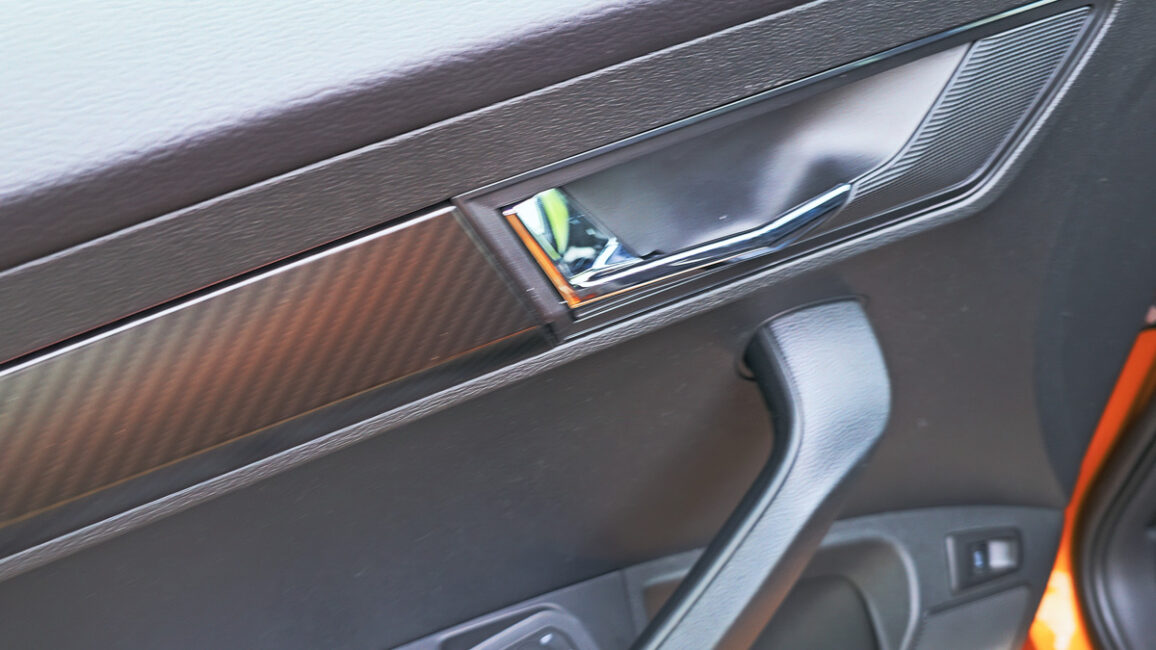
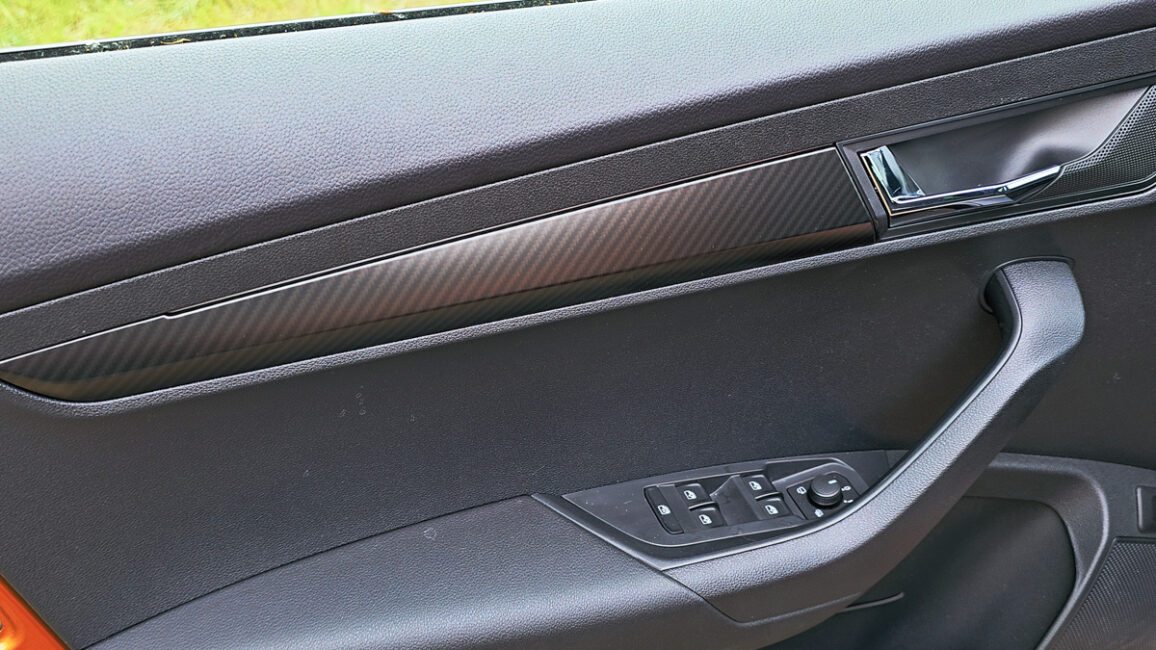
Some changes are also noticeable inside the cabin. First, the door trim has been updated: the upper plastic panel near the handle, which was previously gray plastic with a pattern, now features a carbon fiber-style finish. Above this panel, there’s an ambient light strip. The armrest, which used to be covered in gray synthetic suede, is now wrapped in black eco-leather.
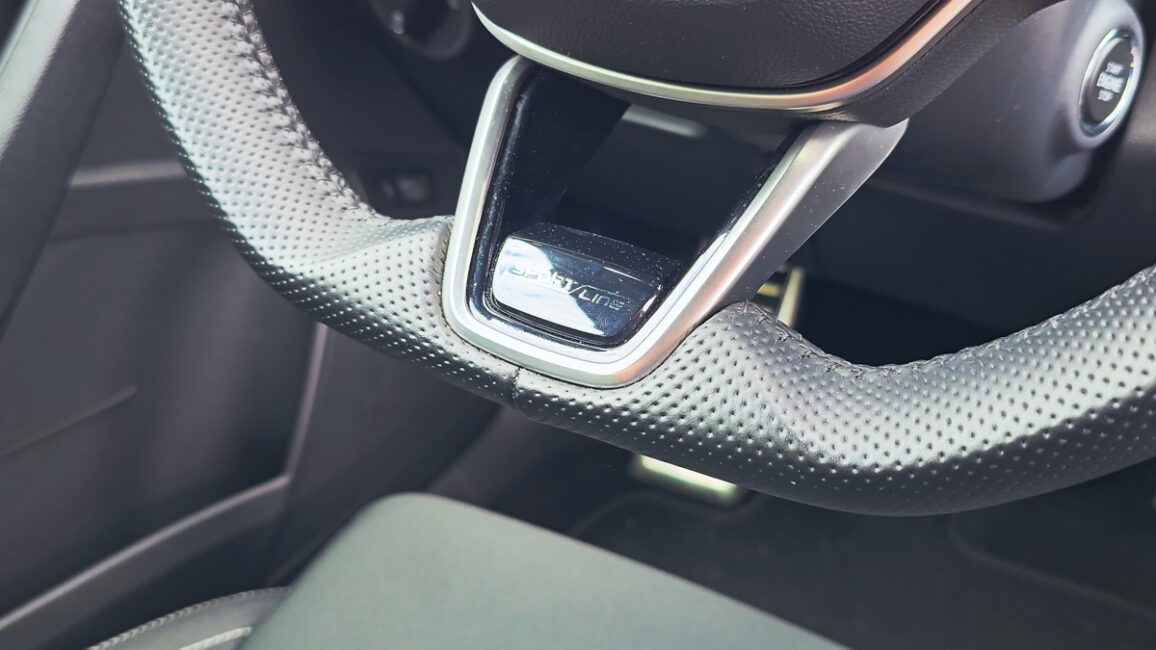
The steering wheel shape has been slightly modified – it used to be a perfect circle, but now features a flat bottom, likely to improve seating ergonomics. Additionally, the previous smooth black leather has been replaced with perforated genuine leather on the new wheel.
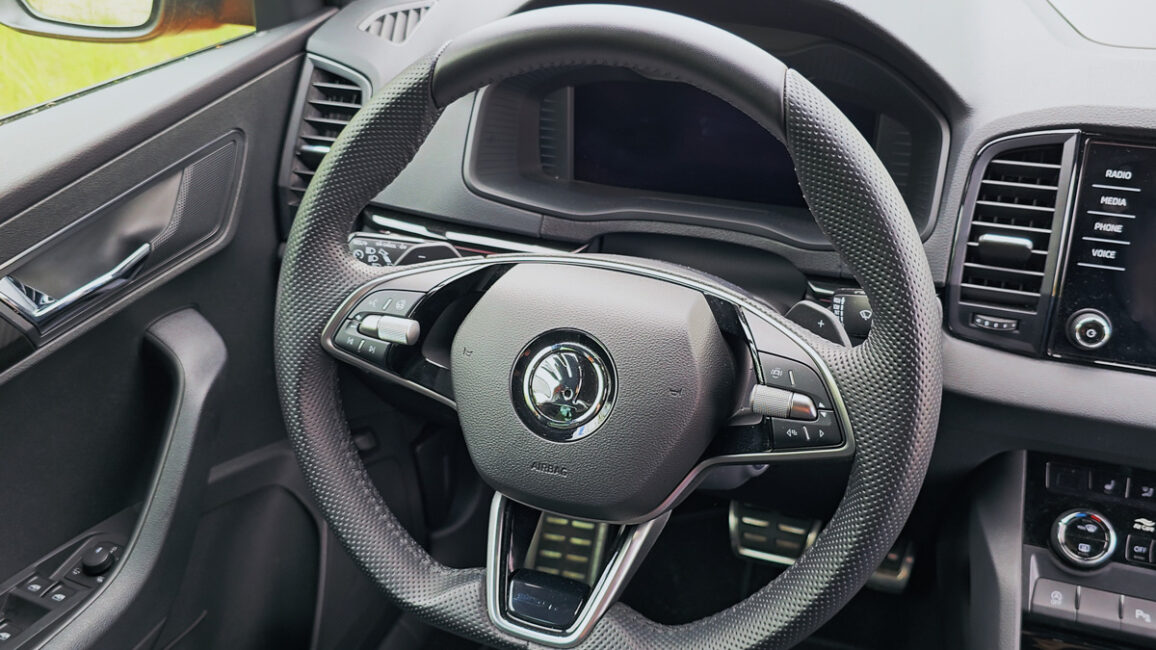
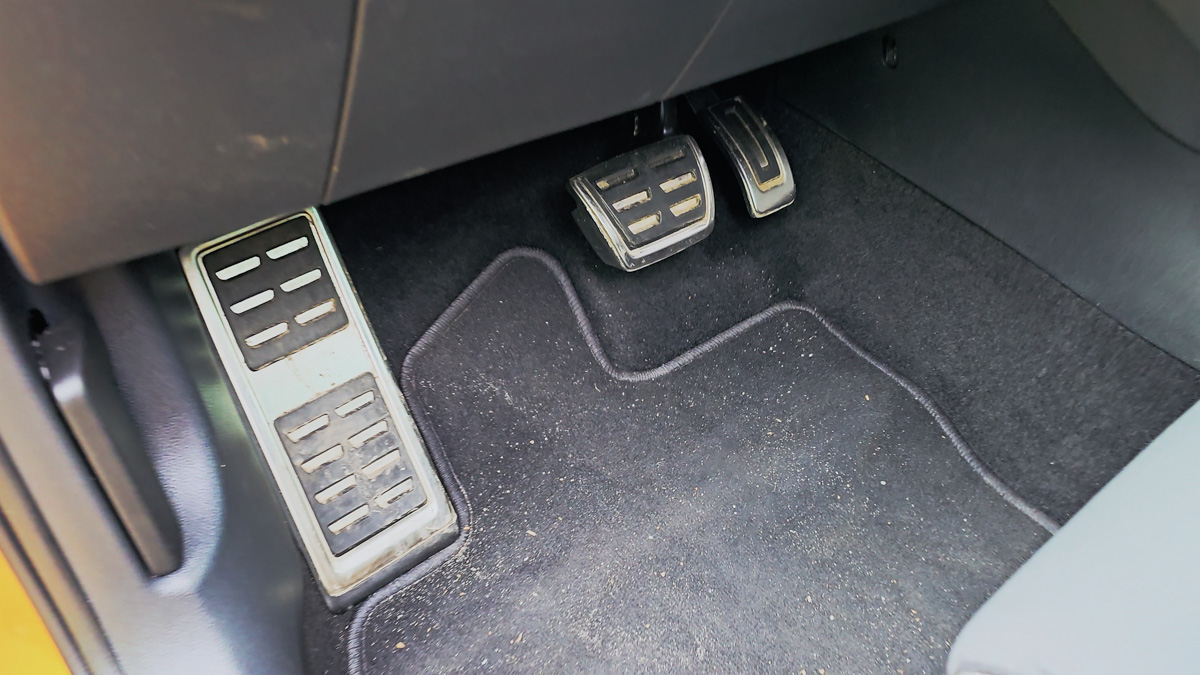
All the pedals and the footrest for the left foot now feature glossy metal covers with black plastic inserts.
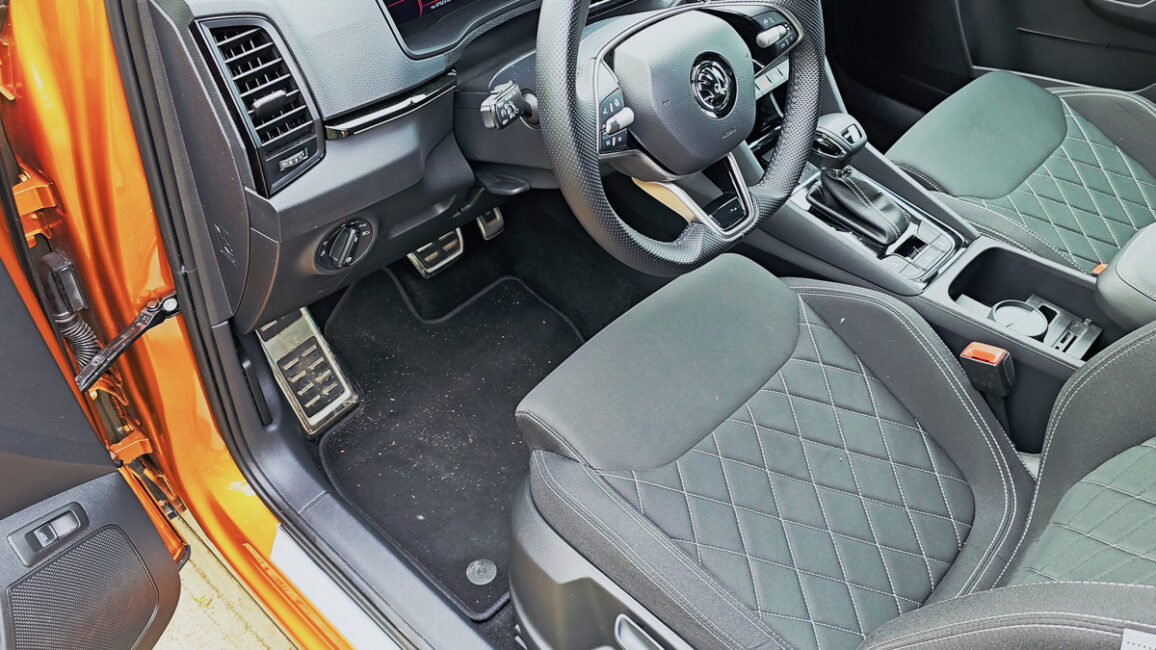
The most noticeable changes inside are the front seats, which now feature a classic sporty design with a new bucket shape. As a result, lateral support has improved. However, the adjustable headrests have been removed. The upholstery material has also changed – moving from a mix of fabric, gray suede, and black eco-leather to a durable black fabric with white stitching. Unfortunately, the base version of the test car lacks electric seat adjustment and memory functions for the front seats, though these can be added as optional features.
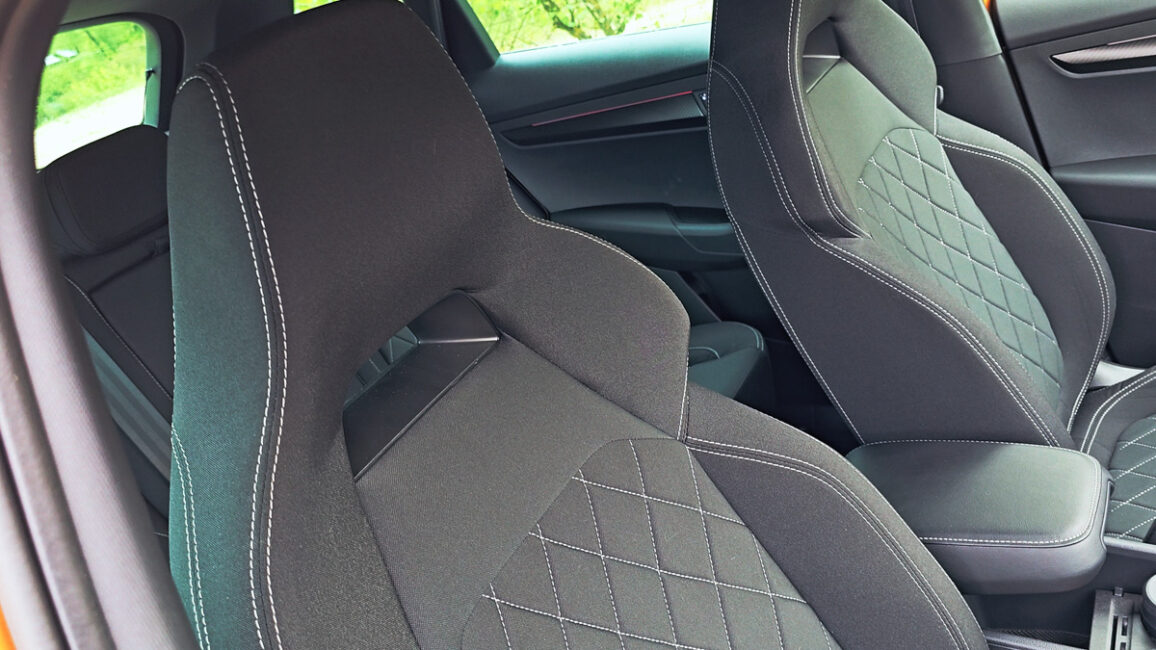
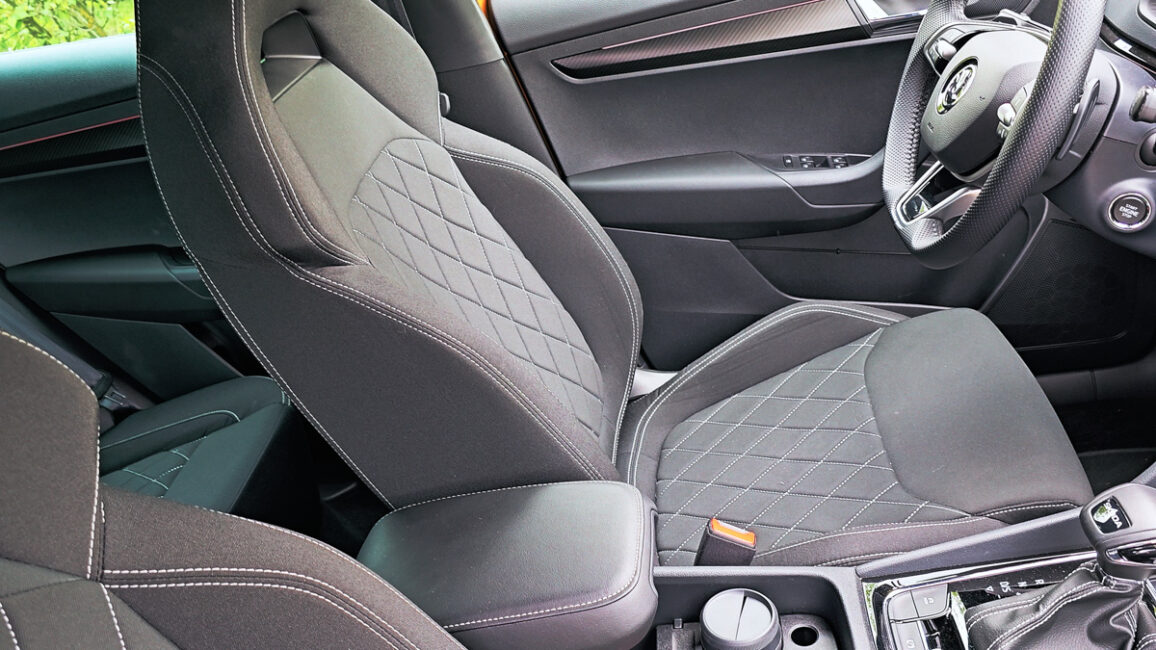
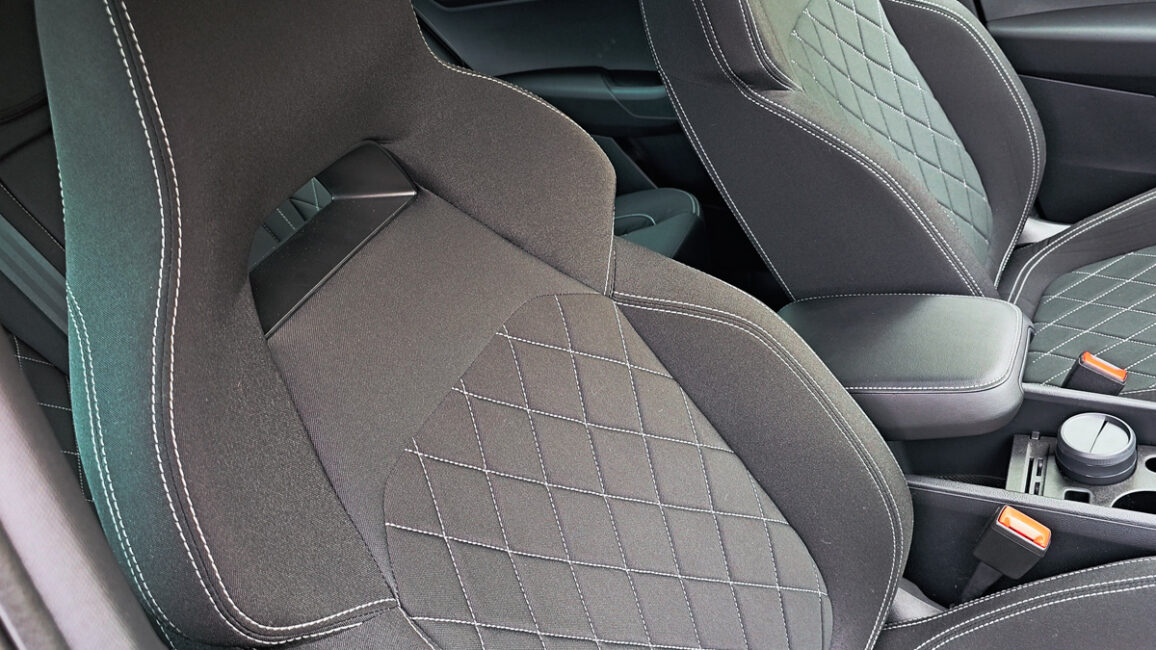
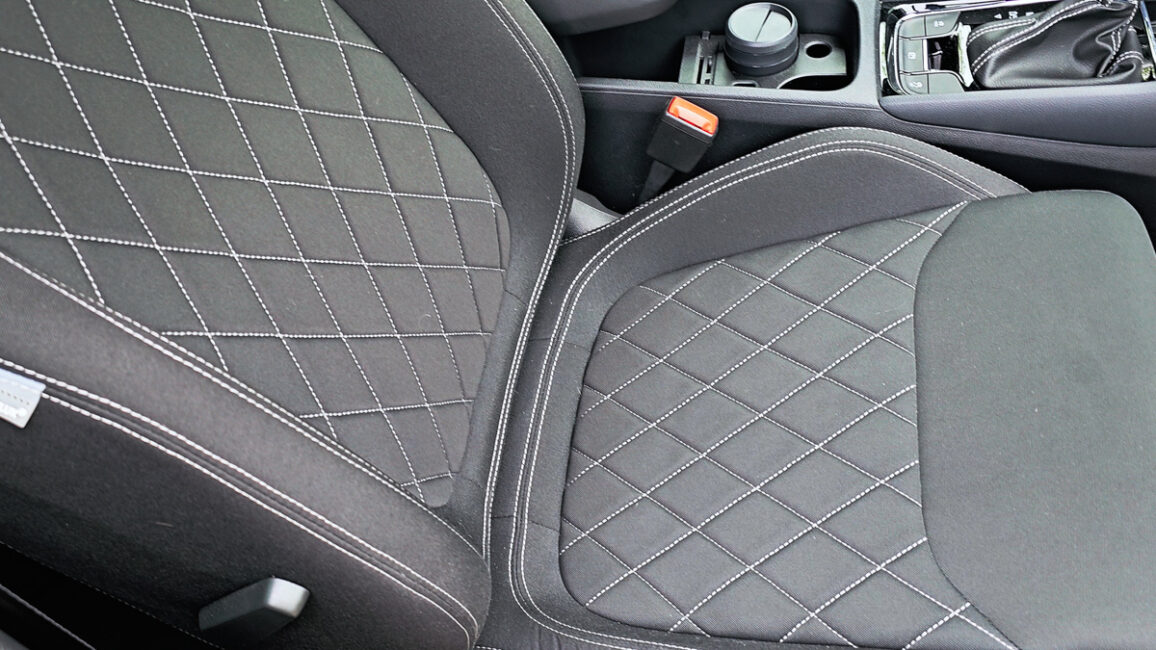
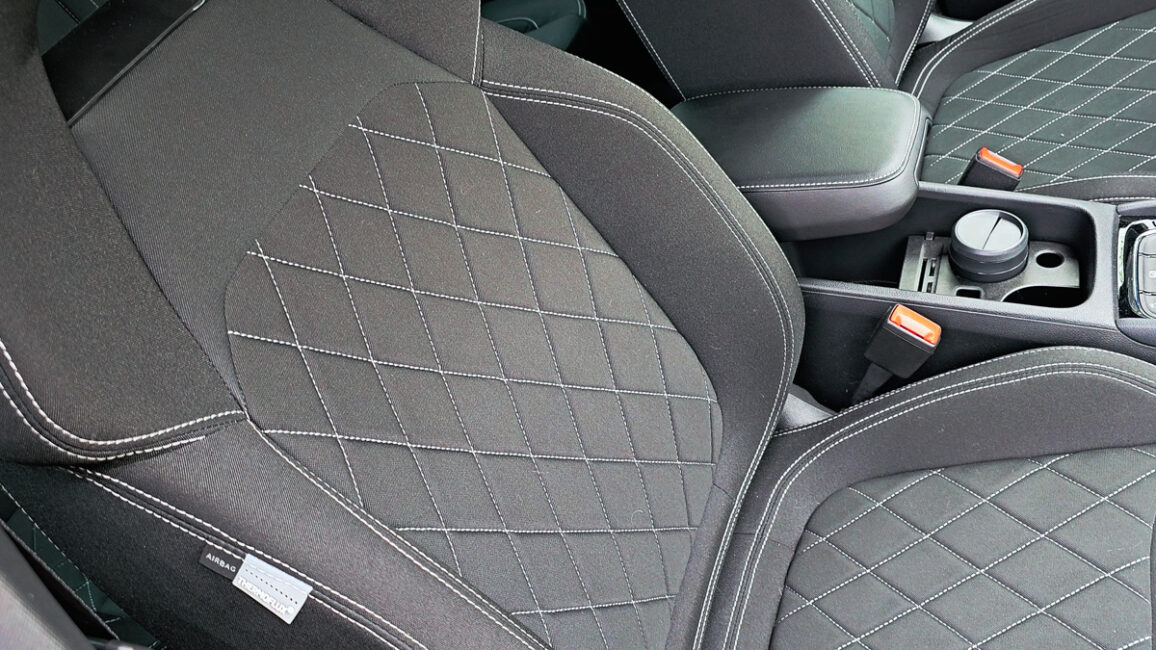
The rear seats remain structurally unchanged but now feature the same upholstery as the front seats. Adjustable headrests are still present, along with a folding center armrest with cupholders that provides direct access to the trunk.
One clearly noticeable update inside the cabin is the black headliner, aligning with current trends for creating a sportier atmosphere in crossover models.
Impressions and conclusions
As you’ve probably gathered, the updates to the Škoda Karoq Sportline are purely visual and don’t affect the car’s core specifications. This approach is quite common among manufacturers. Generally, when a model name includes “Sport,” it often means the engine is tuned for higher performance compared to the standard version, and sometimes the wheels are larger with upgraded suspension.
However, the “Sportline” designation usually refers primarily to sporty styling for the exterior and interior. The Škoda Karoq Sportline fits this pattern perfectly.
The engine remains the same 1.4 TSI, paired with a traditional 8-speed automatic transmission. The car performs quite well in urban settings. When needed, the crossover accelerates briskly from a standstill or during overtaking maneuvers – just don’t hesitate to press the accelerator fully to spool up the turbo if you’re looking for more dynamic performance.
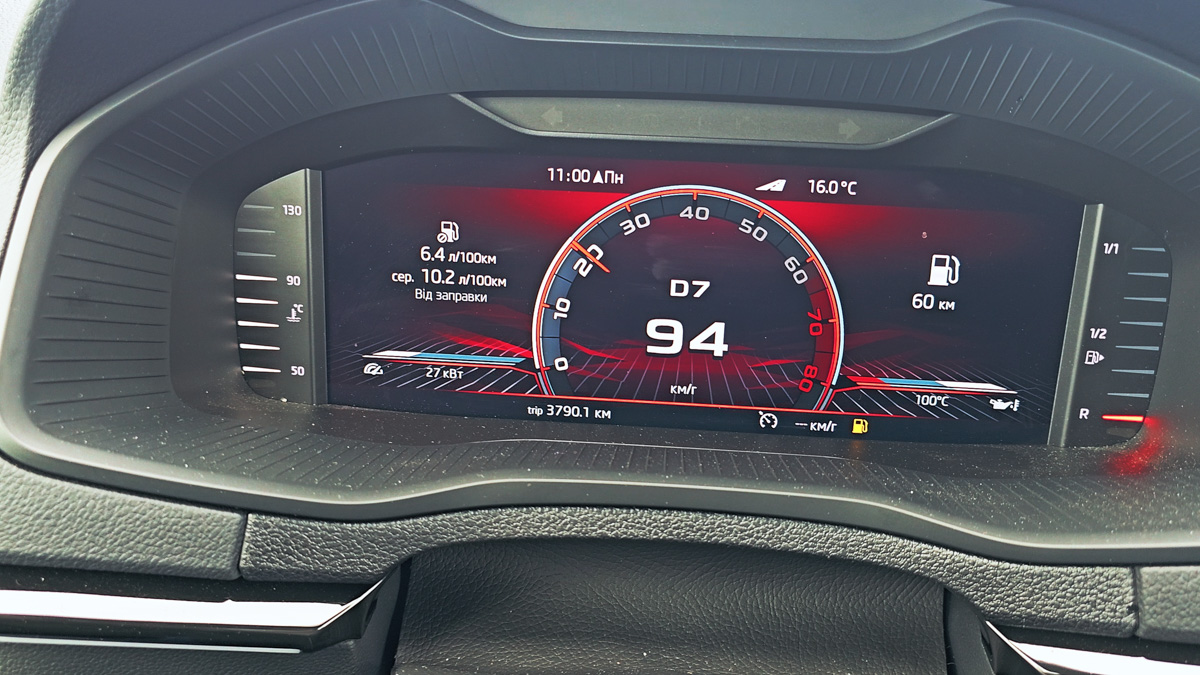
In terms of fuel consumption, the car is relatively economical, averaging between 8 and 10 liters per 100 kilometers in city driving. On the highway, consumption drops to around 6 to 8 liters per 100 kilometers when cruising comfortably at 120 to 140 km/h. While higher speeds are possible, I wouldn’t recommend pushing it – handling becomes less confident, and cabin noise levels increase noticeably.
The suspension and handling remain unchanged, and overall, I have no complaints in this area. Both the classic Karoq and the Sportline version offer handling and stability that are noticeably better than what you’d expect from a typical crossover.
When it comes to comfort and convenience, the car features fully automatic smart LED headlights with cornering cutouts and turn illumination, advanced adaptive cruise control, and well-functioning electronic driver-assistance and safety systems.
Additionally, the car features a fully digital instrument cluster with customizable profiles and an infotainment system equipped with a high-quality display. It supports wireless smartphone connectivity, including Android Auto and Apple CarPlay, and offers a wireless charging pad for phones. There’s also remote access to the vehicle’s systems via the MyŠkoda mobile app, which adds convenience for everyday use. The cabin provides decent sound insulation at speeds up to around 120 km/h. I also noticed what seemed like a slight improvement in the audio system compared to the original model, although that’s not certain.
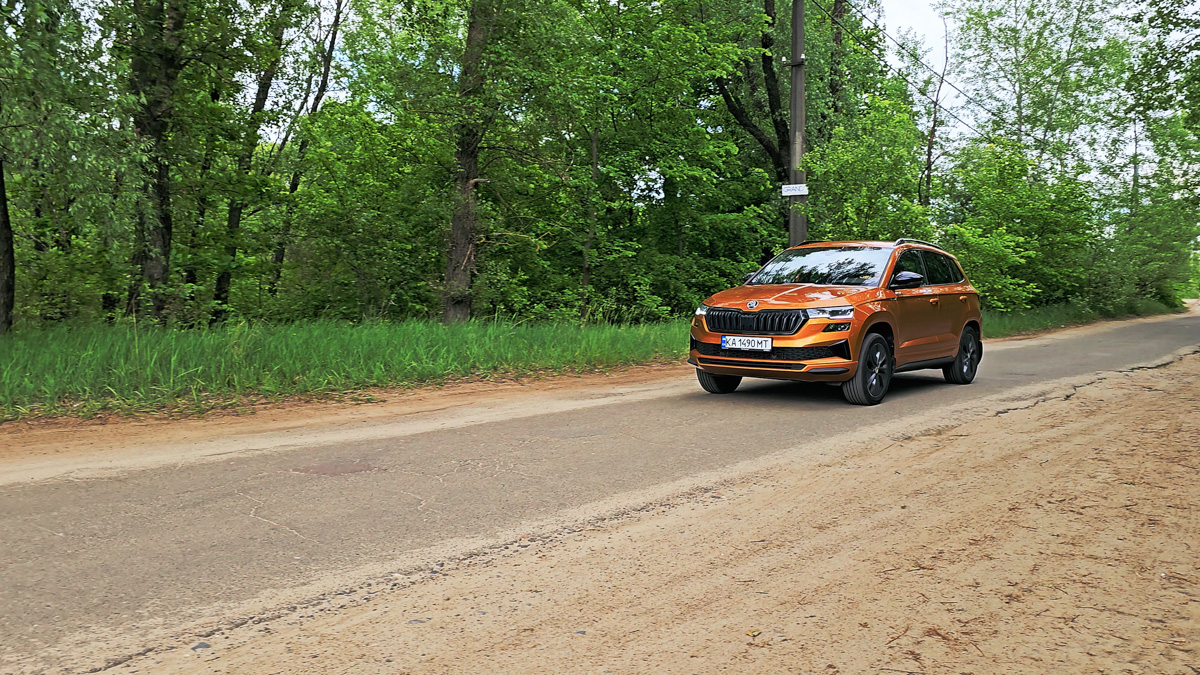
Overall, I found the visual update to the Škoda Karoq Sportline to be appealing. The car’s character feels more aggressive and sporty, and the design has taken on a more modern look. This already well-rounded compact urban crossover has been improved in subtle but meaningful ways, making it worth considering.
Competitors
Read also our reviews of competitive cars in this class:
- Mitsubishi Eclipse Cross Review: True Japanese Car – Modern on Outside, Conservative on Inside
- Mazda CX-30 SPORT BLACK Review – What Can a Compact SUV Do?

.)