





© ROOT-NATION.com - Use of content is permitted with a backlink.
As I zap my enemies with lightning, losing myself in a world of faux New Orleans, I completely forget that this is, in fact, a 14-year-old video game. While its gloomy setting has a distinct blurriness – it is, after all, a 720p picture stretched on a modern 4K TV – I barely notice it. I lose myself in the spectacle of it all. More than a decade after superheroes became omnipresent on screens big and small, inFAMOUS 2 still feels fresh, both gameplay-wise and – perhaps even more so – stylistically.
While the first game embraced the comic book aesthetic, the sequel turned out to be more cinematic, but not painfully so – it’s not polished so much that its shine hurts the eyes, like in the case of Insomniac’s Spider-Man, and its world is more about the atmosphere than sheer scale. Deep inside, it’s still a simple enough game about superpowers, but it’s also a product of its time in the best possible way: rough around the edges, with some unconventional decisions (when is the last time you saw blatant product placement in a story-based AAA title?) but brimming with enthusiasm. Technically impressive, but also artistically expressive.

Sucker Punch as a studio has always cared about style: Sly Cooper’s cel-shaded animation with a strong film noir vibe; inFAMOUS’s dark urban realism; or Ghost of Tsushima’s samurai film minimalism – there’s always a visual hook, so to speak. And for me, in the case of inFAMOUS 2 – possibly my favourite game of theirs – that hook is not only visual, but auditory.
The studio’s commitment to distinctive soundtracks started with the first game, which had electronic genius Amon Tobin among its leading composers, and continued here. While looking for a unique musical landscape that would fit the world of New Orleans – arguably an underrepresented setting in this medium – game’s music manager Jonathan Mayer came up with an unconventional idea: why not hire a New Orleans band called Galactic, known for their ability to blend funk, jazz, hip-hop, and soul. They had never worked on a video game before (or since), but they found the challenge impossible to resist.
Galactic’s funky beats would follow the player everywhere they went in the game; the artists’ spontaneous improvisations would adapt to whatever happened on the screen. It wasn’t overwhelming, but it helped bring the city alive. When I talked to Robert Mercurio, a bassist and producer at Galactic, he told me that he always felt it was hard to “capture” New Orleans, but also that he felt like they did a great job with the vibe in the game.
Galactic were not alone in their endeavor: on the other side of the cultural spectrum, they were joined by a familiar face: Jim Dooley, who had already worked on the previous game. Unlike the band, his style is more academic in nature. When traversing the city’s underbelly, Cole, the protagonist, would always be followed by jazz and funk, but when it was time for a story to move forward, Jonathan Mayer needed someone with a Hollywood-esque bravura. Someone who would, for lack of a better word, make it epic.

Jim did not disappoint: a former assistant to Hans Zimmer, known to video game aficionados for his work on SOCOM 3 U.S. Navy SEALs and Jak and Daxter: The Lost Frontier, he brought his own style of brooding, anxiety-inducing sound that fit the game’s dark themes perfectly. As I said to him, his themes for Cole and Lucy Kuo remain some of the strongest and most memorable in all of PlayStation’s library, even if they are somewhat forgotten by Sony itself.
Next year marks the 15th anniversary of inFAMOUS 2. While the fans still wait for a remake or at least a remaster, the game remains trapped on the PlayStation 3 – a console that still has the best spot under my TV in many ways due to Cole MacGrath and his merry gang of misfits.
It’s been a long time, so I figured it’s time to have a chat with some of the composers for the game. Here’s what they had to say.
TABLE OF CONTENTS:
Jim Dooley: “It can be a truly joyous and challenging experience”
JD: Yes, as a result of my work on SOCOM 3: US Navy SEALs I got to know the audio team very well. They are/were a great bunch of professionals that really put the quality of the music at the center of everything. They are/were experts at what they do and it allowed me to do my best work. I was thrilled to come on for inFAMOUS and continue to work with them. It was such a collaborative effort which is still rare to this day. We had many musical voices in both inFAMOUS and inFAMOUS 2. Without the SONY music teams efforts, that would not be possible.
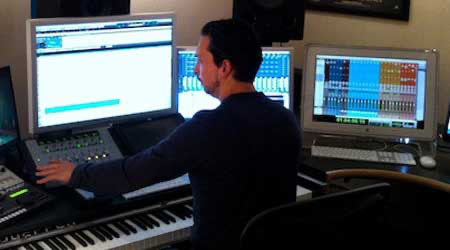
JD: SONY was looking for someone from the film/TV world for SOCOM 3 and so I wrote a demo for it which got me the gig. They wanted a cinematic sound, which is very common these days, but maybe wasn’t as much back then. We recorded it in London and it still sounds amazing to me. It was a mountain of music to write and I’m very proud of the result to this day.
I enjoy the interactive part of the games more now than back then. The technology allows for better versions of this than the PS2 did back in the day (with streams from the disk determining music allowances.) Interactive music has developed a lot more since then.
JD: I haven’t seen the movie. There is good and bad in both ‘high art’ and in ‘game music.’ Composers are not always hired based on merit. I love a great game score and a great symphony. There is room in the world for all of it. I do hope that composers do their best in everything they do. I believe in Jim Henson’s point of view, to leave the world a little better off than you found it.
JD: I do not keep up to date with game music. I study music daily, but mostly classical repertoire. I hope this helps me when I do my next game score… that it won’t be influenced by what is currently going on or trending.
JD: I’m usually given complete access to the story, visuals, and gameplay. We have to support the narrative and knowing what that is is of paramount importance to my job. I love thinking about a score before I write a note. What is the story? How can I serve it? How can I entertain the audience? I love to create new sounds for each game so that they don’t sound alike. It can be a truly joyous and challenging experience that takes a great amount of effort.
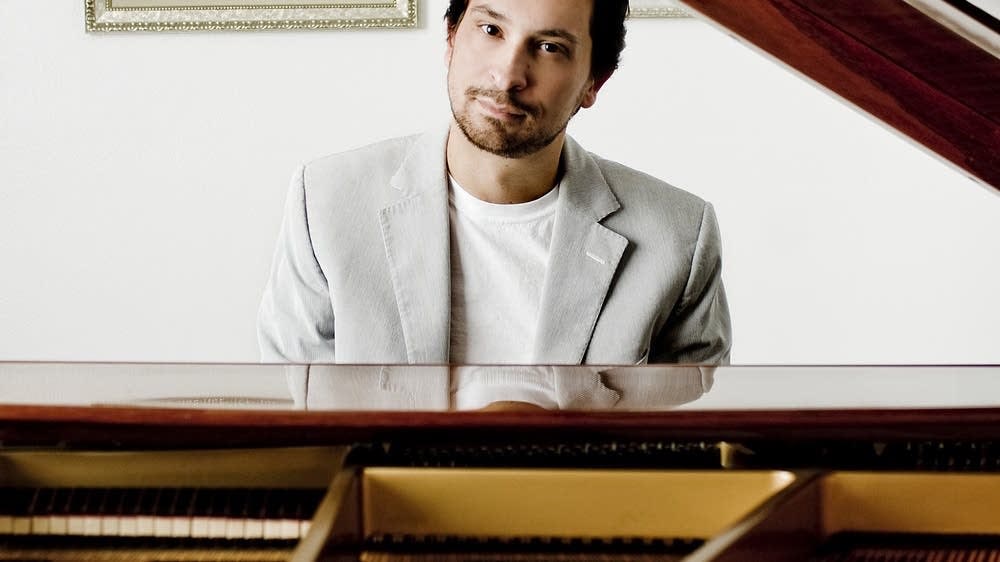
JD: Yes, my contribution to the inFAMOUS 1 and 2 games was more of the “orchestral” composer. Working with the other composers like Amon Tobin and JD Mayer and the band GALACTIC was an effort to create something more than the sum of our parts. We all approach music in a different way. The result is the sound of the scores.
JD: For inFAMOUS 1 and inFAMOUS 2 it was more about creating unique sonic elements than research. We spent a lot of time coming up with new approaches unique to the game. For example, the Doppler effect that you experience when someone honks a car horn and drives past you (the pitch of the sound goes down) was something that reminded me of living in a city. So we created orchestral versions of this effect to bring the real world into the score world. Lots of things like that.
JD: I’m sorry but I really don’t remember much about creating different versions of tracks for each path.
JD: Sometimes people want to try a new direction in a score. That happens quite often. I wasn’t asked to work on the next game but it doesn’t bother me. That’s show business.
JD: Well, we had COVID, a writer’s strike, an actor’s strike, and my home burned down in the Palisades Fire. I think I’m doing as much as I can considering the climate of the last 5 years.
JD: I really hope the TV show Pushing Daisies comes back. That was a great project that ended far too early.
Galactic: “It was one of the most enjoyable projects of my career”
DK: When you first got the call to contribute music for inFAMOUS 2, what went through your mind? Excitement? Curiosity? Or maybe even hesitation? Since then, we don’t see Galactic’s name pop up in other games. Was that by choice, or was it just a matter of the opportunity never coming up again?
Robert Mercurio: We were very very excited when we got the call. We would love to do more work in other games, but nothing has come our way (yet).
Ben Ellman: We were super excited. It was our first experience working on a game. We would love to do more! It was an opportunity to think in a cinematic sense and not a standard song structure, and coming up with themes for the characters that would reoccur in various mutations.

DK: I loved inFAMOUS 2. When you first heard your music in that game, did you think, ‘Oh yeah, that totally fits’… or were you like, ‘Wait, that’s us?’
RM: Yeah, we thought it totally fit. We worked closely with the PlayStation producers so we knew what they were looking for. The game took place in New Orleans, so it made sense to us what they were looking for.
BE: Since it was very percussive heavy with horns, it made sense.
DK:When you think about inFAMOUS 2’s fictional New Orleans, was there anything it actually nailed about the spirit of the city? Do you think it’s not represented in games and movies enough?
RM: I felt like it is always hard to “capture” New Orleans, but I feel like they did a great job with the architecture and vibe in the game.
BE: They definitely nailed the overall vibe and the architecture and the general landscape of the city. Usually New Orleans is represented in a cliche way, but since the game is fantasy… it opened it up to make the city a character in the game.
DK:Do you personally still play games or follow the industry at all? Has that passion stayed with you, or has music always taken all your energy? When you look back, was working on inFAMOUS 2 worth it? Did it feel like a project that mattered?
RM: I’m not personally a big gamer and music has always taken my energy, but I very much feel like working on inFAMOUS 2 was worth it and we had really hoped that it would lead to more work in that field.
BE: I don’t get to play games much these days, but looking back on inFAMOUS 2 and the process, it was one of the most enjoyable projects of my career. We got to visit Lucas Ranch and listen to a massive orchestra record and play pieces we had written. It was truly an incredible experience!
DK:Do you ever think about how some kid might’ve discovered Galactic for the very first time through inFAMOUS 2 (like I did at one point! – I even have the CD) – like they might not even know New Orleans funk otherwise? Did fans come up to you saying, ‘Hey, I found you through inFAMOUS 2’? How wild is it to imagine a teenager’s first Galactic experience happening in a superhero game?
RM: We have met a small few that found us through playing that game. More times I would meet people who would mention the game and I was let them know that we had worked on the music and they then put it together and found it cool.
BE: I really didn’t know that people listened to game soundtracks! I’m very proud of the work we did with the amazing team at Sony. It’s very different from our bands records, but still connected.
DK:Do you think inFAMOUS 2 left a mark on your career in any way, or was it just a cool side note in Galactic history?
RM: The experience is one that I will never forget. Just today, I was talking with some musicians about going to Skywalker Ranch to record the string parts with the San Francisco Orchestra and how that felt like a once in a lifetime chance.
BE: It’s difficult to say for sure. The fact that you’re asking about it now suggests that it had some significance! It certainly opened our minds to the possibility of scoring for movies. We are always open to such opportunities now.
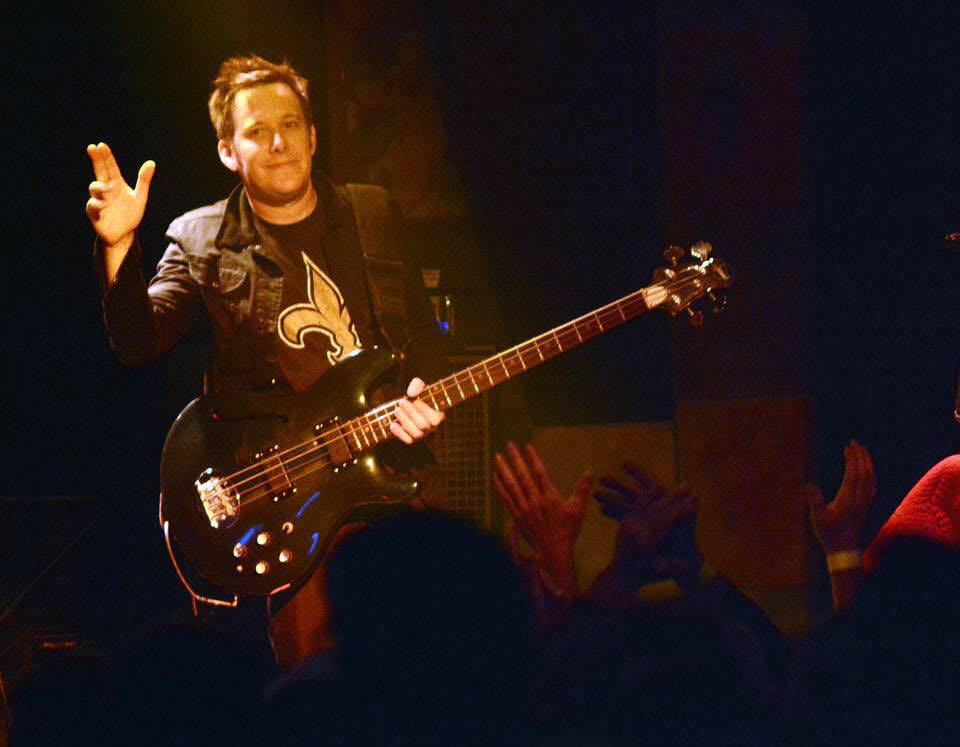
DK:Your live sets thrive on unpredictable improvisation. How do you translate that looseness into a game score that can’t know what a player will do next?
RM: A lot of the music was created through improvisation that we would edit and find the most fitting parts.
BE: We had themes for each character, and each theme had variations for action and suspense. That gave us the framework for dynamics and emotion.
DK:I’ve been covering games for a long time, and one thing I’ve noticed is that game music used to be instantly memorable – hooks you’d hum for decades. Now, a lot of scores just wash over you. Do you think the shift to ‘cinematic’ has made game music less distinctive?
RM: I agree that I think they are moving more into typical score instead of unique sounds. I’m super happy to hear that our score has left memorable hooks!
DK:What’s your favorite video game of all time – even if you’re not a hardcore gamer? What’s the last game you played – on tour, at home, anywhere – and did you actually finish it?
RM: I’m a bit older so a game that I was really into in my youth was called Wizardry and yes, I did finish it!
BE: I love first person shooters, so it was probably some version of Call Of Duty. Writing all this makes me want to get back into it!
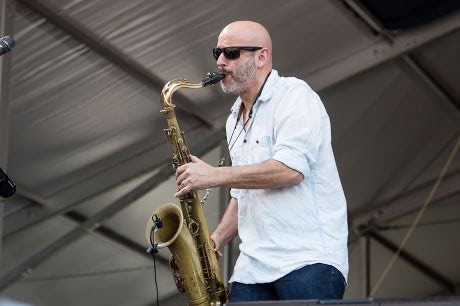
DK:Last question: Did you yourself play (and finish) inFAMOUS 2?
RM: I didn’t play the game, but I watched a lot of Ben Ellman (our sax player and co-producer) play it on tour. It was fascinating to watch.
BE: Absolutely. I played the entire game in the back of the bus with the volume turned up to the max!
One amusing side note: I thoroughly enjoyed killing the street busker character, who was playing solo harmonica (that was me).

