





© ROOT-NATION.com - Use of content is permitted with a backlink.
Steam Machines have recently found themselves back in the spotlight. Some already see them as the “console killer” and the future of home gaming. I remain unconvinced and continue to view the project as one that is ultimately destined to fail.
Why? Because history has shown time and again that a compelling concept on stage does not necessarily translate into a successful product. It is easy to present impressive charts, promise a revolution, and proclaim the beginning of a new era in gaming. The more important question, however, is much simpler: why would the average gamer actually need it?
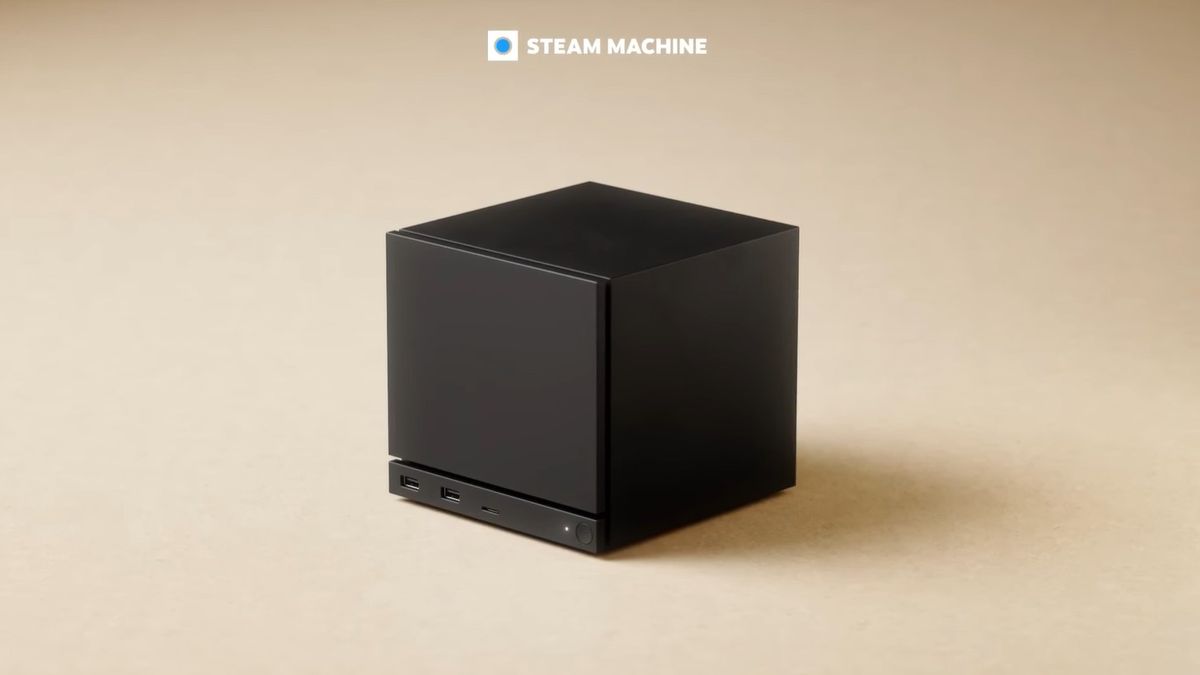
Valve did what it arguably does best – it waited nearly eight years, let the silence serve as its apology, and released a sequel to its own unsuccessful experiment. The new Steam Machine, unveiled in November 2025 and released on June 29, 2026, was meant to demonstrate that the company had learned from its first attempt. Instead of relying on a fragmented ecosystem of hardware from multiple vendors, Valve opted for a single device, a single hardware specification, and a single manufacturer. On paper, it looked like the perfect comeback story. In practice, however, a product does not have to repeat the mistakes of its predecessor to fail – it may simply arrive at the wrong moment.
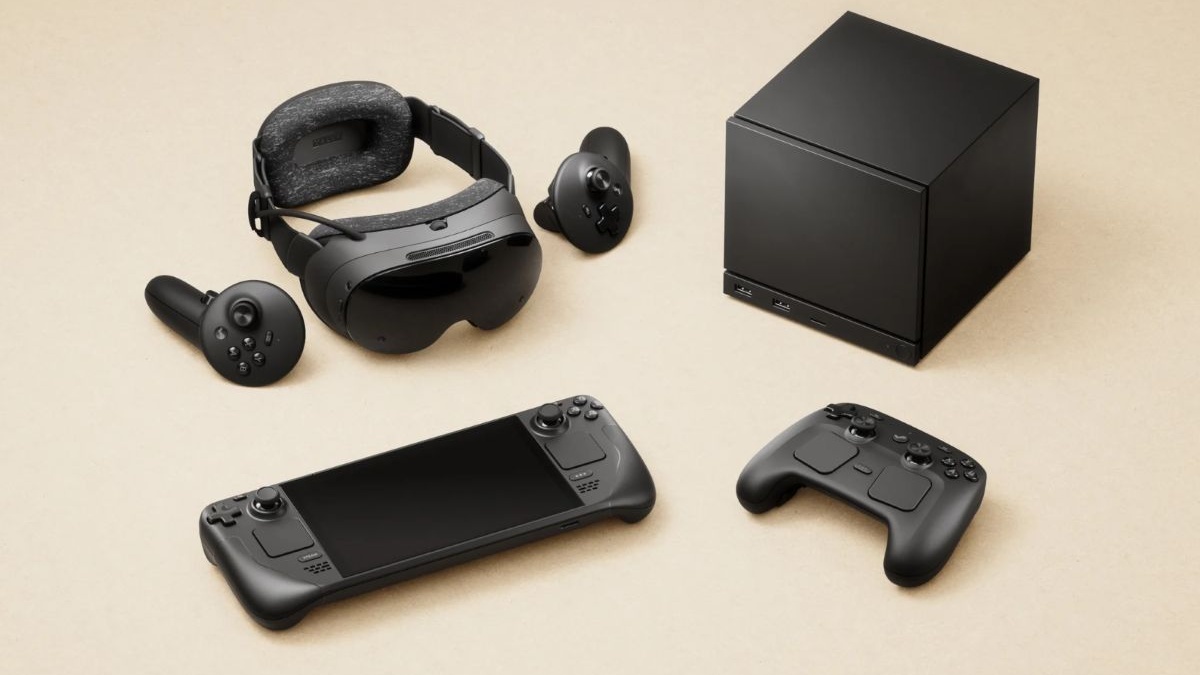
Will people really rush to replace their familiar consoles and gaming PCs with yet another “revolutionary” box under the TV? Or is this simply another case of marketers inventing the future while users choose to stay in the present? Read on. It is about to get interesting – and perhaps a little uncomfortable for Valve fans.
Read also: Next-Generation Console Wars: Current Insights
TABLE OF CONTENTS:
Price as the Main Character
The first – and by far the loudest – talking point surrounding the new Steam Machine was not its performance, design, or even SteamOS. It was the price. The base model with 512 GB of storage starts at $1,049, while the 2 TB version is priced at $1,349. For a device that Valve positions as a way to bring PC gaming into the living room for the mainstream audience, that is a rather expensive ticket to mass adoption.
Reviewers were quick to do the math, and the comparison was not particularly favorable for Valve. Steam Machines turned out to be more expensive than the PS5 Pro, which retails for roughly $900.
The higher price is not the result of Valve’s pricing strategy, but rather a consequence of the global memory shortage driven by the rapidly growing demand from the AI industry. The company openly acknowledged that its original pricing targets were no longer realistic. During the 2026 Game Developers Conference (GDC), Valve even joked about the situation, suggesting that it, too, would have to compete for memory on the open market – a remark that was met with a rather lukewarm response from parts of the community.
Read also: Passkeys Instead of Passwords: Is the World Ready for a New Authentication System?
Performance That Is Embarrassed to Ask for This Much Money
The biggest issue with the new Steam Machine is not that it is a bad product – it is that it offers mid-range performance at a premium price point. In most technical aspects, the device is slightly weaker than the base PS5, while costing more than twice as much. According to reviewers, this gap is the core contradiction facing any potential buyer.
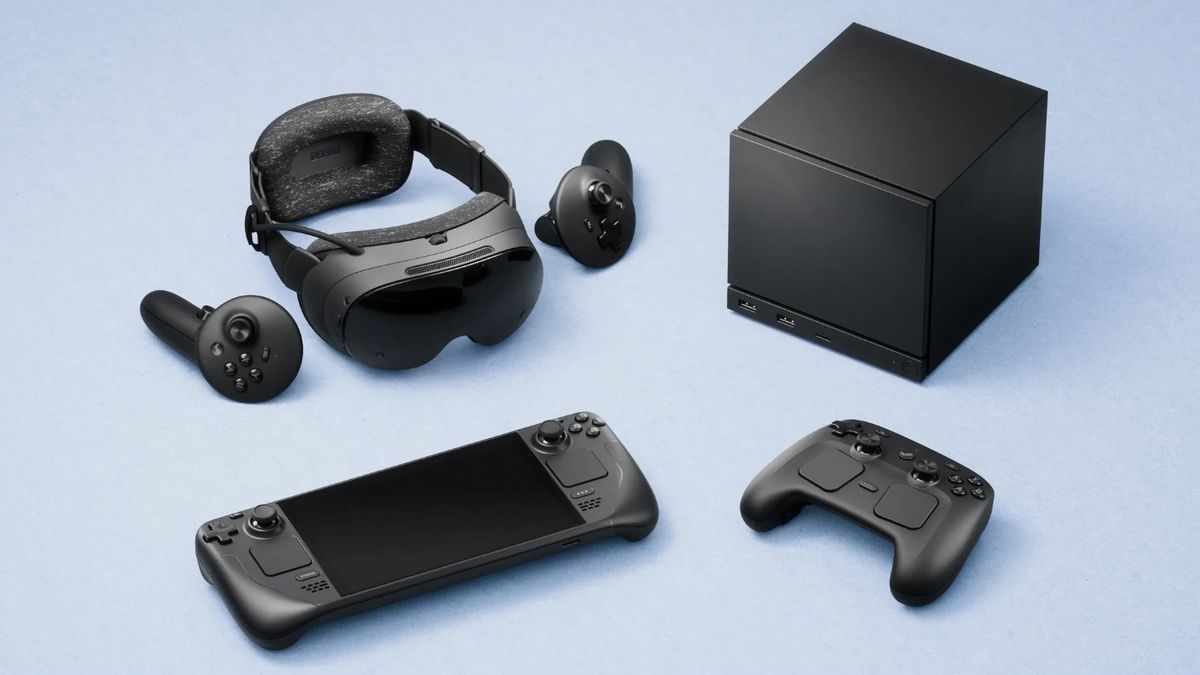
One review put it even more bluntly: the Steam Machine simply does not justify the price Valve is asking for it, adding that the concept itself would have been excellent – five years ago.
Read also: Anthropic Peers Inside AI: What Really Lies Within Claude’s J-Space
Games That Simply Refuse to Run
If the first Steam Machine suffered from limited Linux compatibility due to the lack of Proton, the second one inherited the problem in a slightly different form. A number of the most popular online games with their own anti-cheat systems – including Fortnite – still do not run on SteamOS because of anti-cheat restrictions. Spending more than a thousand dollars on a device that cannot run one of the most played games in the world is, according to reviewers, not a minor footnote but a fundamental issue.
Delays as a Signature Feature
Even before release, the project had already accumulated many of the typical signs of a troubled launch. First came vague timelines, then the shift from “early 2026” to “the first half of the year,” and finally the explanation involving component shortages. One reviewer, amid the confusion surrounding the release schedule, pointed out that Valve insisted on not calling it a delay – even though, in practice, that was exactly what it was. After all, “the first half of 2026” effectively means the middle of the year rather than “early” in the year, as the company had originally suggested.
Sold Out in Minutes – So What?
Yes, the initial batches sold out almost instantly, and this is often presented as evidence of success. However, a rapid sell-out of a limited supply – especially one that Valve itself acknowledged was intentionally constrained – is not necessarily proof of overwhelming market demand. It is more a sign of limited availability. These are two very different things. When supply is low and demand exceeds it, a product selling out within ten minutes says more about production limitations than it does about the product’s actual market success.
Reviewers’ Verdict: Good, but Not for Everyone
The overall tone of the reviews turned out to be surprisingly consistent in its mixed assessment. The design and capabilities of SteamOS are praised almost unanimously, but nearly every reviewer raises concerns about the balance between performance and price. In other words, the hardware looks appealing, but the price tag tells a very different story.
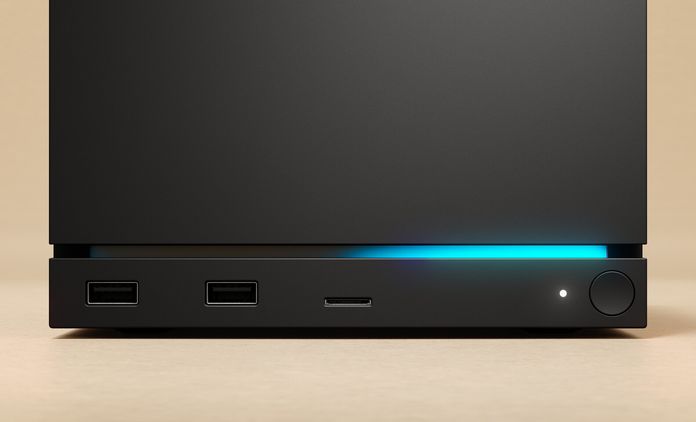
One reviewer summarized the device’s prospects in particularly harsh terms: the Steam Machine received mixed reactions because some consider it too expensive to justify the level of performance it delivers.
Read also: Key You’ve Been Ignoring for Years: Hidden Potential of Windows Key
Conclusion: A Failure in a New Package
Strictly speaking, the new Steam Machine is not as obvious a failure as its predecessor. It has a unified hardware specification, a functional SteamOS ecosystem, and even managed to sell out its initial batch almost instantly. However, the core issue remains the same: Valve is once again offering a niche, expensive product at a time when mainstream consumers are looking for the exact opposite – affordability. The difference is that the original Steam Machine was undermined by the internal flaws of the concept itself, while the second attempt may be challenged by external circumstances. A global memory shortage has transformed an ambitious comeback into a “magic box for those who were already willing to spend money on PC gaming.”
Valve has learned one lesson: the problem is no longer hardware fragmentation. The problem is that the market itself may once again not be the one this product was designed for.
Read also: Everything About NVIDIA RTX Spark: The Superchip Redefining Personal Computing

