




© ROOT-NATION.com - Use of content is permitted with a backlink.
The basement is warm, inviting, and smells faintly of digital nostalgia, which is a strange thing to say about a video game, but Demeo x Dungeons & Dragons: Battlemarked operates almost entirely on the fuel of memory. For anyone who spent their teenage years arguing over line-of-sight rules in a friend’s dimly lit garage, slipping on the PSVR2 headset feels less like logging into a server and more like coming home. This isn’t just a video game adaptation of the world’s most famous role-playing system; it is a meticulous, loving simulation of the act of playing it. After a month of diving into dungeons and cursing the capriciousness of a twenty-sided die, it is clear that Resolution Games has not only successfully skinned their hit formula with the Wizards of the Coast license but has fundamentally deepened the experience of virtual tabletop gaming.
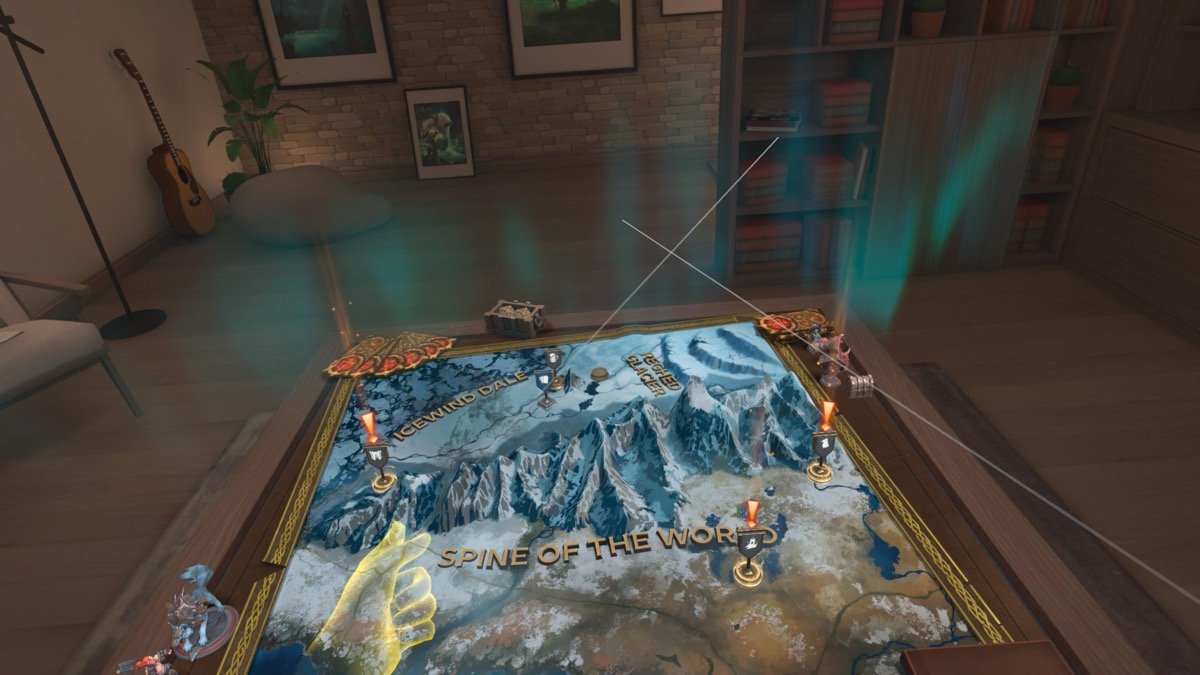
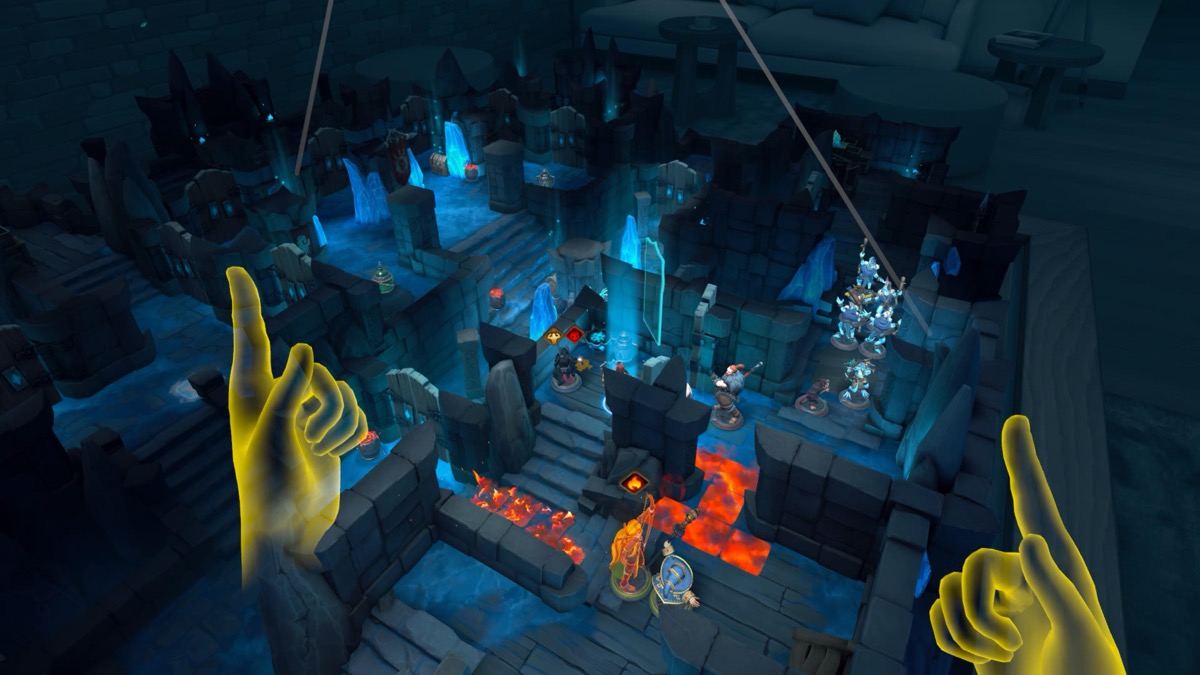
The magic of Battlemarked lies in its tactile presentation, which shines particularly brightly on the PSVR2. While the Quest versions are competent, the Sony headset’s OLED panels give the dark, cavernous dungeons a stark, inky contrast that makes the spell effects pop with startling vibrancy. You aren’t just looking at a screen; you are hovering over a living diorama, a meticulously crafted miniature world that feels expensive and substantial. The pieces themselves, which hop with a delightful, almost stop-motion “South Park” style animation when they move, have a physical weight to them that anchors the fantasy. When you pick up your champion to place them for a tactical flank, you feel like a giant manipulating a precious collection of hand-painted figurines. The ability to zoom in until a miniature is the size of a Barbie doll reveals an absurd level of detail, right down to the specific beverages the tiny characters are swilling in the tavern. It is this commitment to the “toy” aesthetic that sells the illusion, creating a cozy, tangible atmosphere that flat-screen RPGs simply cannot replicate.
Read also: Ghost of Yōtei review: A Sequel That Nails PS5 Potential
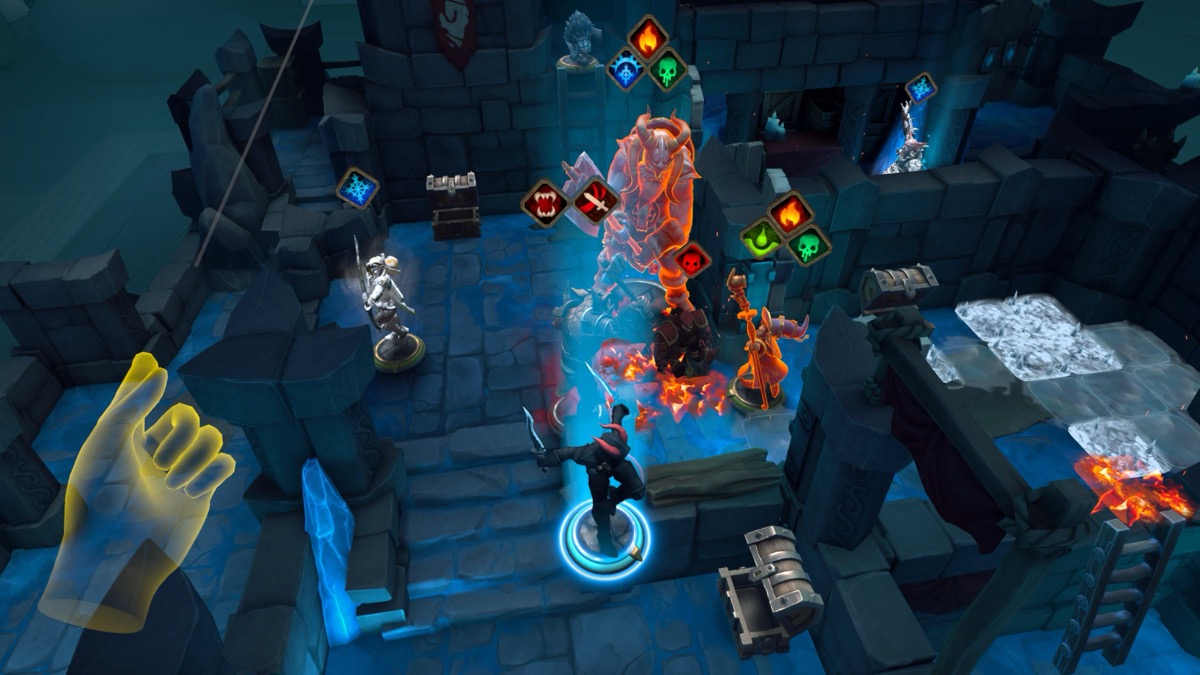
At its core, the gameplay loop remains faithful to the Demeo foundation, which is a very good thing. You navigate grid-based dungeons using a deck of cards representing your abilities, managing two action points per turn to move, attack, or cast spells. It sounds simple, and in the early hours, it is. But Battlemarked introduces the rich, chaotic flavor of D&D into this structure with a grace that feels inevitable. The tension of the dice roll is preserved perfectly here; watching the die clatter across the virtual table, praying it doesn’t land on a skull for a critical miss, triggers a primal dopamine response that no automated combat log can match. The translation of Dungeons & Dragons mechanics into this card-based system is seamless, stripping away the math-heavy crunch that bogs down real-life sessions while keeping the flavor of the spells and monsters intact.
Where the original Demeo was a roguelike run-based affair – where your archer at the end of the night was effectively the same as when you started – Battlemarked finally delivers the progression system fans have been screaming for. You are no longer just running a gauntlet; you are building a legend. The game introduces persistent character leveling, meaning the XP you grind actually matters for the long haul. You can head to the bazaar between missions to buy and sell cards, tweaking your deck to suit your playstyle, or engage in small narrative vignettes in towns that add flavor to the world. This shift from “run” to “campaign” changes the emotional stakes of the game entirely. When your party narrowly survives a boss fight, it’s not just about beating the level; it’s about keeping your leveled-up hero alive to fight another day, although the game is forgiving enough to offer continues so you don’t lose everything.
Read also: The Outer Worlds 2 review: A Perfect 7/10
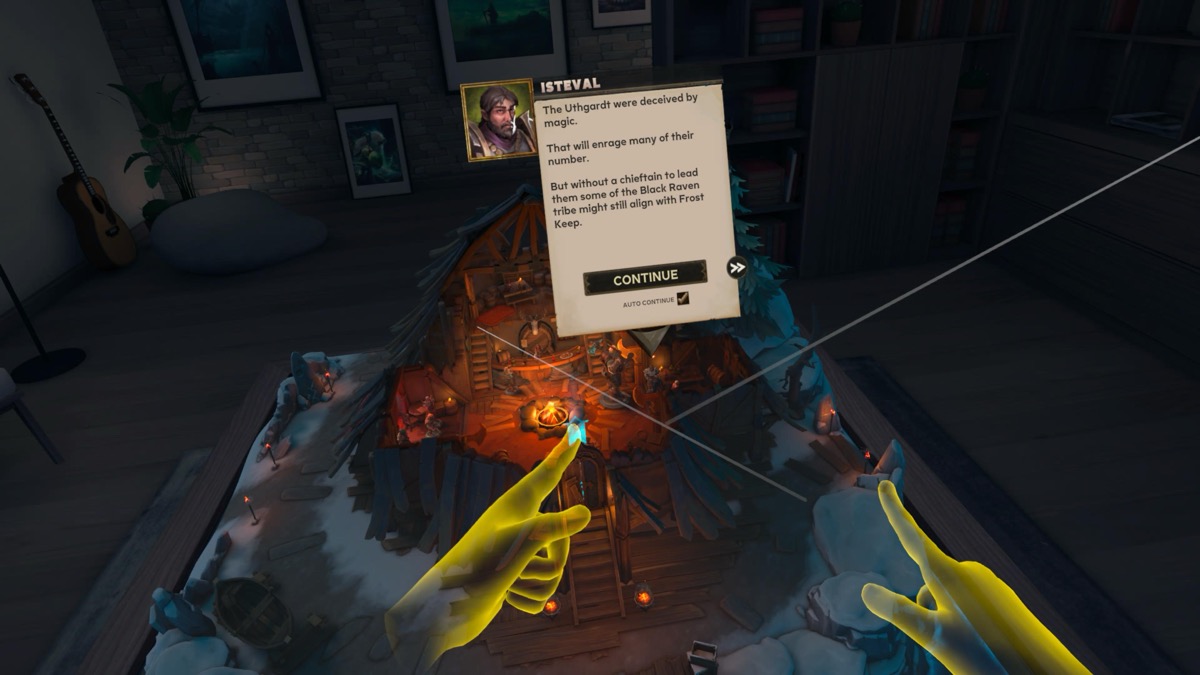
The narrative delivery is another area where the game punches above its weight. A Game Master narrates the adventure, and the writing is surprisingly sharp, featuring voiced NPCs and dialogue options that occasionally require a dice roll to pass skill checks. It creates a layer of role-playing that was largely absent in the silence of the original Demeo. You aren’t just killing monsters; you’re interacting with a world that has its own internal logic and humor. The audio design supports this beautifully, swelling from quiet, medieval Nordic folk tunes during exploration to intense orchestral scores when initiative is rolled. It’s a soundscape that understands the rhythm of a tabletop session, knowing exactly when to recede into the background and when to drive the action forward.
However, the experience is not without its digital ghosts. Multiplayer, which is arguably the intended way to play, has suffered from some technical hiccups since launch. In my sessions, we experienced moments where the game would “hitch” or stutter when loading new areas, a jarring reminder that you are, in fact, tethered to a server and not actually sitting in a basement. There were also sporadic, frustrating bugs where cards would simply vanish when you tried to play them – a digital sleight of hand that is decidedly less fun when it costs you a healing potion in a critical moment. These are the kinds of rough edges that will likely be smoothed out in patches, but for now, they are occasional intruders on an otherwise immersive evening.
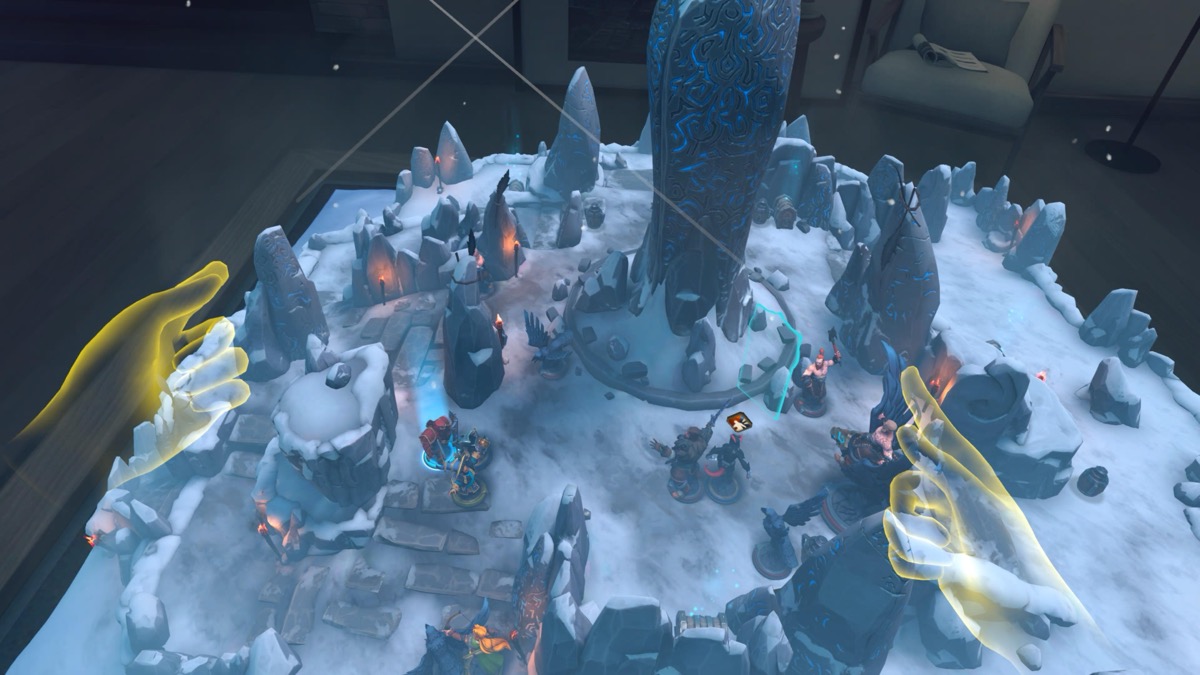
For the antisocial adventurer, the single-player mode is surprisingly robust. While Demeo has always shone brightest as a social lubricant – a place to hang out with friends who live across the country – playing Battlemarked solo is a viable, tactical puzzle game in its own right. You control a main hero and a set of “hirelings,” and contrary to fears that these AI companions might be useless fodder, they are integral to success. The interaction between your hero’s abilities and the hirelings’ support skills creates a satisfying depth that rewards careful planning over brute force. It is a different kind of fun, more cerebral and less chaotic than the shouting matches of a four-player co-op session, but it proves that the game’s mechanics are strong enough to stand on their own without the social element crutch.
Playing on PSVR2 also highlights the subtle but appreciated use of haptics. While some might find the controller feedback a bit too subtle – you don’t always feel the “thud” of a button press as distinctively as you might hope – the overall sensory package is effective. The headset doesn’t aggressively rumble your skull, but the Sense controllers do a good job of conveying the weight of the virtual objects. It’s a game of comfort; you can tilt the board, drag the world around you, and play from a seated position for hours without the fatigue that plagues more active VR titles. It’s the kind of game you can sink into on a rainy Sunday, losing track of time as you paint the dungeon floor with goblin blood.
Read also: Yooka-Replaylee review: The Game We Were Promised All Along
Verdict
Ultimately, Demeo x Dungeons & Dragons: Battlemarked is a triumph of adaptation. It captures the spirit of Dungeons & Dragons not by slavishly recreating every rule in the Player’s Handbook, but by recreating the feeling of playing it. It understands that the heart of the hobby isn’t the math; it’s the miniatures, the map, the camaraderie, and the suspense of the die roll. It is a game that feels handcrafted for VR, proving once again that the medium is at its best when it isn’t trying to be a movie, but rather a better version of reality. Despite a few bugs and network jitters, this is the definitive digital tabletop experience, a beautiful, engaging, and deeply replayable love letter to everyone who has ever wanted to be a hero, if only for a few hours on a Thursday night.

