





© ROOT-NATION.com - Use of content is permitted with a backlink.
There have been previous reports that Apple plans to skip the expected updates to its M6 processor and accelerate development of the next-generation M7. However, current trends clearly point to the release of extremely high-end Mac desktop computers powered by M7 Ultra chips in 2028, and the reason for this is unlikely to surprise anyone.
Anonymous sources continue to share exclusive information with Bloomberg reporter Mark Gurman regarding Apple’s deviation from its usual chip release schedule. Devices with M6 processors haven’t even hit the market yet – though their debut is scheduled for the end of this year – and this entire generation of chips, according to Gurman, is already considered obsolete within Apple itself. However, you’d never guess which factor Gurman cites as the main one. In reality, it’s obvious: it’s AI.
Read also: AERONAUT – everything that flies above the ground: aviation, UAVs and drones, rockets, and space
He notes that AI is no longer just an additional feature that Apple’s chips must support. It now directly determines the design characteristics of these products and their time-to-market. This is a significant shift in focus compared to the past, when the main emphasis was on computing speed, graphics capabilities, battery life, and reducing the thickness of the device.

However, Gurman asserts that we shouldn’t expect the release of M6 Pro, Max, or Ultra variants. The process of finalizing the M7 chip began just six months after work on the M6 was completed. This results in a rather unusual update schedule: we will effectively welcome and see out the M6 generation simultaneously at the end of this year, while the first devices with the M7 will appear as early as the beginning of next year. After that, the situation will stabilize, and the M7 Pro and M7 Max versions are scheduled to be released in late 2027. The M7 Ultra configurations are expected to arrive in 2028.
If you’re saving up to buy a powerful desktop computer, the M7 Ultra’s specs are worth considering. Gourman reports that the new Ultra is designed to support up to 1.5 TB of RAM – nearly double the amount originally planned for the M5 Ultra. However, Apple’s final decision on releasing such a configuration will depend on the global situation in the industry. A widespread shortage of memory chips has made it difficult to source this component and has led to a significant increase in its price.
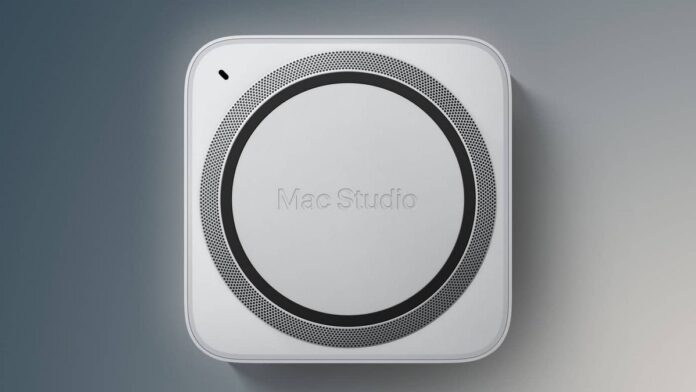
Indeed, it’s worth taking a closer look at this point to assess the potential financial implications. The M5 Ultra processors haven’t been released yet, but rumors point to an upcoming release of a high-performance desktop PC in the form of the Mac Studio. Last month, when Apple significantly raised prices on products such as the MacBook Neo (whose price rose from $600 to $700), it also increased the price of the base model Mac Studio by $500, setting it at $2,500. At the same time, the more expensive Mac Studio model with 96 GB of RAM jumped in price by $1,300 and now costs $5,299. These figures really give one pause.
The situation looks even worse from here on out. The last time Apple offered a Mac with 1.5 TB of RAM was in 2019. At that time, that amount of memory alone cost $25,000. As a result, the total cost of the computer could have reached $53,000. And that was seven years ago, before the onset of historic inflation and a full-blown pricing crisis in the memory market.

Furthermore, it’s important to remember that the M7 Ultra is designed specifically for AI needs. According to Gurman, its capabilities will bring it close to the category of specialized AI accelerators, such as Nvidia’s Blackwell. So how much does an Nvidia Blackwell actually cost? Currently, the cheapest Blackwell option available on Newegg is priced at $12,499.99 – and that’s just for the processor itself.
Obviously, this Apple computer is currently only a theoretical concept, and consumer market conditions over the next few years could change significantly due to both predictable and unpredictable factors. However, if we project the situation to 2028, purchasing a top-of-the-line Mac Studio configuration based on the M7 Ultra processor (or a similar flagship model that will lead the lineup in two years) will require an extreme financial investment from consumers. Given current market trends and component costs, the final price of such a professional computer could well rival the cost of residential real estate.
Read also:
- Is the revolution on hold? Apple may have paused development of AirPods Pro with cameras
- Apple will keep the iPhone Air: What upgrades could the second generation get