





© ROOT-NATION.com - Use of content is permitted with a backlink.
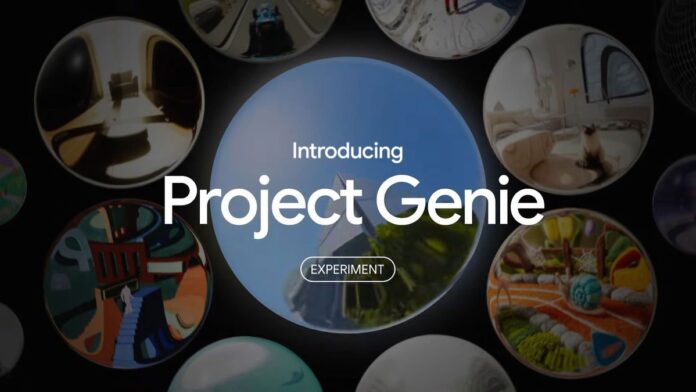
Last summer, Google’s DeepMind division introduced Genie 3, a new type of artificial intelligence system that the developers themselves call a “world of worlds.” It is capable of not only generating images but also dynamically responding to user actions while moving within the simulated environment. Initially, Genie 3 was positioned as a tool for training and testing AI agents. Now, Google is opening access to this technology to a wider audience as part of the Project Genie pilot project.

To try Project Genie, you need to be a Google AI Ultra subscriber (this tariff costs $250 per month). Moreover, users must reside in the US and be at least 18 years old, but the company promises to expand the geography over time. At launch, Project Genie offers three modes of interaction: World sketching, World exploration, and World remixing.
In World Sketching mode, the Nano Banana Pro model is used to create a base image, which Genie 3 uses as the basis for generating an interactive world. At this stage, the user can describe the character, choose the camera perspective (first-person, third-person, or isometric), and determine how to explore the future world. Before the full launch, Nano Banana Pro makes a preliminary “sketch” of the scene so that the user can make corrections and refinements.
Read also: Apple and Google have made a deal: the new Siri will be based on Gemini
In World exploration mode, the world will turn into a “navigable environment waiting to be explored. As you move, Project Genie generates a real-time path forward based on your actions. You can also customize the camera as you travel around the world.” The World remixing feature allows you to mix existing worlds to create new interpretations. “You can also explore curated worlds in the gallery or in the <randomizer icon> to find inspiration, or create from them. And when you’re done, you can upload videos of your worlds and your explorations,” Google said.
It should be borne in mind that Genie 3 is not a game engine in the classical sense. Although the system’s results may look like a video game and support simulation of physical interactions, there are no traditional game mechanics. In addition, there are technical limitations: each generation lasts no more than 60 seconds, the display is limited to 24 frames per second, and the resolution is 720p.
Despite these limitations, Project Genie provides a rare opportunity to look at the very edge of Google DeepMind’s current research. For AI Ultra subscribers, this is a chance to see firsthand what the company has been working on over the past few years and experience what the future of interactive digital worlds created by artificial intelligence might look like.
Read also:
- The mysterious OpenAI gadget is coming: here’s what we know about the future AI device?
- Amazon closes physical stores and admits failure of offline strategy