





© ROOT-NATION.com - Use of content is permitted with a backlink.
Google has published official requirements for Gemini Intelligence. To use the feature, a device must have a flagship chipset, at least 12 GB of RAM, AI Core support, and a Gemini Nano version 3 or higher. This combination of requirements automatically eliminates the vast majority of even the most advanced smartphones on the market.
The main barrier was the Gemini Nano v3 requirement. The Pixel 9 series, Samsung Galaxy Fold 7, and Xiaomi 17 currently run on Nano v2, which means they can’t run Gemini Intelligence regardless of the amount of memory they have installed. Among the few devices that already comply with the new standard is the OPPO Find X9 series. The first device to publicly support the feature will be the Samsung Galaxy Fold 8, which is expected to be released in July 2026. It will be followed by the Galaxy S26 series and the Pixel 10 line this summer.

Google’s developer page with a list of Nano v3-compatible devices consists almost exclusively of 2026 releases. The Pixel 10 and OPPO Find X9 are rare exceptions among the previous generation devices. This means that the Galaxy S25 Ultra, Pixel 9 Pro, and Fold 7 are blocked not because of a lack of memory or an outdated chipset, but solely because of the AI model. Google has not yet announced whether these devices will receive a software update to Nano v3.
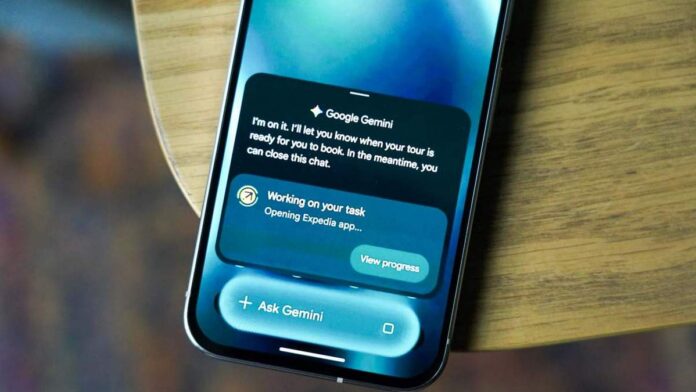
The Gemini Intelligence functionality explains the strict hardware requirements. The system is capable of autonomously performing multi-stage tasks in the background: collecting information, processing it, and interacting with applications and websites without constant user participation. Among the confirmed tools are Rambler in Gboard for voice text input with support for parasitic words and mixed languages, as well as the Create my Widget function that generates personalized home screen widgets using AI tools. All processes are performed directly on the device using the Gemini Nano v3 model, which is why 12 GB of RAM is a practical minimum, not a conventional mark.

In addition to hardware requirements, Google requires manufacturers to guarantee at least five updates to the Android operating system and six years of security patches. Devices must also meet the set thresholds for stability, crash rate, spatial sound support, HDR, and low-light quality.
The situation with Pixel 11 deserves special attention. According to leaks, the base model may come with only 8 GB of RAM, which is 4 GB less than the minimum threshold for Gemini Intelligence. This is a controversial situation for a company that positions Gemini Intelligence as the main feature of the year. Either the leaked information will turn out to be false, or Google will make an exception for its own device, or the basic Pixel 11 will simply not support its own manufacturer’s flagship AI feature. None of these scenarios seems convenient for a presentation at an official announcement.

For buyers who are already choosing a smartphone with Gemini Intelligence in mind, the Galaxy S26 series is still the most reliable option.
Read also:
- Ukraine Struck One of Russia’s Largest Oil Refineries: Military Vessels and Occupation Logistics Sites Also Reportedly Targeted
- ChatGPT integration in Siri failed to meet expectations: OpenAI may sue Apple